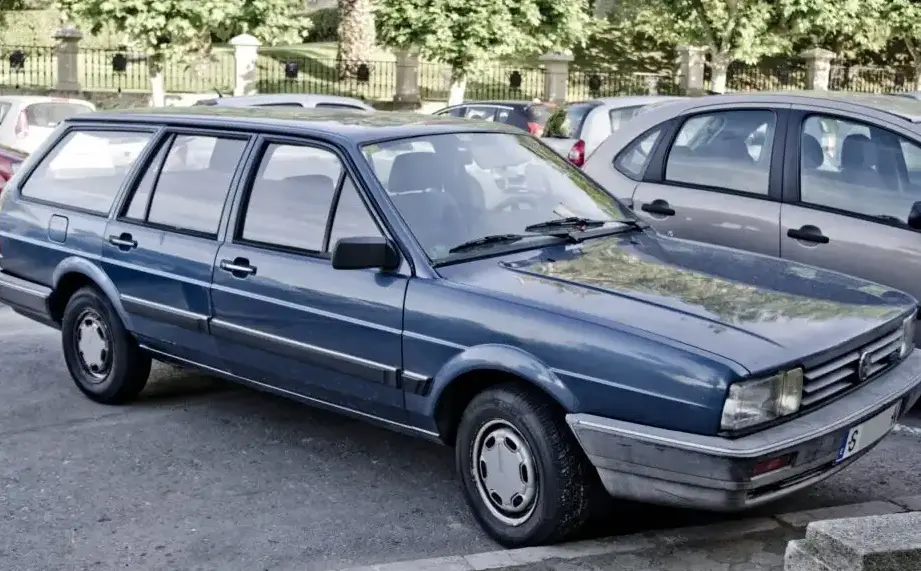
The Volkswagen Passat Variant (B2) 1.6 TD, produced between 1982 and 1988, represented a practical and fuel-efficient option within the broader B2 Passat lineup. Positioned as an entry-level diesel variant, it catered to buyers prioritizing economy and load-carrying capacity over outright performance. The B2 generation Passat, launched in 1981, was a significant evolution of the original Passat, offering increased interior space and improved refinement. The “Variant” designation denoted the station wagon (estate) body style, a popular choice in Europe for families and those requiring versatile transportation. This particular 1.6-liter turbocharged diesel engine, while not the most powerful in the range, offered a compelling blend of fuel efficiency and usable torque.
Technical Specifications
| Brand | Volkswagen |
| Model | Passat |
| Generation | Passat Variant (B2) |
| Type (Engine) | 1.6 TD (70 Hp) |
| Start of production | 1982 |
| End of production | 1988 |
| Powertrain Architecture | Internal Combustion engine |
| Body type | Station wagon (estate) |
| Seats | 5 |
| Doors | 5 |
| Fuel Type | Diesel |
| Acceleration 0 – 100 km/h | 9.9 sec |
| Acceleration 0 – 62 mph | 9.9 sec |
| Acceleration 0 – 60 mph | 9.4 sec |
| Maximum speed | 157 km/h (97.56 mph) |
| Weight-to-power ratio | 13.6 kg/Hp, 73.3 Hp/tonne |
| Weight-to-torque ratio | 7.2 kg/Nm, 139.3 Nm/tonne |
| Power | 70 Hp @ 4500 rpm |
| Power per litre | 44.1 Hp/l |
| Torque | 133 Nm @ 2600 rpm (98.1 lb.-ft. @ 2600 rpm) |
| Engine layout | Front, Longitudinal |
| Engine Model/Code | CY |
| Engine displacement | 1588 cm3 (96.91 cu. in.) |
| Number of cylinders | 4 |
| Engine configuration | Inline |
| Cylinder Bore | 76.5 mm (3.01 in.) |
| Piston Stroke | 86.4 mm (3.4 in.) |
| Compression ratio | 23:1 |
| Number of valves per cylinder | 2 |
| Fuel injection system | Precombustion chamber injection |
| Engine aspiration | Turbocharger |
| Valvetrain | OHC |
| Engine oil capacity | 3.5 l (3.7 US qt | 3.08 UK qt) |
| Kerb Weight | 955 kg (2105.41 lbs.) |
| Max. weight | 1485 kg (3273.86 lbs.) |
| Max load | 530 kg (1168.45 lbs.) |
| Trunk (boot) space – minimum | 540 l (19.07 cu. ft.) |
| Trunk (boot) space – maximum | 1811 l (63.95 cu. ft.) |
| Fuel tank capacity | 70 l (18.49 US gal | 15.4 UK gal) |
| Length | 4545 mm (178.94 in.) |
| Width | 1695 mm (66.73 in.) |
| Height | 1385 mm (54.53 in.) |
| Wheelbase | 2555 mm (100.59 in.) |
| Front track | 1400 mm (55.12 in.) |
| Rear (Back) track | 1408 mm (55.43 in.) |
| Drivetrain Architecture | The Internal combustion engine (ICE) drives the front wheels of the vehicle. |
| Drive wheel | Front wheel drive |
| Number of gears and type of gearbox | 5 gears, manual transmission |
| Front suspension | Independent type McPherson |
| Rear suspension | Coil spring |
| Front brakes | Ventilated discs |
| Rear brakes | Disc |
| Steering type | Steering rack and pinion |
| Tires size | 175/70 R13 |
| Wheel rims size | 13 |
Powertrain & Engine Architecture
The heart of the Passat Variant 1.6 TD was the CY engine code, a 1.6-liter inline four-cylinder diesel engine. This engine utilized precombustion chamber injection, a common diesel technology of the era. Unlike direct injection systems, precombustion chambers housed a glow plug and a small auxiliary combustion chamber, promoting more complete combustion, particularly during cold starts. The addition of a turbocharger significantly boosted power output compared to naturally aspirated diesel engines of similar displacement. The turbocharger, a Garrett unit in many cases, provided increased air intake, resulting in the 70 horsepower and 98 lb-ft of torque. The engine featured an overhead camshaft (OHC) valvetrain operating two valves per cylinder. The five-speed manual transmission was the standard offering, providing a good balance between fuel economy and drivability. The engine was mounted longitudinally in the front of the vehicle, driving the front wheels.
Driving Characteristics
The 1.6 TD engine, paired with the five-speed manual transmission, delivered a driving experience focused on efficiency and practicality. Acceleration was modest, with a 0-60 mph time around 9.4 seconds. However, the engine’s torque characteristics made it well-suited for everyday driving and hauling loads. The turbocharger provided a noticeable boost in power at higher RPMs, but the engine lacked the outright punch of the gasoline-powered Passat variants. The gear ratios were optimized for fuel economy, with a relatively tall fifth gear for comfortable highway cruising. Compared to the more powerful gasoline engines, the 1.6 TD offered significantly better fuel economy, making it a popular choice for long-distance drivers. The manual transmission provided precise control, but the shift linkage could feel somewhat notchy compared to more modern gearboxes.
Equipment & Trim Levels
The 1.6 TD Variant typically represented the entry-level trim within the Passat range. Standard equipment included cloth upholstery, basic instrumentation, and manual windows and door locks. The dashboard layout was functional and straightforward, prioritizing usability over luxury. Optional extras included a sunroof, upgraded stereo system, and power windows. The interior trim was generally durable and practical, designed to withstand the rigors of family use. The exterior featured steel wheels with hubcaps, and relatively simple body trim.
Chassis & Braking
The Passat B2 featured an independent McPherson strut front suspension and a coil spring rear suspension. This setup provided a comfortable ride and reasonable handling characteristics. The front brakes were ventilated discs, offering good stopping power, while the rear brakes were solid discs. The steering was rack and pinion, providing precise and responsive steering feel. The 175/70 R13 tires offered adequate grip for everyday driving conditions. Stabilizer bars were typically fitted to both the front and rear axles, helping to reduce body roll during cornering.
Market Reception & Comparison
The Passat Variant 1.6 TD was well-received in Europe as a practical and economical family car. Critics praised its fuel efficiency, spacious interior, and load-carrying capacity. However, the engine’s modest power output was often noted as a drawback. Compared to the gasoline-powered Passat variants, the 1.6 TD offered significantly better fuel economy but lacked the same level of performance. Compared to other diesel-powered station wagons of the era, the Passat offered a good balance of features, performance, and price. The 1.6 TD was often seen as a sensible and reliable choice for buyers prioritizing practicality over prestige.
Legacy
The Volkswagen Passat B2 1.6 TD powertrain proved to be remarkably durable and reliable. Many examples remain on the road today, a testament to the engine’s robust construction and relatively simple design. While maintenance costs can increase with age, the engine is generally considered to be relatively easy to repair. In the used car market, these Passats are often sought after by enthusiasts and those looking for a classic, economical, and practical vehicle. The 1.6 TD engine, while not a performance powerhouse, established a reputation for longevity and fuel efficiency that continues to be associated with Volkswagen diesel engines.