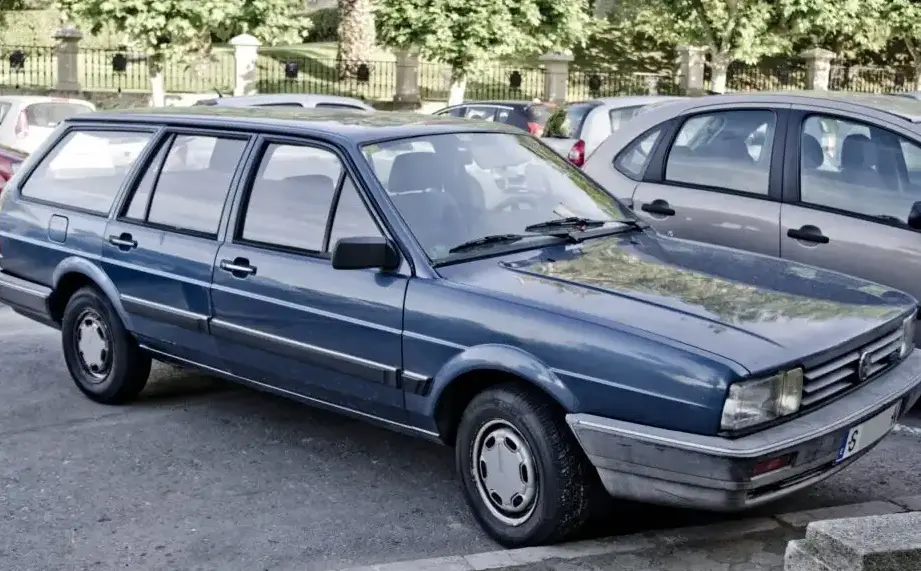
The Volkswagen Passat Variant (B2) 1.8, produced from 1984, represented a key offering within the second-generation Passat lineup. Positioned as a practical and relatively affordable option, this variant catered to families and those needing a versatile vehicle. The B2 Passat, launched in 1981, was a significant evolution of the original Passat, offering increased space, improved aerodynamics, and a more modern design. The Variant, or station wagon, body style further enhanced the Passat’s practicality, making it a popular choice in European markets. This specific 1.8-liter, 112 horsepower configuration aimed to balance fuel efficiency with adequate performance for everyday driving.
Technical Specifications
| Brand | Volkswagen |
| Model | Passat |
| Generation | Passat Variant (B2) |
| Type (Engine) | 1.8 (112 Hp) |
| Start of production | 1984 |
| End of production | 1984 |
| Powertrain Architecture | Internal Combustion engine |
| Body type | Station wagon (estate) |
| Seats | 5 |
| Doors | 5 |
| Fuel Type | Petrol (Gasoline) |
| Power | 112 Hp |
| Engine Model/Code | DZ |
| Engine aspiration | Naturally aspirated engine |
| Engine oil capacity | 3 l (3.17 US qt | 2.64 UK qt) |
| Coolant capacity | 4 l (4.23 US qt | 3.52 UK qt) |
| Trunk (boot) space – minimum | 540 l (19.07 cu. ft.) |
| Trunk (boot) space – maximum | 1811 l (63.95 cu. ft.) |
| Fuel tank capacity | 70 l (18.49 US gal | 15.4 UK gal) |
| Length | 4545 mm (178.94 in.) |
| Width | 1695 mm (66.73 in.) |
| Wheelbase | 2555 mm (100.59 in.) |
Powertrain & Engine Architecture
The Passat Variant (B2) 1.8 utilized the Volkswagen DZ engine code, a 1.8-liter inline-four cylinder gasoline engine. This engine was a naturally aspirated unit, meaning it did not employ a turbocharger or supercharger. It featured a single overhead camshaft (SOHC) valvetrain, operating two valves per cylinder. Fuel delivery was managed by Bosch mechanical fuel injection, a system common for the era, providing a balance between efficiency and performance. The DZ engine produced 112 horsepower and approximately 109 lb-ft of torque. The engine was known for its relative simplicity and durability, though it wasn’t a powerhouse by any means.
The 1.8-liter engine was typically paired with a four-speed automatic transmission. This transmission, while providing convenience, was not known for its particularly quick shifts or sporty feel. It was geared towards smooth operation and fuel economy. The automatic transmission’s gear ratios were optimized for comfortable cruising and everyday driving, rather than aggressive acceleration. A three-speed automatic was also available in some markets.
Driving Characteristics
The driving experience in the Passat Variant (B2) 1.8 with the automatic transmission was characterized by smooth, predictable performance. Acceleration was adequate for merging onto highways and passing slower vehicles, but it wasn’t particularly brisk. The automatic transmission contributed to a relaxed driving style, but it also meant that the engine often operated at higher RPMs during acceleration, potentially impacting fuel economy. Compared to the manual transmission versions of the 1.8, the automatic offered less driver engagement and slightly slower acceleration times. Compared to the more powerful GTI or VR6 variants, the 1.8 automatic was significantly less sporty, prioritizing comfort and practicality over outright performance.
The suspension setup was tuned for comfort, providing a relatively soft ride quality. Handling was competent but not particularly sharp. The weight distribution was reasonably balanced, contributing to predictable cornering behavior, but the car wasn’t designed for aggressive driving. Steering was power-assisted, making it easy to maneuver at low speeds.
Equipment & Trim Levels
The Passat Variant (B2) 1.8 typically came with a reasonable level of standard equipment for its time. This included cloth upholstery, basic instrumentation (speedometer, fuel gauge, temperature gauge), and a four-speaker stereo system. Power steering was often standard, while air conditioning and electric windows were frequently offered as optional extras. The interior design was functional and straightforward, prioritizing practicality over luxury. Trim levels varied depending on the market, but generally, the 1.8 variant occupied a mid-range position in the Passat lineup.
Optional extras could include a sunroof, upgraded stereo systems, and more luxurious interior trim options. The Variant body style itself added to the appeal, offering a larger cargo area than the sedan version. The rear seats could be folded down to further increase cargo capacity.
Chassis & Braking
The Passat Variant (B2) featured a MacPherson strut front suspension and a semi-independent torsion beam rear suspension. This setup provided a good balance between ride comfort and handling. Braking systems varied depending on the market and trim level. Lower-spec models often featured drum brakes on the rear wheels, while higher-spec models were equipped with disc brakes all around. The braking system was generally adequate for the car’s weight and performance, but it lacked the stopping power of more modern vehicles.
Stabilizer bars were fitted to both the front and rear axles to reduce body roll during cornering. The steering system was a rack-and-pinion setup, providing precise and responsive steering feel.
Market Reception & Comparison
The Passat Variant (B2) 1.8 was generally well-received by automotive critics as a practical and reliable family car. It was praised for its spacious interior, comfortable ride, and fuel efficiency. However, it was also criticized for its relatively modest performance and somewhat dated interior design. Compared to other station wagons in its class, such as the Ford Sierra Estate or the Opel Ascona Caravan, the Passat offered a good balance of features and value. The 1.8-liter engine provided adequate power for most drivers, but those seeking more performance often opted for the GTI or VR6 models.
Fuel economy was a strong point for the 1.8-liter engine, making it an attractive option for those concerned about running costs. Reliability was also generally good, although regular maintenance was essential to prevent issues.
Legacy
The Volkswagen Passat Variant (B2) 1.8, while not the most exciting version of the B2 Passat, remains a popular choice among classic car enthusiasts. The DZ engine is known for its durability, and parts availability is generally good. Today, these cars are often sought after as affordable and practical classic vehicles. The automatic transmission, while not particularly sophisticated, is generally reliable if properly maintained. The Passat B2, and particularly the Variant, helped solidify Volkswagen’s reputation for building well-engineered and practical vehicles. The 1.8 automatic variant represents a sensible and accessible entry point into the world of classic Volkswagen ownership.