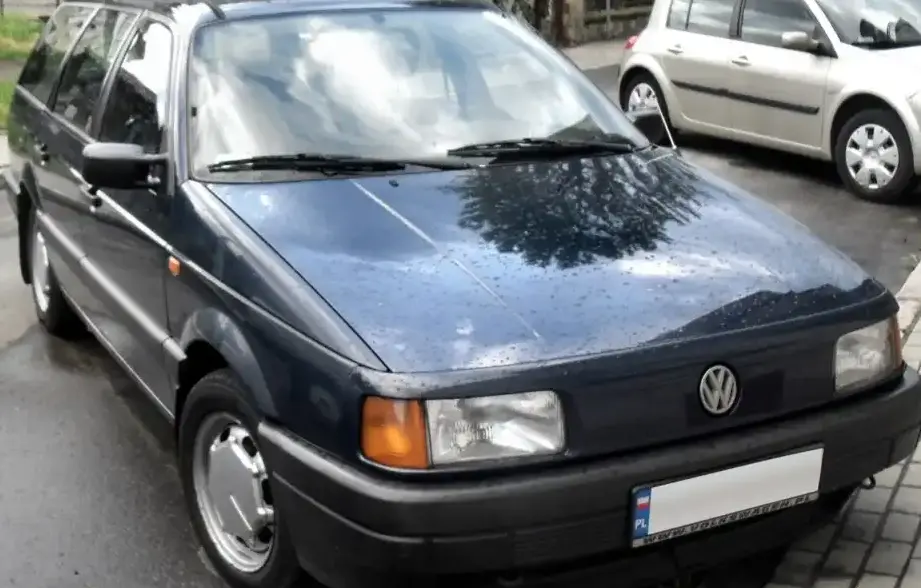
The Volkswagen Passat Variant (B3) 1.8, producing 75 horsepower, was a mainstay of the Passat lineup from 1990 to 1993. Positioned as an entry-level offering within the B3 generation (1988-1993), this variant catered to buyers seeking a practical and economical family vehicle. The B3 Passat represented a significant step forward for Volkswagen, moving away from the rear-wheel-drive layout of its predecessors to a front-wheel-drive configuration based on the A platform, shared with models like the Golf and Jetta. The Variant, or station wagon, body style offered increased cargo capacity, making it a popular choice in European markets where practicality was highly valued. This specific 1.8-liter engine and five-speed manual transmission combination aimed to balance affordability with reasonable performance.
Technical Specifications
| Brand | Volkswagen |
| Model | Passat |
| Generation | Passat Variant (B3) |
| Type (Engine) | 1.8 (75 Hp) |
| Start of production | 1990 |
| End of production | 1993 |
| Powertrain Architecture | Internal Combustion engine |
| Body type | Station wagon (estate) |
| Seats | 5 |
| Doors | 5 |
| Fuel consumption (urban) | 10.5 l/100 km (22.4 US mpg) |
| Fuel consumption (extra urban) | 6 l/100 km (39.2 US mpg) |
| Fuel consumption (combined) | 7.9 l/100 km (29.8 US mpg) |
| Fuel Type | Petrol (Gasoline) |
| Acceleration 0 – 100 km/h | 16.7 sec |
| Acceleration 0 – 62 mph | 16.7 sec |
| Acceleration 0 – 60 mph | 15.9 sec |
| Maximum speed | 164 km/h (101.9 mph) |
| Weight-to-power ratio | 17.5 kg/Hp |
| Weight-to-torque ratio | 9.4 kg/Nm |
| Power | 75 Hp @ 5000 rpm |
| Torque | 140 Nm @ 2500 rpm (103.26 lb.-ft. @ 2500 rpm) |
| Engine layout | Front, Transverse |
| Engine Model/Code | AAM |
| Engine displacement | 1781 cm3 (108.68 cu. in.) |
| Number of cylinders | 4 |
| Engine configuration | Inline |
| Cylinder Bore | 81 mm (3.19 in.) |
| Piston Stroke | 86.4 mm (3.4 in.) |
| Compression ratio | 9:1 |
| Number of valves per cylinder | 2 |
| Fuel injection system | Single-point injection |
| Engine aspiration | Naturally aspirated engine |
| Valvetrain | OHC |
| Engine oil capacity | 3.8 l (4.02 US qt | 3.34 UK qt) |
| Coolant capacity | 5 l (5.28 US qt | 4.4 UK qt) |
| Kerb Weight | 1315 kg (2899.08 lbs.) |
| Max. weight | 1750 kg (3858.09 lbs.) |
| Max load | 435 kg (959.01 lbs.) |
| Trunk (boot) space – minimum | 465 l (16.42 cu. ft.) |
| Trunk (boot) space – maximum | 1500 l (52.97 cu. ft.) |
| Fuel tank capacity | 70 l (18.49 US gal | 15.4 UK gal) |
| Length | 4595 mm (180.91 in.) |
| Width | 1720 mm (67.72 in.) |
| Height | 1445 mm (56.89 in.) |
| Wheelbase | 2625 mm (103.35 in.) |
| Front track | 1479 mm (58.23 in.) |
| Rear track | 1422 mm (55.98 in.) |
| Drivetrain Architecture | Front wheel drive |
| Number of gears | 5 |
| Gearbox type | Manual transmission |
| Front suspension | Wishbone |
| Rear suspension | Suspension with traction connecting levers |
| Front brakes | Disc |
| Rear brakes | Drum |
| Assisting systems | ABS (Anti-lock braking system) |
| Steering type | Steering rack and pinion |
| Power steering | Hydraulic |
| Tires size | 185/65 R14 |
| Wheel rims size | 14 |
Powertrain & Engine Architecture
The heart of the Passat Variant 1.8 was the Volkswagen AAM engine, an inline four-cylinder unit displacing 1781cc. This engine utilized a single-point fuel injection system (also known as mono-point injection), where a single injector delivered fuel into the intake manifold. While simpler and less precise than multi-point injection systems found in higher-spec Passats, it contributed to the engine’s affordability and relative ease of maintenance. The engine featured an overhead camshaft (OHC) valvetrain with two valves per cylinder. The 75 horsepower output was achieved at 5000 rpm, with a torque figure of 140 Nm (103.26 lb-ft) available at 2500 rpm. The five-speed manual transmission was the standard offering, providing a balance between fuel efficiency and drivability. The transmission’s gear ratios were geared towards economy, reflecting the engine’s modest power output.
Driving Characteristics
The Passat Variant 1.8 with a manual transmission offered adequate, but not exhilarating, performance. Acceleration from 0 to 60 mph took approximately 15.9 seconds, and the top speed was around 101.9 mph. The engine felt somewhat strained when accelerating hard, particularly when fully loaded with passengers and luggage. The gear ratios were spaced to maximize fuel economy, meaning frequent downshifts were often necessary when tackling hills or overtaking. Compared to the more powerful 1.9 TDI diesel or the 2.0-liter gasoline variants, the 1.8 felt noticeably slower. However, its lighter weight and simpler mechanicals made it more nimble and responsive in everyday driving situations. The steering was light and precise, making it easy to maneuver in urban environments.
Equipment & Trim Levels
The 1.8-liter Passat Variant typically came with a relatively basic level of equipment. Standard features included central locking, power steering, and a basic stereo system. Interior upholstery was typically cloth, and the dashboard featured a functional, if somewhat spartan, design. Optional extras included power windows, a sunroof, and upgraded audio systems. The trim level was generally considered the entry point to the Passat range, appealing to buyers prioritizing practicality and value over luxury features. The interior space was generous, particularly in the rear seats and cargo area, making it well-suited for families.
Chassis & Braking
The B3 Passat Variant featured an independent front suspension with wishbones and a semi-independent rear suspension utilizing traction connecting levers. This setup provided a comfortable ride quality, although it wasn’t particularly sporty. The front brakes were discs, while the rear brakes were drums. ABS (Anti-lock Braking System) was available as an option, enhancing safety in emergency braking situations. The suspension was tuned for comfort, prioritizing ride quality over handling precision. Stabilizer bars were fitted to reduce body roll, but the overall handling characteristics were geared towards safe and predictable driving rather than aggressive cornering.
Market Reception & Comparison
The Passat Variant 1.8 was generally well-received as an affordable and practical family car. Critics praised its spacious interior, comfortable ride, and reasonable fuel economy. However, the engine’s modest power output was often cited as a drawback. Compared to the 1.9 TDI, the 1.8 offered less torque and lower fuel economy, but it was quieter and smoother to drive. The 2.0-liter gasoline variant provided significantly more power, but at a higher price point. The 1.8 appealed to buyers who prioritized affordability and practicality over outright performance.
Legacy
The AAM engine, found in the Passat Variant 1.8, is known for its relative reliability and durability. While not without its quirks, it’s generally considered a robust and long-lasting engine. Today, these cars are relatively affordable to purchase and maintain, making them popular choices for budget-conscious buyers. Parts availability is generally good, although some components may be becoming increasingly difficult to find. The Passat Variant 1.8 represents a solid and dependable example of 1990s family motoring, offering a blend of practicality, affordability, and Volkswagen build quality.