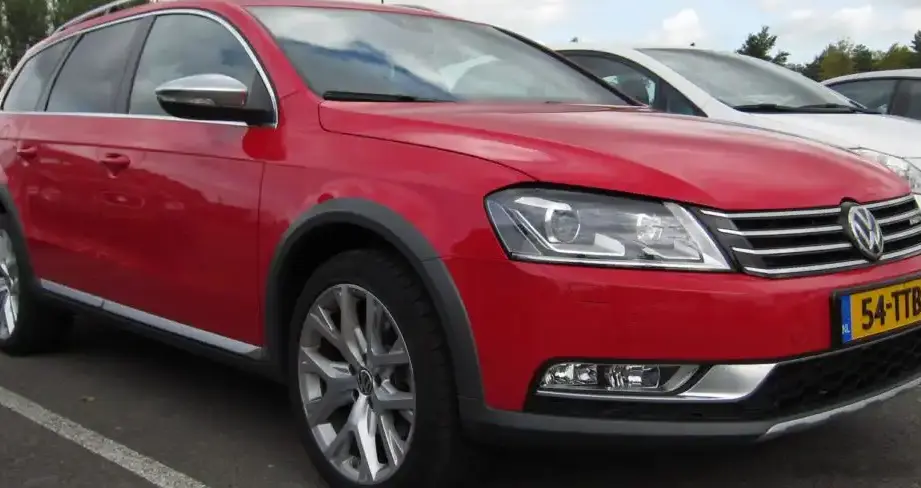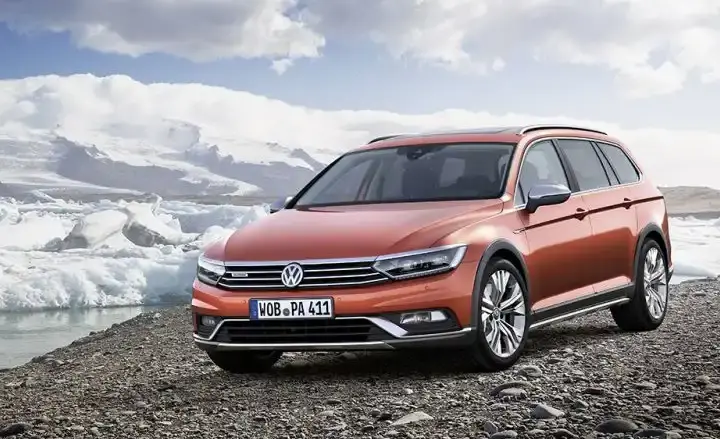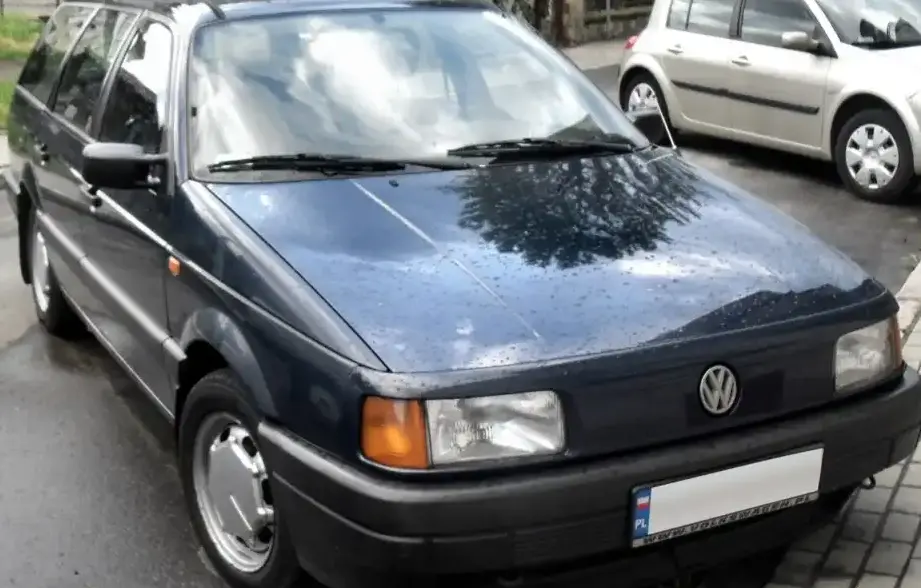
The Volkswagen Passat Variant (B3) 1.8, producing 90 horsepower and equipped with an automatic transmission, was a mainstay of the Passat lineup from 1988 to 1993. Positioned as an entry-to-mid-level trim, it offered practicality and affordability within the broader B3 Passat range, which also included more powerful gasoline engines and diesel options. This variant was primarily marketed in Europe, where station wagons (known as ‘Variants’ by Volkswagen) held significant popularity, offering a balance between family transport and cargo capacity. It represented a key offering in Volkswagen’s strategy to provide a versatile vehicle for a wide range of customers.
Technical Specifications
| Brand | Volkswagen |
| Model | Passat |
| Generation | Passat Variant (B3) |
| Type (Engine) | 1.8 (90 Hp) Automatic |
| Start of production | 1988 |
| End of production | 1993 |
| Powertrain Architecture | Internal Combustion engine |
| Body type | Station wagon (estate) |
| Seats | 5 |
| Doors | 5 |
| Fuel consumption (urban) | 11.8 l/100 km (19.9 US mpg, 23.9 UK mpg, 8.5 km/l) |
| Fuel consumption (extra urban) | 7.1 l/100 km (33.1 US mpg, 39.8 UK mpg, 14.1 km/l) |
| Fuel consumption (combined) | 9 l/100 km (26.1 US mpg, 31.4 UK mpg, 11.1 km/l) |
| Fuel Type | Petrol (Gasoline) |
| Acceleration 0 – 100 km/h | 16.1 sec |
| Acceleration 0 – 62 mph | 16.1 sec |
| Acceleration 0 – 60 mph | 15.3 sec |
| Maximum speed | 170 km/h (105.63 mph) |
| Weight-to-power ratio | 14.7 kg/Hp, 68.2 Hp/tonne |
| Weight-to-torque ratio | 9.1 kg/Nm, 109.8 Nm/tonne |
| Power | 90 Hp @ 5500 rpm |
| Power per litre | 50.5 Hp/l |
| Torque | 145 Nm @ 2500 rpm (106.95 lb.-ft. @ 2500 rpm) |
| Engine layout | Front, Transverse |
| Engine Model/Code | RP, ABS |
| Engine displacement | 1781 cm3 (108.68 cu. in.) |
| Number of cylinders | 4 |
| Engine configuration | Inline |
| Cylinder Bore | 81 mm (3.19 in.) |
| Piston Stroke | 86.4 mm (3.4 in.) |
| Compression ratio | 10:1 |
| Number of valves per cylinder | 2 |
| Fuel injection system | Single-point injection |
| Engine aspiration | Naturally aspirated engine |
| Valvetrain | OHC |
| Engine oil capacity | 3.8 l (4.02 US qt | 3.34 UK qt) |
| Coolant capacity | 6.5 l (6.87 US qt | 5.72 UK qt) |
| Kerb Weight | 1320 kg (2910.1 lbs.) |
| Max. weight | 1780 kg (3924.23 lbs.) |
| Max load | 460 kg (1014.13 lbs.) |
| Trunk (boot) space – minimum | 465 l (16.42 cu. ft.) |
| Trunk (boot) space – maximum | 1500 l (52.97 cu. ft.) |
| Fuel tank capacity | 70 l (18.49 US gal | 15.4 UK gal) |
| Length | 4595 mm (180.91 in.) |
| Width | 1720 mm (67.72 in.) |
| Height | 1445 mm (56.89 in.) |
| Wheelbase | 2625 mm (103.35 in.) |
| Front track | 1479 mm (58.23 in.) |
| Rear (Back) track | 1422 mm (55.98 in.) |
| Drivetrain Architecture | The Internal combustion engine (ICE) drives the front wheels of the vehicle. |
| Drive wheel | Front wheel drive |
| Number of gears and type of gearbox | 4 gears, automatic transmission |
| Front suspension | Wishbone |
| Rear suspension | Suspension with traction connecting levers |
| Front brakes | Disc |
| Rear brakes | Drum |
| Assisting systems | ABS (Anti-lock braking system) |
| Steering type | Steering rack and pinion |
| Power steering | Hydraulic Steering |
| Tires size | 185/65 R14 |
| Wheel rims size | 14 |
Powertrain & Engine Architecture
The Passat Variant (B3) 1.8 Automatic utilized the Volkswagen RP or ABS engine code, representing a relatively simple, naturally aspirated inline-four cylinder engine. The RP code was generally found in earlier models, while the ABS code was more common in later B3 Passats. Both engines featured a single-point fuel injection system (Bosch Mono-Jetronic), which, while less sophisticated than multi-point injection, offered a cost-effective solution for fuel delivery. The engine’s overhead camshaft (OHC) design operated two valves per cylinder. The 1781cc displacement produced 90 horsepower at 5500 rpm and 145 Nm (107 lb-ft) of torque at 2500 rpm. The automatic transmission was typically a four-speed unit, designed for smooth, if not particularly sporty, operation. This transmission was chosen to provide ease of use, appealing to drivers prioritizing comfort over performance.
Driving Characteristics
The 1.8L automatic Passat Variant offered a comfortable, but unhurried, driving experience. Acceleration from 0-60 mph took around 15.3 seconds, and top speed was limited to 170 km/h (106 mph). Compared to the more powerful 1.8L 16V or VR6 variants, the 90 hp engine felt noticeably underpowered, especially when fully loaded with passengers and cargo. The automatic transmission, while convenient, contributed to this feeling, with relatively long gear ratios prioritizing fuel economy over responsiveness. However, for everyday commuting and relaxed highway cruising, the 1.8 Automatic provided adequate performance. The automatic transmission’s shift points were calibrated for smooth transitions, but lacked the engagement and control offered by a manual gearbox.
Equipment & Trim Levels
The 1.8 Automatic trim typically included basic features such as power steering, central locking, and a relatively simple interior with cloth upholstery. Air conditioning and power windows were often optional extras. Dashboard design was functional and straightforward, reflecting the B3 Passat’s focus on practicality. Higher trim levels within the B3 range offered features like upgraded audio systems, alloy wheels, and more luxurious interior appointments, but the 1.8 Automatic generally represented the entry point to the Passat Variant experience. The emphasis was on providing a well-equipped, reliable vehicle at an accessible price point.
Chassis & Braking
The B3 Passat Variant featured a front-wheel-drive layout with a wishbone front suspension and a torsion beam rear suspension. The 1.8 Automatic variant typically utilized disc brakes on the front wheels and drum brakes on the rear. ABS (Anti-lock Braking System) was often included as standard equipment, enhancing safety. The suspension was tuned for comfort, providing a relatively soft ride quality. Stabilizer bars were present, but were generally thinner than those found on higher-performance Passat models, contributing to a slightly more pronounced body roll during cornering.
Market Reception & Comparison
The 1.8 Automatic Passat Variant was generally well-received as a practical and affordable family car. Critics acknowledged its comfortable ride and spacious interior, but often noted its lack of outright performance. Compared to the more powerful Passat variants, the 1.8 Automatic offered better fuel economy – around 26.1 US mpg combined – but at the expense of driving excitement. The diesel variants, such as the 1.9 TDI, were often praised for their superior fuel efficiency and torque, making them popular choices for long-distance driving. The 1.8 Automatic appealed to buyers who prioritized comfort, practicality, and affordability over sporty performance.
Legacy
The Volkswagen Passat B3 1.8 Automatic, while not the most powerful or technologically advanced variant, proved to be a reliable and durable vehicle. The RP and ABS engines, when properly maintained, are known for their longevity. Today, these cars are relatively affordable on the used market, making them attractive options for budget-conscious buyers. However, potential buyers should be aware of the age-related issues common to vehicles of this era, such as corrosion and wear on suspension components. The 1.8 Automatic Passat Variant remains a testament to Volkswagen’s commitment to building practical, dependable vehicles that offer a good balance of value and functionality.