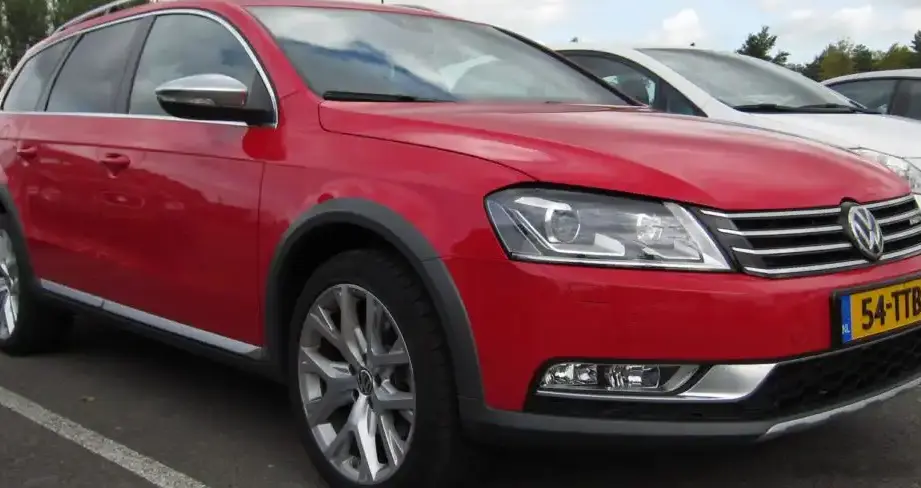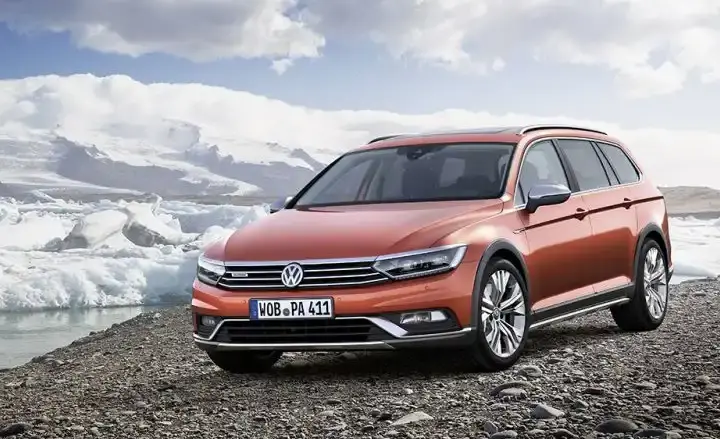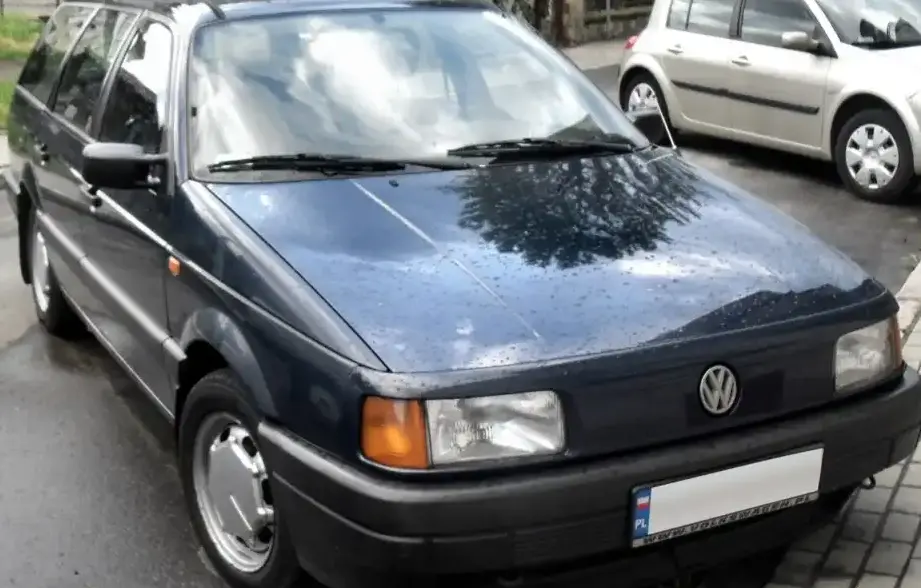
The Volkswagen Passat Variant (B3) 1.9 D, producing 68 horsepower, was a mainstay of the Passat lineup in Europe from 1989 to 1993. Representing an economical and practical option within the B3 generation (1988-1993), this variant catered to buyers prioritizing fuel efficiency and load-carrying capacity over outright performance. Positioned as the entry-level diesel offering, it served as a workhorse for families and businesses alike. The B3 Passat Variant, built on the A3 platform shared with the Audi 80, Golf, and Jetta, offered a significant step forward in space and refinement compared to its predecessor, the B2 Passat.
Technical Specifications
| Brand | Volkswagen |
| Model | Passat |
| Generation | Passat Variant (B3) |
| Type (Engine) | 1.9 D (68 Hp) |
| Start of production | 1989 |
| End of production | 1993 |
| Powertrain Architecture | Internal Combustion engine |
| Body type | Station wagon (estate) |
| Seats | 5 |
| Doors | 5 |
| Fuel consumption (urban) | 7.4 l/100 km (31.8 US mpg) |
| Fuel consumption (extra urban) | 4.7 l/100 km (50 US mpg) |
| Fuel consumption (combined) | 6.6 l/100 km (35.6 US mpg) |
| Fuel Type | Diesel |
| Acceleration 0 – 100 km/h | 19.4 sec |
| Acceleration 0 – 62 mph | 19.4 sec |
| Acceleration 0 – 60 mph | 18.4 sec |
| Maximum speed | 155 km/h (96.31 mph) |
| Weight-to-power ratio | 17.4 kg/Hp |
| Weight-to-torque ratio | 8.9 kg/Nm |
| Power | 68 Hp @ 4200 rpm |
| Torque | 133 Nm @ 2200 rpm (98.1 lb.-ft. @ 2200 rpm) |
| Engine layout | Front, Transverse |
| Engine Model/Code | 1Y |
| Engine displacement | 1896 cm3 (115.7 cu. in.) |
| Number of cylinders | 4 |
| Engine configuration | Inline |
| Cylinder Bore | 79.5 mm (3.13 in.) |
| Piston Stroke | 95.5 mm (3.76 in.) |
| Compression ratio | 19:1 |
| Number of valves per cylinder | 2 |
| Fuel injection system | Precombustion chamber injection |
| Engine aspiration | Naturally aspirated |
| Valvetrain | SOHC |
| Engine oil capacity | 4.5 l (4.76 US qt | 3.96 UK qt) |
| Coolant capacity | 5 l (5.28 US qt | 4.4 UK qt) |
| Kerb Weight | 1180 kg (2601.45 lbs.) |
| Max. weight | 1750 kg (3858.09 lbs.) |
| Max load | 570 kg (1256.63 lbs.) |
| Trunk (boot) space – minimum | 465 l (16.42 cu. ft.) |
| Trunk (boot) space – maximum | 1500 l (52.97 cu. ft.) |
| Fuel tank capacity | 70 l (18.49 US gal | 15.4 UK gal) |
| Length | 4595 mm (180.91 in.) |
| Width | 1720 mm (67.72 in.) |
| Height | 1445 mm (56.89 in.) |
| Wheelbase | 2425 mm (95.47 in.) |
| Front track | 1479 mm (58.23 in.) |
| Rear track | 1422 mm (55.98 in.) |
| Drivetrain Architecture | Front wheel drive |
| Number of gears | 5 |
| Gearbox type | Manual transmission |
| Front suspension | Wishbone |
| Rear suspension | Suspension with traction connecting levers |
| Front brakes | Disc |
| Rear brakes | Drum |
| Assisting systems | ABS (Anti-lock braking system) |
| Steering type | Steering rack and pinion |
| Power steering | Hydraulic |
| Tires size | 185/65 R14 |
| Wheel rims size | 14 |
Powertrain & Engine Architecture
The heart of the Passat Variant 1.9 D was the 1Y engine, a naturally aspirated, inline-four cylinder diesel. This engine utilized a precombustion chamber injection system, a common technology for diesel engines of the era. This system involved injecting fuel into a precombustion chamber connected to the main cylinder, promoting more complete combustion and reducing noise. The engine featured a single overhead camshaft (SOHC) valvetrain operating two valves per cylinder. The 1.9-liter displacement provided a reasonable balance between fuel economy and usability, though performance was modest. The five-speed manual transmission was the standard offering, providing a relatively long-legged gearing setup optimized for highway cruising and fuel efficiency. The engine’s robust construction and relatively simple design contributed to its longevity and ease of maintenance.
Driving Characteristics
The 1.9 D-powered Passat Variant was not known for its speed. With only 68 horsepower, acceleration was leisurely, taking approximately 19.4 seconds to reach 62 mph. However, the engine delivered a respectable amount of torque – 133 Nm (98 lb-ft) – at relatively low engine speeds, making it suitable for hauling loads and tackling inclines. The manual transmission’s gear ratios were spaced to maximize fuel economy, and the car felt most comfortable at steady highway speeds. Compared to the more powerful gasoline variants, such as the 1.8 or 2.0-liter engines, the 1.9 D offered significantly less performance but a substantial improvement in fuel economy. It also contrasted sharply with the later TDI (Turbocharged Direct Injection) diesel models, which offered considerably more power and torque.
Equipment & Trim Levels
The 1.9 D variant of the Passat Variant typically represented the base trim level. Standard equipment generally included basic cloth upholstery, a simple dashboard layout, and manual windows and door locks. Power steering was often included, but air conditioning and central locking were usually optional extras. The interior was functional and durable, prioritizing practicality over luxury. Optional extras could include upgraded stereo systems, sunroofs, and alloy wheels. The focus was on providing a comfortable and reliable family vehicle at an affordable price point.
Chassis & Braking
The B3 Passat Variant featured an independent front suspension with wishbones and a semi-independent rear suspension utilizing traction connecting levers. This setup provided a reasonable level of ride comfort and handling. Braking was accomplished via disc brakes on the front wheels and drum brakes on the rear. ABS (Anti-lock Braking System) was often available as an option, enhancing safety. The chassis was designed to accommodate the weight of passengers and cargo, providing a stable and predictable driving experience. Stabilizer bars were typically fitted to reduce body roll during cornering.
Market Reception & Comparison
The Passat Variant 1.9 D was well-received in Europe as a practical and economical choice. Critics praised its fuel efficiency, spacious interior, and load-carrying capacity. However, its lack of performance was often noted. Compared to the gasoline-powered Passats, the 1.9 D appealed to buyers who prioritized fuel economy and low running costs. Against competitors like the Ford Mondeo Estate and Opel/Vauxhall Vectra Estate, the Passat offered a similar blend of practicality and affordability. The later introduction of TDI models offered a more compelling performance option for diesel buyers, but the 1.9 D remained a popular choice for those seeking a simple and reliable workhorse.
Legacy
The 1.9 D engine, in its various iterations, proved to be remarkably durable and reliable. Passat Variants equipped with this engine are still found on the roads today, often with high mileage. The simplicity of the engine and its robust construction contribute to its longevity. In the used car market, these vehicles are often sought after by those looking for an affordable and dependable estate car. While not a performance icon, the Passat Variant 1.9 D represents a significant chapter in Volkswagen’s history, embodying the brand’s commitment to practicality, fuel efficiency, and enduring quality.