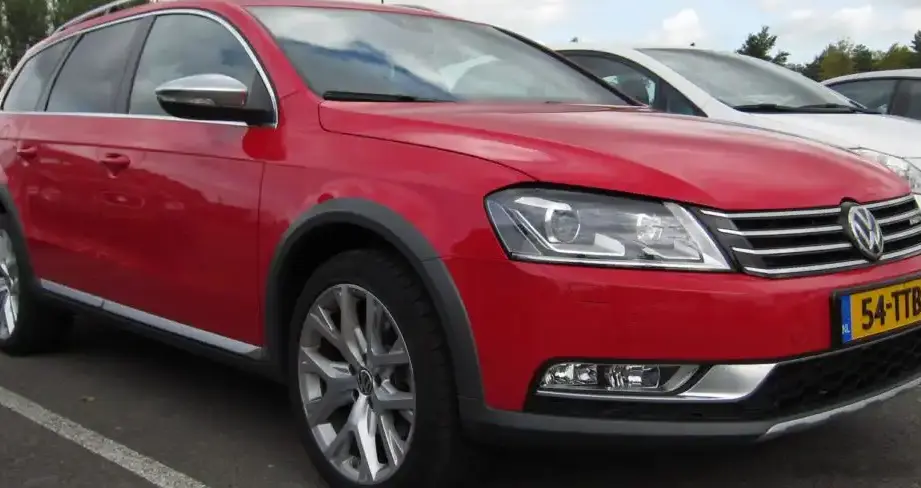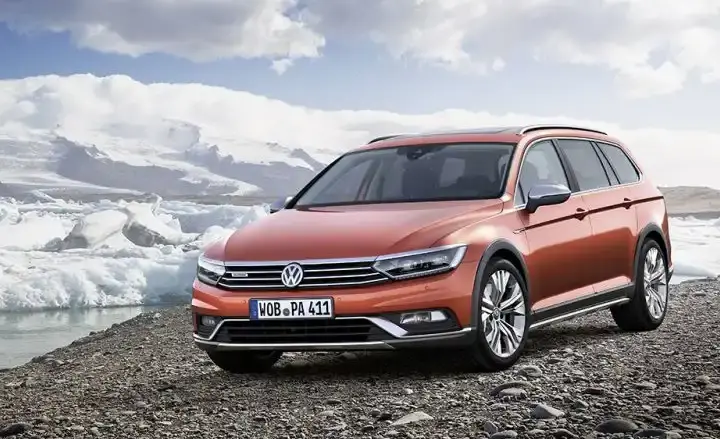
The Volkswagen Passat Variant (B3) 2.0, produced between 1990 and 1993, represented a significant evolution of Volkswagen’s popular mid-size offering. This variant, a station wagon (estate) based on the B3 Passat platform, aimed to provide practicality and space without sacrificing the driving experience. Positioned as a mid-range option within the B3 Passat lineup, the 2.0-liter engine offered a balance between performance and fuel economy, appealing to families and drivers needing a versatile vehicle. It was a key model in expanding Volkswagen’s presence in the European market, offering a competitive alternative to other family wagons like the Ford Mondeo and Opel Vectra.
Technical Specifications
| Brand | Volkswagen |
| Model | Passat |
| Generation | Passat Variant (B3) |
| Type (Engine) | 2.0 (115 Hp) |
| Start of production | 1990 |
| End of production | 1993 |
| Powertrain Architecture | Internal Combustion engine |
| Body type | Station wagon (estate) |
| Seats | 5 |
| Doors | 5 |
| Fuel consumption (urban) | 10.9 l/100 km (21.6 US mpg, 25.9 UK mpg, 9.2 km/l) |
| Fuel consumption (extra urban) | 6.8 l/100 km (34.6 US mpg, 41.5 UK mpg, 14.7 km/l) |
| Fuel consumption (combined) | 8.6 l/100 km (27.4 US mpg, 32.8 UK mpg, 11.6 km/l) |
| Fuel Type | Petrol (Gasoline) |
| Acceleration 0 – 100 km/h | 11.3 sec |
| Acceleration 0 – 62 mph | 11.3 sec |
| Acceleration 0 – 60 mph | 10.7 sec |
| Maximum speed | 191 km/h (118.68 mph) |
| Weight-to-power ratio | 10 kg/Hp, 99.6 Hp/tonne |
| Weight-to-torque ratio | 7 kg/Nm, 143.7 Nm/tonne |
| Power | 115 Hp @ 5400 rpm |
| Power per litre | 58 Hp/l |
| Torque | 166 Nm @ 3200 rpm (122.44 lb.-ft. @ 3200 rpm) |
| Engine layout | Front, Longitudinal |
| Engine Model/Code | 2E |
| Engine displacement | 1984 cm3 (121.07 cu. in.) |
| Number of cylinders | 4 |
| Engine configuration | Inline |
| Cylinder Bore | 82.5 mm (3.25 in.) |
| Piston Stroke | 92.8 mm (3.65 in.) |
| Compression ratio | 10:1 |
| Number of valves per cylinder | 2 |
| Fuel injection system | Multi-port manifold injection |
| Engine aspiration | Naturally aspirated engine |
| Valvetrain | OHC |
| Engine oil capacity | 4 l (4.23 US qt | 3.52 UK qt) |
| Coolant capacity | 5 l (5.28 US qt | 4.4 UK qt) |
| Kerb Weight | 1155 kg (2546.34 lbs.) |
| Max. weight | 1730 kg (3814 lbs.) |
| Max load | 575 kg (1267.66 lbs.) |
| Trunk (boot) space – minimum | 465 l (16.42 cu. ft.) |
| Trunk (boot) space – maximum | 1500 l (52.97 cu. ft.) |
| Fuel tank capacity | 70 l (18.49 US gal | 15.4 UK gal) |
| Length | 4595 mm (180.91 in.) |
| Width | 1720 mm (67.72 in.) |
| Height | 1445 mm (56.89 in.) |
| Wheelbase | 2625 mm (103.35 in.) |
| Front track | 1479 mm (58.23 in.) |
| Rear (Back) track | 1422 mm (55.98 in.) |
| Drivetrain Architecture | The Internal combustion engine (ICE) drives the front wheels of the vehicle. |
| Drive wheel | Front wheel drive |
| Number of gears and type of gearbox | 5 gears, manual transmission |
| Front suspension | Wishbone |
| Rear suspension | Suspension with traction connecting levers |
| Front brakes | Disc |
| Rear brakes | Disc |
| Assisting systems | ABS (Anti-lock braking system) |
| Steering type | Steering rack and pinion |
| Power steering | Hydraulic Steering |
| Tires size | 185/65 R14 |
| Wheel rims size | 14 |
Powertrain & Engine Architecture
The heart of the Passat Variant 2.0 was the 2E engine, a 1984cc inline four-cylinder gasoline engine. This engine utilized a multi-port fuel injection system, a common feature for the time, providing improved fuel efficiency and smoother operation compared to carbureted engines. The engine featured a single overhead camshaft (OHC) valvetrain, operating two valves per cylinder. The 2E engine was known for its relative simplicity and durability. The engine’s longitudinal mounting within the engine bay contributed to a balanced weight distribution. The five-speed manual transmission was the standard offering, providing a good spread of gears for both city driving and highway cruising. The transmission was known for its robust construction, though shift quality could vary depending on maintenance and age.
Driving Characteristics
The 115 horsepower and 122 lb-ft of torque produced by the 2.0-liter engine provided adequate, but not exhilarating, performance. Acceleration from 0-60 mph took around 10.7 seconds, and top speed was approximately 118 mph. Compared to the more powerful VR6 variant, the 2.0 felt noticeably slower, particularly when fully loaded. However, the 2.0 offered a more relaxed driving experience, with a broader, more accessible powerband. The manual transmission’s gear ratios were well-suited to everyday driving, providing sufficient torque in most situations. The front-wheel-drive configuration offered predictable handling, though it lacked the all-weather capability of a four-wheel-drive system.
Equipment & Trim Levels
The Passat Variant 2.0 typically came equipped with features considered standard for a mid-range family car in the early 1990s. This included power steering, central locking, and a basic stereo system. Interior upholstery was typically cloth, with options for upgraded materials available. Dashboard configuration was functional and straightforward, prioritizing usability over aesthetics. Optional extras included sunroofs, alloy wheels, and upgraded audio systems. The level of equipment varied depending on the specific market and dealer options.
Chassis & Braking
The B3 Passat Variant featured an independent front suspension with wishbones, providing a comfortable ride and decent handling. The rear suspension utilized a torsion beam setup with traction connecting levers, a cost-effective solution that offered a good balance between comfort and stability. Braking was handled by disc brakes on all four wheels, with ABS (Anti-lock Braking System) available as an option, and becoming increasingly common as standard equipment. The chassis was designed to provide a stable and predictable driving experience, even when carrying a full load.
Market Reception & Comparison
The Passat Variant 2.0 was generally well-received by automotive critics as a practical and reliable family wagon. It offered a good compromise between performance, fuel economy, and space. Compared to the more expensive VR6 variant, the 2.0 represented a more sensible choice for budget-conscious buyers. Fuel economy was respectable for the time, averaging around 27 mpg in combined driving. Reliability was generally good, though regular maintenance was essential to prevent issues with the fuel injection system and cooling system. The 1.8L engine was also available, offering slightly better fuel economy but less power.
Legacy
The Volkswagen Passat Variant (B3) 2.0 has proven to be a durable and long-lasting vehicle. Many examples are still on the road today, a testament to their robust construction and relatively simple mechanical design. The 2E engine is known for its reliability, though age and mileage can lead to issues with oil leaks and valve wear. In the used car market, these Passats are often sought after by enthusiasts and those looking for a classic European wagon. Parts availability is generally good, though some specific components may be becoming increasingly difficult to find. The B3 Passat Variant 2.0 remains a popular choice for those seeking a practical, reliable, and affordable classic car.