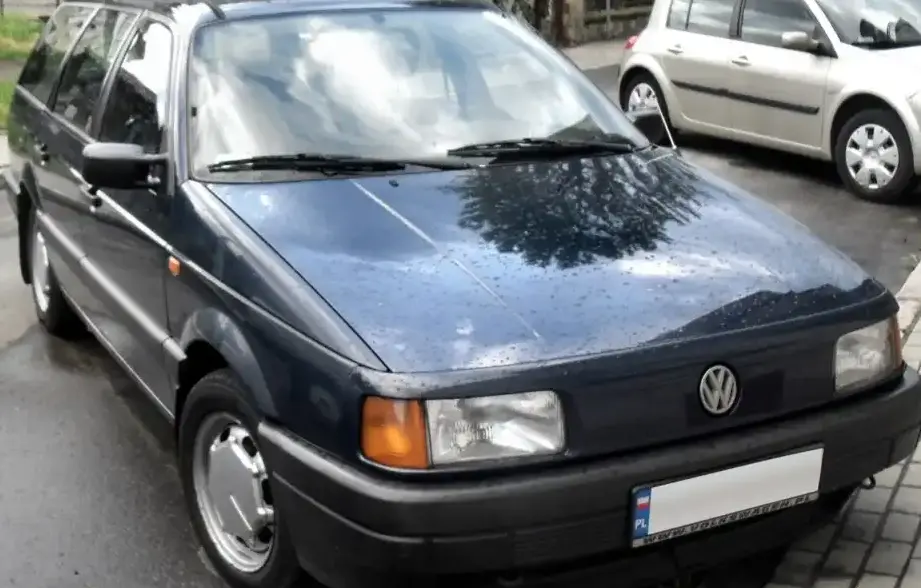
The Volkswagen Passat Variant (B3) 2.0 Automatic, produced between 1990 and 1993, represented a practical and comfortable offering within the broader B3 Passat range. Positioned as a mid-range trim, it catered to buyers seeking the versatility of a station wagon (estate) with the convenience of an automatic transmission. This variant was a key part of Volkswagen’s strategy to offer a family-oriented vehicle with a blend of German engineering and reasonable running costs, primarily aimed at the European market. The B3 generation, built on the A3 platform (internally designated 1HX0), was a significant step forward for the Passat, offering increased space, improved aerodynamics, and a more modern design compared to its predecessor.
Technical Specifications
| Brand | Volkswagen |
| Model | Passat |
| Generation | Passat Variant (B3) |
| Type (Engine) | 2.0 (115 Hp) Automatic |
| Start of production | 1990 |
| End of production | 1993 |
| Powertrain Architecture | Internal Combustion engine |
| Body type | Station wagon (estate) |
| Seats | 5 |
| Doors | 5 |
| Fuel consumption (urban) | 10.9 l/100 km (21.6 US mpg, 25.9 UK mpg, 9.2 km/l) |
| Fuel consumption (extra urban) | 6.8 l/100 km (34.6 US mpg, 41.5 UK mpg, 14.7 km/l) |
| Fuel consumption (combined) | 8.6 l/100 km (27.4 US mpg, 32.8 UK mpg, 11.6 km/l) |
| Fuel Type | Petrol (Gasoline) |
| Acceleration 0 – 100 km/h | 12.9 sec |
| Acceleration 0 – 62 mph | 12.9 sec |
| Acceleration 0 – 60 mph | 12.3 sec |
| Maximum speed | 188 km/h (116.82 mph) |
| Weight-to-power ratio | 10 kg/Hp, 99.6 Hp/tonne |
| Weight-to-torque ratio | 7 kg/Nm, 143.7 Nm/tonne |
| Power | 115 Hp @ 5400 rpm |
| Power per litre | 58 Hp/l |
| Torque | 166 Nm @ 3200 rpm (122.44 lb.-ft. @ 3200 rpm) |
| Engine layout | Front, Longitudinal |
| Engine Model/Code | 2E |
| Engine displacement | 1984 cm3 (121.07 cu. in.) |
| Number of cylinders | 4 |
| Engine configuration | Inline |
| Cylinder Bore | 82.5 mm (3.25 in.) |
| Piston Stroke | 92.8 mm (3.65 in.) |
| Compression ratio | 10:1 |
| Number of valves per cylinder | 2 |
| Fuel injection system | Multi-port manifold injection |
| Engine aspiration | Naturally aspirated engine |
| Valvetrain | OHC |
| Engine oil capacity | 4 l (4.23 US qt | 3.52 UK qt) |
| Coolant capacity | 5 l (5.28 US qt | 4.4 UK qt) |
| Kerb Weight | 1155 kg (2546.34 lbs.) |
| Max. weight | 1730 kg (3814 lbs.) |
| Max load | 575 kg (1267.66 lbs.) |
| Trunk (boot) space – minimum | 465 l (16.42 cu. ft.) |
| Trunk (boot) space – maximum | 1500 l (52.97 cu. ft.) |
| Fuel tank capacity | 70 l (18.49 US gal | 15.4 UK gal) |
| Length | 4595 mm (180.91 in.) |
| Width | 1720 mm (67.72 in.) |
| Height | 1445 mm (56.89 in.) |
| Wheelbase | 2625 mm (103.35 in.) |
| Front track | 1479 mm (58.23 in.) |
| Rear (Back) track | 1422 mm (55.98 in.) |
| Drivetrain Architecture | The Internal combustion engine (ICE) drives the front wheels of the vehicle. |
| Drive wheel | Front wheel drive |
| Number of gears and type of gearbox | 4 gears, automatic transmission |
| Front suspension | Wishbone |
| Rear suspension | Suspension with traction connecting levers |
| Front brakes | Disc |
| Rear brakes | Disc |
| Assisting systems | ABS (Anti-lock braking system) |
| Steering type | Steering rack and pinion |
| Power steering | Hydraulic Steering |
| Tires size | 185/65 R14 |
| Wheel rims size | 14 |
Powertrain & Engine Architecture
The heart of the Passat Variant 2.0 Automatic was the 2E engine, a 1984cc inline four-cylinder gasoline engine. This engine featured a cast iron block and an aluminum cylinder head, employing a single overhead camshaft (OHC) design operating two valves per cylinder. Fuel delivery was managed by a Bosch multi-port fuel injection system, providing a balance between efficiency and performance. The 2E engine was known for its relative simplicity and durability, making it a reliable powerplant for everyday use. The automatic transmission was a four-speed unit, designed to provide smooth and effortless gear changes. While not offering the sporty engagement of a manual gearbox, it significantly enhanced the car’s usability in urban environments and during long journeys.
Driving Characteristics
The 115 horsepower and 122 lb-ft of torque produced by the 2.0-liter engine, coupled with the four-speed automatic transmission, resulted in a driving experience focused on comfort and practicality rather than outright speed. Acceleration from 0-60 mph took around 12.3 seconds, and top speed was approximately 117 mph. The automatic transmission’s gear ratios were optimized for fuel economy and smooth cruising, but this came at the expense of responsiveness. Compared to the manual transmission versions of the 2.0, or the more powerful VR6 models, the automatic felt noticeably slower. However, it provided a more relaxed driving experience, particularly in stop-and-go traffic. The engine delivered adequate power for overtaking maneuvers on the highway, but required careful planning.
Equipment & Trim Levels
The Passat Variant 2.0 Automatic typically came equipped with features considered standard for a mid-range family car of the early 1990s. This included power steering, central locking, electric windows, and an adjustable steering column. Interior upholstery was typically cloth, with options for upgraded materials available. Depending on the market and optional packages selected, features like air conditioning, a sunroof, and a radio/cassette player could be added. The dashboard layout was functional and straightforward, prioritizing ease of use over stylistic flair. Safety features included seatbelts for all occupants and, increasingly, an Anti-lock Braking System (ABS) as standard or optional equipment.
Chassis & Braking
The B3 Passat Variant featured an independent front suspension with wishbones and a semi-independent rear suspension utilizing traction connecting levers. This setup provided a comfortable ride quality, absorbing bumps and imperfections in the road surface effectively. The car was equipped with disc brakes on all four wheels, offering adequate stopping power for its weight class. The inclusion of ABS on many models further enhanced braking performance and stability, particularly in adverse weather conditions. The steering was rack and pinion, providing precise and responsive handling.
Market Reception & Comparison
The Passat Variant 2.0 Automatic was generally well-received by automotive critics as a practical and comfortable family car. It was praised for its spacious interior, comfortable ride, and reasonable fuel economy. However, the automatic transmission was sometimes criticized for its lack of responsiveness compared to the manual gearbox. Compared to the more powerful VR6 models, the 2.0 Automatic offered a more affordable entry point into the Passat range, but at the cost of performance. The 1.9 TDI diesel variants offered superior fuel economy, but with a different driving character. The 2.0 Automatic struck a balance between affordability, comfort, and practicality, making it a popular choice for families.
Legacy
The Volkswagen Passat Variant (B3) 2.0 Automatic has proven to be a relatively reliable vehicle over the long term, particularly when properly maintained. The 2E engine is known for its durability, and the automatic transmission, while not without its potential issues, can withstand years of use. Today, these cars are increasingly sought after by classic car enthusiasts and collectors. While not as highly valued as the VR6 models, well-maintained examples of the 2.0 Automatic are becoming increasingly rare and represent a piece of automotive history. The B3 Passat Variant remains a testament to Volkswagen’s commitment to building practical, reliable, and comfortable family cars.