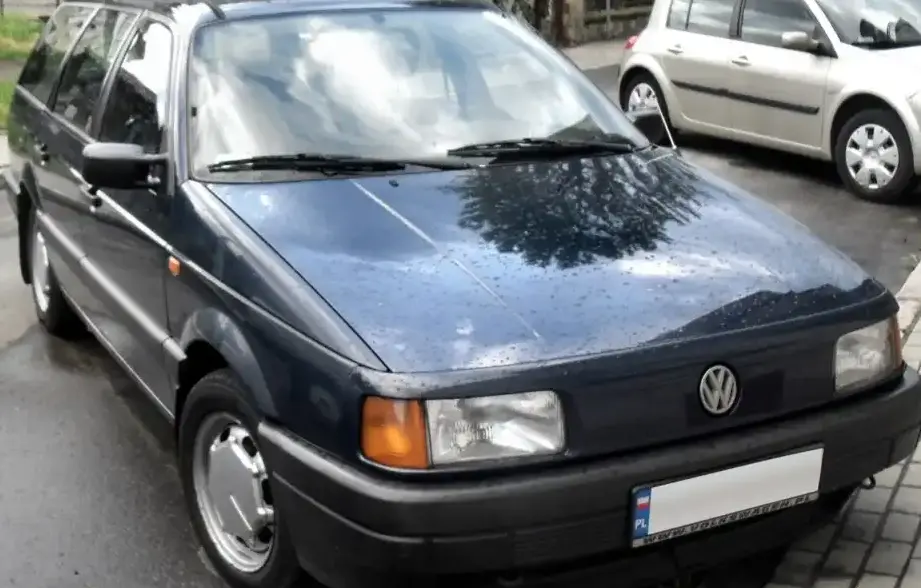
The Volkswagen Passat Variant (B3) 2.0 16V Automatic, produced between 1988 and 1993, represented a significant evolution of Volkswagen’s popular mid-size offering. This variant, part of the B3 generation (internally designated Typ 35I), was a station wagon (estate) body style aimed at providing practicality and space for families. It sat within the broader Passat lineup, which also included saloon (sedan) versions and a range of engine options, offering a more refined and powerful alternative to the base models. The B3 Passat was a key model for Volkswagen, solidifying its position in the European market and beginning to establish a foothold in North America.
Technical Specifications
| Brand | Volkswagen |
| Model | Passat |
| Generation | Passat Variant (B3) |
| Type (Engine) | 2.0 16V (136 Hp) Automatic |
| Start of production | 1988 |
| End of production | 1993 |
| Powertrain Architecture | Internal Combustion engine |
| Body type | Station wagon (estate) |
| Seats | 5 |
| Doors | 5 |
| Fuel consumption (urban) | 12.5 l/100 km (18.8 US mpg, 22.6 UK mpg, 8 km/l) |
| Fuel consumption (extra urban) | 7.3 l/100 km (32.2 US mpg, 38.7 UK mpg, 13.7 km/l) |
| Fuel consumption (combined) | 9 l/100 km (26.1 US mpg, 31.4 UK mpg, 11.1 km/l) |
| Fuel Type | Petrol (Gasoline) |
| Acceleration 0 – 100 km/h | 10.8 sec |
| Acceleration 0 – 62 mph | 10.8 sec |
| Acceleration 0 – 60 mph | 10.3 sec |
| Maximum speed | 197 km/h (122.41 mph) |
| Weight-to-power ratio | 9.1 kg/Hp, 110.1 Hp/tonne |
| Weight-to-torque ratio | 6.9 kg/Nm, 145.7 Nm/tonne |
| Power | 136 Hp @ 5800 rpm |
| Power per litre | 68.5 Hp/l |
| Torque | 180 Nm @ 4400 rpm (132.76 lb.-ft. @ 4400 rpm) |
| Engine layout | Front, Transverse |
| Engine Model/Code | 9A |
| Engine displacement | 1984 cm3 (121.07 cu. in.) |
| Number of cylinders | 4 |
| Engine configuration | Inline |
| Cylinder Bore | 82.5 mm (3.25 in.) |
| Piston Stroke | 92.8 mm (3.65 in.) |
| Compression ratio | 10.8:1 |
| Number of valves per cylinder | 4 |
| Fuel injection system | Multi-port manifold injection |
| Engine aspiration | Naturally aspirated engine |
| Valvetrain | DOHC |
| Engine oil capacity | 4 l (4.23 US qt | 3.52 UK qt) |
| Coolant capacity | 5 l (5.28 US qt | 4.4 UK qt) |
| Kerb Weight | 1235 kg (2722.71 lbs.) |
| Max. weight | 1780 kg (3924.23 lbs.) |
| Max load | 545 kg (1201.52 lbs.) |
| Trunk (boot) space – minimum | 465 l (16.42 cu. ft.) |
| Trunk (boot) space – maximum | 1500 l (52.97 cu. ft.) |
| Fuel tank capacity | 70 l (18.49 US gal | 15.4 UK gal) |
| Length | 4595 mm (180.91 in.) |
| Width | 1720 mm (67.72 in.) |
| Height | 1455 mm (57.28 in.) |
| Wheelbase | 2625 mm (103.35 in.) |
| Front track | 1479 mm (58.23 in.) |
| Rear track | 1422 mm (55.98 in.) |
| Drivetrain Architecture | Front wheel drive |
| Number of gears | 4 |
| Gearbox type | Automatic transmission |
| Front suspension | Wishbone |
| Rear suspension | Suspension with traction connecting levers |
| Front brakes | Ventilated discs |
| Rear brakes | Disc |
| Assisting systems | ABS (Anti-lock braking system) |
| Steering type | Steering rack and pinion |
| Power steering | Hydraulic |
| Tires size | 185/65 R14 |
| Wheel rims size | 14 |
Powertrain & Engine Architecture
The heart of the Passat Variant 2.0 16V Automatic was the 9A engine code, a 1984cc, inline-four cylinder, naturally aspirated gasoline engine. This engine featured a dual overhead camshaft (DOHC) valvetrain with four valves per cylinder, contributing to its relatively high output for the time. The 16-valve configuration allowed for improved breathing and higher revs compared to earlier 8-valve designs. Fuel delivery was handled by a Bosch multi-port fuel injection system, optimizing fuel atomization and combustion efficiency. The engine produced 136 horsepower at 5800 rpm and 180 Nm (132.76 lb-ft) of torque at 4400 rpm. Paired with a four-speed automatic transmission, the powertrain aimed to balance performance with ease of use. This automatic transmission, while providing convenience, was a conventional hydraulic control unit, lacking the electronic sophistication of later automatics.
Driving Characteristics
The 2.0 16V Automatic Passat Variant offered a comfortable and refined driving experience, though not particularly sporty. The automatic transmission, while smooth, did detract from the engine’s potential. Acceleration from 0-60 mph took around 10.3 seconds, and top speed was approximately 122 mph. Compared to the manual transmission versions of the same engine, the automatic suffered a slight performance penalty due to drivetrain losses. It also felt less engaging to drive. Compared to the more powerful VR6 engine option, the 2.0 16V felt noticeably less potent, but offered better fuel economy. The gear ratios were tuned for comfortable cruising rather than aggressive acceleration, making it well-suited for long highway journeys.
Equipment & Trim Levels
The 2.0 16V Automatic trim typically represented a mid-range offering within the B3 Passat lineup. Standard equipment included power steering, central locking, electric windows, and an anti-lock braking system (ABS). Interior upholstery was typically cloth, with options for upgraded velour or leather. Dashboard configuration was functional and straightforward, with a clear instrument cluster. Optional extras included a sunroof, air conditioning, and upgraded audio systems. The Passat Variant, being the wagon version, inherently offered a larger cargo area than the saloon, making it a practical choice for families or those needing to transport larger items.
Chassis & Braking
The B3 Passat Variant featured an independent front suspension with wishbones and a semi-independent rear suspension utilizing traction connecting levers. This setup provided a good balance between ride comfort and handling. Brakes were ventilated discs on the front wheels and solid discs on the rear, providing adequate stopping power for the vehicle’s weight and performance. The hydraulic power steering offered light and precise steering feel. The 185/65 R14 tires provided reasonable grip in most conditions.
Market Reception & Comparison
The Passat Variant 2.0 16V Automatic was generally well-received by automotive critics as a practical and comfortable family car. However, the automatic transmission was often criticized for diminishing the engine’s performance. Fuel economy was considered reasonable for the time, averaging around 26 mpg combined. Compared to the 1.8L and diesel variants, the 2.0 16V offered a noticeable performance upgrade, but at a higher price point. The VR6, while more expensive, was the clear choice for those prioritizing performance. Reliability was generally good, although the automatic transmission could be prone to issues if not properly maintained.
Legacy
The B3 Passat Variant 2.0 16V Automatic remains a relatively common sight on European roads today, testament to its build quality and durability. The 9A engine is known to be robust and relatively easy to maintain, although age-related issues such as oil leaks and worn seals are common. The automatic transmission, while not the most sophisticated, can provide years of reliable service with regular fluid changes. In the used car market, these Passats are often sought after by enthusiasts and collectors looking for a classic Volkswagen estate car. Parts availability is generally good, making them a relatively affordable and practical classic car option.