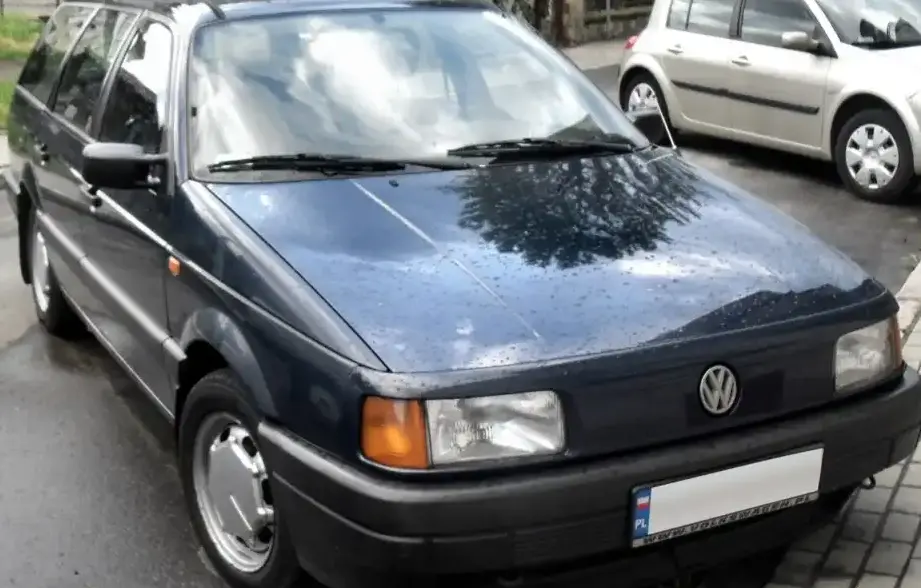
The Volkswagen Passat Variant (B3) 2.8 VR6, produced between 1991 and 1993, represented a significant offering in Volkswagen’s lineup during that period. Positioned as a premium variant within the B3 Passat range – itself a successor to the popular B2 model – the VR6 wagon combined the practicality of a station wagon with a relatively powerful and technologically advanced engine. It was primarily marketed in Europe, where the demand for practical, yet refined, family vehicles was strong. The B3 generation, built on the Volkswagen Group’s ‘PQ’ platform, aimed to offer a more modern and spacious alternative to its predecessor, and the VR6 variant was a flagship model showcasing the platform’s capabilities.
Technical Specifications
| Brand | Volkswagen |
| Model | Passat |
| Generation | Passat Variant (B3) |
| Type (Engine) | 2.8 VR6 (174 Hp) |
| Start of production | 1991 |
| End of production | 1993 |
| Powertrain Architecture | Internal Combustion engine |
| Body type | Station wagon (estate) |
| Seats | 5 |
| Doors | 5 |
| Fuel consumption (economy) – urban | 13.5 l/100 km (17.4 US mpg, 20.9 UK mpg, 7.4 km/l) |
| Fuel consumption (economy) – extra urban | 7.8 l/100 km (30.2 US mpg, 36.2 UK mpg, 12.8 km/l) |
| Fuel consumption (economy) – combined | 9.5 l/100 km (24.8 US mpg, 29.7 UK mpg, 10.5 km/l) |
| Fuel Type | Petrol (Gasoline) |
| Acceleration 0 – 100 km/h | 8.6 sec |
| Acceleration 0 – 62 mph | 8.6 sec |
| Acceleration 0 – 60 mph | 8.2 sec |
| Maximum speed | 218 km/h (135.46 mph) |
| Weight-to-power ratio | 8.5 kg/Hp, 118 Hp/tonne |
| Weight-to-torque ratio | 6.3 kg/Nm, 159.3 Nm/tonne |
| Power | 174 Hp @ 5800 rpm |
| Power per litre | 62.3 Hp/l |
| Torque | 235 Nm @ 4200 rpm (173.33 lb.-ft. @ 4200 rpm) |
| Engine layout | Front, Transverse |
| Engine Model/Code | AAA |
| Engine displacement | 2792 cm3 (170.38 cu. in.) |
| Number of cylinders | 6 |
| Engine configuration | V-engine |
| Cylinder Bore | 81 mm (3.19 in.) |
| Piston Stroke | 90.3 mm (3.56 in.) |
| Compression ratio | 10:1 |
| Number of valves per cylinder | 2 |
| Fuel injection system | Multi-port manifold injection |
| Engine aspiration | Naturally aspirated engine |
| Valvetrain | OHC |
| Engine oil capacity | 6 l (6.34 US qt | 5.28 UK qt) |
| Coolant | 8.2 l (8.66 US qt | 7.21 UK qt) |
| Kerb Weight | 1475 kg (3251.82 lbs.) |
| Max. weight | 1940 kg (4276.97 lbs.) |
| Max load | 465 kg (1025.15 lbs.) |
| Trunk (boot) space – minimum | 465 l (16.42 cu. ft.) |
| Trunk (boot) space – maximum | 1500 l (52.97 cu. ft.) |
| Fuel tank capacity | 70 l (18.49 US gal | 15.4 UK gal) |
| Length | 4595 mm (180.91 in.) |
| Width | 1720 mm (67.72 in.) |
| Height | 1485 mm (58.46 in.) |
| Wheelbase | 2625 mm (103.35 in.) |
| Front track | 1485 mm (58.46 in.) |
| Rear (Back) track | 1428 mm (56.22 in.) |
| Minimum turning circle | 10 m (32.81 ft.) |
| Drivetrain Architecture | The Internal combustion engine (ICE) drives the front wheels of the vehicle. |
| Drive wheel | Front wheel drive |
| Number of gears and type of gearbox | 5 gears, manual transmission |
| Front suspension | Wishbone |
| Rear suspension | Suspension with traction connecting levers |
| Front brakes | Ventilated discs |
| Rear brakes | Disc |
| Assisting systems | ABS (Anti-lock braking system) |
| Steering type | Steering rack and pinion |
| Power steering | Hydraulic Steering |
| Tires size | 205/50 R15 |
| Wheel rims size | 6J x 15 |
Powertrain & Engine Architecture
The heart of the Passat Variant 2.8 VR6 was the AAA engine code, a 2.8-liter V6. This engine was a relatively compact design, achieving a V6 configuration in a space comparable to an inline-four. It featured a 15-degree V-angle, contributing to its smoothness and balance. The engine utilized a multi-port fuel injection system, delivering fuel directly to each cylinder for optimized combustion. The single overhead camshaft (OHC) design operated two valves per cylinder. The 2.8 VR6 produced 174 horsepower at 5800 rpm and 235 Nm (173 lb-ft) of torque at 4200 rpm. The engine was typically paired with a five-speed manual transmission, although a four-speed automatic transmission was also available, albeit less common. The automatic transmission, while offering convenience, did impact acceleration and fuel economy compared to the manual.
Driving Characteristics
The 2.8 VR6 Passat Variant offered a noticeably more spirited driving experience than the lower-powered four-cylinder variants. Acceleration to 60 mph took approximately 8.2-8.6 seconds, making it one of the quicker wagons of its time. The VR6 engine provided a broad torque curve, offering good responsiveness in most driving situations. The manual transmission allowed for precise control, while the automatic, though smoother, felt somewhat less engaging. The front-wheel-drive layout provided predictable handling, but could exhibit some understeer when pushed hard. The suspension, tuned for comfort, provided a reasonably compliant ride, although it wasn’t particularly sporty.
Equipment & Trim Levels
The VR6 variant of the Passat Variant was generally well-equipped, reflecting its position as a premium model. Standard features typically included central locking, electric windows, power steering, and an anti-lock braking system (ABS). Interior upholstery was usually cloth, but leather options were available. Higher trim levels could include features like a sunroof, alloy wheels, and upgraded audio systems. The dashboard layout was functional and straightforward, typical of German automotive design of the era. Optional extras included air conditioning, a trip computer, and heated seats.
Chassis & Braking
The B3 Passat Variant featured an independent front suspension with wishbones and a semi-independent rear suspension utilizing traction-connecting levers. This setup provided a good balance between ride comfort and handling. Braking duties were handled by ventilated discs at the front and solid discs at the rear. The ABS system enhanced braking performance, particularly on slippery surfaces. The steering was a rack-and-pinion system with hydraulic power assistance, providing light and precise steering feel.
Market Reception & Comparison
The Passat Variant 2.8 VR6 was generally well-received by automotive critics. It was praised for its smooth and powerful engine, spacious interior, and practical wagon body style. However, some critics noted the relatively high fuel consumption compared to the four-cylinder models. Compared to the base models, the VR6 offered a significant performance upgrade, but came at a higher price point. Against competitors like the Ford Mondeo and Opel/Vauxhall Vectra, the Passat VR6 offered a more refined and upscale experience, but was often more expensive. The 1.8L and 2.0L four-cylinder variants were more popular due to their lower running costs and affordability, appealing to a broader range of buyers.
Legacy
The Passat Variant 2.8 VR6, while not the most common B3 variant, has gained a following among enthusiasts. The VR6 engine is known for its durability and distinctive sound. Well-maintained examples are becoming increasingly sought after by collectors and classic car enthusiasts. The engine itself is generally reliable, but can be susceptible to oil leaks and timing chain wear if not properly serviced. The automatic transmission, while convenient, is generally considered less robust than the manual. Today, these cars represent a piece of 1990s automotive history, offering a blend of practicality, performance, and German engineering.