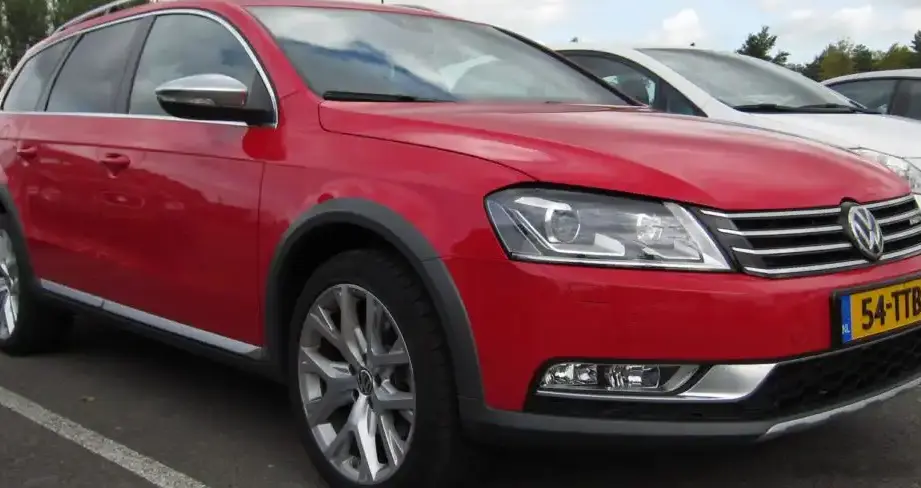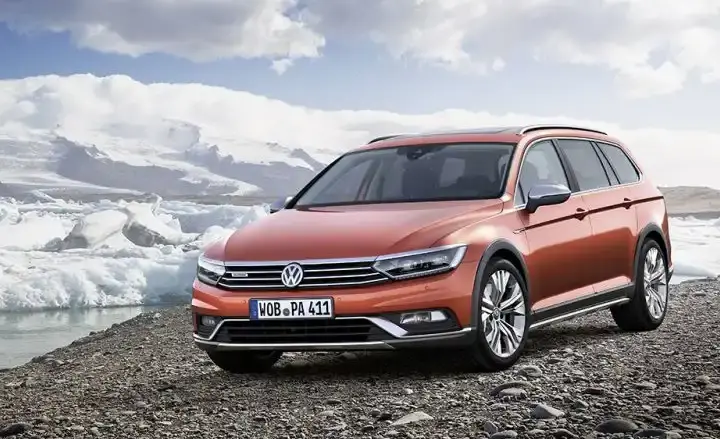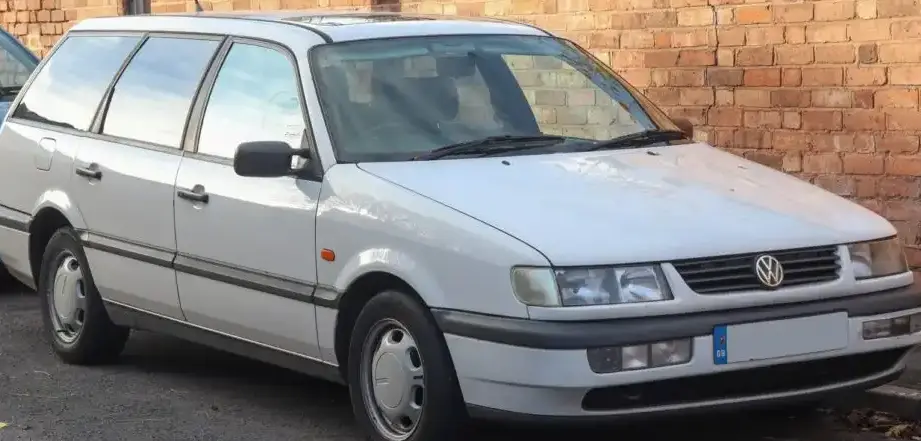
The Volkswagen Passat Variant (B4) 1.6, produced between 1994 and 1995, represented an entry-level offering within the broader B4 Passat range. Positioned as a practical and affordable family vehicle, this variant catered to buyers prioritizing space and economy over outright performance. The B4 generation, built on the Volkswagen Group’s 1HX0/A3 platform, was a significant evolution of the Passat line, offering increased interior space and improved refinement compared to its predecessor. The Variant (estate/wagon) body style was particularly popular in Europe, offering a versatile solution for families and those requiring substantial cargo capacity. This 1.6-liter model served as a stepping stone into the Passat lineup, offering a more accessible price point than the more powerful and technologically advanced trims.
Technical Specifications
| Brand | Volkswagen |
| Model | Passat |
| Generation | Passat Variant (B4) |
| Type (Engine) | 1.6 (100 Hp) |
| Start of production | 1994 |
| End of production | 1995 |
| Powertrain Architecture | Internal Combustion engine |
| Body type | Station wagon (estate) |
| Seats | 5 |
| Doors | 5 |
| Fuel consumption (urban) | 10.4 l/100 km (22.6 US mpg, 27.2 UK mpg, 9.6 km/l) |
| Fuel consumption (extra urban) | 6.1 l/100 km (38.6 US mpg, 46.3 UK mpg, 16.4 km/l) |
| Fuel consumption (combined) | 8.1 l/100 km (29 US mpg, 34.9 UK mpg, 12.3 km/l) |
| Fuel Type | Petrol (Gasoline) |
| Acceleration 0 – 100 km/h | 13.1 sec |
| Acceleration 0 – 62 mph | 13.1 sec |
| Acceleration 0 – 60 mph | 12.4 sec |
| Maximum speed | 181 km/h (112.47 mph) |
| Emission standard | Euro 2 |
| Power | 100 Hp @ 5800 rpm |
| Power per litre | 62.7 Hp/l |
| Torque | 135 Nm @ 4400 rpm (99.57 lb.-ft. @ 4400 rpm) |
| Engine layout | Front, Transverse |
| Engine Model/Code | AEK |
| Engine displacement | 1595 cm3 (97.33 cu. in.) |
| Number of cylinders | 4 |
| Engine configuration | Inline |
| Cylinder Bore | 81 mm (3.19 in.) |
| Piston Stroke | 77.4 mm (3.05 in.) |
| Compression ratio | 10:1 |
| Number of valves per cylinder | 2 |
| Fuel injection system | Multi-port manifold injection |
| Engine aspiration | Naturally aspirated engine |
| Valvetrain | SOHC |
| Engine oil capacity | 4 l (4.23 US qt | 3.52 UK qt) |
| Max. weight | 1780 kg (3924.23 lbs.) |
| Trunk (boot) space – minimum | 465 l (16.42 cu. ft.) |
| Trunk (boot) space – maximum | 1500 l (52.97 cu. ft.) |
| Fuel tank capacity | 70 l (18.49 US gal | 15.4 UK gal) |
| Max. roof load | 75 kg (165.35 lbs.) |
| Permitted trailer load with brakes (12%) | 1200 kg (2645.55 lbs.) |
| Permitted trailer load without brakes | 600 kg (1322.77 lbs.) |
| Length | 4595 mm (180.91 in.) |
| Width | 1720 mm (67.72 in.) |
| Height | 1445 mm (56.89 in.) |
| Wheelbase | 2625 mm (103.35 in.) |
| Front overhang | 915 mm (36.02 in.) |
| Rear overhang | 1055 mm (41.54 in.) |
| Minimum turning circle | 10.7 m (35.1 ft.) |
| Drivetrain Architecture | The Internal combustion engine (ICE) drives the front wheels of the vehicle. |
| Drive wheel | Front wheel drive |
| Number of gears and type of gearbox | 5 gears, manual transmission |
| Front suspension | Coil spring, Wishbone, Transverse stabilizer |
| Rear suspension | Wishbone, Transverse stabilizer, Coil spring |
| Front brakes | Disc |
| Rear brakes | Drum |
| Assisting systems | ABS (Anti-lock braking system) |
| Steering type | Steering rack and pinion |
| Power steering | Hydraulic Steering |
| Tires size | 195/60 R14 |
| Wheel rims size | 6J x 14 |
Powertrain & Engine Architecture
The heart of the Passat Variant 1.6 was the AEK engine, a 1.6-liter inline four-cylinder gasoline engine. This engine utilized a single overhead camshaft (SOHC) valvetrain with two valves per cylinder. Fuel delivery was managed by a multi-port fuel injection system, a common setup for the time, providing a balance between efficiency and performance. The AEK engine was known for its relative simplicity and durability, though it wasn’t a powerhouse. The 100 horsepower output at 5800 rpm and 135 Nm (99.57 lb-ft) of torque at 4400 rpm were adequate for everyday driving but didn’t offer significant acceleration. The engine’s transverse mounting and front-wheel-drive configuration were standard for Volkswagen at the time, optimizing space utilization within the engine bay. The standard transmission was a five-speed manual, although a four-speed automatic transmission was also available, albeit less common. The automatic transmission, while offering convenience, further reduced the car’s responsiveness.
Driving Characteristics
The 1.6-liter Passat Variant with a manual transmission offered a reasonably engaging driving experience, though it wasn’t sporty. Acceleration was modest, taking around 13.1 seconds to reach 62 mph. The engine felt most comfortable in the mid-range, providing sufficient power for overtaking maneuvers on open roads. The automatic transmission version, however, noticeably dulled performance. The gear ratios were optimized for fuel economy rather than acceleration, resulting in a sluggish feel, particularly when attempting to accelerate quickly. The suspension, featuring coil springs and wishbone setups front and rear, provided a comfortable ride, absorbing bumps and imperfections in the road surface effectively. Steering was precise thanks to the rack and pinion system, although it lacked the feedback found in more performance-oriented vehicles.
Equipment & Trim Levels
The 1.6-liter Passat Variant typically came with a fairly basic level of equipment. Standard features included power steering, central locking, and an anti-lock braking system (ABS). Interior upholstery was typically cloth, and the dashboard featured a functional, if somewhat utilitarian, design. Optional extras included power windows, a sunroof, and upgraded audio systems. The trim level was generally considered the entry point to the Passat range, appealing to buyers seeking a practical and reliable family car without the added cost of more luxurious features. The focus was on providing essential comfort and convenience features at an affordable price.
Chassis & Braking
The B4 Passat Variant featured a robust chassis designed to handle the demands of everyday driving and occasional heavy loads. The front suspension utilized coil springs and wishbones, while the rear suspension employed a wishbone setup with coil springs. A transverse stabilizer bar was fitted to both the front and rear axles to reduce body roll during cornering. Braking duties were handled by disc brakes at the front and drum brakes at the rear. While adequate for the car’s weight and performance, the rear drum brakes were a cost-saving measure compared to the all-disc setups found on higher-spec Passat models. The ABS system provided enhanced braking control, particularly on slippery surfaces.
Market Reception & Comparison
The Passat Variant 1.6 was generally well-received as a practical and affordable family car. Critics praised its spacious interior, comfortable ride, and reasonable fuel economy. However, the engine’s lack of power was a common criticism, particularly when compared to the more potent 1.8-liter and VR6 variants. The 1.8-liter offered a noticeable performance boost, while the VR6 provided significantly more power and a more refined driving experience. The 1.9 TDI diesel version, while more expensive initially, offered superior fuel economy and torque, making it a popular choice for long-distance drivers. The 1.6-liter model was often seen as a compromise, offering affordability at the expense of performance.
Legacy
The Passat Variant 1.6, while not the most exciting version of the B4 Passat, proved to be a reliable and durable vehicle. The AEK engine, despite its modest power output, was known for its longevity and relatively low maintenance costs. Today, these cars are relatively rare, and well-maintained examples are sought after by enthusiasts and collectors. The simplicity of the engine and mechanical components makes them relatively easy to repair and maintain. The Passat Variant 1.6 represents a practical and affordable entry point into the world of classic Volkswagen ownership, offering a comfortable and spacious vehicle for everyday use.