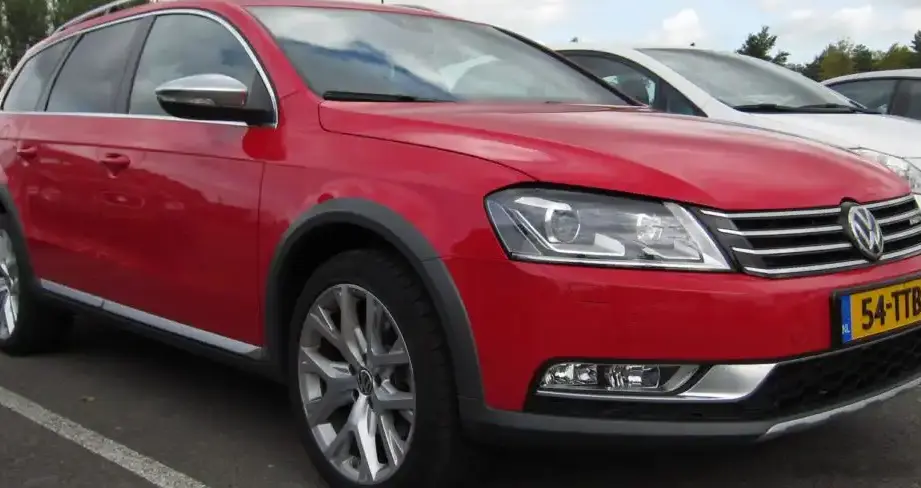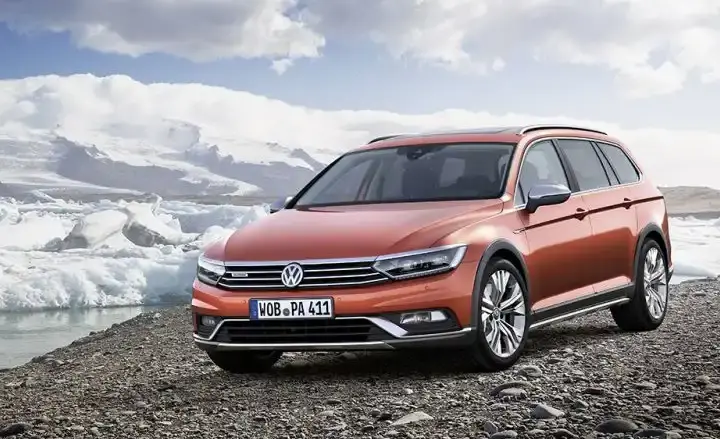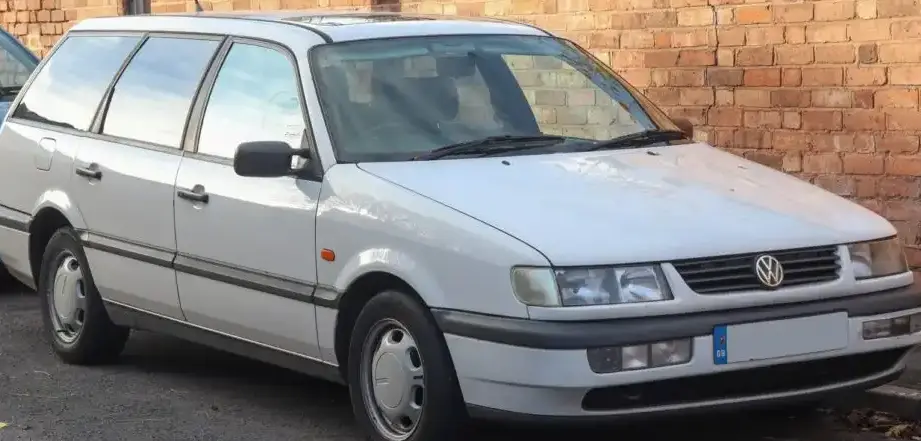
The Volkswagen Passat Variant (B4) 1.9 TDI, produced from 1996 to 1997, represented a significant offering in the European market as a practical and fuel-efficient station wagon. Positioned as a mid-range trim within the B4 Passat lineup, it catered to buyers seeking the versatility of an estate car combined with the economy of a diesel engine. This variant utilized Volkswagen’s well-regarded 1.9-liter turbocharged direct injection (TDI) engine, delivering a balance of performance and fuel efficiency. The B4 Passat Variant, built on the Volkswagen Group’s B4 platform (also known as the 1HX0 chassis code), was a popular choice for families and those requiring substantial cargo space.
Technical Specifications
| Brand | Volkswagen |
| Model | Passat |
| Generation | Passat Variant (B4) |
| Type (Engine) | 1.9 TDI (110 Hp) |
| Start of production | 1996 |
| End of production | 1997 |
| Powertrain Architecture | Internal Combustion engine |
| Body type | Station wagon (estate) |
| Seats | 5 |
| Doors | 5 |
| Fuel consumption (urban) | 6 l/100 km (39.2 US mpg, 47.1 UK mpg, 16.7 km/l) |
| Fuel consumption (extra urban) | 4.1 l/100 km (57.4 US mpg, 68.9 UK mpg, 24.4 km/l) |
| Fuel consumption (combined) | 5.2 l/100 km (45.2 US mpg, 54.3 UK mpg, 19.2 km/l) |
| Fuel Type | Diesel |
| Acceleration 0 – 100 km/h | 12.1 sec |
| Acceleration 0 – 62 mph | 12.1 sec |
| Acceleration 0 – 60 mph | 11.5 sec |
| Maximum speed | 188 km/h (116.82 mph) |
| Emission standard | Euro 2 |
| Weight-to-power ratio | 12.6 kg/Hp, 79.4 Hp/tonne |
| Weight-to-torque ratio | 5.9 kg/Nm, 169.7 Nm/tonne |
| Power | 110 Hp @ 4150 rpm |
| Power per litre | 58 Hp/l |
| Torque | 235 Nm @ 1900 rpm (173.33 lb.-ft. @ 1900 rpm) |
| Engine layout | Front, Transverse |
| Engine Model/Code | AFN |
| Engine displacement | 1896 cm3 (115.7 cu. in.) |
| Number of cylinders | 4 |
| Engine configuration | Inline |
| Cylinder Bore | 79.5 mm (3.13 in.) |
| Piston Stroke | 95.5 mm (3.76 in.) |
| Compression ratio | 19.5:1 |
| Number of valves per cylinder | 2 |
| Fuel injection system | Direct injection |
| Engine aspiration | Turbocharger, Intercooler |
| Valvetrain | SOHC |
| Engine oil capacity | 4.3 l (4.54 US qt | 3.78 UK qt) |
| Coolant capacity | 6.5 l (6.87 US qt | 5.72 UK qt) |
| Kerb Weight | 1385 kg (3053.4 lbs.) |
| Max. weight | 1850 kg (4078.55 lbs.) |
| Max load | 465 kg (1025.15 lbs.) |
| Trunk (boot) space – minimum | 465 l (16.42 cu. ft.) |
| Trunk (boot) space – maximum | 1500 l (52.97 cu. ft.) |
| Fuel tank capacity | 70 l (18.49 US gal | 15.4 UK gal) |
| Max. roof load | 75 kg (165.35 lbs.) |
| Permitted trailer load with brakes (12%) | 1300 kg (2866.01 lbs.) |
| Permitted trailer load without brakes | 650 kg (1433 lbs.) |
| Length | 4595 mm (180.91 in.) |
| Width | 1720 mm (67.72 in.) |
| Height | 1445 mm (56.89 in.) |
| Wheelbase | 2625 mm (103.35 in.) |
| Front track | 1479 mm (58.23 in.) |
| Rear track | 1422 mm (55.98 in.) |
| Front overhang | 915 mm (36.02 in.) |
| Rear overhang | 1055 mm (41.54 in.) |
| Minimum turning circle | 10.7 m (35.1 ft.) |
| Drivetrain Architecture | Front wheel drive |
| Drive wheel | Front wheel drive |
| Number of gears and type of gearbox | 5 gears, manual transmission |
| Front suspension | Coil spring, Wishbone, Transverse stabilizer |
| Rear suspension | Wishbone, Transverse stabilizer, Coil spring |
| Front brakes | Disc |
| Rear brakes | Drum |
| Assisting systems | ABS (Anti-lock braking system) |
| Steering type | Steering rack and pinion |
| Power steering | Hydraulic Steering |
| Tires size | 205/50 R15 |
| Wheel rims size | 6J x 15 |
Powertrain & Engine Architecture
The heart of the Passat Variant 1.9 TDI was the AFN engine code, a 1.9-liter inline-four cylinder diesel engine. This engine was a direct injection (DI) design, utilizing a high-pressure fuel injection system to deliver fuel directly into the combustion chamber. This technology, relatively new at the time, significantly improved fuel efficiency and reduced emissions compared to older indirect injection diesel engines. The engine featured a single overhead camshaft (SOHC) valvetrain operating two valves per cylinder. A turbocharger with an intercooler was employed to boost power output, increasing the engine’s torque and responsiveness. The 1.9 TDI produced 110 horsepower at 4150 rpm and 235 Nm (173 lb-ft) of torque at 1900 rpm. The engine was transversely mounted in the front of the vehicle. The 5-speed manual transmission was the standard offering, providing a balance between fuel economy and drivability.
Driving Characteristics
The 1.9 TDI automatic Passat Variant offered a comfortable and practical driving experience. While not particularly sporty, the engine provided adequate power for everyday driving and highway cruising. The automatic transmission, while improving convenience, did slightly diminish the engine’s responsiveness compared to the manual version. The gear ratios were optimized for fuel efficiency, resulting in a relaxed driving style. Acceleration from 0-60 mph took around 11.5 seconds, and the top speed was approximately 116.82 mph. The turbocharger provided a noticeable boost in power during acceleration, but turbo lag was present, particularly at lower engine speeds. The suspension was tuned for comfort, absorbing bumps and providing a stable ride, even when fully loaded.
Equipment & Trim Levels
The 1.9 TDI variant of the Passat Variant B4 typically included features such as power windows, central locking, and an adjustable steering column as standard equipment. Interior upholstery was generally cloth, with options for upgraded materials available. Air conditioning was often an optional extra. The dashboard layout was functional and straightforward, with clearly labeled controls. Higher trim levels could include features like alloy wheels, a sunroof, and a more advanced audio system. Safety features included ABS anti-lock brakes, which were standard across the range.
Chassis & Braking
The Passat Variant B4 featured a MacPherson strut front suspension and a semi-independent wishbone rear suspension. A transverse stabilizer bar was fitted to both the front and rear axles to reduce body roll during cornering. The braking system consisted of disc brakes on the front wheels and drum brakes on the rear wheels. The hydraulic power steering provided light and precise steering control. The tires were typically 205/50 R15, offering a good balance of grip and ride comfort.
Market Reception & Comparison
The Passat Variant 1.9 TDI was well-received in the European market as a practical and economical family car. Critics praised its fuel efficiency, spacious interior, and comfortable ride. Compared to the gasoline-powered Passat variants, the 1.9 TDI offered significantly better fuel economy. Compared to the more powerful VR6 engine, the 1.9 TDI provided less outright performance but was more affordable to operate and maintain. The 1.9 TDI was also a more sensible choice than the high-performance models for those prioritizing fuel efficiency and practicality.
Legacy
The Volkswagen Passat Variant B4 1.9 TDI powertrain proved to be remarkably durable and reliable. The AFN engine is known for its longevity, and many examples are still on the road today. The 1.9 TDI engine became a benchmark for diesel engine technology, and its direct injection system paved the way for future generations of diesel engines. In the used car market, these Passat Variants are sought after by those looking for a reliable and economical estate car. However, potential buyers should be aware of age-related issues such as corrosion and wear and tear on suspension components. Overall, the Passat Variant 1.9 TDI remains a respected and capable vehicle, representing a significant chapter in Volkswagen’s history.