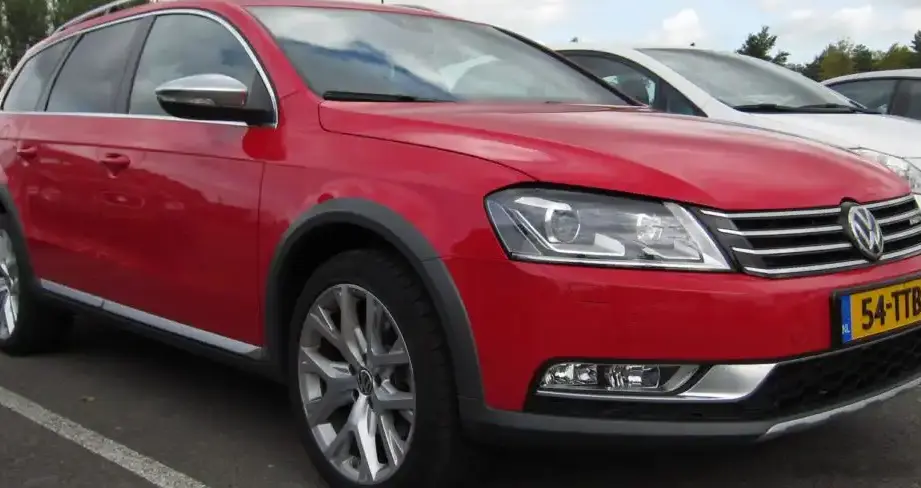
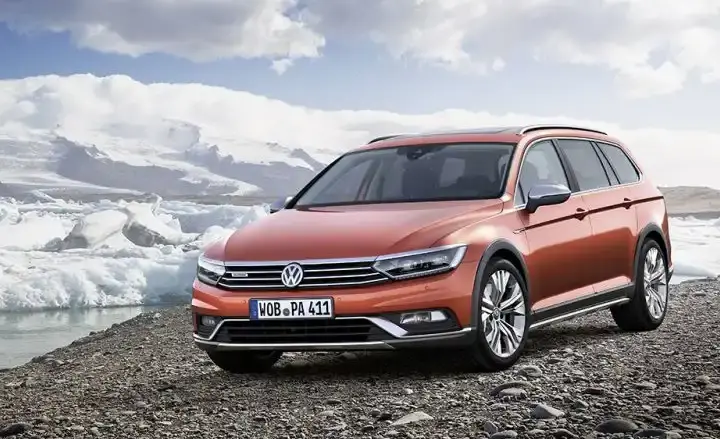
The Volkswagen Passat Variant (B5) 1.6, produced between 1997 and 2000, represented an entry-level offering within the broader B5 Passat range. Positioned as a practical and affordable family vehicle, it catered to buyers prioritizing space and fuel economy over outright performance. This variant, utilizing the 1.6-liter gasoline engine, was primarily sold in European markets, where station wagons (known as ‘Variants’ by Volkswagen) held significant popularity. It was built on the Volkswagen Group’s B5 platform (internally designated 3B), shared with models like the Audi A4, Škoda Superb, and SEAT Passat. The 1.6L engine was often paired with a 5-speed manual transmission, but an optional 4-speed automatic transmission was also available, impacting the vehicle’s overall driving experience and target demographic.
Technical Specifications
| Brand | Volkswagen |
| Model | Passat |
| Generation | Passat Variant (B5) |
| Type (Engine) | 1.6 (101 Hp) |
| Start of production | 1997 |
| End of production | 2000 |
| Powertrain Architecture | Internal Combustion engine |
| Body type | Station wagon (estate) |
| Seats | 5 |
| Doors | 5 |
| Fuel consumption (urban) | 11.6 l/100 km (20.3 US mpg) |
| Fuel consumption (extra urban) | 6.3 l/100 km (37.3 US mpg) |
| Fuel Type | Petrol (Gasoline) |
| Acceleration 0 – 100 km/h | 13.1 sec |
| Acceleration 0 – 62 mph | 13.1 sec |
| Acceleration 0 – 60 mph | 12.4 sec |
| Maximum speed | 186 km/h (115.58 mph) |
| Weight-to-power ratio | 12.6 kg/Hp |
| Weight-to-torque ratio | 8.8 kg/Nm |
| Power | 101 Hp @ 5600 rpm |
| Torque | 145 Nm @ 3800 rpm (106.95 lb.-ft. @ 3800 rpm) |
| Engine layout | Front, Longitudinal |
| Engine Model/Code | ADP, AHL, ANA, ARM |
| Engine displacement | 1595 cm3 (97.33 cu. in.) |
| Number of cylinders | 4 |
| Engine configuration | Inline |
| Cylinder Bore | 81 mm (3.19 in.) |
| Piston Stroke | 77.4 mm (3.05 in.) |
| Compression ratio | 10.3:1 |
| Number of valves per cylinder | 2 |
| Fuel injection system | Multi-port manifold injection |
| Engine aspiration | Naturally aspirated engine |
| Valvetrain | OHC |
| Engine oil capacity | 3 l (3.17 US qt | 2.64 UK qt) |
| Coolant capacity | 7 l (7.4 US qt | 6.16 UK qt) |
| Kerb Weight | 1270 kg (2799.87 lbs.) |
| Max. weight | 1820 kg (4012.41 lbs.) |
| Max load | 550 kg (1212.54 lbs.) |
| Trunk (boot) space – minimum | 465 l (16.42 cu. ft.) |
| Trunk (boot) space – maximum | 1500 l (52.97 cu. ft.) |
| Fuel tank capacity | 70 l (18.49 US gal | 15.4 UK gal) |
| Length | 4675 mm (184.06 in.) |
| Width | 1740 mm (68.5 in.) |
| Height | 1459 mm (57.44 in.) |
| Wheelbase | 2703 mm (106.42 in.) |
| Front track | 1498 mm (58.98 in.) |
| Rear track | 1500 mm (59.06 in.) |
| Drivetrain Architecture | Front wheel drive |
| Number of gears | 5 |
| Gearbox type | Manual transmission |
| Front suspension | Wishbone |
| Rear suspension | Suspension with traction connecting levers |
| Front brakes | Ventilated discs |
| Rear brakes | Disc |
| Assisting systems | ABS (Anti-lock braking system) |
| Steering type | Steering rack and pinion |
| Power steering | Hydraulic Steering |
| Tires size | 195/65 R15 |
| Wheel rims size | 6J x 15 |
Powertrain & Engine Architecture
The heart of the Passat Variant 1.6 was the 1.6-liter, inline-four cylinder gasoline engine, available with engine codes ADP, AHL, ANA, and ARM depending on the specific year and market. This engine featured a single overhead camshaft (OHC) design and utilized multi-port fuel injection. The engine’s relatively simple design prioritized reliability and affordability. The 101 horsepower output was achieved at 5600 rpm, while peak torque of 145 Nm (106.95 lb-ft) arrived at 3800 rpm. The optional 4-speed automatic transmission, while offering convenience, was known to slightly diminish acceleration and fuel economy compared to the standard 5-speed manual. This automatic transmission was a conventional hydraulic unit, lacking the more advanced electronic controls found in later automatic gearboxes.
Driving Characteristics
The 1.6-liter engine, coupled with the automatic transmission, delivered modest performance. Acceleration from 0-100 km/h (0-62 mph) took approximately 13.1 seconds, making it noticeably slower than Passat variants equipped with larger engines like the 1.8 or 2.0-liter options. The automatic transmission’s gear ratios were geared towards fuel efficiency rather than spirited driving. In real-world conditions, the 1.6L automatic felt adequate for everyday commuting and highway cruising, but struggled with overtaking maneuvers or when fully loaded with passengers and luggage. The manual transmission version offered a more engaging driving experience and slightly improved performance, but required more driver involvement.
Equipment & Trim Levels
The 1.6-liter Passat Variant typically represented the base trim level. Standard equipment generally included power steering, central locking, electric front windows, and an anti-lock braking system (ABS). Interior upholstery was typically cloth, and the dashboard featured a functional, if somewhat basic, design. Optional extras included air conditioning, alloy wheels, a radio/cassette player, and upgraded interior trim. Higher trim levels, available with larger engines, offered features like leather upholstery, sunroofs, and more sophisticated audio systems.
Chassis & Braking
The B5 Passat Variant featured independent suspension at the front, utilizing a wishbone setup, and a semi-independent suspension with traction connecting levers at the rear. The 1.6-liter models typically had smaller diameter brake discs compared to higher-spec variants. Rear brakes were discs on most models, though some earlier or lower-spec versions may have featured drum brakes. Stabilizer bars were fitted to both the front and rear axles to reduce body roll during cornering. The suspension tuning prioritized comfort and ride quality over sporty handling.
Market Reception & Comparison
The Passat Variant 1.6 was generally well-received as a practical and affordable family car. Critics acknowledged its spacious interior, comfortable ride, and reasonable fuel economy. However, the engine’s lack of power was a common criticism, particularly when compared to the more potent engine options available in the Passat range. The 1.8-liter engine offered a significant performance boost, while the diesel variants (like the 1.9 TDI) provided superior fuel economy. The automatic transmission, while convenient, was often criticized for its sluggishness and impact on fuel consumption.
Legacy
The 1.6-liter engine in the B5 Passat Variant is generally considered a reliable unit, though age and mileage can lead to common issues such as oil leaks and worn timing belts. The automatic transmission, while durable, can be prone to wear and tear, particularly if not serviced regularly. Today, these vehicles are relatively affordable on the used car market, making them attractive to budget-conscious buyers. However, potential buyers should be aware of the engine’s limited power and the potential maintenance costs associated with an older vehicle. The B5 Passat Variant, even in its 1.6-liter guise, remains a popular choice for those seeking a spacious, practical, and relatively affordable station wagon.