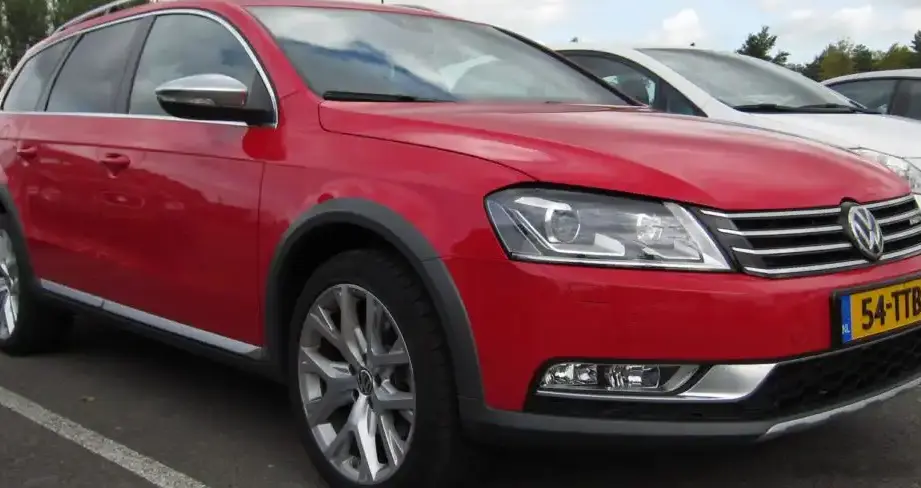
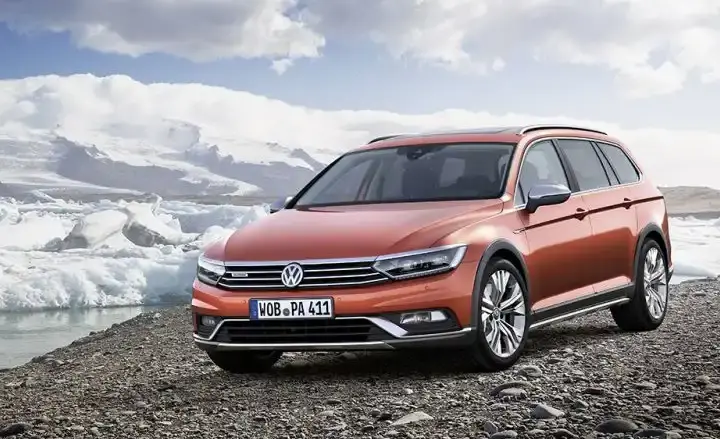
The Volkswagen Passat Variant (B5) 1.8T 20V Automatic, produced between 1997 and 2000, represented a significant offering in the mid-size station wagon segment. Positioned as a practical and relatively affordable option within the B5 Passat lineup, it catered to buyers seeking a balance between performance, fuel efficiency, and cargo capacity. This variant utilized Volkswagen’s well-regarded turbocharged 1.8-liter four-cylinder engine paired with a four-speed automatic transmission, making it a popular choice, particularly in European markets where station wagons held a stronger presence. It was part of the larger B5 Passat generation (1996-2005), built on the Volkswagen Group’s PL45 platform, also known as the 1HX0/A3 platform, shared with models like the Audi A4 and Škoda Superb.
Technical Specifications
| Brand | Volkswagen |
| Model | Passat |
| Generation | Passat Variant (B5) |
| Type (Engine) | 1.8 T 20V (150 Hp) Automatic |
| Start of production | 1997 |
| End of production | 2000 |
| Powertrain Architecture | Internal Combustion engine |
| Body type | Station wagon (estate) |
| Seats | 5 |
| Doors | 5 |
| Fuel consumption (urban) | 13.3 l/100 km (17.7 US mpg, 21.2 UK mpg) |
| Fuel consumption (extra urban) | 7.1 l/100 km (33.1 US mpg, 39.8 UK mpg) |
| Fuel Type | Petrol (Gasoline) |
| Acceleration 0 – 100 km/h | 10.3 sec |
| Acceleration 0 – 62 mph | 10.3 sec |
| Acceleration 0 – 60 mph | 9.8 sec |
| Maximum speed | 211 km/h (131.11 mph) |
| Weight-to-power ratio | 9.2 kg/Hp |
| Weight-to-torque ratio | 6.6 kg/Nm |
| Power | 150 Hp @ 5700 rpm |
| Power per litre | 84.2 Hp/l |
| Torque | 210 Nm @ 1750 rpm (154.89 lb.-ft. @ 1750 rpm) |
| Engine layout | Front, Longitudinal |
| Engine Model/Code | AEB, ANB, APU, ATW, AUG, AWT, BGC |
| Engine displacement | 1781 cm3 (108.68 cu. in.) |
| Number of cylinders | 4 |
| Engine configuration | Inline |
| Cylinder Bore | 81 mm (3.19 in.) |
| Piston Stroke | 86.4 mm (3.4 in.) |
| Compression ratio | 9.5:1 |
| Number of valves per cylinder | 5 |
| Fuel injection system | Multi-port manifold injection |
| Engine aspiration | Turbocharger |
| Valvetrain | DOHC |
| Engine oil capacity | 3.5 l (3.7 US qt | 3.08 UK qt) |
| Coolant capacity | 7 l (7.4 US qt | 6.16 UK qt) |
| Kerb Weight | 1385 kg (3053.4 lbs.) |
| Max. weight | 1960 kg (4321.06 lbs.) |
| Max load | 575 kg (1267.66 lbs.) |
| Trunk (boot) space – minimum | 495 l (17.48 cu. ft.) |
| Trunk (boot) space – maximum | 1600 l (56.5 cu. ft.) |
| Fuel tank capacity | 62 l (16.38 US gal | 13.64 UK gal) |
| Length | 4675 mm (184.06 in.) |
| Width | 1740 mm (68.5 in.) |
| Height | 1459 mm (57.44 in.) |
| Wheelbase | 2703 mm (106.42 in.) |
| Front track | 1498 mm (58.98 in.) |
| Rear track | 1500 mm (59.06 in.) |
| Drivetrain Architecture | Front wheel drive |
| Number of gears | 4 |
| Gearbox type | Automatic transmission |
| Front suspension | Coil spring |
| Rear suspension | Coil spring |
| Front brakes | Ventilated discs |
| Rear brakes | Disc |
| Assisting systems | ABS (Anti-lock braking system) |
| Steering type | Steering rack and pinion |
| Power steering | Hydraulic |
| Tires size | 195/65 R15 |
| Wheel rims size | 6J x 15 |
Powertrain & Engine Architecture
The heart of the Passat Variant 1.8T was the 1.8-liter, inline-four cylinder engine, available under various engine codes including AEB, ANB, APU, ATW, AUG, AWT, and BGC. These engines featured a cast iron block with an aluminum cylinder head, incorporating five valves per cylinder (three intake, two exhaust) – a design intended to improve breathing and enhance power delivery. The engine utilized a single turbocharger with an intercooler to boost performance. Fuel delivery was managed by a Bosch Motronic multi-port fuel injection system. The four-speed automatic transmission, typically the 5HP19, was known for its relatively smooth shifts, though it wasn’t as sporty or efficient as more modern automatic gearboxes. This transmission was electronically controlled, adapting shift points based on throttle position and driving conditions.
Driving Characteristics
The 1.8T Automatic Passat Variant offered a comfortable and refined driving experience. With 150 horsepower and 155 lb-ft of torque, acceleration was adequate for everyday driving, though not particularly brisk. The 0-60 mph time of around 9.8 seconds reflects this. The automatic transmission, while convenient, did result in some power loss compared to the available five-speed manual. Gear ratios were tuned for fuel economy and smooth cruising, rather than aggressive acceleration. The turbocharger provided a noticeable boost in power at higher RPMs, but turbo lag was present, especially at lower engine speeds. The front-wheel-drive configuration offered predictable handling, but lacked the all-weather capability of all-wheel-drive variants.
Equipment & Trim Levels
The 1.8T Automatic trim typically included features such as air conditioning, power windows and locks, a basic audio system, and alloy wheels. Interior upholstery was usually cloth, with options for leather available at an extra cost. Higher trim levels added features like a sunroof, upgraded audio systems, automatic climate control, and heated seats. Safety features included dual front airbags and ABS brakes. The Passat Variant was generally well-equipped for its price point, offering a good balance of comfort and convenience.
Chassis & Braking
The B5 Passat Variant featured an independent suspension setup with coil springs and shock absorbers at all four wheels. The front suspension utilized MacPherson struts, while the rear employed a multi-link setup. This configuration provided a comfortable ride and decent handling characteristics. Brakes consisted of ventilated discs at the front and solid discs at the rear. ABS was standard, enhancing braking performance and stability. Stabilizer bars were fitted to both the front and rear axles to reduce body roll during cornering.
Market Reception & Comparison
The Passat Variant 1.8T Automatic was generally well-received by automotive critics. It was praised for its spacious interior, comfortable ride, and relatively fuel-efficient engine. However, some reviewers noted the lack of outright performance compared to higher-output variants like the VR6. Compared to the 1.9 TDI diesel, the 1.8T offered more power but significantly lower fuel economy. The TDI was favored by those prioritizing fuel efficiency and long-distance cruising. The 1.8T Automatic represented a middle ground, appealing to buyers who wanted a balance between performance and economy.
Legacy
The Passat Variant B5 1.8T Automatic has proven to be a relatively reliable vehicle, although age and mileage inevitably lead to maintenance issues. Common problems include turbocharger failure, issues with the automatic transmission, and wear and tear on suspension components. The engine itself is generally robust, but requires regular maintenance, including oil changes and timing belt replacements. Today, these Passats are increasingly sought after by enthusiasts and collectors, particularly well-maintained examples. The combination of practicality, comfort, and a turbocharged engine makes it a desirable classic for those seeking a European station wagon experience.