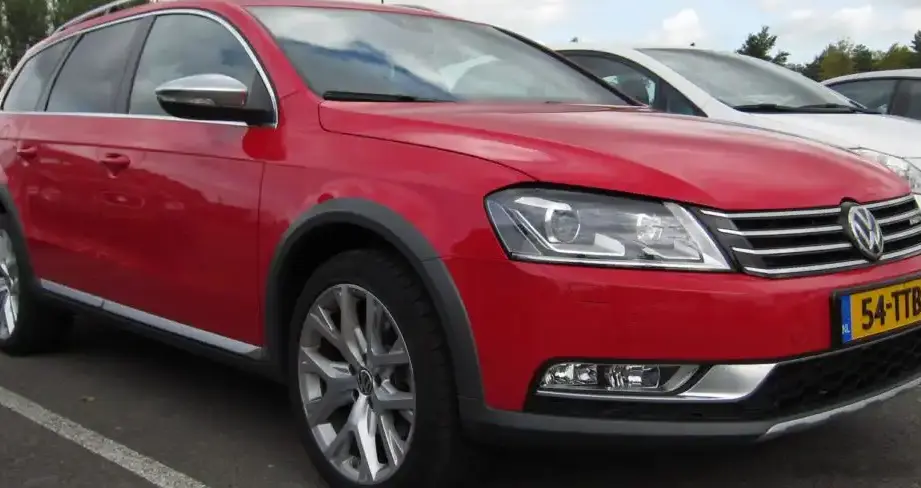
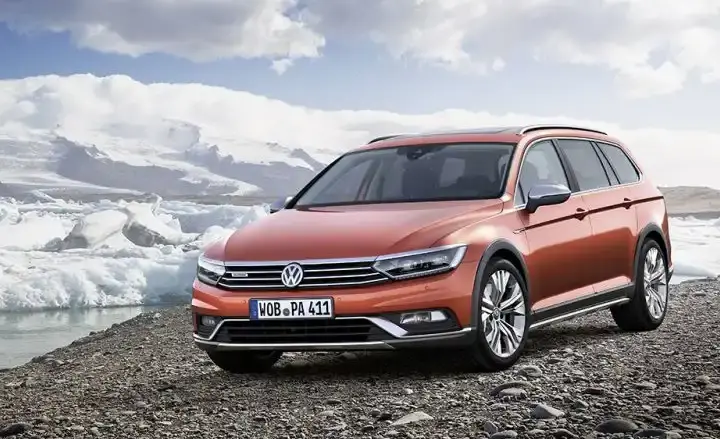
The Volkswagen Passat Variant (B5) 1.9 TDI with the automatic transmission, produced between 1997 and 2000, represented a practical and fuel-efficient option within the broader B5 Passat range. Positioned as a mid-range offering, it catered to buyers seeking the versatility of a station wagon (estate) with the convenience of an automatic gearbox and the economy of a diesel engine. This variant was primarily sold in Europe, where station wagons held a significant market share, and offered a compelling alternative to petrol-powered Passats and other competitors in the family car segment. It utilized the Volkswagen Group’s PL45 (PQ46) platform, also known as the 1HX0 for the Passat Variant.
Technical Specifications
| Brand | Volkswagen |
| Model | Passat |
| Generation | Passat Variant (B5) |
| Type (Engine) | 1.9 TDI (110 Hp) Automatic |
| Start of production | 1997 |
| End of production | 2000 |
| Powertrain Architecture | Internal Combustion engine |
| Body type | Station wagon (estate) |
| Seats | 5 |
| Doors | 5 |
| Fuel consumption (economy) – urban | 9.3 l/100 km (25.3 US mpg) |
| Fuel consumption (economy) – extra urban | 5.2 l/100 km (45.2 US mpg) |
| Fuel Type | Diesel |
| Acceleration 0 – 100 km/h | 13.3 sec |
| Acceleration 0 – 62 mph | 13.3 sec |
| Acceleration 0 – 60 mph | 12.6 sec |
| Maximum speed | 188 km/h (116.82 mph) |
| Weight-to-power ratio | 12.2 kg/Hp |
| Weight-to-torque ratio | 5.7 kg/Nm |
| Power | 110 Hp @ 4150 rpm |
| Power per litre | 58 Hp/l |
| Torque | 235 Nm @ 1900 rpm (173.33 lb.-ft. @ 1900 rpm) |
| Engine layout | Front, Longitudinal |
| Engine Model/Code | AFN |
| Engine displacement | 1896 cm3 (115.7 cu. in.) |
| Number of cylinders | 4 |
| Engine configuration | Inline |
| Cylinder Bore | 79.5 mm (3.13 in.) |
| Piston Stroke | 95.5 mm (3.76 in.) |
| Compression ratio | 19.5:1 |
| Number of valves per cylinder | 2 |
| Fuel injection system | Direct injection |
| Engine aspiration | Turbocharger, Intercooler |
| Valvetrain | OHC |
| Engine oil capacity | 3.8 l (4.02 US qt | 3.34 UK qt) |
| Coolant | 7.5 l (7.93 US qt | 6.6 UK qt) |
| Kerb Weight | 1340 kg (2954.19 lbs.) |
| Max. weight | 1890 kg (4166.74 lbs.) |
| Max load | 550 kg (1212.54 lbs.) |
| Trunk (boot) space – minimum | 495 l (17.48 cu. ft.) |
| Trunk (boot) space – maximum | 1600 l (56.5 cu. ft.) |
| Fuel tank capacity | 62 l (16.38 US gal | 13.64 UK gal) |
| Length | 4675 mm (184.06 in.) |
| Width | 1740 mm (68.5 in.) |
| Height | 1459 mm (57.44 in.) |
| Wheelbase | 2703 mm (106.42 in.) |
| Front track | 1498 mm (58.98 in.) |
| Rear (Back) track | 1500 mm (59.06 in.) |
| Drivetrain Architecture | The Internal combustion engine (ICE) drives the front wheels of the vehicle. |
| Drive wheel | Front wheel drive |
| Number of gears and type of gearbox | 4 gears, automatic transmission |
| Front suspension | Several levers and rods |
| Rear suspension | Rigid axle suspension |
| Front brakes | Ventilated discs |
| Rear brakes | Disc |
| Assisting systems | ABS (Anti-lock braking system) |
| Steering type | Steering rack and pinion |
| Power steering | Hydraulic Steering |
| Tires size | 195/65 R 15 |
| Wheel rims size | 6J x 15 |
Powertrain & Engine Architecture
The heart of this Passat Variant was the 1.9-liter (1896 cc) inline-four cylinder diesel engine, designated the AFN code. This engine was a member of Volkswagen’s well-regarded TDI (Turbocharged Direct Injection) family. The AFN featured a Bosch VE EDC (Electronic Diesel Control) fuel injection system, delivering fuel directly into the cylinders at extremely high pressure. This direct injection, combined with a turbocharger and intercooler, allowed for a good balance of power and fuel efficiency. The engine utilized a single overhead camshaft (OHC) operating two valves per cylinder. The automatic transmission was a four-speed unit, offering smooth, if not particularly sporty, gear changes. This transmission was chosen for its ease of use and suitability for family transport, rather than outright performance.
Driving Characteristics
The 1.9 TDI automatic Passat Variant offered a comfortable and relaxed driving experience. With 110 horsepower and 235 Nm (173 lb-ft) of torque, acceleration was adequate for everyday driving, though not particularly brisk. The 0-60 mph time of around 12.6 seconds reflects this. The automatic transmission, while convenient, did sap some performance compared to the available five-speed manual gearbox. The torque curve was relatively flat, providing good pulling power from low engine speeds, making it suitable for hauling passengers and cargo. Gear ratios were optimized for fuel economy and cruising comfort, rather than aggressive acceleration. Compared to the more powerful 1.8-liter petrol variants or the higher-output TDI models, this version prioritized efficiency and usability over outright speed.
Equipment & Trim Levels
The 1.9 TDI automatic typically came with a reasonable level of standard equipment. This included central locking, electric front windows, power steering, and an ABS anti-lock braking system. Interior upholstery was usually cloth, with a functional, if somewhat understated, dashboard layout. Optional extras included alloy wheels, a sunroof, climate control, and a radio/cassette player (or CD player in later models). Trim levels varied slightly depending on the market, but generally, this variant occupied a mid-range position, offering a good balance of features and affordability. It was often seen as a step up from the base-model Passats, but lacked the luxury appointments of the higher-spec versions.
Chassis & Braking
The Passat Variant (B5) featured independent suspension at the front, utilizing several levers and rods for a comfortable ride and good handling. The rear suspension employed a rigid axle setup, which was a cost-effective solution for station wagon applications. Braking was provided by ventilated discs at the front and solid discs at the rear. The ABS system helped to maintain steering control during emergency braking. Stabilizer bars were fitted to both the front and rear axles to reduce body roll. The suspension tuning was geared towards comfort and stability, rather than sporty handling.
Market Reception & Comparison
The 1.9 TDI automatic Passat Variant was generally well-received by automotive critics as a practical and economical family car. Its fuel economy was a major selling point, particularly in Europe where diesel fuel was often cheaper than petrol. Compared to the petrol-powered Passats, the TDI offered significantly better fuel consumption. However, some critics noted that the automatic transmission could feel sluggish at times, and that the engine lacked the refinement of some of its competitors. Against other TDI variants, the 110 hp version offered a more affordable entry point, but sacrificed some performance compared to the 130 hp and 150 hp models. Reliability was generally good, although the turbocharger and fuel injection system could require maintenance over time.
Legacy
The 1.9 TDI engine, particularly in the AFN guise, has proven to be remarkably durable and reliable. Many examples of the Passat Variant (B5) 1.9 TDI automatic are still on the road today, testament to the engine’s longevity. In the used car market, these vehicles are often sought after for their fuel efficiency and relatively low running costs. However, potential buyers should be aware of the possibility of age-related issues, such as turbocharger wear and fuel injector problems. The Passat B5 1.9 TDI automatic remains a popular choice for those seeking a practical, economical, and reliable station wagon.