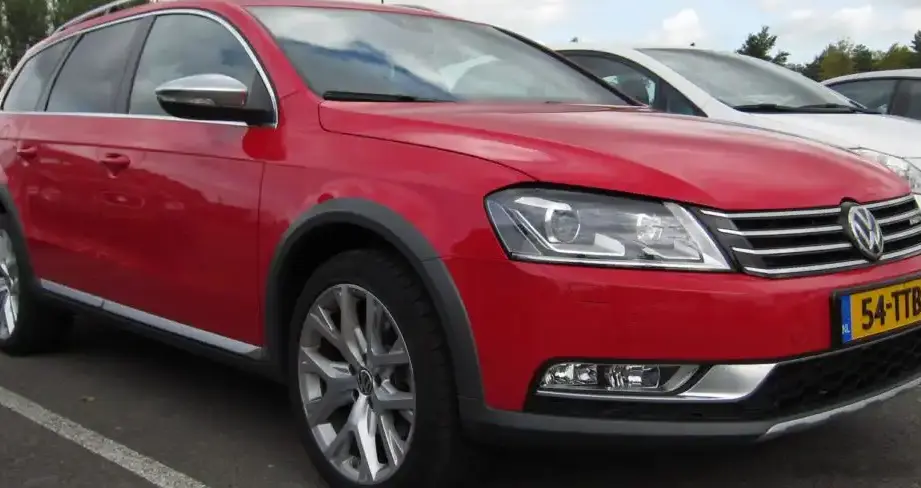
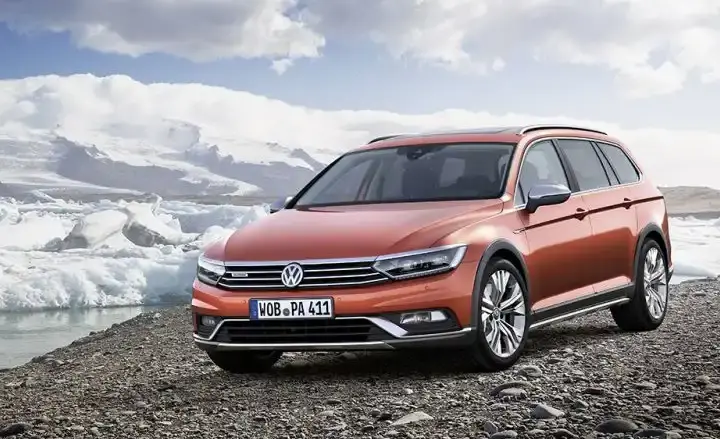
The Volkswagen Passat Variant (B5) 1.9 TDI, produced between 1998 and 2000, represents a significant iteration of Volkswagen’s popular mid-size family car. This variant, a station wagon (estate) body style, was a key offering within the B5 Passat generation (1996-2005), which utilized the Volkswagen Group’s PL45 platform, also known as the 1HX0/A3 platform. The 1.9 TDI model was particularly important in European markets, where diesel engines held a substantial share of the automotive landscape, offering a blend of fuel efficiency and practicality. In the US market, the Passat B5 was available, but the diesel variants were less common, with gasoline engines being the primary focus.
Technical Specifications
| Brand | Volkswagen |
| Model | Passat |
| Generation | Passat Variant (B5) |
| Type (Engine) | 1.9 TDI (115 Hp) |
| Start of production | 1998 |
| End of production | 2000 |
| Powertrain Architecture | Internal Combustion engine |
| Body type | Station wagon (estate) |
| Seats | 5 |
| Doors | 5 |
| Fuel consumption (urban) | 7.1 l/100 km (33.1 US mpg, 39.8 UK mpg, 14.1 km/l) |
| Fuel consumption (extra urban) | 4.5 l/100 km (52.3 US mpg, 62.8 UK mpg, 22.2 km/l) |
| Fuel Type | Diesel |
| Acceleration 0 – 100 km/h | 11 sec |
| Acceleration 0 – 62 mph | 11 sec |
| Acceleration 0 – 60 mph | 10.5 sec |
| Maximum speed | 194 km/h (120.55 mph) |
| Weight-to-power ratio | 11.8 kg/Hp, 84.6 Hp/tonne |
| Weight-to-torque ratio | 4.4 kg/Nm, 227.9 Nm/tonne |
| Power | 115 Hp @ 4000 rpm |
| Power per litre | 60.7 Hp/l |
| Torque | 310 Nm @ 1900 rpm (228.64 lb.-ft. @ 1900 rpm) |
| Engine layout | Front, Longitudinal |
| Engine Model/Code | ATJ, AJM |
| Engine displacement | 1896 cm3 (115.7 cu. in.) |
| Number of cylinders | 4 |
| Engine configuration | Inline |
| Cylinder Bore | 79.5 mm (3.13 in.) |
| Piston Stroke | 95.5 mm (3.76 in.) |
| Compression ratio | 18:1 |
| Number of valves per cylinder | 2 |
| Fuel injection system | Pump-nozzle (Unit Injector) |
| Engine aspiration | Turbocharger, Intercooler |
| Valvetrain | OHC |
| Engine oil capacity | 3.6 l (3.8 US qt | 3.17 UK qt) |
| Coolant | 7 l (7.4 US qt | 6.16 UK qt) |
| Kerb Weight | 1360 kg (2998.29 lbs.) |
| Max. weight | 1920 kg (4232.88 lbs.) |
| Max load | 560 kg (1234.59 lbs.) |
| Trunk (boot) space – minimum | 495 l (17.48 cu. ft.) |
| Trunk (boot) space – maximum | 1600 l (56.5 cu. ft.) |
| Fuel tank capacity | 62 l (16.38 US gal | 13.64 UK gal) |
| Length | 4675 mm (184.06 in.) |
| Width | 1740 mm (68.5 in.) |
| Height | 1459 mm (57.44 in.) |
| Wheelbase | 2703 mm (106.42 in.) |
| Front track | 1498 mm (58.98 in.) |
| Rear (Back) track | 1500 mm (59.06 in.) |
| Drivetrain Architecture | The Internal combustion engine (ICE) drives the front wheels of the vehicle. |
| Drive wheel | Front wheel drive |
| Number of gears and type of gearbox | 5 gears, manual transmission |
| Front suspension | Coil spring |
| Rear suspension | Coil spring |
| Front brakes | Ventilated discs |
| Rear brakes | Ventilated discs |
| Assisting systems | ABS (Anti-lock braking system) |
| Steering type | Steering rack and pinion |
| Power steering | Hydraulic Steering |
| Tires size | 195/65 R15 |
| Wheel rims size | 6J x 15 |
Powertrain & Engine Architecture
The heart of the Passat Variant 1.9 TDI was the 1.9-liter, four-cylinder diesel engine, available with either the ATJ or AJM engine code depending on the specific year and market. This engine was a member of Volkswagen’s well-regarded TDI (Turbocharged Direct Injection) family. It employed a pump-nozzle (unit injector) fuel injection system, a technology that allowed for precise fuel delivery and contributed to the engine’s efficiency and relatively low emissions for its time. The engine featured an overhead camshaft (OHC) valvetrain operating two valves per cylinder. A turbocharger with an intercooler was standard, boosting power output to 115 horsepower and 228.64 lb-ft of torque. The torque curve was notably flat, providing strong pulling power from low engine speeds. The engine was mounted longitudinally in the front of the vehicle, driving the front wheels.
Driving Characteristics
The 1.9 TDI engine, paired with a five-speed manual transmission, offered a practical and economical driving experience. While not a performance-oriented variant, the 115 hp and 228.64 lb-ft of torque provided adequate acceleration for everyday driving and highway cruising. Acceleration from 0-60 mph took around 10.5 seconds, and top speed was approximately 120.55 mph. The gear ratios were tuned for fuel efficiency and usability, rather than outright speed. Compared to the more powerful gasoline engines available in the B5 Passat range, such as the 1.8T or VR6, the 1.9 TDI prioritized fuel economy and low-end torque. The manual transmission offered precise shifts, and the engine’s responsiveness made it easy to navigate both city streets and open highways. The automatic transmission option, while offering convenience, generally resulted in slightly slower acceleration and reduced fuel economy.
Equipment & Trim Levels
The 1.9 TDI variant of the Passat Variant (B5) typically occupied a mid-range position in the lineup. Standard equipment generally included power windows, central locking, power steering, and an anti-lock braking system (ABS). Interior upholstery was typically cloth, with options for upgraded materials available. Dashboard configuration was consistent across the B5 range, featuring a functional and straightforward design. Optional extras included alloy wheels, a sunroof, climate control, and a radio/cassette or CD player. Higher trim levels added features like leather upholstery, wood trim, and more advanced audio systems.
Chassis & Braking
The Passat B5 featured a fully independent suspension system, with coil springs and shock absorbers at all four wheels. The front suspension utilized MacPherson struts, while the rear employed a multi-link setup. This configuration provided a comfortable ride and good handling characteristics. Brakes were ventilated discs on all four wheels, providing ample stopping power. The steering system was a rack-and-pinion type with hydraulic power assistance, offering precise and responsive steering feel. Stabilizer bars were fitted to both the front and rear axles to reduce body roll during cornering.
Market Reception & Comparison
The Passat Variant 1.9 TDI was well-received in European markets, where its fuel efficiency and practicality were highly valued. Critics praised the engine’s torque and responsiveness, as well as the car’s comfortable ride and spacious interior. Compared to the gasoline-powered Passat variants, the 1.9 TDI offered significantly better fuel economy, making it an attractive option for drivers who covered long distances. However, some critics noted that the diesel engine was noisier and produced more vibrations than the gasoline engines. Reliability was generally good, although the pump-nozzle fuel injection system could be prone to issues if not properly maintained.
Legacy
The Volkswagen Passat Variant (B5) 1.9 TDI remains a popular choice in the used car market, particularly in Europe. The 1.9 TDI engine is known for its durability and relatively low maintenance costs, although finding parts for the pump-nozzle injection system can sometimes be challenging. The B5 Passat’s reputation for reliability and practicality has ensured its continued popularity among drivers seeking a comfortable and economical family car. The 1.9 TDI variant, in particular, is often sought after by those who prioritize fuel efficiency and long-term reliability.