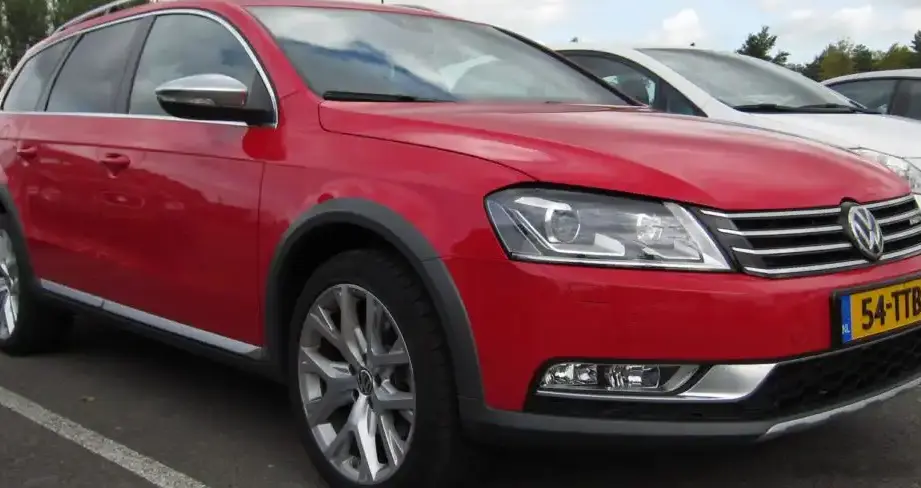
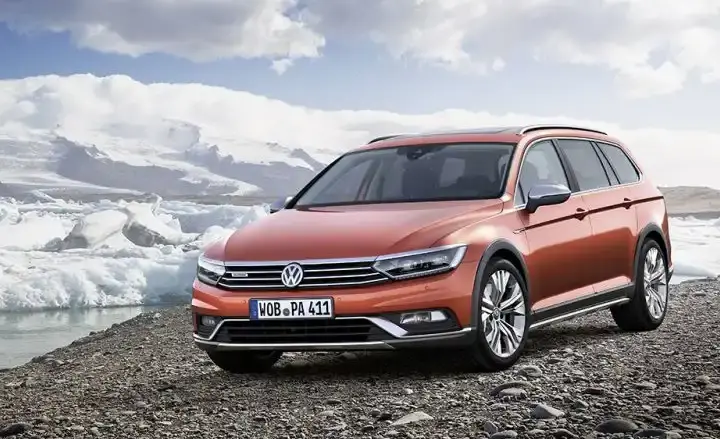
The Volkswagen Passat Variant (B5) 1.9 TDI Syncro, produced between 1999 and 2000, represents a compelling blend of practicality, performance, and all-weather capability within the broader B5 Passat range. Positioned as a premium offering, it catered to buyers seeking a versatile wagon with the added security of Volkswagen’s Syncro all-wheel-drive system. This variant was primarily marketed in Europe, where the demand for diesel-powered wagons with all-wheel drive was significant, offering a robust alternative to rear-wheel-drive or front-wheel-drive competitors. The B5 generation Passat, built on the 1HX0/A3 platform, aimed to elevate Volkswagen’s presence in the mid-size segment, and the 1.9 TDI Syncro was a key component of that strategy.
Technical Specifications
| Brand | Volkswagen |
| Model | Passat |
| Generation | Passat Variant (B5) |
| Type (Engine) | 1.9 TDI Syncro (130 Hp) |
| Start of production | 1999 |
| End of production | 2000 |
| Powertrain Architecture | Internal Combustion engine |
| Body type | Station wagon (estate) |
| Seats | 5 |
| Doors | 5 |
| Fuel consumption (economy) – urban | 8.3 l/100 km (28.3 US mpg, 34 UK mpg, 12 km/l) |
| Fuel consumption (economy) – extra urban | 5.3 l/100 km (44.4 US mpg, 53.3 UK mpg, 18.9 km/l) |
| Fuel Type | Diesel |
| Acceleration 0 – 100 km/h | 10.7 sec |
| Acceleration 0 – 62 mph | 10.7 sec |
| Acceleration 0 – 60 mph | 10.2 sec |
| Maximum speed | 197 km/h (122.41 mph) |
| Weight-to-power ratio | 11.9 kg/Hp, 83.9 Hp/tonne |
| Weight-to-torque ratio | 5 kg/Nm, 200 Nm/tonne |
| Power | 130 Hp @ 4000 rpm |
| Power per litre | 68.6 Hp/l |
| Torque | 310 Nm @ 1900 rpm (228.64 lb.-ft. @ 1900 rpm) |
| Engine layout | Front, Transverse |
| Engine Model/Code | AVF, AWX |
| Engine displacement | 1896 cm3 (115.7 cu. in.) |
| Number of cylinders | 4 |
| Engine configuration | Inline |
| Cylinder Bore | 79.5 mm (3.13 in.) |
| Piston Stroke | 95.5 mm (3.76 in.) |
| Compression ratio | 19:1 |
| Number of valves per cylinder | 2 |
| Fuel injection system | Pump-nozzle (Unit Injector) |
| Engine aspiration | Turbocharger, Intercooler |
| Valvetrain | OHC |
| Engine oil capacity | 4 l (4.23 US qt, 3.52 UK qt) |
| Coolant | 7 l (7.4 US qt, 6.16 UK qt) |
| Kerb Weight | 1550 kg (3417.17 lbs.) |
| Max. weight | 2130 kg (4695.85 lbs.) |
| Max load | 580 kg (1278.68 lbs.) |
| Trunk (boot) space – minimum | 450 l (15.89 cu. ft.) |
| Trunk (boot) space – maximum | 1545 l (54.56 cu. ft.) |
| Fuel tank capacity | 62 l (16.38 US gal, 13.64 UK gal) |
| Length | 4683 mm (184.37 in.) |
| Width | 1746 mm (68.74 in.) |
| Height | 1498 mm (58.98 in.) |
| Wheelbase | 2703 mm (106.42 in.) |
| Front track | 1515 mm (59.65 in.) |
| Rear (Back) track | 1515 mm (59.65 in.) |
| Drive wheel | All wheel drive (4×4) |
| Number of gears and type of gearbox | 6 gears, manual transmission |
| Front suspension | Coil spring |
| Rear suspension | Coil spring |
| Front brakes | Ventilated discs |
| Rear brakes | Disc |
| Assisting systems | ABS (Anti-lock braking system) |
| Steering type | Steering rack and pinion |
| Power steering | Hydraulic Steering |
| Tires size | 195/65 R15 |
| Wheel rims size | 6J x 15 |
Powertrain & Engine Architecture
The heart of the Passat Variant 1.9 TDI Syncro is the 1.9-liter, four-cylinder diesel engine, typically identified by engine codes AVF or AWX. This engine is a member of Volkswagen’s well-regarded TDI (Turbocharged Direct Injection) family. It utilizes a pump-nozzle (unit injector) fuel injection system, a technology that delivers highly precise fuel metering and contributes to the engine’s efficiency and power output. The engine features an overhead camshaft (OHC) valvetrain operating two valves per cylinder. A turbocharger with an intercooler is employed to boost power and torque, providing 130 horsepower at 4000 rpm and a substantial 310 Nm (228.64 lb-ft) of torque at a low 1900 rpm. The six-speed manual transmission was standard, offering well-spaced gear ratios to maximize the engine’s torque delivery and fuel economy. The Syncro all-wheel-drive system employs a viscous coupling to distribute power between the front and rear axles as needed, providing enhanced traction in slippery conditions.
Driving Characteristics
The 1.9 TDI Syncro, with its 130 hp and six-speed manual, offered a balanced driving experience. While not overtly sporty, it provided ample power for everyday driving and comfortable highway cruising. The generous torque output meant strong acceleration from low engine speeds, making overtaking maneuvers relatively effortless. Compared to the higher-output TDI variants (like the 150 hp versions), the 130 hp model felt less stressed and potentially more durable in the long run. The Syncro system added a noticeable weight penalty, and the all-wheel-drive system did introduce a slight increase in drivetrain loss, but the added stability and traction, particularly in inclement weather, were considered worthwhile by many owners. The six-speed gearbox allowed for efficient cruising at highway speeds, keeping engine revs low and contributing to good fuel economy.
Equipment & Trim Levels
The Passat Variant 1.9 TDI Syncro typically came well-equipped, reflecting its position as a premium trim level. Standard features generally included power windows, central locking, air conditioning, and an upgraded audio system. Interior upholstery was typically cloth, with options for leather available. Dashboard configuration was consistent with other B5 Passats, featuring a functional and ergonomic layout. Optional extras included sunroofs, upgraded audio systems with CD changers, and alloy wheels. The Syncro models often featured unique badging to distinguish them from other Passat variants.
Chassis & Braking
The Passat B5 featured independent suspension all around, with coil springs and shock absorbers. The front suspension utilized MacPherson struts, while the rear employed a multi-link setup. This configuration provided a comfortable ride and good handling characteristics. Braking systems varied slightly depending on the specific market and options selected, but typically included ventilated discs on the front wheels and discs on the rear. Anti-lock braking system (ABS) was standard. Stabilizer bars were fitted front and rear to reduce body roll during cornering. The Syncro models often had slightly stiffer suspension components to compensate for the added weight of the all-wheel-drive system.
Market Reception & Comparison
The Passat Variant 1.9 TDI Syncro was generally well-received by automotive critics. It was praised for its practicality, fuel efficiency, and all-weather capability. Compared to the petrol-powered Passats, the TDI Syncro offered significantly better fuel economy and a more relaxed driving experience, particularly on long journeys. Against competitors like the Audi A4 Avant and BMW 3 Series Touring, the Passat offered a compelling value proposition, often undercutting its rivals in price while providing comparable levels of equipment and performance. The 130 hp TDI engine was considered a good balance between performance and economy, although some critics noted that it lacked the outright punch of the higher-output TDI variants.
Legacy
The 1.9 TDI engine, in its various iterations, has earned a reputation for durability and reliability. The AVF and AWX codes are generally considered robust, although proper maintenance is crucial. The Syncro all-wheel-drive system, while adding complexity, has also proven to be reliable when properly maintained. Today, the Passat Variant 1.9 TDI Syncro remains a popular choice among enthusiasts and those seeking a practical and dependable wagon. Well-maintained examples command reasonable prices in the used car market, and the availability of spare parts is generally good. The combination of fuel efficiency, all-wheel-drive capability, and a spacious interior ensures that this variant continues to appeal to a wide range of buyers.