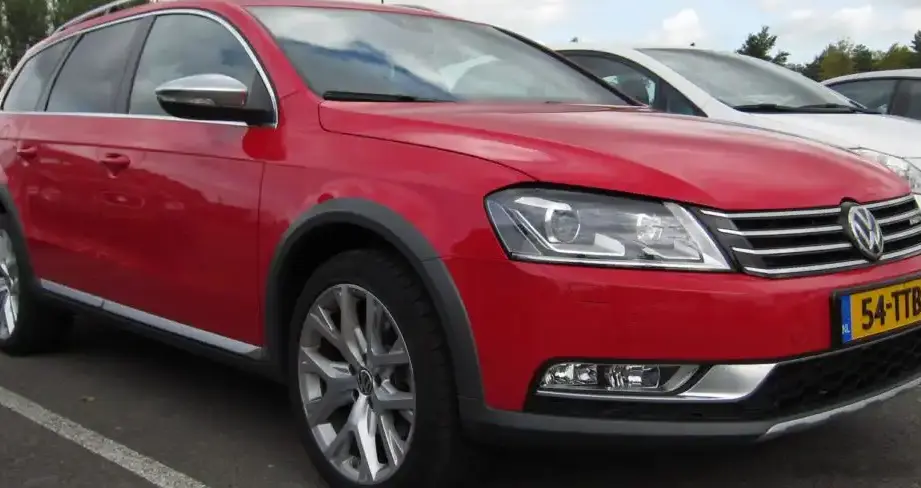
The Volkswagen Passat Variant (B5) 2.3 VR5, produced between 1997 and 2000, represents a unique offering within the fourth-generation (B5) Passat lineup. Positioned as a mid-range variant, it combined the practicality of the Passat wagon body style with Volkswagen’s distinctive VR5 engine. This model aimed to provide a blend of performance, refinement, and spaciousness, appealing to buyers seeking an alternative to more conventional four-cylinder or six-cylinder options. The B5 Passat, overall, was a significant step forward for Volkswagen, introducing a more modern design and improved build quality compared to its predecessor, and the VR5 variant further enhanced its appeal in the European market, where wagons were – and continue to be – highly popular.
Technical Specifications
| Brand | Volkswagen |
| Model | Passat |
| Generation | Passat Variant (B5) |
| Type (Engine) | 2.3 VR5 (150 Hp) |
| Start of production | 1997 |
| End of production | 2000 |
| Powertrain Architecture | Internal Combustion engine |
| Body type | Station wagon (estate) |
| Seats | 5 |
| Doors | 5 |
| Fuel consumption (economy) – urban | 13.6 l/100 km (17.3 US mpg, 20.8 UK mpg, 7.4 km/l) |
| Fuel consumption (economy) – extra urban | 7.5 l/100 km (31.4 US mpg, 37.7 UK mpg, 13.3 km/l) |
| Fuel Type | Petrol (Gasoline) |
| Acceleration 0 – 100 km/h | 9.3 sec |
| Acceleration 0 – 62 mph | 9.3 sec |
| Acceleration 0 – 60 mph | 8.8 sec |
| Maximum speed | 214 km/h (132.97 mph) |
| Weight-to-power ratio | 9.2 kg/Hp, 109.1 Hp/tonne |
| Weight-to-torque ratio | 6.7 kg/Nm, 149.1 Nm/tonne |
| Power | 150 Hp @ 6000 rpm |
| Power per litre | 64.5 Hp/l |
| Torque | 205 Nm @ 3200 rpm (151.2 lb.-ft. @ 3200 rpm) |
| Engine layout | Front, Longitudinal |
| Engine Model/Code | AGZ |
| Engine displacement | 2324 cm3 (141.82 cu. in.) |
| Number of cylinders | 5 |
| Engine configuration | Inline |
| Cylinder Bore | 81 mm (3.19 in.) |
| Piston Stroke | 90.2 mm (3.55 in.) |
| Compression ratio | 10.1:1 |
| Number of valves per cylinder | 2 |
| Fuel injection system | Multi-port manifold injection |
| Engine aspiration | Naturally aspirated engine |
| Valvetrain | DOHC |
| Engine oil capacity | 3.7 l (3.91 US qt | 3.26 UK qt) |
| Coolant | 9 l (9.51 US qt | 7.92 UK qt) |
| Kerb Weight | 1375 kg (3031.36 lbs.) |
| Max. weight | 1925 kg (4243.9 lbs.) |
| Max load | 550 kg (1212.54 lbs.) |
| Trunk (boot) space – minimum | 495 l (17.48 cu. ft.) |
| Trunk (boot) space – maximum | 1600 l (56.5 cu. ft.) |
| Fuel tank capacity | 62 l (16.38 US gal | 13.64 UK gal) |
| Length | 4675 mm (184.06 in.) |
| Width | 1740 mm (68.5 in.) |
| Height | 1459 mm (57.44 in.) |
| Wheelbase | 2703 mm (106.42 in.) |
| Front track | 1498 mm (58.98 in.) |
| Rear (Back) track | 1500 mm (59.06 in.) |
| Drivetrain Architecture | The Internal combustion engine (ICE) drives the front wheels of the vehicle. |
| Drive wheel | Front wheel drive |
| Number of gears and type of gearbox | 5 gears, manual transmission |
| Front suspension | Coil spring |
| Rear suspension | Coil spring |
| Front brakes | Ventilated discs |
| Rear brakes | Disc |
| Assisting systems | ABS (Anti-lock braking system) |
| Steering type | Steering rack and pinion |
| Power steering | Hydraulic Steering |
| Tires size | 195/65 R15 |
| Wheel rims size | 6J x 15 |
INTRODUCTION
The Volkswagen Passat Variant (B5) 2.3 VR5, manufactured from 1997 to 2000, occupied a unique niche within the B5 Passat range. It was offered as a practical, yet somewhat upscale, alternative to the more common four-cylinder models. The B5 generation Passat, built on the 1HX0/A3 platform, represented a significant leap forward in terms of design, build quality, and technology for Volkswagen. The Variant (wagon) body style was particularly popular in Europe, and the VR5 engine added a touch of exclusivity and performance. This variant aimed to appeal to families and individuals who desired a spacious and comfortable vehicle with a more refined driving experience than the base models offered.
Powertrain & Engine Architecture
The heart of the Passat Variant 2.3 VR5 is the AGZ engine code, a 2.3-liter naturally aspirated VR5 engine. This engine is notable for its unusual configuration – a narrow-angle V5, essentially combining characteristics of both inline and V-engines. It features five cylinders arranged in a V-shape with a 15-degree angle between the banks. This design allowed for a shorter engine length compared to a traditional inline-five, facilitating its fitment into the Passat’s engine bay. The engine utilizes multi-port fuel injection and a double overhead camshaft (DOHC) valvetrain, contributing to its smooth power delivery. The 2.3 VR5 produces 150 horsepower at 6000 rpm and 205 Nm (151.2 lb-ft) of torque at 3200 rpm. The engine is paired with a 5-speed manual transmission as standard, providing a balance between fuel efficiency and performance. The transmission’s gear ratios were tuned to complement the engine’s torque curve, offering reasonable acceleration and comfortable cruising.
Driving Characteristics
The 2.3 VR5 automatic Passat Variant offered a distinctly different driving experience compared to the more common 1.8-liter four-cylinder or the higher-performance VR6 models. While not as overtly sporty as the VR6, the VR5 provided a smooth and refined power delivery, making it well-suited for everyday driving and long-distance journeys. The automatic transmission, while offering convenience, did slightly diminish the engine’s responsiveness compared to the manual version. Acceleration from 0 to 60 mph took approximately 8.8 seconds, which was respectable for the time, but noticeably slower than the VR6. The engine’s torque curve provided adequate pulling power for overtaking maneuvers, but required the transmission to downshift for more spirited acceleration. The suspension, tuned for comfort, provided a compliant ride, absorbing bumps and imperfections in the road effectively. However, this did result in some body roll during cornering.
Equipment & Trim Levels
The Passat Variant 2.3 VR5 typically came with a generous level of standard equipment. Interior features included comfortable cloth upholstery, power windows and locks, and a basic audio system. Higher trim levels offered options such as leather upholstery, sunroof, automatic climate control, and upgraded audio systems. Safety features included ABS anti-lock brakes and front airbags. The dashboard layout was functional and ergonomically designed, with easy-to-read gauges and intuitive controls. Optional extras included alloy wheels, fog lights, and a rear wiper.
Chassis & Braking
The Passat Variant 2.3 VR5 utilized a MacPherson strut front suspension and a multi-link rear suspension, providing a good balance between ride comfort and handling. The braking system consisted of ventilated discs on the front wheels and solid discs on the rear. ABS anti-lock brakes were standard, enhancing braking performance and stability, especially in adverse conditions. The steering was a hydraulic power-assisted rack and pinion system, offering precise and responsive steering feel. The suspension was tuned to accommodate the vehicle’s weight and provide a comfortable ride, with stabilizer bars helping to reduce body roll during cornering.
Market Reception & Comparison
The Passat Variant 2.3 VR5 received generally positive reviews from automotive critics. It was praised for its smooth engine, comfortable ride, and spacious interior. However, some critics noted that the automatic transmission could feel sluggish at times, and the fuel economy was not as good as the four-cylinder models. Compared to the 1.8-liter Passat, the VR5 offered significantly more power and refinement, but at a higher price point. Compared to the VR6, the VR5 provided a more balanced driving experience, sacrificing some outright performance for improved fuel economy and a smoother ride. The VR5 was often seen as a sweet spot in the Passat lineup, appealing to buyers who wanted a comfortable and refined wagon without the higher cost and more aggressive character of the VR6.
Legacy
The Volkswagen Passat Variant 2.3 VR5 has proven to be a relatively reliable vehicle, with the VR5 engine generally considered durable and long-lasting. However, like any older vehicle, it requires regular maintenance to prevent issues. Common maintenance items include oil changes, timing belt replacements, and coolant flushes. The VR5 engine can be more complex to work on than a traditional four-cylinder, potentially leading to higher repair costs. Today, the Passat Variant 2.3 VR5 is gaining popularity among classic car enthusiasts who appreciate its unique engine and spacious practicality. Well-maintained examples are becoming increasingly sought after, and prices are slowly rising. Its blend of comfort, performance, and distinctive styling ensures its place as a memorable and enjoyable vehicle from the late 1990s.