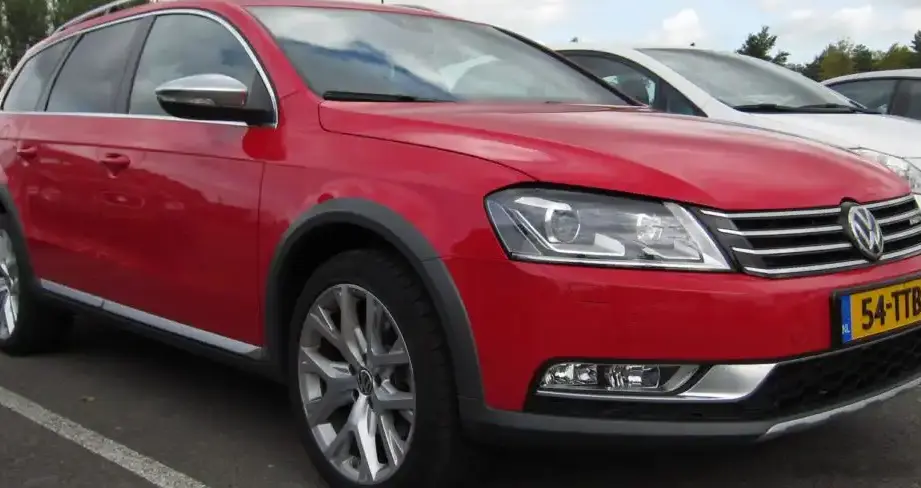
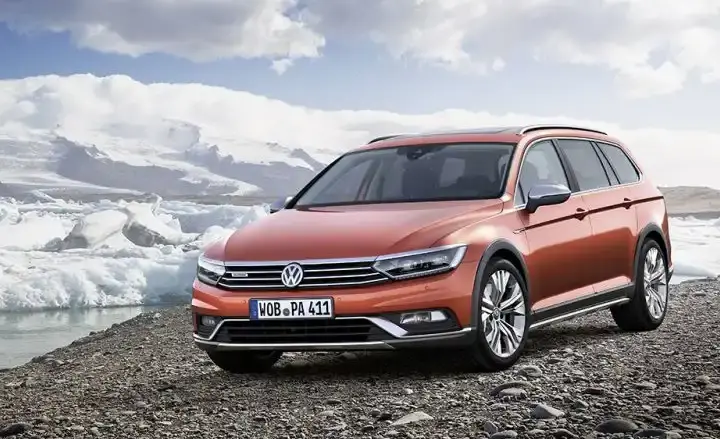
The Volkswagen Passat Variant (B5) 2.3 VR5 Automatic, produced between 1997 and 2000, represents a unique offering within the popular B5 Passat generation. Positioned as a mid-range trim level, it combined the distinctive VR5 engine with the convenience of an automatic transmission, appealing to buyers seeking a blend of performance and practicality in a spacious station wagon (estate) body style. This variant was primarily sold in the European market, where wagons held a significant share of the family car segment, though limited numbers were also available in other regions. It built upon the success of the B5 Passat, which itself was a significant step forward for Volkswagen in terms of build quality, refinement, and technology.
Technical Specifications
| Brand | Volkswagen |
| Model | Passat |
| Generation | Passat Variant (B5) |
| Type (Engine) | 2.3 VR5 (150 Hp) Automatic |
| Start of production | 1997 |
| End of production | 2000 |
| Powertrain Architecture | Internal Combustion engine |
| Body type | Station wagon (estate) |
| Seats | 5 |
| Doors | 5 |
| Fuel consumption (urban) | 15.2 l/100 km (15.5 US mpg, 18.6 UK mpg, 6.6 km/l) |
| Fuel consumption (extra urban) | 7.5 l/100 km (31.4 US mpg, 37.7 UK mpg, 13.3 km/l) |
| Fuel Type | Petrol (Gasoline) |
| Acceleration 0 – 100 km/h | 10.9 sec |
| Acceleration 0 – 62 mph | 10.9 sec |
| Acceleration 0 – 60 mph | 10.4 sec |
| Maximum speed | 208 km/h (129.25 mph) |
| Weight-to-power ratio | 9.2 kg/Hp, 109.1 Hp/tonne |
| Weight-to-torque ratio | 6.7 kg/Nm, 149.1 Nm/tonne |
| Power | 150 Hp @ 6000 rpm |
| Power per litre | 64.5 Hp/l |
| Torque | 205 Nm @ 3200 rpm (151.2 lb.-ft. @ 3200 rpm) |
| Engine layout | Front, Longitudinal |
| Engine Model/Code | AGZ |
| Engine displacement | 2324 cm3 (141.82 cu. in.) |
| Number of cylinders | 5 |
| Engine configuration | Inline |
| Cylinder Bore | 81 mm (3.19 in.) |
| Piston Stroke | 90.2 mm (3.55 in.) |
| Compression ratio | 10.1:1 |
| Number of valves per cylinder | 2 |
| Fuel injection system | Multi-port manifold injection |
| Engine aspiration | Naturally aspirated engine |
| Valvetrain | DOHC |
| Engine oil capacity | 3.7 l (3.91 US qt | 3.26 UK qt) |
| Coolant capacity | 9 l (9.51 US qt | 7.92 UK qt) |
| Kerb Weight | 1375 kg (3031.36 lbs.) |
| Max. weight | 1925 kg (4243.9 lbs.) |
| Max load | 550 kg (1212.54 lbs.) |
| Trunk (boot) space – minimum | 495 l (17.48 cu. ft.) |
| Trunk (boot) space – maximum | 1600 l (56.5 cu. ft.) |
| Fuel tank capacity | 62 l (16.38 US gal | 13.64 UK gal) |
| Length | 4675 mm (184.06 in.) |
| Width | 1740 mm (68.5 in.) |
| Height | 1459 mm (57.44 in.) |
| Wheelbase | 2703 mm (106.42 in.) |
| Front track | 1498 mm (58.98 in.) |
| Rear (Back) track | 1500 mm (59.06 in.) |
| Drivetrain Architecture | The Internal combustion engine (ICE) drives the front wheels of the vehicle. |
| Drive wheel | Front wheel drive |
| Number of gears and type of gearbox | 5 gears, automatic transmission |
| Front suspension | Coil spring |
| Rear suspension | Coil spring |
| Front brakes | Ventilated discs |
| Rear brakes | Disc |
| Assisting systems | ABS (Anti-lock braking system) |
| Steering type | Steering rack and pinion |
| Power steering | Hydraulic Steering |
| Tires size | 195/65 R15 |
| Wheel rims size | 6J x 15 |
Powertrain & Engine Architecture
The heart of this Passat Variant is the 2.3-liter VR5 engine, designated the AGZ engine code. This engine is notable for its unusual configuration – a narrow-angle V5, essentially combining characteristics of inline and V-engines. This design allowed for a relatively compact engine with good balance and smoothness. The AGZ features multi-port fuel injection and a double overhead camshaft (DOHC) valvetrain, contributing to its respectable power output for its displacement. The engine produces 150 horsepower at 6000 rpm and 205 Nm (151.2 lb-ft) of torque at 3200 rpm. Paired with this engine is a 5-speed automatic transmission. This transmission, while providing convenience, was not known for its sportiness, prioritizing smooth shifts over rapid acceleration. It was a common automatic transmission used across the Volkswagen Group during this period.
Driving Characteristics
The 2.3 VR5 Automatic Passat Variant offered a comfortable and refined driving experience. Acceleration from 0-60 mph took around 10.4 seconds, which was adequate for everyday driving but noticeably slower than the manual transmission or higher-output engine options like the 1.8T. The automatic transmission’s gear ratios were geared towards fuel efficiency and smooth cruising rather than aggressive performance. The engine delivered its peak torque at a relatively low 3200 rpm, providing decent responsiveness in typical driving situations. However, overtaking maneuvers required careful planning. The front-wheel-drive configuration provided predictable handling, but lacked the all-weather capability of all-wheel-drive variants.
Equipment & Trim Levels
The 2.3 VR5 Automatic trim typically included features such as air conditioning, power windows, central locking, and an upgraded audio system. Interior upholstery was usually cloth, with options for leather available at extra cost. Dashboard trim could vary, with woodgrain or metallic finishes offered. Common optional extras included a sunroof, alloy wheels, and upgraded sound systems. Safety features like ABS were standard, but airbags were often optional depending on the specific market.
Chassis & Braking
The B5 Passat Variant featured independent suspension all around, utilizing coil springs and shock absorbers. The front suspension employed MacPherson struts, while the rear used a multi-link setup. This provided a good balance between ride comfort and handling. Braking consisted of ventilated discs on the front wheels and solid discs on the rear. ABS was standard, enhancing braking performance and stability. Stabilizer bars were fitted to both the front and rear axles to reduce body roll during cornering.
Market Reception & Comparison
The 2.3 VR5 Automatic Passat Variant was generally well-received by automotive critics as a comfortable and practical family car. However, its performance was often criticized as being somewhat underwhelming compared to the more powerful 1.8T or the diesel-powered TDI variants. Fuel economy was also a concern, with the VR5 engine consuming significantly more fuel than the smaller-displacement engines. Compared to the 1.8T, the VR5 offered a smoother and more refined engine character, but at the expense of performance and fuel efficiency. The TDI models, while less powerful, provided superior fuel economy and torque. The VR5 appealed to buyers who prioritized comfort and refinement over outright performance.
Legacy
The AGZ VR5 engine, when properly maintained, proved to be a relatively reliable unit. However, it is known to be sensitive to oil quality and requires regular maintenance to prevent issues such as oil leaks and timing chain wear. The automatic transmission, while generally durable, can experience issues with solenoid failure or valve body wear over time. Today, the 2.3 VR5 Automatic Passat Variant is considered a desirable classic by many Volkswagen enthusiasts. Its unique engine, spacious interior, and comfortable ride make it a compelling alternative to more common B5 Passat models. Well-maintained examples command a premium in the used car market, appealing to those seeking a distinctive and refined European wagon.