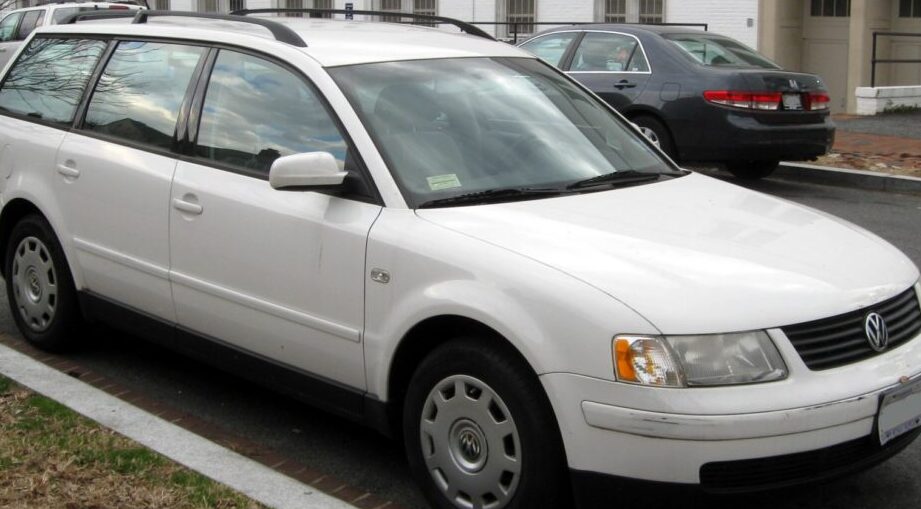
The Volkswagen Passat Variant (B5) 2.8 30V, produced between 1997 and 2000, represented a significant evolution of Volkswagen’s popular mid-size offering. Positioned as a premium trim within the B5 Passat range – which spanned from 1996 to 2000 – the 2.8-liter 30-valve variant aimed to deliver a blend of performance, practicality, and refinement for the discerning driver. This station wagon (estate) body style, popular in Europe, offered increased cargo capacity compared to the sedan, making it a versatile choice for families and those with active lifestyles. The B5 generation Passat, built on the 1HX0/A3 platform, marked a departure from previous designs with a more contemporary aesthetic and improved build quality.
Technical Specifications
| Brand | Volkswagen |
| Model | Passat |
| Generation | Passat Variant (B5) |
| Type (Engine) | 2.8 30V (193 Hp) |
| Start of production | 1997 |
| End of production | 2000 |
| Powertrain Architecture | Internal Combustion engine |
| Body type | Station wagon (estate) |
| Seats | 5 |
| Doors | 5 |
| Fuel consumption (urban) | 15.4 l/100 km (15.3 US mpg, 18.3 UK mpg, 6.5 km/l) |
| Fuel consumption (extra urban) | 8.1 l/100 km (29 US mpg, 34.9 UK mpg, 12.3 km/l) |
| Fuel Type | Petrol (Gasoline) |
| Acceleration 0 – 100 km/h | 8 sec |
| Acceleration 0 – 62 mph | 8 sec |
| Acceleration 0 – 60 mph | 7.6 sec |
| Maximum speed | 232 km/h (144.16 mph) |
| Weight-to-power ratio | 8.2 kg/Hp, 121.4 Hp/tonne |
| Weight-to-torque ratio | 5.7 kg/Nm, 176.1 Nm/tonne |
| Power | 193 Hp @ 6000 rpm |
| Power per litre | 69.6 Hp/l |
| Torque | 280 Nm @ 3200 rpm (206.52 lb.-ft. @ 3200 rpm) |
| Engine layout | Front, Longitudinal |
| Engine Model/Code | AMX, ATQ |
| Engine displacement | 2771 cm3 (169.1 cu. in.) |
| Number of cylinders | 6 |
| Engine configuration | V-engine |
| Cylinder Bore | 82.5 mm (3.25 in.) |
| Piston Stroke | 86.4 mm (3.4 in.) |
| Compression ratio | 10.6:1 |
| Number of valves per cylinder | 5 |
| Fuel injection system | Multi-port manifold injection |
| Engine aspiration | Naturally aspirated engine |
| Valvetrain | DOHC |
| Engine oil capacity | 5.5 l (5.81 US qt, 4.84 UK qt) |
| Coolant | 8 l (8.45 US qt, 7.04 UK qt) |
| Kerb Weight | 1590 kg (3505.35 lbs.) |
| Max. weight | 2130 kg (4695.85 lbs.) |
| Max load | 540 kg (1190.5 lbs.) |
| Trunk (boot) space – minimum | 450 l (15.89 cu. ft.) |
| Trunk (boot) space – maximum | 1545 l (54.56 cu. ft.) |
| Fuel tank capacity | 62 l (16.38 US gal, 13.64 UK gal) |
| Length | 4683 mm (184.37 in.) |
| Width | 1746 mm (68.74 in.) |
| Height | 1498 mm (58.98 in.) |
| Wheelbase | 2703 mm (106.42 in.) |
| Front track | 1515 mm (59.65 in.) |
| Rear (Back) track | 1515 mm (59.65 in.) |
| Drivetrain Architecture | The Internal combustion engine (ICE) drives the front wheels of the vehicle. |
| Drive wheel | Front wheel drive |
| Number of gears and type of gearbox | 5 gears, manual transmission |
| Front suspension | Coil spring |
| Rear suspension | Coil spring |
| Front brakes | Ventilated discs |
| Rear brakes | Disc |
| Assisting systems | ABS (Anti-lock braking system) |
| Steering type | Steering rack and pinion |
| Power steering | Hydraulic Steering |
| Tires size | 205/55 R16 |
| Wheel rims size | 16 |
Powertrain & Engine Architecture
The heart of the Passat Variant 2.8 30V was the AMX or ATQ engine code, a 2.8-liter naturally aspirated V6. This engine featured a 90-degree V-configuration, contributing to its smooth operation. The “30V” designation indicated the engine’s five valves per cylinder (three intake, two exhaust), a design intended to enhance volumetric efficiency and broaden the powerband. Fuel delivery was managed by a multi-port fuel injection system, providing precise fuel metering for optimal combustion. The engine utilized a double overhead camshaft (DOHC) valvetrain, further optimizing airflow into and out of the cylinders. The engine’s longitudinal mounting allowed for a front-wheel-drive configuration, common in European vehicles of this era. The five-speed manual transmission was the standard offering, providing drivers with direct control over the engine’s power.
Driving Characteristics
The 193 horsepower and 206 lb-ft of torque produced by the 2.8-liter V6 provided brisk acceleration, with 0-60 mph times around 7.6 seconds. While not a sports car, the Passat 2.8 offered a noticeably more engaging driving experience than the base 1.8-liter models. The five-speed manual transmission allowed for precise gear selection, maximizing the engine’s power output. The gear ratios were well-matched to the engine’s characteristics, providing good acceleration in everyday driving situations. Compared to the more economical 1.8-liter variants, the 2.8 offered a more refined and powerful driving experience, but at the cost of increased fuel consumption. The weight distribution, while front-biased, was reasonably balanced for a front-wheel-drive vehicle, contributing to predictable handling.
Equipment & Trim Levels
The Passat Variant 2.8 30V typically came well-equipped, reflecting its position as a premium trim level. Standard features often included power windows, power locks, air conditioning, and an upgraded audio system. Interior upholstery was typically cloth, with leather options available. Dashboard configuration was functional and ergonomically designed, with clear instrumentation. Optional extras included a sunroof, heated seats, automatic climate control, and alloy wheels. The level of equipment varied depending on the specific market and optional packages selected by the original purchaser.
Chassis & Braking
The Passat B5 featured an independent suspension setup at all four wheels, utilizing coil springs and shock absorbers. The front suspension employed MacPherson struts, while the rear utilized a multi-link setup. This configuration provided a comfortable ride while maintaining good handling characteristics. Braking duties were handled by ventilated discs at the front and solid discs at the rear, providing adequate stopping power. An Anti-lock Braking System (ABS) was standard, enhancing safety by preventing wheel lockup during hard braking. Stabilizer bars were fitted to both the front and rear axles, reducing body roll during cornering.
Market Reception & Comparison
The Passat Variant 2.8 30V was generally well-received by automotive critics. It was praised for its refined engine, comfortable ride, and spacious interior. However, some critics noted that the fuel economy was relatively poor compared to the smaller-engined models. Compared to the 1.8-liter Passat variants, the 2.8 offered significantly more power and a more luxurious driving experience, but at a higher price point. The 2.8 also offered a compelling alternative to other mid-size station wagons, such as the Audi A4 Avant and the BMW 3 Series Touring.
Legacy
The Volkswagen Passat B5 2.8 30V has proven to be a relatively reliable vehicle, with many examples still on the road today. The 2.8-liter V6 engine, while not without its potential issues (such as timing belt maintenance), is generally considered to be a durable and long-lasting powerplant. The availability of parts and a strong aftermarket support network contribute to the continued viability of these vehicles. In the used car market, the Passat Variant 2.8 30V is often sought after by enthusiasts who appreciate its blend of performance, practicality, and classic Volkswagen styling. Regular maintenance, particularly timely timing belt replacements, is crucial for ensuring the long-term reliability of this powertrain.