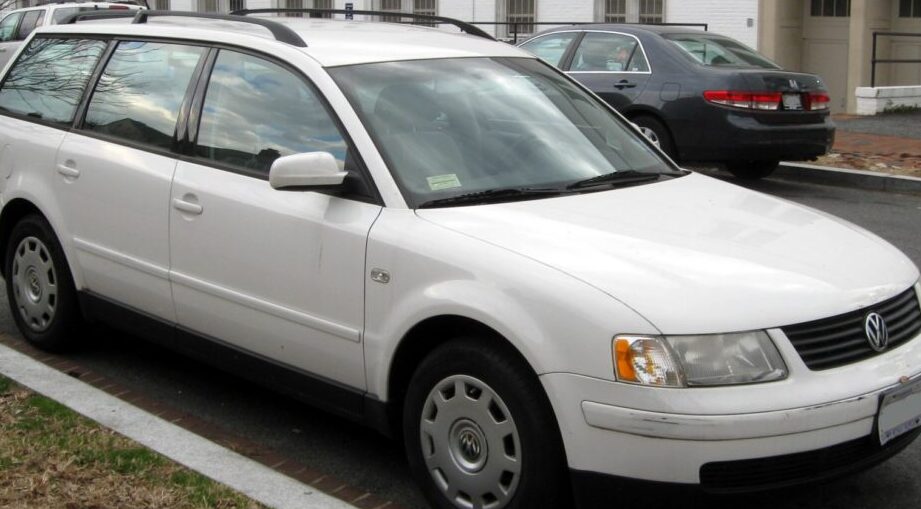
The Volkswagen Passat Variant (B5) 2.8 30V Automatic, produced between 1997 and 2000, represented a sophisticated offering within the B5 Passat generation (1996-2005). Positioned as a premium trim level, this variant combined a potent 2.8-liter V6 engine with a five-speed automatic transmission, packaged in the practical and popular station wagon (estate) body style. It was a key model for Volkswagen in the European market, appealing to buyers seeking a blend of performance, space, and refinement. The B5 Passat, built on the 1HX0/A3 platform, aimed to elevate Volkswagen’s presence in the mid-size segment, and the 2.8 30V Automatic played a significant role in that ambition.
Technical Specifications
| Brand | Volkswagen |
| Model | Passat |
| Generation | Passat Variant (B5) |
| Type (Engine) | 2.8 30V (193 Hp) Automatic |
| Start of production | 1997 |
| End of production | 2000 |
| Powertrain Architecture | Internal Combustion engine |
| Body type | Station wagon (estate) |
| Seats | 5 |
| Doors | 5 |
| Fuel consumption (urban) | 16.5 l/100 km (14.3 US mpg, 17.1 UK mpg, 6.1 km/l) |
| Fuel consumption (extra urban) | 8 l/100 km (29.4 US mpg, 35.3 UK mpg, 12.5 km/l) |
| Fuel Type | Petrol (Gasoline) |
| Acceleration 0 – 100 km/h | 10.1 sec |
| Acceleration 0 – 62 mph | 10.1 sec |
| Acceleration 0 – 60 mph | 9.6 sec |
| Maximum speed | 227 km/h (141.05 mph) |
| Weight-to-power ratio | 8.2 kg/Hp, 121.4 Hp/tonne |
| Weight-to-torque ratio | 5.7 kg/Nm, 176.1 Nm/tonne |
| Power | 193 Hp @ 6000 rpm |
| Power per litre | 69.6 Hp/l |
| Torque | 280 Nm @ 3200 rpm (206.52 lb.-ft. @ 3200 rpm) |
| Engine layout | Front, Longitudinal |
| Engine Model/Code | AMX, ATQ |
| Engine displacement | 2771 cm3 (169.1 cu. in.) |
| Number of cylinders | 6 |
| Engine configuration | V-engine |
| Cylinder Bore | 82.5 mm (3.25 in.) |
| Piston Stroke | 86.4 mm (3.4 in.) |
| Compression ratio | 10.6:1 |
| Number of valves per cylinder | 5 |
| Fuel injection system | Multi-port manifold injection |
| Engine aspiration | Naturally aspirated engine |
| Valvetrain | DOHC |
| Engine oil capacity | 5.5 l (5.81 US qt | 4.84 UK qt) |
| Coolant capacity | 8 l (8.45 US qt | 7.04 UK qt) |
| Kerb Weight | 1590 kg (3505.35 lbs.) |
| Max. weight | 2130 kg (4695.85 lbs.) |
| Max load | 540 kg (1190.5 lbs.) |
| Trunk (boot) space – minimum | 450 l (15.89 cu. ft.) |
| Trunk (boot) space – maximum | 1545 l (54.56 cu. ft.) |
| Fuel tank capacity | 62 l (16.38 US gal | 13.64 UK gal) |
| Length | 4683 mm (184.37 in.) |
| Width | 1746 mm (68.74 in.) |
| Height | 1498 mm (58.98 in.) |
| Wheelbase | 2703 mm (106.42 in.) |
| Front track | 1515 mm (59.65 in.) |
| Rear (Back) track | 1515 mm (59.65 in.) |
| Drivetrain Architecture | The Internal combustion engine (ICE) drives the front wheels of the vehicle. |
| Drive wheel | Front wheel drive |
| Number of gears and type of gearbox | 5 gears, automatic transmission |
| Front suspension | Coil spring |
| Rear suspension | Coil spring |
| Front brakes | Ventilated discs |
| Rear brakes | Disc |
| Assisting systems | ABS (Anti-lock braking system) |
| Steering type | Steering rack and pinion |
| Power steering | Hydraulic Steering |
| Tires size | 205/55 R16 |
| Wheel rims size | 16 |
Powertrain & Engine Architecture
The heart of the Passat Variant 2.8 30V Automatic is the AMX or ATQ engine code, a 2.8-liter (2771 cc) naturally aspirated V6. This engine featured a 60-degree V-angle and utilized a dual overhead camshaft (DOHC) design with five valves per cylinder (three intake, two exhaust). This 30-valve configuration was key to its relatively high output for its displacement. Fuel delivery was managed by a multi-port fuel injection system, providing precise fuel metering for optimal combustion. The engine’s longitudinal mounting and front-wheel-drive configuration were typical for Volkswagen’s higher-end models. The five-speed automatic transmission, often the 5HP19, was a robust unit known for its smooth shifting characteristics. It was designed to handle the engine’s torque output effectively, though it wasn’t as sporty as the available manual transmission.
Driving Characteristics
The 2.8 30V Automatic Passat Variant offered a comfortable and refined driving experience. While not overtly sporty, the 193 horsepower and 280 Nm (206 lb-ft) of torque provided ample power for everyday driving and highway cruising. Acceleration from 0-60 mph took around 9.6 seconds, respectable for the era. The automatic transmission, while smooth, did result in some power loss compared to the manual version. Gear ratios were tuned for a balance of fuel economy and responsiveness. The automatic transmission’s programming prioritized smooth transitions over aggressive downshifts, making it well-suited for relaxed touring. Compared to the more economical 1.8-liter four-cylinder variants, the 2.8 offered significantly more power, but at the cost of increased fuel consumption. It also provided a more refined and quieter driving experience than the diesel options.
Equipment & Trim Levels
The 2.8 30V Automatic trim typically included a generous level of standard equipment. This often included features like air conditioning, power windows and locks, central locking, a radio/cassette player (often upgraded to a CD player), and alloy wheels. Interior upholstery was typically cloth, with leather options available as an upgrade. Dashboard configuration was generally consistent across the B5 Passat range, featuring a functional and ergonomic layout. Optional extras could include a sunroof, heated seats, automatic climate control, and upgraded audio systems. The 2.8 Automatic was often positioned as a mid-to-high trim level, offering a step up in luxury and features compared to the base models.
Chassis & Braking
The Passat Variant B5 featured an independent suspension setup at all four wheels, utilizing coil springs and shock absorbers. The front suspension employed MacPherson struts, while the rear utilized a multi-link setup. This configuration provided a good balance of ride comfort and handling. Braking duties were handled by ventilated discs at the front and solid discs at the rear, equipped with an Anti-lock Braking System (ABS) as standard. The braking system was generally considered adequate for the vehicle’s weight and performance. Stabilizer bars were fitted to both the front and rear axles to reduce body roll during cornering.
Market Reception & Comparison
The Passat Variant 2.8 30V Automatic was generally well-received by automotive critics. It was praised for its spacious interior, comfortable ride, and refined engine. However, some reviewers noted that the automatic transmission could feel slightly sluggish compared to the manual. Fuel economy was a common criticism, as the V6 engine consumed significantly more fuel than the four-cylinder alternatives. Compared to rivals like the Ford Mondeo and Opel/Vauxhall Vectra, the Passat offered a more premium feel and a more sophisticated engine option. Reliability was generally good, although preventative maintenance was crucial to avoid issues with the engine’s timing belt and cooling system.
Legacy
The Volkswagen Passat Variant B5 2.8 30V Automatic has become a popular choice among enthusiasts and used car buyers. The engine, while requiring regular maintenance (particularly the timing belt replacement), is known for its durability and smooth power delivery. The automatic transmission, if properly maintained, can provide years of reliable service. Today, these vehicles are often sought after for their practicality, comfort, and relatively affordable price point. They represent a well-built and refined example of a late-1990s European station wagon, and continue to offer a compelling alternative to more modern vehicles.