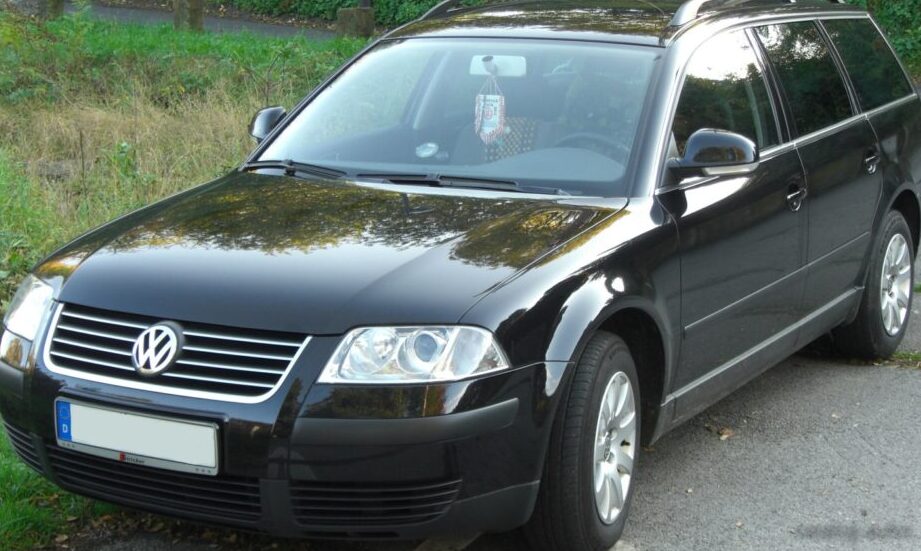
The Volkswagen Passat Variant (B5.5) 1.9 TDI with a 130 horsepower output and a six-speed manual transmission represents a significant offering within the broader B5.5 Passat range, produced between 2000 and 2005. This variant was primarily aimed at the European market, where station wagons (known as ‘Variants’ in Volkswagen terminology) held a strong appeal for families and those requiring practical load-carrying capabilities. It sat in a sweet spot within the lineup, offering a balance of fuel efficiency, reasonable performance, and affordability, positioned between the lower-powered petrol engines and the more expensive, higher-performance options like the V6 models.
Technical Specifications
| Brand | Volkswagen |
| Model | Passat |
| Generation | Passat Variant (B5.5) |
| Type (Engine) | 1.9 TDI (130 Hp) Manual 6-speed |
| Start of production | 2000 |
| End of production | 2005 |
| Powertrain Architecture | Internal Combustion engine |
| Body type | Station wagon (estate) |
| Seats | 5 |
| Doors | 5 |
| Fuel consumption (economy) – urban (NEDC) | 7.7 l/100 km (30.5 US mpg, 36.7 UK mpg, 13 km/l) |
| Fuel consumption (economy) – extra urban (NEDC) | 5 l/100 km (47 US mpg, 56.5 UK mpg, 20 km/l) |
| Fuel consumption (economy) – combined (NEDC) | 6 l/100 km (39.2 US mpg, 47.1 UK mpg, 16.7 km/l) |
| CO2 emissions (NEDC) | 162 g/km |
| Fuel Type | Diesel |
| Acceleration 0 – 100 km/h | 10.2 sec |
| Acceleration 0 – 62 mph | 10.2 sec |
| Acceleration 0 – 60 mph | 9.7 sec |
| Maximum speed | 201 km/h (124.9 mph) |
| Emission standard | Euro 3 |
| Weight-to-power ratio | 12.6 kg/Hp, 79.2 Hp/tonne |
| Weight-to-torque ratio | 5.3 kg/Nm, 188.9 Nm/tonne |
| Power | 130 Hp @ 4000 rpm |
| Power per litre | 68.6 Hp/l |
| Torque | 310 Nm @ 1900 rpm (228.64 lb.-ft. @ 1900 rpm) |
| Engine layout | Front, Longitudinal |
| Engine Model/Code | AVF |
| Engine displacement | 1896 cm3 (115.7 cu. in.) |
| Number of cylinders | 4 |
| Engine configuration | Inline |
| Cylinder Bore | 79.5 mm (3.13 in.) |
| Piston Stroke | 95.5 mm (3.76 in.) |
| Compression ratio | 19:1 |
| Number of valves per cylinder | 2 |
| Fuel injection system | Pump-nozzle (Unit Injector) |
| Engine aspiration | Turbocharger, Intercooler |
| Valvetrain | SOHC |
| Engine oil capacity | 4 l (4.23 US qt | 3.52 UK qt) |
| Coolant | 7 l (7.4 US qt | 6.16 UK qt) |
| Kerb Weight | 1641 kg (3617.79 lbs.) |
| Max. weight | 2050 kg (4519.48 lbs.) |
| Max load | 409 kg (901.69 lbs.) |
| Trunk (boot) space – minimum | 495 l (17.48 cu. ft.) |
| Trunk (boot) space – maximum | 1600 l (56.5 cu. ft.) |
| Fuel tank capacity | 62 l (16.38 US gal | 13.64 UK gal) |
| Max. roof load | 100 kg (220.46 lbs.) |
| Permitted trailer load with brakes (12%) | 1600 kg (3527.4 lbs.) |
| Permitted trailer load without brakes | 650 kg (1433 lbs.) |
| Permitted towbar download | 75 kg (165.35 lbs.) |
| Length | 4682 mm (184.33 in.) |
| Width | 1746 mm (68.74 in.) |
| Height | 1498 mm (58.98 in.) |
| Wheelbase | 2703 mm (106.42 in.) |
| Minimum turning circle | 11.4 m (37.4 ft.) |
| Drivetrain Architecture | ICE drives front wheels |
| Drive wheel | Front wheel drive |
| Number of gears and type of gearbox | 6 gears, manual transmission |
| Front suspension | Independent multi-link suspension, Transverse stabilizer |
| Rear suspension | Trailing arm, Torsion |
| Front brakes | Ventilated discs |
| Rear brakes | Disc |
| Assisting systems | ABS (Anti-lock braking system) |
| Steering type | Steering rack and pinion |
| Power steering | Hydraulic Steering |
| Tires size | 195/65 R15 |
| Wheel rims size | 6J x 15 |
INTRODUCTION
The Volkswagen Passat B5.5, launched in late 2000, was a significant refresh of the B5 generation, bringing with it styling updates, improved interior materials, and revised engine options. The 1.9 TDI 130 hp manual variant quickly became a popular choice, particularly in Europe, offering a compelling blend of fuel economy, practicality, and reasonable performance. Built on the 1HX0/A3 platform, the B5.5 Passat aimed to address some of the criticisms leveled at the earlier B5 model, focusing on perceived quality and refinement. This specific engine and transmission combination was a mainstay of the range, appealing to buyers who prioritized efficiency and usability over outright speed.
Powertrain & Engine Architecture
The heart of this Passat Variant is the 1.9-liter, four-cylinder diesel engine, designated the AVF engine code. This engine is a direct-injection diesel, utilizing Volkswagen’s pump-nozzle (Unit Injector) technology. This system delivers highly pressurized fuel directly into the combustion chamber, improving combustion efficiency and reducing emissions. The engine features a single overhead camshaft (SOHC) operating two valves per cylinder. A turbocharger with an intercooler is employed to boost power and torque, providing 130 horsepower at 4000 rpm and a substantial 310 Nm (228.64 lb.-ft.) of torque at a low 1900 rpm. The six-speed manual transmission provides well-spaced gear ratios, allowing the engine to operate efficiently at highway speeds while still providing adequate acceleration. The gearbox itself is known for its durability and relatively smooth shift action.
Driving Characteristics
The 1.9 TDI 130 hp manual Passat Variant offers a comfortable and capable driving experience. While not a sports car, the engine’s strong low-end torque makes it feel surprisingly responsive in everyday driving situations. The six-speed gearbox allows for relaxed cruising on the highway, and the engine doesn’t feel strained even when fully loaded. Compared to the higher-output TDI variants (like the 150 hp or 180 hp versions), this 130 hp model feels less urgent in acceleration, but it compensates with improved fuel economy. The manual transmission provides more driver engagement than the available automatic option, and allows for better control when navigating winding roads or overtaking. The gear ratios are well-chosen, maximizing efficiency and providing adequate power for most driving scenarios.
Equipment & Trim Levels
The Passat Variant B5.5 1.9 TDI 130 hp typically came with a reasonable level of standard equipment. This included central locking, electric windows, power steering, ABS brakes, and a basic stereo system. Interior upholstery was usually cloth, although leather options were available. Trim levels varied depending on the market, but generally included options for alloy wheels, climate control, a sunroof, and upgraded audio systems. The ‘Trendline’ and ‘Comfortline’ trims were common, with the ‘Highline’ offering the most luxurious features. Optional extras could significantly enhance the vehicle, but the base specification provided a comfortable and well-equipped package for the price.
Chassis & Braking
The Passat Variant B5.5 features an independent multi-link suspension at the front, providing a comfortable ride and good handling characteristics. The rear suspension utilizes a trailing arm setup with torsion beam, which is a cost-effective and space-efficient design. Front brakes are ventilated discs, providing ample stopping power, while rear brakes are typically solid discs. ABS (Anti-lock Braking System) is standard, enhancing safety in emergency braking situations. Stabilizer bars are fitted to both the front and rear axles, reducing body roll during cornering.
Market Reception & Comparison
The Passat Variant 1.9 TDI 130 hp was generally well-received by automotive critics. It was praised for its fuel efficiency, practicality, and comfortable ride. Compared to the more powerful TDI variants, it offered a more affordable entry point into the Passat range, while still providing a good level of performance for everyday driving. The manual transmission was favored by many drivers for its improved engagement and fuel economy compared to the automatic option. Reliability was generally good, although like all diesel engines, it was susceptible to issues with the fuel injection system and turbocharger if not properly maintained.
Legacy
The 1.9 TDI engine, particularly in the AVF guise, has earned a reputation for durability and longevity. Many examples of the Passat Variant 1.9 TDI 130 hp are still on the road today, testament to the engine’s robust design. In the used car market, these vehicles are often sought after for their fuel efficiency and relatively low running costs. However, potential buyers should be aware of the potential for age-related issues, such as wear and tear on the suspension components and the possibility of problems with the fuel injection system. Overall, the Passat Variant 1.9 TDI 130 hp remains a practical and reliable choice for those seeking a spacious and economical estate car.