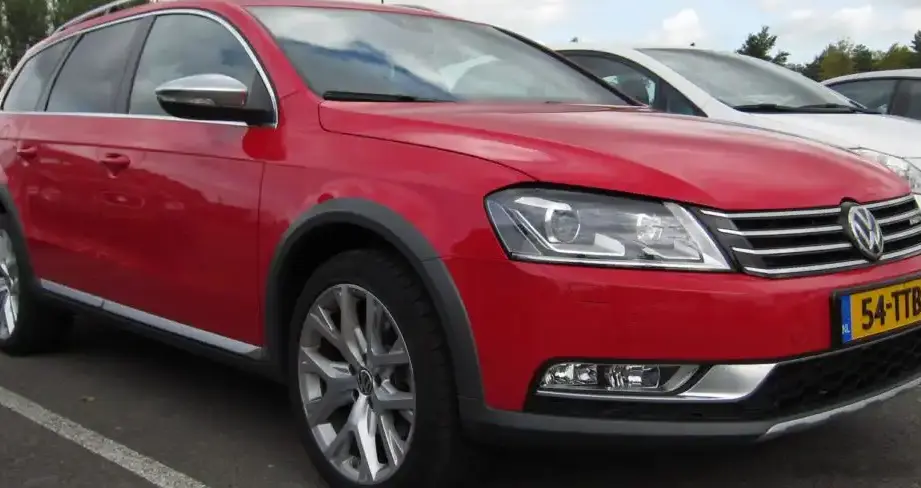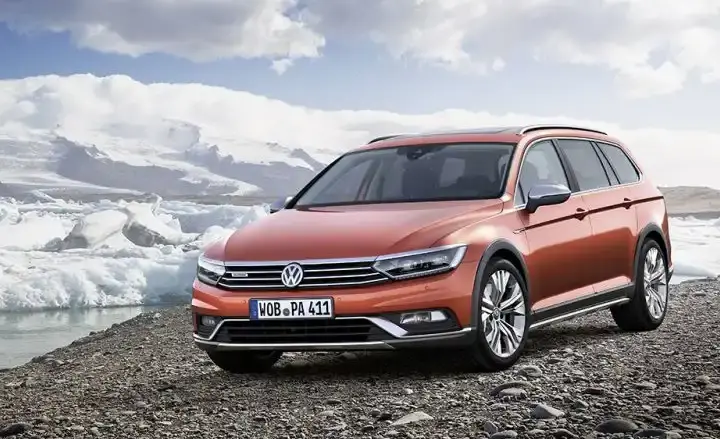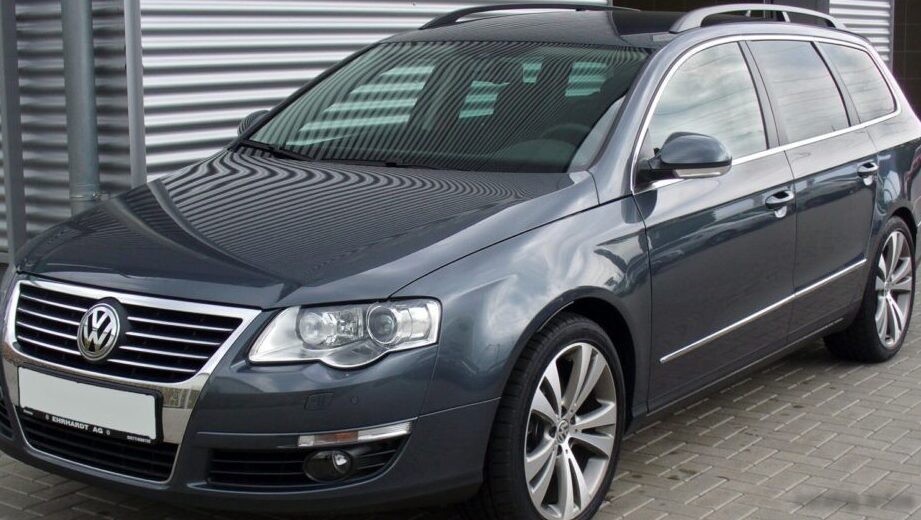
The Volkswagen Passat Variant (B6) 1.4 TSI 122 hp with the Direct-Shift Gearbox (DSG) was a popular configuration of Volkswagen’s mid-size family wagon, produced from October 2007 to July 2010. Positioned as a more economical and accessible entry point into the B6 Passat Variant range, it offered a blend of practicality, fuel efficiency, and modern technology. This variant played a significant role in broadening the Passat’s appeal in European markets, where station wagons remained a dominant body style. It represented Volkswagen’s move towards smaller displacement, turbocharged engines paired with advanced automatic transmissions.
Technical Specifications
| Brand | Volkswagen |
| Model | Passat |
| Generation | Passat Variant (B6) |
| Type (Engine) | 1.4 TSI (122 Hp) DSG |
| Start of production | October, 2007 |
| End of production | July, 2010 |
| Powertrain Architecture | Internal Combustion engine |
| Body type | Station wagon (estate) |
| Seats | 5 |
| Doors | 5 |
| Fuel consumption (urban) | 8.3 l/100 km (28.3 US mpg, 34 UK mpg, 12 km/l) |
| Fuel consumption (extra urban) | 5.5 l/100 km (42.8 US mpg, 51.4 UK mpg, 18.2 km/l) |
| Fuel consumption (combined) | 6.5 l/100 km (36.2 US mpg, 43.5 UK mpg, 15.4 km/l) |
| Fuel Type | Petrol (Gasoline) |
| Acceleration 0 – 100 km/h | 10.8 sec |
| Acceleration 0 – 62 mph | 10.8 sec |
| Acceleration 0 – 60 mph | 10.3 sec |
| Maximum speed | 198 km/h (123.03 mph) |
| Emission standard | Euro 4 |
| Weight-to-power ratio | 11.5 kg/Hp, 87 Hp/tonne |
| Weight-to-torque ratio | 7 kg/Nm, 142.6 Nm/tonne |
| Power | 122 Hp @ 5000 rpm |
| Power per litre | 87.8 Hp/l |
| Torque | 200 Nm @ 1500-4000 rpm (147.51 lb.-ft. @ 1500-4000 rpm) |
| Engine layout | Front, Transverse |
| Engine Model/Code | CAXA |
| Engine displacement | 1390 cm3 (84.82 cu. in.) |
| Number of cylinders | 4 |
| Engine configuration | Inline |
| Cylinder Bore | 76.5 mm (3.01 in.) |
| Piston Stroke | 75.6 mm (2.98 in.) |
| Number of valves per cylinder | 4 |
| Fuel injection system | Direct injection |
| Engine aspiration | Turbocharger, Intercooler |
| Valvetrain | DOHC |
| Engine oil capacity | 3.6 l (3.8 US qt | 3.17 UK qt) |
| Coolant | 5.6 l (5.92 US qt | 4.93 UK qt) |
| Kerb Weight | 1403 kg (3093.09 lbs.) |
| Max. weight | 2040 kg (4497.43 lbs.) |
| Max load | 637 kg (1404.34 lbs.) |
| Trunk (boot) space – minimum | 603 l (21.29 cu. ft.) |
| Trunk (boot) space – maximum | 1731 l (61.13 cu. ft.) |
| Fuel tank capacity | 70 l (18.49 US gal | 15.4 UK gal) |
| Length | 4774 mm (187.95 in.) |
| Width | 1820 mm (71.65 in.) |
| Height | 1517 mm (59.72 in.) |
| Wheelbase | 2709 mm (106.65 in.) |
| Front track | 1552 mm (61.1 in.) |
| Rear (Back) track | 1551 mm (61.06 in.) |
| Minimum turning circle | 11.4 m (37.4 ft.) |
| Drivetrain Architecture | Front wheel drive |
| Number of gears and type of gearbox | 6 gears, automatic transmission |
| Front suspension | Spring Strut |
| Rear suspension | Coil spring |
| Front brakes | Ventilated discs |
| Rear brakes | Disc |
| Assisting systems | ABS (Anti-lock braking system) |
| Steering type | Steering rack and pinion |
| Tires size | 205/55 R16 |
| Wheel rims size | 6.5J x 16 |
Powertrain & Engine Architecture
At the heart of the Passat Variant 1.4 TSI DSG lies the CAXA engine code, a 1.4-liter inline-four cylinder gasoline engine. This engine was a key component of Volkswagen’s strategy to downsize and improve fuel economy without sacrificing performance. The CAXA utilizes direct fuel injection (FSI) and a turbocharger with an intercooler to deliver a respectable 122 horsepower and 200 Nm (147 lb-ft) of torque. The direct injection system precisely meters fuel into the combustion chamber, enhancing efficiency and reducing emissions. The turbocharger spools up quickly, providing a broad torque curve that is particularly useful for everyday driving. The engine features a double overhead camshaft (DOHC) valvetrain with four valves per cylinder, optimizing airflow for improved power output. Paired with this engine is the 7-speed DSG (Direct-Shift Gearbox), a dual-clutch transmission known for its quick and smooth gear changes. The DSG allows for both fully automatic operation and manual gear selection via the gear lever or steering wheel-mounted paddles (depending on trim level).
Driving Characteristics
The 1.4 TSI DSG Passat Variant offered a comfortable and refined driving experience. While not a performance-oriented model, the turbocharger provided adequate acceleration for most driving situations. The 0-60 mph time of around 10.3 seconds was respectable for a family wagon of this size. The DSG transmission contributed to smooth and seamless gear changes, enhancing the overall driving experience. Compared to the higher-output 1.8 TSI or 2.0 TSI variants, the 1.4 TSI felt less eager to accelerate, particularly when fully loaded. However, the 1.4 TSI’s lighter weight and efficient engine contributed to better fuel economy. The gear ratios in the DSG were tuned for a balance of fuel efficiency and responsiveness, with taller gears for highway cruising and shorter gears for quicker acceleration. The steering was light and precise, making the Passat easy to maneuver in urban environments.
Equipment & Trim Levels
The 1.4 TSI DSG variant typically came with a reasonable level of standard equipment. This included air conditioning, power windows, power mirrors, a CD stereo system, and alloy wheels. Higher trim levels, such as Trendline and Comfortline, added features like automatic climate control, a multi-function steering wheel, cruise control, and upgraded upholstery. Optional extras included a sunroof, navigation system, parking sensors, and leather seats. Interior upholstery was typically cloth, but leather options were available. The dashboard layout was functional and well-designed, with clear instrumentation and intuitive controls.
Chassis & Braking
The Passat Variant B6 featured a MacPherson strut front suspension and a multi-link rear suspension, providing a comfortable ride and good handling characteristics. The suspension was tuned to prioritize comfort over outright sportiness. The 1.4 TSI models typically used ventilated front disc brakes and solid rear disc brakes. Anti-lock Braking System (ABS) was standard, enhancing safety and stability during braking. Stabilizer bars were fitted to both the front and rear axles to reduce body roll during cornering. The chassis was designed to provide a stable and predictable driving experience, even when fully loaded.
Market Reception & Comparison
The Passat Variant 1.4 TSI DSG was generally well-received by automotive critics. It was praised for its fuel efficiency, comfortable ride, and refined driving experience. However, some critics noted that the 1.4 TSI engine could feel underpowered when the car was fully loaded or driving uphill. Compared to the 1.8 TSI and 2.0 TSI variants, the 1.4 TSI offered a more affordable entry point into the Passat range, but at the expense of performance. The 1.4 TSI also offered better fuel economy than the larger-displacement engines, making it an attractive option for drivers who prioritized efficiency. Compared to diesel variants like the 1.9 TDI and 2.0 TDI, the 1.4 TSI offered a quieter and smoother driving experience, but with slightly higher fuel consumption.
Legacy
The 1.4 TSI engine and DSG transmission combination proved to be relatively reliable, although some owners have reported issues with the DSG transmission, such as mechatronic unit failures. Regular maintenance, including fluid changes, is crucial for ensuring the longevity of the DSG. The CAXA engine is generally considered to be durable, but it is susceptible to carbon buildup on the intake valves, which can reduce performance over time. In the used car market, the Passat Variant 1.4 TSI DSG remains a popular choice for buyers looking for a practical and fuel-efficient family wagon. Its combination of comfort, technology, and affordability makes it a compelling option in its price range.