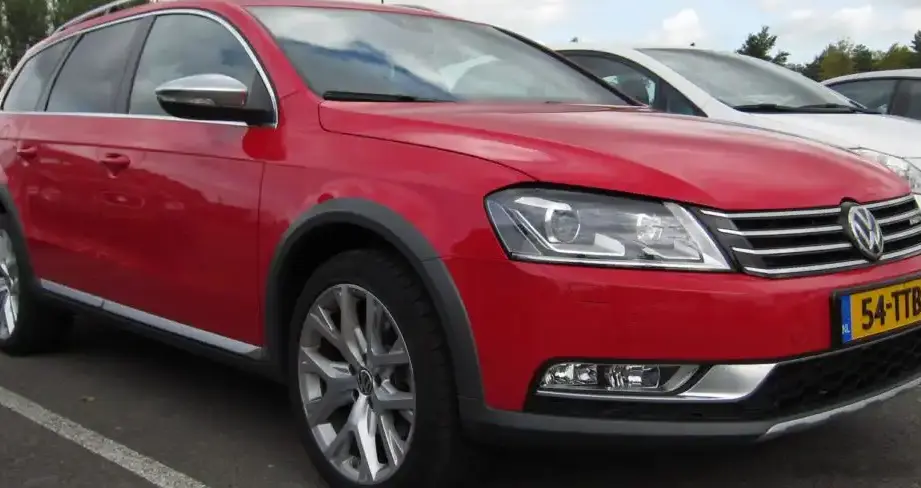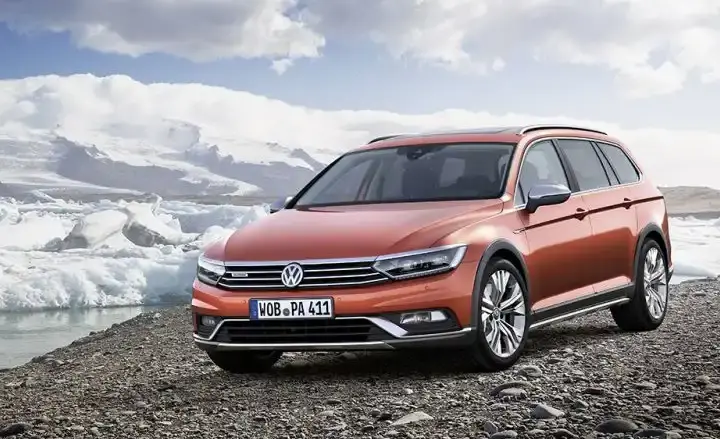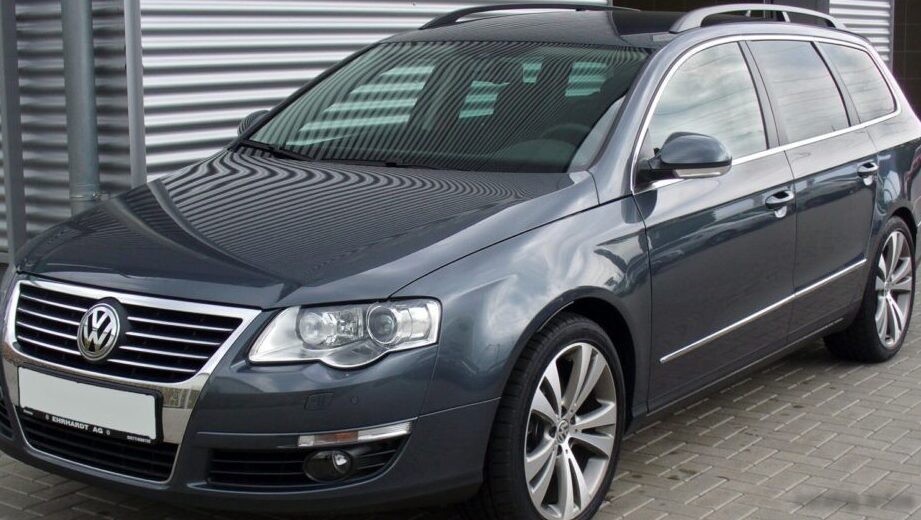
The Volkswagen Passat Variant (B6) 1.4 TSI (150 hp) EcoFuel, produced from 2009 to 2010, represents a unique offering within the sixth generation (B6) Passat lineup. This variant, a station wagon (estate) body style, was specifically designed to appeal to European markets increasingly focused on alternative fuels and fuel efficiency. It combined a turbocharged direct-injection gasoline engine with the capability to run on Compressed Natural Gas (CNG), offering a compromise between performance and reduced emissions. The B6 Passat, launched in 2005, was a significant model for Volkswagen, built on the A6 platform shared with other Volkswagen Group vehicles like the Audi A4 and Škoda Superb.
Technical Specifications
| Brand | Volkswagen |
| Model | Passat |
| Generation | Passat Variant (B6) |
| Type (Engine) | 1.4 TSI (150 Hp) EcoFuel |
| Start of production | 2009 |
| End of production | 2010 |
| Powertrain Architecture | Internal Combustion engine |
| Body type | Station wagon (estate) |
| Seats | 5 |
| Doors | 5 |
| Fuel consumption (economy) – urban (NEDC) | 9.6 l/100 km (24.5 US mpg, 29.4 UK mpg, 10.4 km/l) |
| Fuel consumption (economy) – urban (CNG) (NEDC) | 6.1 kg/100 km |
| Fuel consumption (economy) – extra urban (NEDC) | 5.7 l/100 km (41.3 US mpg, 49.6 UK mpg, 17.5 km/l) |
| Fuel consumption (economy) – extra urban (CNG) (NEDC) | 3.6 kg/100 km |
| Fuel consumption (economy) – combined (NEDC) | 7.2 l/100 km (32.7 US mpg, 39.2 UK mpg, 13.9 km/l) |
| Fuel consumption (economy) – combined (CNG) (NEDC) | 4.6 kg/100 km |
| CO2 emissions (NEDC) | 167 g/km |
| CO2 emissions (CNG) (NEDC) | 124 g/km |
| Fuel Type | Petrol / CNG |
| Acceleration 0 – 100 km/h | 9.9 sec |
| Acceleration 0 – 62 mph | 9.9 sec |
| Acceleration 0 – 60 mph | 9.4 sec |
| Maximum speed | 210 km/h (130.49 mph) |
| Emission standard | Euro 5 |
| Weight-to-power ratio | 10.4 kg/Hp, 96.3 Hp/tonne |
| Weight-to-torque ratio | 7.1 kg/Nm, 141.2 Nm/tonne |
| Power | 150 Hp @ 5500 rpm |
| Power per litre | 107.9 Hp/l |
| Torque | 220 Nm @ 1500-4500 rpm (162.26 lb.-ft. @ 1500-4500 rpm) |
| Engine layout | Front, Transverse |
| Engine Model/Code | EA111 / CDGA |
| Engine displacement | 1390 cm3 (84.82 cu. in.) |
| Number of cylinders | 4 |
| Engine configuration | Inline |
| Cylinder Bore | 76.5 mm (3.01 in.) |
| Piston Stroke | 75.6 mm (2.98 in.) |
| Compression ratio | 10:1 |
| Number of valves per cylinder | 4 |
| Fuel injection system | Direct injection and Multi-port manifold injection |
| Engine aspiration | Turbocharging and Supercharger, Intercooler |
| Valvetrain | DOHC |
| Engine oil capacity | 3.6 l (3.8 US qt | 3.17 UK qt) |
| Kerb Weight | 1558 kg (3434.8 lbs.) |
| Max. weight | 2160 kg (4761.98 lbs.) |
| Max load | 602 kg (1327.18 lbs.) |
| Trunk (boot) space – minimum | 523 l (18.47 cu. ft.) |
| Trunk (boot) space – maximum | 1651 l (58.3 cu. ft.) |
| Fuel tank capacity | 31 l (8.19 US gal | 6.82 UK gal) |
| CNG cylinder capacity | 21 kg |
| Max. roof load | 100 kg (220.46 lbs.) |
| Permitted trailer load with brakes (8%) | 1700 kg (3747.86 lbs.) |
| Permitted trailer load with brakes (12%) | 1500 kg (3306.93 lbs.) |
| Permitted trailer load without brakes | 750 kg (1653.47 lbs.) |
| Permitted towbar download | 90 kg (198.42 lbs.) |
| Length | 4774 mm (187.95 in.) |
| Width | 1820 mm (71.65 in.) |
| Width including mirrors | 1991 mm (78.39 in.) |
| Height | 1517 mm (59.72 in.) |
| Wheelbase | 2709 mm (106.65 in.) |
| Front track | 1552 mm (61.1 in.) |
| Rear (Back) track | 1551 mm (61.06 in.) |
| Ride height (ground clearance) | 114 mm (4.49 in.) |
| Minimum turning circle (turning diameter) | 11.4 m (37.4 ft.) |
| Approach angle | 14.4° |
| Departure angle | 12.7° |
| Ramp-over (brakeover) angle | 10.8° |
| Drivetrain Architecture | The Internal combustion engine (ICE) drives the front wheels of the vehicle. |
| Drive wheel | Front wheel drive |
| Number of gears and type of gearbox | 6 gears, manual transmission |
| Front suspension | Independent type McPherson, Transverse stabilizer |
| Rear suspension | Independent multi-link suspension, Transverse stabilizer |
| Front brakes | Ventilated discs |
| Rear brakes | Disc |
| Assisting systems | ABS (Anti-lock braking system) |
| Steering type | Steering rack and pinion |
| Power steering | Electric Steering |
| Tires size | 205/55 R 16 |
| Wheel rims size | 6.5 J x 16 |
INTRODUCTION
The Volkswagen Passat Variant (B6) 1.4 TSI (150 hp) EcoFuel was a niche model within the B6 Passat range, primarily aimed at the European market where CNG infrastructure was more developed. Introduced in 2009 and discontinued in 2010, it offered a compelling alternative to traditional gasoline or diesel engines, capitalizing on government incentives for cleaner vehicles. The “EcoFuel” designation signified its bi-fuel capability, allowing it to run on either gasoline or CNG, or a combination of both. This variant occupied a mid-range position in the Passat lineup, offering a balance between fuel economy, performance, and practicality.
Powertrain & Engine Architecture
At the heart of the Passat Variant 1.4 TSI EcoFuel lies the EA111 engine code, specifically the CDGA variant. This 1.4-liter inline-four cylinder engine is notable for its combination of turbocharging and supercharging – a relatively uncommon setup. The supercharger provides immediate boost at low engine speeds, eliminating turbo lag, while the turbocharger takes over at higher RPMs for sustained power delivery. Direct fuel injection further enhances efficiency and performance. The engine produces 150 horsepower at 5500 rpm and 220 Nm (162 lb-ft) of torque between 1500 and 4500 rpm. The EcoFuel system incorporates a high-pressure CNG tank, typically located in the spare wheel well, and a fuel management system that seamlessly switches between gasoline and CNG operation. The engine is paired with a 6-speed manual transmission, which was the only transmission option available for this variant.
Driving Characteristics
The 1.4 TSI EcoFuel Passat Variant offered a surprisingly lively driving experience, especially considering its focus on fuel efficiency. The combined supercharger and turbocharger setup provided a broad torque curve, making it responsive in everyday driving situations. While not as quick as the higher-powered gasoline or diesel variants, the 0-60 mph time of around 9.4 seconds was respectable. When running on CNG, a slight power reduction was noticeable, but the lower fuel costs often outweighed this performance difference. The 6-speed manual transmission was well-matched to the engine, offering precise shifts and allowing drivers to maximize fuel economy. Compared to the 1.6L gasoline engine, the 1.4 TSI EcoFuel offered significantly more power and torque, while the 2.0 TDI diesel provided superior fuel economy but at a higher initial cost.
Equipment & Trim Levels
The Passat Variant 1.4 TSI EcoFuel typically came with a reasonable level of standard equipment, reflecting its mid-range positioning. This included features like air conditioning, power windows, central locking, and an audio system. Interior upholstery was generally cloth, with options for upgraded materials available. Common optional extras included alloy wheels, a sunroof, parking sensors, and a navigation system. The dashboard layout was typical of the B6 Passat, with a functional and ergonomic design. Specific trim levels varied depending on the country of sale, but generally followed a progression from base “Trendline” to mid-range “Comfortline” and higher-spec “Highline” models.
Chassis & Braking
The Passat Variant 1.4 TSI EcoFuel utilized the standard B6 Passat chassis setup. Front suspension consisted of independent MacPherson struts with a transverse stabilizer bar, while the rear featured an independent multi-link suspension, also with a stabilizer bar. This configuration provided a comfortable ride and good handling characteristics. Brakes were ventilated discs on the front wheels and solid discs on the rear. ABS (Anti-lock Braking System) was standard. The added weight of the CNG tank did slightly affect the vehicle’s handling balance, but the difference was generally not significant.
Market Reception & Comparison
The Passat Variant 1.4 TSI EcoFuel received generally positive reviews from automotive critics. It was praised for its innovative powertrain, fuel efficiency, and surprisingly enjoyable driving experience. However, the limited availability of CNG refueling stations in many regions was a significant drawback. Compared to other Passat variants, the EcoFuel model offered a unique proposition for environmentally conscious buyers. Its fuel economy was comparable to, or slightly better than, the 1.6L gasoline engine, while its performance was significantly improved. The 2.0 TDI diesel offered superior fuel economy but came with a higher price tag and potential concerns about diesel emissions.
Legacy
The Volkswagen Passat Variant 1.4 TSI EcoFuel represents an interesting chapter in Volkswagen’s exploration of alternative fuels. While production was relatively short-lived, it demonstrated the potential of CNG as a viable fuel source. Today, these vehicles are relatively rare on the used car market. The EA111 engine, while generally reliable, can be prone to carbon buildup if not properly maintained, particularly when running primarily on CNG. The EcoFuel system itself is generally robust, but the CNG tank requires periodic inspection and recertification. Despite these potential maintenance concerns, the Passat Variant 1.4 TSI EcoFuel remains a unique and appealing option for those seeking a fuel-efficient and environmentally friendly station wagon.