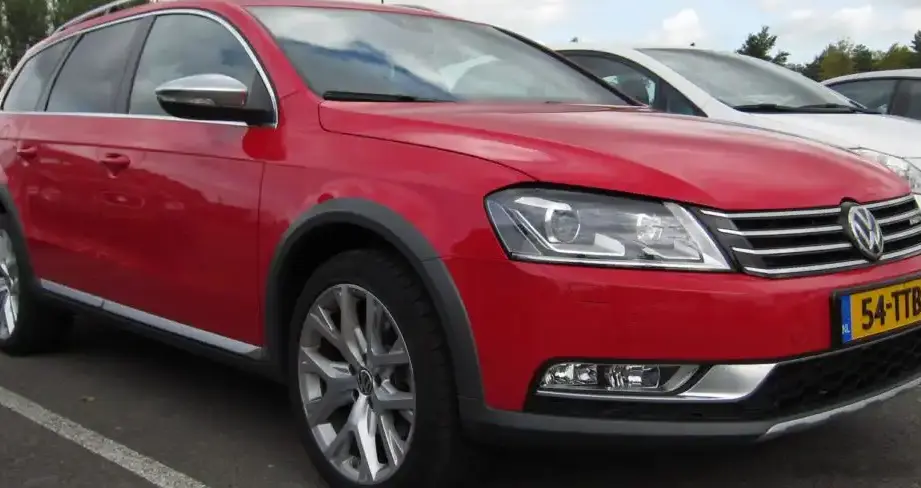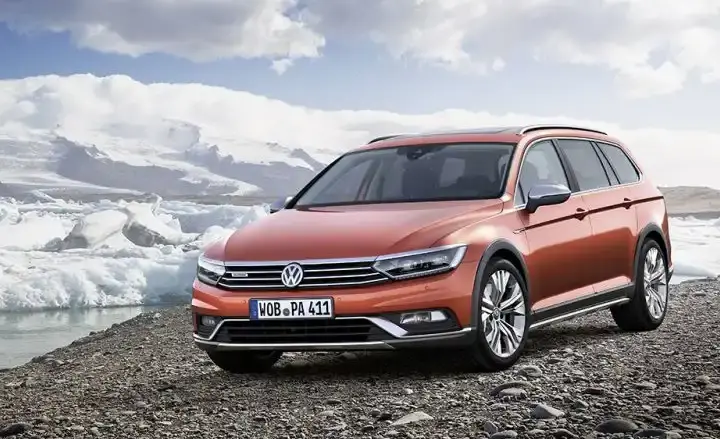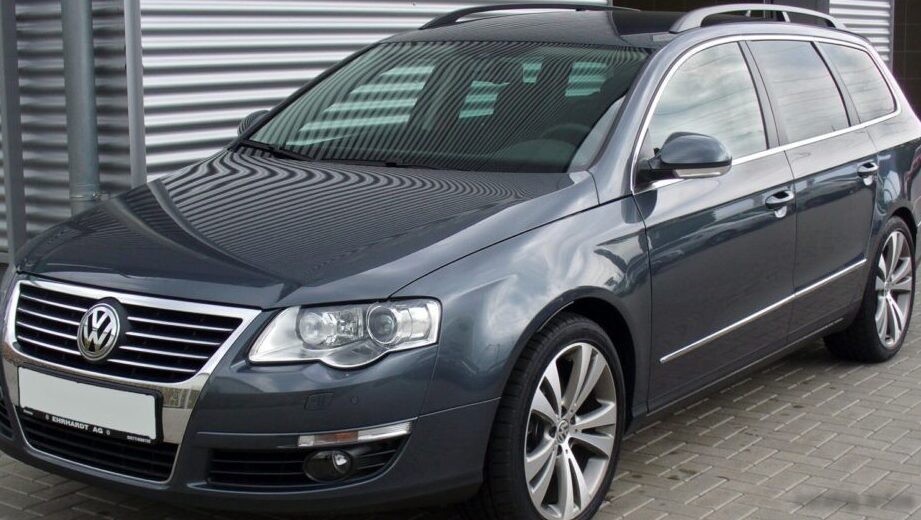
The Volkswagen Passat Variant (B6) 1.4 TSI BMT with 122 horsepower and a Direct-Shift Gearbox (DSG) was a popular configuration of the sixth-generation Passat, produced between 2009 and 2010. Positioned as an entry-to-mid-range option within the B6 Variant lineup, it offered a balance of fuel efficiency, practicality, and modern technology. This model aimed to appeal to buyers seeking a spacious, comfortable wagon without the higher running costs associated with larger engines. It was primarily sold in the European market, where wagons (estate cars) held a significant share of the family car segment.
Technical Specifications
| Brand | Volkswagen |
| Model | Passat |
| Generation | Passat Variant (B6) |
| Type (Engine) | 1.4 TSI BMT (122 Hp) DSG |
| Start of production | 2009 |
| End of production | 2010 |
| Powertrain Architecture | Internal Combustion engine |
| Body type | Station wagon (estate) |
| Seats | 5 |
| Doors | 5 |
| Fuel consumption (economy) – urban (NEDC) | 7.5 l/100 km (31.4 US mpg, 37.7 UK mpg, 13.3 km/l) |
| Fuel consumption (economy) – extra urban (NEDC) | 5.1 l/100 km (46.1 US mpg, 55.4 UK mpg, 19.6 km/l) |
| Fuel consumption (economy) – combined (NEDC) | 6 l/100 km (39.2 US mpg, 47.1 UK mpg, 16.7 km/l) |
| CO2 emissions (NEDC) | 139 g/km |
| Fuel Type | Petrol (Gasoline) |
| Acceleration 0 – 100 km/h | 10.6 sec |
| Acceleration 0 – 62 mph | 10.6 sec |
| Acceleration 0 – 60 mph | 10.1 sec |
| Maximum speed | 200 km/h (124.27 mph) |
| Emission standard | Euro 5 |
| Weight-to-power ratio | 11.8 kg/Hp, 85 Hp/tonne |
| Weight-to-torque ratio | 7.2 kg/Nm, 139.3 Nm/tonne |
| Power | 122 Hp @ 5000 rpm |
| Power per litre | 87.8 Hp/l |
| Torque | 200 Nm @ 1500-4000 rpm (147.51 lb.-ft. @ 1500-4000 rpm) |
| Engine layout | Front, Transverse |
| Engine Model/Code | CAXA |
| Engine displacement | 1390 cm3 (84.82 cu. in.) |
| Number of cylinders | 4 |
| Engine configuration | Inline |
| Number of valves per cylinder | 4 |
| Fuel injection system | Direct injection |
| Engine aspiration | Turbocharger, Intercooler |
| Valvetrain | DOHC |
| Engine oil capacity | 3.6 l (3.8 US qt | 3.17 UK qt) |
| Coolant | 5.6 l (5.92 US qt | 4.93 UK qt) |
| Kerb Weight | 1436 kg (3165.84 lbs.) |
| Max. weight | 2040 kg (4497.43 lbs.) |
| Max load | 604 kg (1331.59 lbs.) |
| Trunk (boot) space – minimum | 603 l (21.29 cu. ft.) |
| Trunk (boot) space – maximum | 1731 l (61.13 cu. ft.) |
| Fuel tank capacity | 70 l (18.49 US gal | 15.4 UK gal) |
| Max. roof load | 100 kg (220.46 lbs.) |
| Permitted trailer load with brakes (8%) | 1600 kg (3527.4 lbs.) |
| Permitted trailer load with brakes (12%) | 1400 kg (3086.47 lbs.) |
| Permitted trailer load without brakes | 750 kg (1653.47 lbs.) |
| Permitted towbar download | 90 kg (198.42 lbs.) |
| Length | 4774 mm (187.95 in.) |
| Width | 1820 mm (71.65 in.) |
| Width including mirrors | 1991 mm (78.39 in.) |
| Height | 1517 mm (59.72 in.) |
| Wheelbase | 2709 mm (106.65 in.) |
| Front track | 1552 mm (61.1 in.) |
| Rear (Back) track | 1551 mm (61.06 in.) |
| Ride height (ground clearance) | 114 mm (4.49 in.) |
| Minimum turning circle (turning diameter) | 11.4 m (37.4 ft.) |
| Approach angle | 14.4° |
| Departure angle | 12.7° |
| Ramp-over (brakeover) angle | 10.8° |
| Drivetrain Architecture | The Internal combustion engine (ICE) drives the front wheels of the vehicle. |
| Drive wheel | Front wheel drive |
| Number of gears and type of gearbox | 7 gears, automatic transmission DSG |
| Front suspension | Independent type McPherson, Transverse stabilizer |
| Rear suspension | Independent multi-link suspension, Transverse stabilizer |
| Front brakes | Ventilated discs |
| Rear brakes | Disc |
| Assisting systems | ABS (Anti-lock braking system) |
| Steering type | Steering rack and pinion |
| Power steering | Electric Steering |
| Tires size | 205/55 R 16 |
| Wheel rims size | 6.5 J x 16 |
Powertrain & Engine Architecture
The heart of this Passat Variant was the 1.4-liter TSI (Turbocharged Stratified Injection) engine, specifically the CAXA engine code. This engine was a key component of Volkswagen’s efforts to downsize and improve fuel efficiency. It featured direct fuel injection, a turbocharger with an intercooler, and a dual overhead camshaft (DOHC) valvetrain with four valves per cylinder. The ‘BMT’ designation stands for ‘BlueMotion Technology’, indicating the inclusion of fuel-saving features like start-stop functionality and regenerative braking. The engine’s relatively small displacement was offset by the turbocharger, which provided a boost in power and torque. The CAXA engine is known for its responsiveness and relatively smooth operation. Paired with this engine was the 7-speed DSG (Direct-Shift Gearbox), a dual-clutch transmission that offered quick, seamless gear changes and contributed to improved fuel economy compared to a traditional automatic transmission.
Driving Characteristics
The 122 hp output and 200 Nm (147 lb-ft) of torque delivered by the 1.4 TSI engine, combined with the DSG transmission, resulted in a driving experience that prioritized efficiency and usability over outright performance. Acceleration from 0-100 km/h (0-62 mph) took around 10.6 seconds. While not particularly quick, the engine provided sufficient power for everyday driving situations, including highway cruising and overtaking. The DSG transmission’s quick shifts helped to keep the engine in its optimal power band. Compared to the more powerful 1.8 TSI or 2.0 TDI variants, this version felt less eager to accelerate, but it offered a more relaxed and fuel-efficient driving experience. The gear ratios were tuned for economy, meaning the engine didn’t rev as high as in sportier models.
Equipment & Trim Levels
The 1.4 TSI BMT DSG Passat Variant typically came with a reasonable level of standard equipment. This included air conditioning, power windows, central locking, an audio system with CD player, and alloy wheels. Safety features such as ABS, electronic stability control, and multiple airbags were also standard. Higher trim levels offered options like leather upholstery, a sunroof, a navigation system, and parking sensors. Interior upholstery was generally cloth, with options for upgraded materials. The dashboard layout was typical of the B6 Passat, with a functional and straightforward design.
Chassis & Braking
The Passat Variant B6 featured an independent suspension setup, with McPherson struts at the front and a multi-link suspension at the rear. This provided a comfortable ride quality and good handling characteristics. The front brakes were ventilated discs, while the rear brakes were solid discs. The suspension was tuned to prioritize comfort, but it still offered a reasonable level of control in corners. Stabilizer bars were fitted to both the front and rear axles to reduce body roll.
Market Reception & Comparison
The 1.4 TSI BMT DSG Passat Variant was generally well-received by automotive critics as a practical and fuel-efficient family car. It was praised for its comfortable ride, spacious interior, and modern technology. However, some critics noted that the engine could feel underpowered when fully loaded or driving uphill. Compared to the 1.8 TSI and 2.0 TDI variants, it offered lower running costs but less performance. The fuel economy of around 6 l/100 km (39.2 US mpg) was a significant selling point, making it an attractive option for drivers who prioritized efficiency.
Legacy
The 1.4 TSI engine and DSG transmission combination proved to be relatively reliable, although some owners have reported issues with the DSG’s mechatronic unit over time. Regular maintenance, including timely DSG fluid changes, is crucial for long-term reliability. Today, the Passat Variant (B6) 1.4 TSI BMT DSG can be found on the used car market at affordable prices. It remains a practical and spacious option for those seeking a comfortable and fuel-efficient wagon, but potential buyers should be aware of the potential DSG maintenance costs.