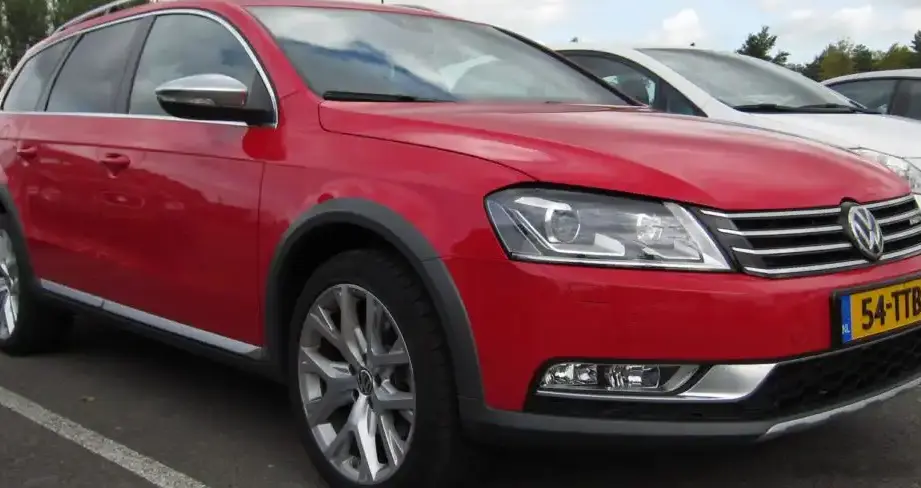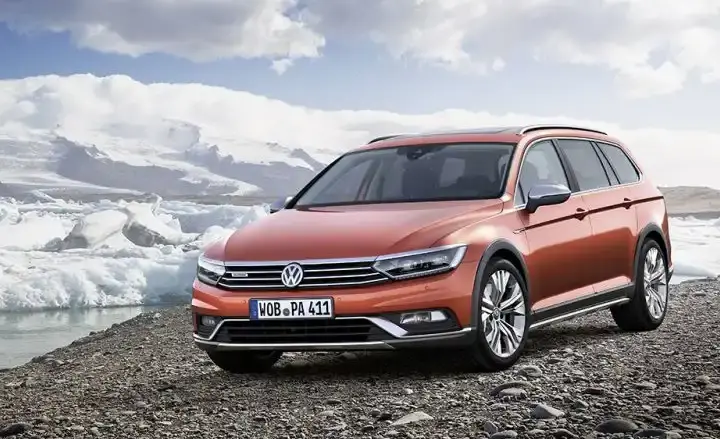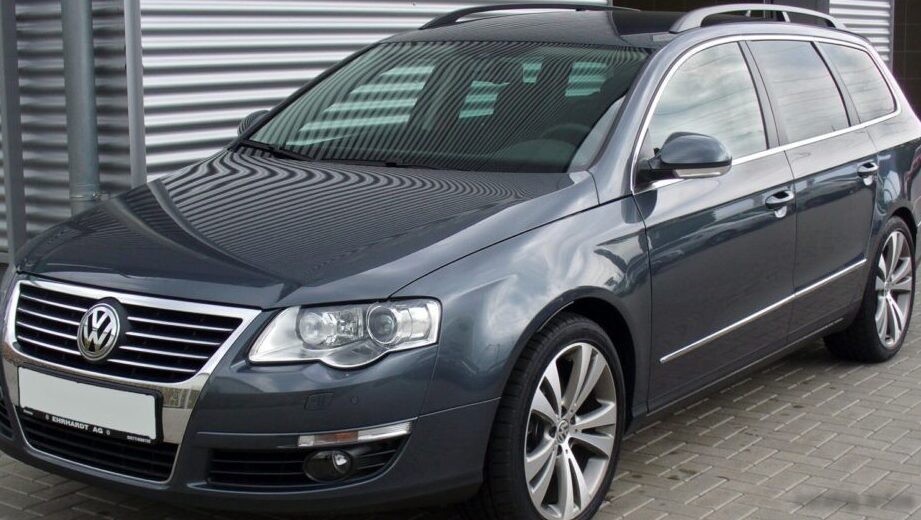
The Volkswagen Passat Variant (B6) 1.6i 16V FSI, produced from February 2005 to April 2008, represented an entry-level offering within the broader B6 Passat range. This variant, a practical station wagon (estate) based on the Volkswagen Group’s B6 platform (shared with models like the Audi A4 and Škoda Superb), aimed to provide fuel efficiency and reasonable space for families at a more accessible price point. It occupied the lower end of the Passat lineup, positioned below the more powerful 1.8T, 2.0T, and V6 models. The 1.6 FSI engine and manual transmission combination was primarily targeted at buyers prioritizing economy over outright performance.
Technical Specifications
| Brand | Volkswagen |
| Model | Passat |
| Generation | Passat Variant (B6) |
| Type (Engine) | 1.6i 16V FSI (115 Hp) |
| Start of production | February, 2005 |
| End of production | April, 2008 |
| Powertrain Architecture | Internal Combustion engine |
| Body type | Station wagon (estate) |
| Seats | 5 |
| Doors | 5 |
| Fuel consumption (urban) | 10.1 l/100 km (23.3 US mpg, 28 UK mpg, 9.9 km/l) |
| Fuel consumption (extra urban) | 6.2 l/100 km (37.9 US mpg, 45.6 UK mpg, 16.1 km/l) |
| Fuel consumption (combined) | 7.6 l/100 km (30.9 US mpg, 37.2 UK mpg, 13.2 km/l) |
| Fuel Type | Petrol (Gasoline) |
| Acceleration 0 – 100 km/h | 11.7 sec |
| Acceleration 0 – 62 mph | 11.7 sec |
| Acceleration 0 – 60 mph | 11.1 sec |
| Maximum speed | 197 km/h (122.41 mph) |
| Weight-to-power ratio | 12.2 kg/Hp, 82 Hp/tonne |
| Weight-to-torque ratio | 9.1 kg/Nm, 110.5 Nm/tonne |
| Power | 115 Hp @ 6000 rpm |
| Power per litre | 72 Hp/l |
| Torque | 155 Nm @ 4000 rpm (114.32 lb.-ft. @ 4000 rpm) |
| Engine layout | Front, Transverse |
| Engine Model/Code | BLF |
| Engine displacement | 1598 cm3 (97.52 cu. in.) |
| Number of cylinders | 4 |
| Engine configuration | Inline |
| Cylinder Bore | 76.5 mm (3.01 in.) |
| Piston Stroke | 86.9 mm (3.42 in.) |
| Compression ratio | 12:1 |
| Number of valves per cylinder | 4 |
| Fuel injection system | Direct injection |
| Engine aspiration | Naturally aspirated engine |
| Valvetrain | DOHC |
| Engine oil capacity | 3.6 l (3.8 US qt | 3.17 UK qt) |
| Coolant | 5.6 l (5.92 US qt | 4.93 UK qt) |
| Kerb Weight | 1403 kg (3093.09 lbs.) |
| Max. weight | 2040 kg (4497.43 lbs.) |
| Max load | 637 kg (1404.34 lbs.) |
| Trunk (boot) space – minimum | 603 l (21.29 cu. ft.) |
| Trunk (boot) space – maximum | 1731 l (61.13 cu. ft.) |
| Fuel tank capacity | 70 l (18.49 US gal | 15.4 UK gal) |
| Length | 4774 mm (187.95 in.) |
| Width | 1820 mm (71.65 in.) |
| Height | 1517 mm (59.72 in.) |
| Wheelbase | 2709 mm (106.65 in.) |
| Front track | 1552 mm (61.1 in.) |
| Rear (Back) track | 1551 mm (61.06 in.) |
| Minimum turning circle | 11.4 m (37.4 ft.) |
| Drivetrain Architecture | The Internal combustion engine (ICE) drives the front wheels of the vehicle. |
| Drive wheel | Front wheel drive |
| Number of gears and type of gearbox | 6 gears, manual transmission |
| Front suspension | Spring Strut |
| Rear suspension | Coil spring |
| Front brakes | Ventilated discs |
| Rear brakes | Disc |
| Assisting systems | ABS (Anti-lock braking system) |
| Steering type | Steering rack and pinion |
| Tires size | 205/55 R16 |
| Wheel rims size | 6.5J x 16 |
Powertrain & Engine Architecture
The heart of this Passat Variant was the 1.6-liter inline-four cylinder engine, designated BLF. This engine featured direct fuel injection (FSI – Fuel Stratified Injection), a technology Volkswagen had been developing to improve fuel efficiency and reduce emissions. The FSI system injected fuel directly into the combustion chamber, allowing for more precise control of the air-fuel mixture and higher compression ratios. The engine utilized a dual overhead camshaft (DOHC) valvetrain with four valves per cylinder, contributing to its relatively good breathing for its displacement. The 1.6 FSI produced 115 horsepower at 6000 rpm and 155 Nm (114 lb-ft) of torque at 4000 rpm. This power was delivered through a standard six-speed manual transmission, optimized for fuel economy rather than rapid acceleration. The engine’s transverse mounting and front-wheel-drive configuration were typical for Volkswagen’s mainstream models.
Driving Characteristics
The 1.6i 16V FSI Passat Variant offered a comfortable, if not particularly exciting, driving experience. Acceleration was adequate for everyday driving, with a 0-60 mph time of around 11.1 seconds. However, it was noticeably slower than Passats equipped with the 1.8T or 2.0T engines. The six-speed manual transmission helped to keep the engine in its optimal power band, but required frequent shifting when overtaking or climbing hills. The suspension provided a good balance between comfort and handling, absorbing bumps reasonably well while maintaining a stable feel in corners. The steering was precise and well-weighted, although it lacked the feedback of some more sporting rivals. Overall, the driving experience was geared towards practicality and efficiency rather than performance.
Equipment & Trim Levels
The 1.6i FSI variant typically came with a reasonable level of standard equipment, though it was less lavishly equipped than higher-spec models. Standard features generally included air conditioning, power windows, central locking, and an integrated radio/CD player. Safety features such as ABS brakes, front airbags, and side airbags were also standard. Interior upholstery was typically cloth, and the dashboard featured a functional, if somewhat understated, design. Optional extras included alloy wheels, a sunroof, upgraded audio systems, and parking sensors. Trim levels varied slightly depending on the market, but the 1.6 FSI generally represented the entry point to the Passat Variant range.
Chassis & Braking
The B6 Passat Variant featured a MacPherson strut front suspension and a multi-link rear suspension, providing a comfortable ride and decent handling. The front brakes were ventilated discs, while the rear brakes were solid discs. ABS (Anti-lock Braking System) was standard, enhancing braking performance and stability. The chassis was designed to provide a good balance between ride comfort and handling, and the suspension was tuned to suit the car’s intended role as a family vehicle. The 1.6 FSI variant, being the entry-level model, typically had slightly smaller wheels and tires compared to higher-spec versions.
Market Reception & Comparison
The 1.6i FSI Passat Variant was generally well-received by critics as a practical and fuel-efficient family car. However, it was often criticized for its lack of outright performance compared to other engines in the Passat range. Fuel economy was a strong point, with combined figures around 30.9 US mpg. In terms of reliability, the 1.6 FSI engine was generally considered to be reasonably reliable, although some owners reported issues with the fuel injectors and coil packs. Compared to the 1.8T and 2.0T models, the 1.6 FSI offered lower running costs but less driving enjoyment. The 1.9 TDI diesel variant provided even better fuel economy and more torque, but at a higher initial cost.
Legacy
The Volkswagen Passat Variant (B6) 1.6i 16V FSI remains a relatively common sight on used car markets today. While not the most desirable version of the B6 Passat, it offers a good value proposition for buyers seeking a practical and affordable estate car. The 1.6 FSI engine, while not known for its blistering performance, has proven to be reasonably durable with proper maintenance. Parts availability is generally good, and repair costs are typically moderate. The B6 Passat Variant, in general, is regarded as a well-built and comfortable car, and the 1.6 FSI variant continues to provide reliable transportation for many owners.