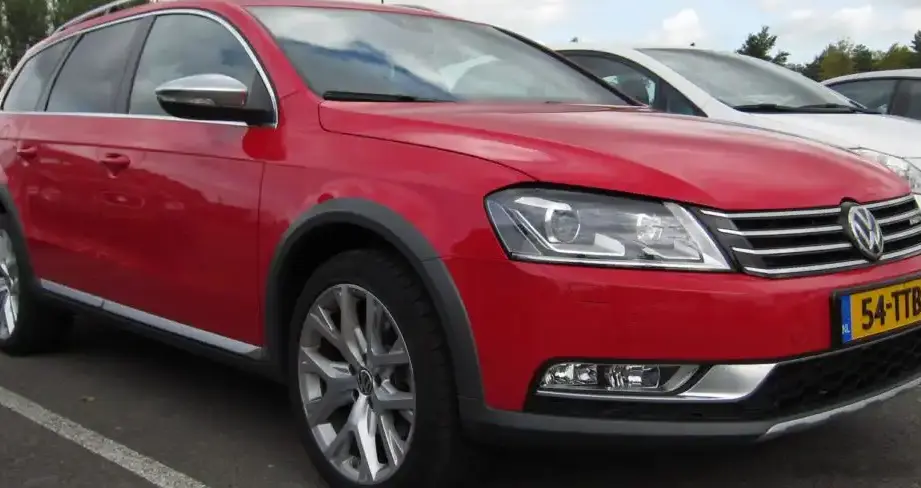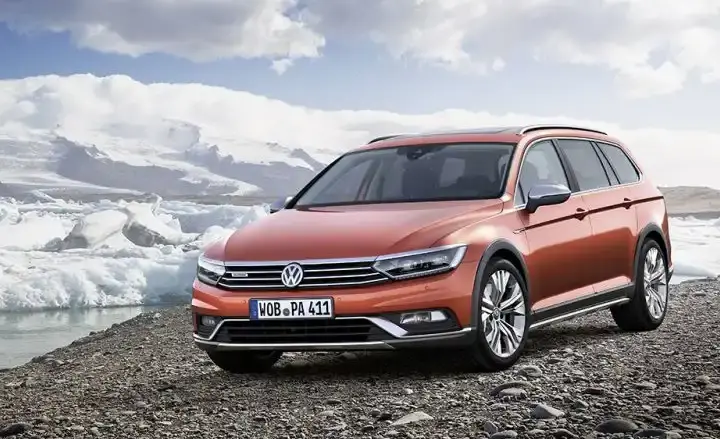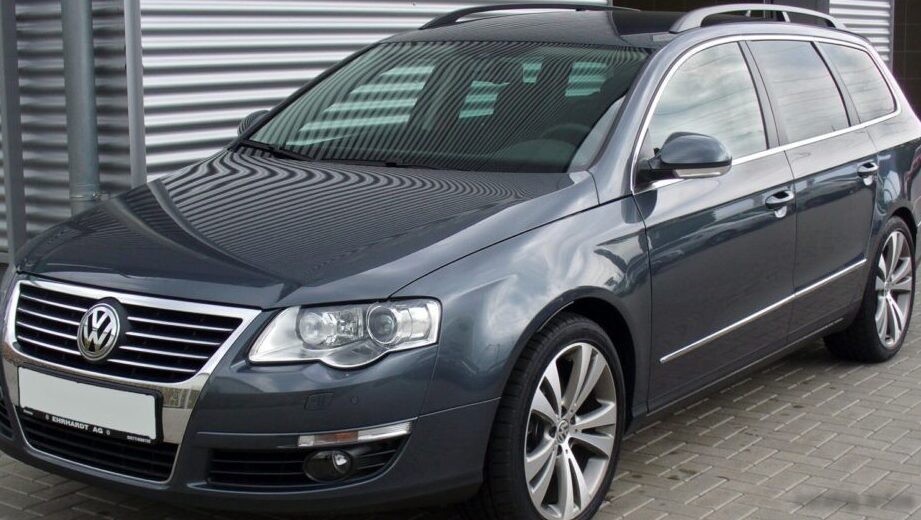
The Volkswagen Passat Variant (B6) 1.6i 16V FSI Automatic, produced from February 2005 to April 2008, represented an entry-level offering within the broader B6 Passat range. Positioned as a practical and fuel-efficient option, this variant catered to buyers prioritizing space and comfort over outright performance. It was a key model in the European market, where station wagons (known as ‘Variants’ by Volkswagen) held significant popularity. The B6 generation Passat, built on the 1HX0/A3 platform, aimed to refine the previous generation with improved build quality, updated styling, and enhanced technology.
| Brand | Volkswagen |
| Model | Passat |
| Generation | Passat Variant (B6) |
| Type (Engine) | 1.6i 16V FSI (115 Hp) Automatic |
| Start of production | February, 2005 |
| End of production | April, 2008 |
| Powertrain Architecture | Internal Combustion engine |
| Body type | Station wagon (estate) |
| Seats | 5 |
| Doors | 5 |
| Fuel consumption (urban) | 10.7 l/100 km (22 US mpg, 26.4 UK mpg, 9.3 km/l) |
| Fuel consumption (extra urban) | 6.4 l/100 km (36.8 US mpg, 44.1 UK mpg, 15.6 km/l) |
| Fuel consumption (combined) | 7.9 l/100 km (29.8 US mpg, 35.8 UK mpg, 12.7 km/l) |
| Fuel Type | Petrol (Gasoline) |
| Acceleration 0 – 100 km/h | 13.3 sec |
| Acceleration 0 – 62 mph | 13.3 sec |
| Acceleration 0 – 60 mph | 12.6 sec |
| Maximum speed | 192 km/h (119.3 mph) |
| Weight-to-power ratio | 12.2 kg/Hp, 82 Hp/tonne |
| Weight-to-torque ratio | 9.1 kg/Nm, 110.5 Nm/tonne |
| Power | 115 Hp @ 6000 rpm |
| Power per litre | 72 Hp/l |
| Torque | 155 Nm @ 4000 rpm (114.32 lb.-ft. @ 4000 rpm) |
| Engine layout | Front, Transverse |
| Engine Model/Code | BLF |
| Engine displacement | 1598 cm3 (97.52 cu. in.) |
| Number of cylinders | 4 |
| Engine configuration | Inline |
| Cylinder Bore | 76.5 mm (3.01 in.) |
| Piston Stroke | 86.9 mm (3.42 in.) |
| Compression ratio | 12:1 |
| Number of valves per cylinder | 4 |
| Fuel injection system | Direct injection |
| Engine aspiration | Naturally aspirated engine |
| Valvetrain | DOHC |
| Engine oil capacity | 3.6 l (3.8 US qt | 3.17 UK qt) |
| Coolant | 5.6 l (5.92 US qt | 4.93 UK qt) |
| Kerb Weight | 1403 kg (3093.09 lbs.) |
| Max. weight | 2040 kg (4497.43 lbs.) |
| Max load | 637 kg (1404.34 lbs.) |
| Trunk (boot) space – minimum | 603 l (21.29 cu. ft.) |
| Trunk (boot) space – maximum | 1731 l (61.13 cu. ft.) |
| Fuel tank capacity | 70 l (18.49 US gal | 15.4 UK gal) |
| Length | 4774 mm (187.95 in.) |
| Width | 1820 mm (71.65 in.) |
| Height | 1517 mm (59.72 in.) |
| Wheelbase | 2709 mm (106.65 in.) |
| Front track | 1552 mm (61.1 in.) |
| Rear (Back) track | 1551 mm (61.06 in.) |
| Minimum turning circle | 11.4 m (37.4 ft.) |
| Drivetrain Architecture | Front wheel drive |
| Number of gears | 6 |
| Gearbox type | automatic transmission |
| Front suspension | Spring Strut |
| Rear suspension | Coil spring |
| Front brakes | Ventilated discs |
| Rear brakes | Disc |
| Assisting systems | ABS (Anti-lock braking system) |
| Steering type | Steering rack and pinion |
| Tires size | 205/55 R16 |
| Wheel rims size | 6.5J X 16 |
Powertrain & Engine Architecture
The heart of this Passat Variant was the 1.6-liter BLF engine, a naturally aspirated, inline-four cylinder powerplant. This engine utilized direct fuel injection (FSI – Fuel Stratified Injection), a technology Volkswagen had been developing to improve fuel efficiency and power output. The FSI system injected fuel directly into the combustion chamber, allowing for more precise control of the air-fuel mixture and higher compression ratios. The engine featured a double overhead camshaft (DOHC) valvetrain with four valves per cylinder, contributing to its relatively efficient breathing. The 1.6 FSI produced 115 horsepower at 6000 rpm and 155 Nm (114 lb-ft) of torque at 4000 rpm. Paired with this engine was a six-speed automatic transmission, designed to provide smooth shifts and enhance drivability. This transmission wasn’t known for its sportiness, prioritizing comfort and fuel economy over rapid gear changes.
Driving Characteristics
The 1.6i FSI Automatic Passat Variant offered a comfortable, but not particularly exhilarating, driving experience. Acceleration was adequate for everyday driving, with a 0-60 mph time of around 12.6 seconds. The automatic transmission, while smooth, could feel somewhat sluggish, especially when attempting quicker overtaking maneuvers. The gear ratios were tuned for fuel efficiency, meaning the engine often operated at lower rpm, which could result in a lack of immediate response. Compared to the more powerful 2.0-liter TDI or the sporty VR6 variants, the 1.6 FSI felt noticeably less potent. However, it provided a more relaxed and refined driving experience than the often-busy diesel engines.
Equipment & Trim Levels
The 1.6i FSI Automatic typically came with a reasonable level of standard equipment. This included air conditioning, power windows, central locking, and an integrated radio/CD player. Interior upholstery was generally cloth, with options for upgraded materials available. Safety features such as ABS (Anti-lock Braking System) and front airbags were standard. Optional extras included alloy wheels, a sunroof, parking sensors, and a more advanced audio system. Trim levels varied slightly depending on the market, but generally, this variant occupied the lower to mid-range of the Passat lineup.
Chassis & Braking
The B6 Passat Variant featured a typical front-wheel-drive chassis configuration. The front suspension utilized MacPherson struts, while the rear employed a multi-link setup, providing a good balance of ride comfort and handling. Brakes consisted of ventilated discs at the front and solid discs at the rear. The braking system was adequate for the vehicle’s weight and performance, but lacked the stopping power of the larger-engined variants. Stabilizer bars were fitted front and rear to reduce body roll during cornering.
Market Reception & Comparison
The 1.6i FSI Automatic Passat Variant was generally well-received as a practical and economical family car. Critics praised its spacious interior, comfortable ride, and reasonable fuel economy. However, it was often criticized for its lack of outright performance and the sometimes-sluggish response of the automatic transmission. Compared to the 2.0 TDI, the 1.6 FSI offered lower running costs in terms of fuel, but the TDI provided significantly more torque and better fuel economy overall. The VR6 offered a much more engaging driving experience, but at a higher price point and with increased fuel consumption. The 1.6 FSI appealed to buyers who prioritized comfort, space, and affordability over sporty performance.
Legacy
The BLF 1.6 FSI engine, while generally reliable, has been known to exhibit some issues over time, particularly with carbon buildup on the intake valves due to the direct injection system. Regular servicing and the use of high-quality fuel can help mitigate these problems. The six-speed automatic transmission is generally durable, but like any automatic, requires regular fluid changes. Today, the 1.6i FSI Automatic Passat Variant represents an affordable entry point into B6 Passat ownership. While not the most desirable variant in terms of performance, it offers a practical and comfortable option for those seeking a spacious and reliable family car. Its relatively low purchase price and reasonable running costs make it a popular choice in the used car market.