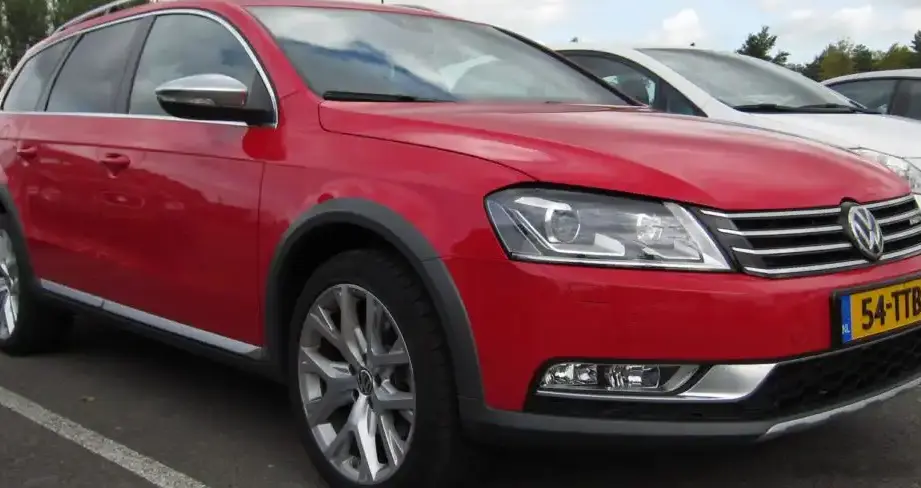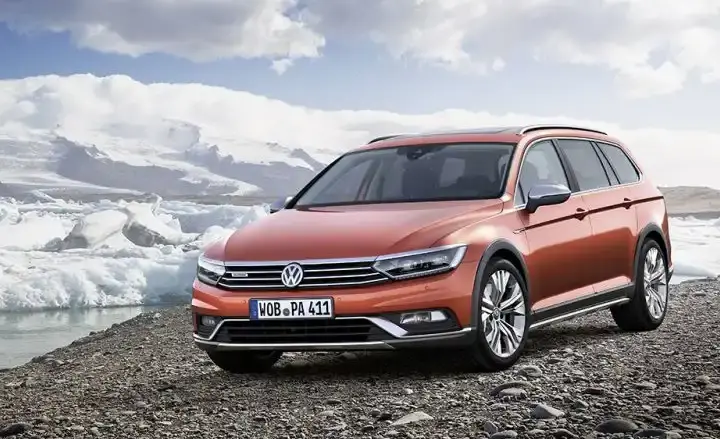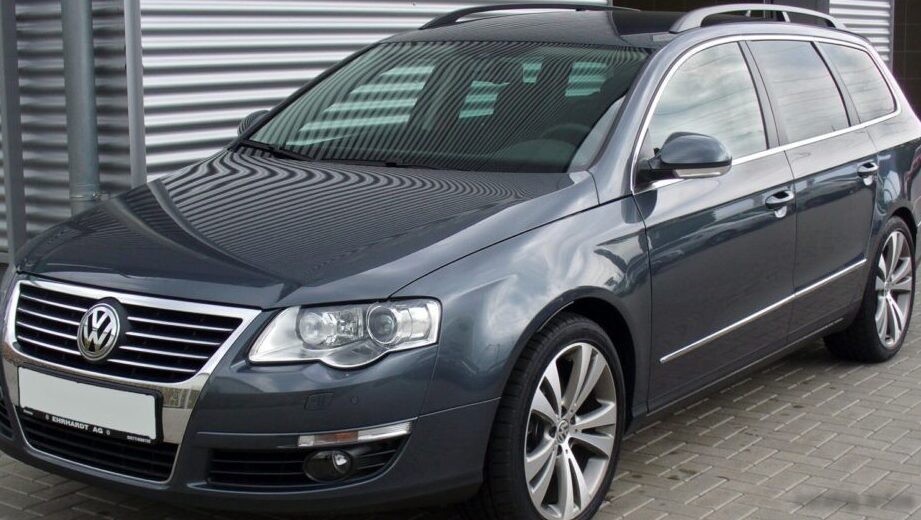
The Volkswagen Passat Variant (B6) 1.8 TSI 150 hp represents a compelling blend of practicality and performance within the B6 Passat range, produced between November 2008 and May 2010. Positioned as a mid-range offering, this variant aimed to provide a balance between fuel efficiency, reasonable power, and a comfortable driving experience for families and commuters. It was a key model in the European market, where station wagons (known as ‘Variants’ by Volkswagen) held significant popularity. The B6 generation Passat, built on the 1HX0/A3 platform, sought to refine the formula established by its predecessor, offering improved build quality, updated technology, and a more sophisticated driving experience.
Technical Specifications
| Brand | Volkswagen |
| Model | Passat |
| Generation | Passat Variant (B6) |
| Type (Engine) | 1.8 TSI (150 Hp) |
| Start of production | November, 2008 |
| End of production | May, 2010 |
| Powertrain Architecture | Internal Combustion engine |
| Body type | Station wagon (estate) |
| Seats | 5 |
| Doors | 5 |
| Fuel consumption (urban) | 10.6 l/100 km (22.2 US mpg) |
| Fuel consumption (extra urban) | 6.2 l/100 km (37.9 US mpg) |
| Fuel consumption (combined) | 7.8 l/100 km (30.2 US mpg) |
| Fuel Type | Petrol (Gasoline) |
| Acceleration 0 – 100 km/h | 8.8 sec |
| Acceleration 0 – 62 mph | 8.8 sec |
| Acceleration 0 – 60 mph | 8.4 sec |
| Maximum speed | 217 km/h (134.84 mph) |
| Emission standard | Euro 4 |
| Weight-to-power ratio | 9.4 kg/Hp |
| Weight-to-torque ratio | 6.7 kg/Nm |
| Power | 150 Hp @ 5700 rpm |
| Torque | 210 Nm @ 1750 rpm (154.89 lb.-ft. @ 1750 rpm) |
| Engine layout | Front, Longitudinal |
| Engine Model/Code | BZB, CDAA |
| Engine displacement | 1781 cm3 (108.68 cu. in.) |
| Number of cylinders | 4 |
| Engine configuration | Inline |
| Cylinder Bore | 81 mm (3.19 in.) |
| Piston Stroke | 86.4 mm (3.4 in.) |
| Compression ratio | 9.5:1 |
| Number of valves per cylinder | 5 |
| Fuel injection system | Direct injection |
| Engine aspiration | Turbocharger, Intercooler |
| Valvetrain | DOHC |
| Engine oil capacity | 4.7 l (4.97 US qt | 4.14 UK qt) |
| Coolant capacity | 5.6 l (5.92 US qt | 4.93 UK qt) |
| Kerb Weight | 1403 kg (3093.09 lbs.) |
| Max. weight | 2040 kg (4497.43 lbs.) |
| Max load | 637 kg (1404.34 lbs.) |
| Trunk (boot) space – minimum | 603 l (21.29 cu. ft.) |
| Trunk (boot) space – maximum | 1731 l (61.13 cu. ft.) |
| Fuel tank capacity | 70 l (18.49 US gal | 15.4 UK gal) |
| Length | 4774 mm (187.95 in.) |
| Width | 1820 mm (71.65 in.) |
| Height | 1517 mm (59.72 in.) |
| Wheelbase | 2709 mm (106.65 in.) |
| Front track | 1552 mm (61.1 in.) |
| Rear track | 1551 mm (61.06 in.) |
| Minimum turning circle | 11.4 m (37.4 ft.) |
| Drivetrain Architecture | Front wheel drive |
| Number of gears | 6 gears, manual transmission |
| Front suspension | Spring Strut |
| Rear suspension | Coil spring |
| Front brakes | Ventilated discs |
| Rear brakes | Disc |
| Assisting systems | ABS (Anti-lock braking system) |
| Steering type | Steering rack and pinion |
| Tires size | 205/55 R16 |
| Wheel rims size | 6.5J x 16 |
Powertrain & Engine Architecture
At the heart of the Passat Variant 1.8 TSI lies the 1.8-liter, four-cylinder turbocharged engine, identified by engine codes BZB or CDAA. This engine is a member of Volkswagen’s EA886 family, known for its robust design and relatively lightweight construction. The ‘TSI’ designation signifies Turbocharged Stratified Injection, indicating the use of direct fuel injection combined with a turbocharger and intercooler. This combination allowed for a good balance of power and fuel efficiency. The engine utilizes a dual overhead camshaft (DOHC) valvetrain with five valves per cylinder (four intake, one exhaust), optimizing airflow for improved performance. The turbocharger provides a significant boost in power, delivering 150 horsepower at 5700 rpm and 210 Nm (154.89 lb-ft) of torque from as low as 1750 rpm. The engine’s longitudinal mounting and front-wheel-drive configuration were standard for this model. The 6-speed manual transmission was the standard offering, providing precise gear changes and contributing to the car’s overall driving dynamics.
Driving Characteristics
The 1.8 TSI engine, paired with the 6-speed manual transmission, offered a respectable driving experience. Acceleration from 0 to 100 km/h (0-62 mph) took approximately 8.8 seconds, making it adequately quick for everyday driving and highway merging. While not as sporty as the higher-output variants like the 2.0 TSI, the 1.8 TSI provided sufficient power for most situations. The turbocharger’s boost was noticeable, providing a surge of acceleration when needed. The manual transmission allowed for greater driver control, while the gear ratios were well-suited for both city and highway driving. Compared to the diesel variants (like the 2.0 TDI), the 1.8 TSI offered a more responsive and refined driving experience, albeit with slightly higher fuel consumption. The suspension provided a comfortable ride, absorbing bumps and imperfections in the road effectively.
Equipment & Trim Levels
The Passat Variant 1.8 TSI typically came equipped with a reasonable level of standard features. These included air conditioning, power windows, power mirrors, a CD stereo system, and ABS brakes. Higher trim levels offered additional features such as alloy wheels, a multi-function steering wheel, cruise control, and upgraded upholstery. Interior upholstery was typically cloth, with options for leather available on higher-spec models. The dashboard layout was functional and well-designed, with clear instrumentation and intuitive controls. Optional extras included a sunroof, navigation system, and parking sensors.
Chassis & Braking
The B6 Passat Variant featured a MacPherson strut front suspension and a multi-link rear suspension, providing a good balance of ride comfort and handling. The front brakes were ventilated discs, offering excellent stopping power, while the rear brakes were solid discs. ABS (Anti-lock Braking System) was standard, enhancing safety and stability during braking. The steering was a rack and pinion system, providing precise and responsive steering feel. The car’s weight distribution was well-balanced, contributing to its stable handling characteristics.
Market Reception & Comparison
The Passat Variant 1.8 TSI was generally well-received by automotive critics. It was praised for its comfortable ride, spacious interior, and fuel-efficient engine. However, some critics noted that the engine lacked the outright performance of the higher-output variants. Compared to the 2.0 TDI, the 1.8 TSI offered a more refined driving experience but suffered from slightly higher fuel consumption. In terms of reliability, the 1.8 TSI engine proved to be generally reliable, although regular maintenance was essential to prevent issues such as carbon buildup on the intake valves.
Legacy
The Volkswagen Passat Variant (B6) 1.8 TSI remains a popular choice in the used car market today. Its combination of practicality, comfort, and reasonable running costs makes it an attractive option for families and commuters. The EA886 engine, while requiring regular maintenance, is known for its durability. However, potential buyers should be aware of the possibility of carbon buildup on the intake valves, which can affect engine performance. Overall, the 1.8 TSI variant represents a well-rounded and reliable option within the B6 Passat range, offering a good balance of features and performance for its price point.