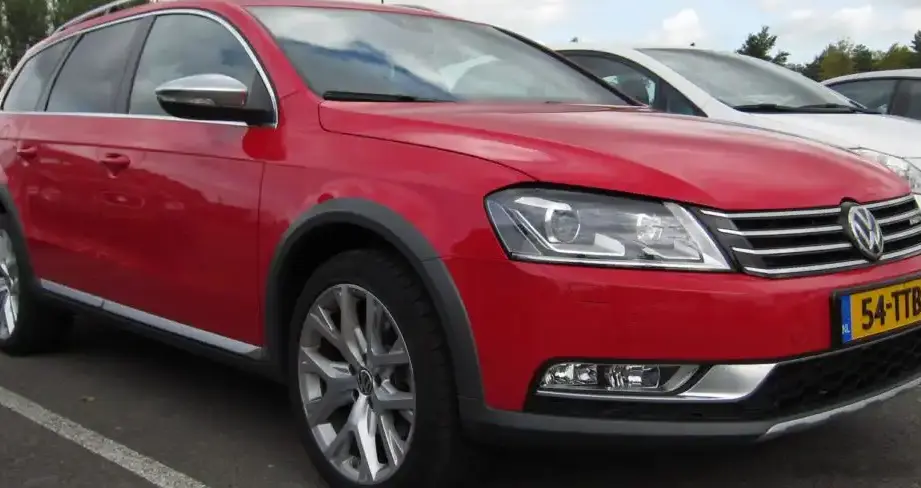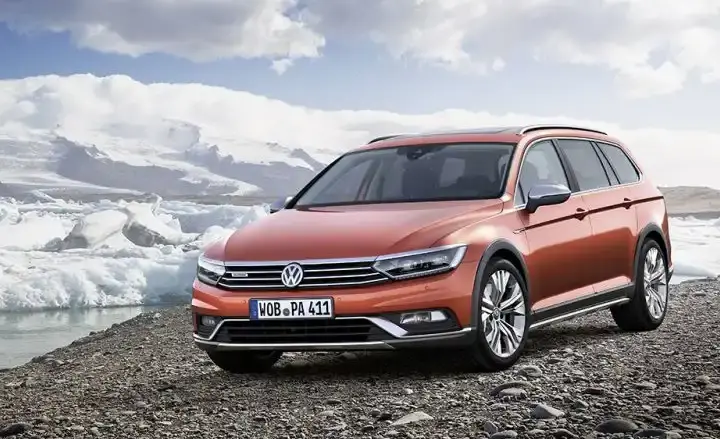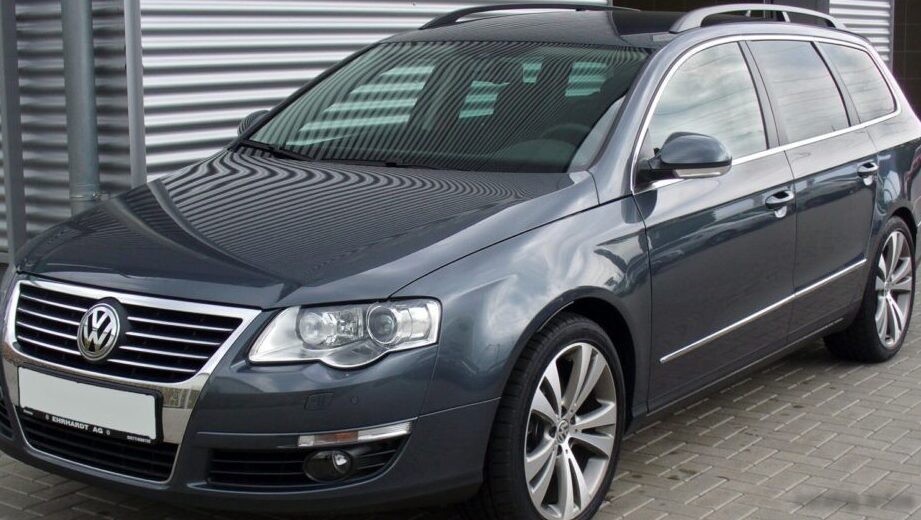
The Volkswagen Passat Variant (B6) 1.8 TSI 160 hp with the Direct-Shift Gearbox (DSG) represents a compelling blend of practicality, efficiency, and performance within the B6 Passat range. Produced briefly between February and October 2010, this variant occupied a mid-range position in the lineup, offering a step up from the base models while remaining more accessible than the higher-performance trims like those equipped with the 2.0 TSI engine. It was primarily marketed in Europe as a versatile family vehicle, capitalizing on the popularity of station wagons (known as ‘Variants’ in Volkswagen terminology) and the growing demand for turbocharged, direct-injection engines.
Technical Specifications
| Brand | Volkswagen |
| Model | Passat |
| Generation | Passat Variant (B6) |
| Type (Engine) | 1.8 TSI (160 Hp) DSG |
| Start of production | February, 2010 |
| End of production | October, 2010 |
| Powertrain Architecture | Internal Combustion engine |
| Body type | Station wagon (estate) |
| Seats | 5 |
| Doors | 5 |
| Fuel consumption (economy) – urban (NEDC) | 10 l/100 km (23.5 US mpg, 28.2 UK mpg, 10 km/l) |
| Fuel consumption (economy) – extra urban (NEDC) | 5.8 l/100 km (40.6 US mpg, 48.7 UK mpg, 17.2 km/l) |
| Fuel consumption (economy) – combined (NEDC) | 7.4 l/100 km (31.8 US mpg, 38.2 UK mpg, 13.5 km/l) |
| CO2 emissions (NEDC) | 171 g/km |
| Fuel Type | Petrol (Gasoline) |
| Acceleration 0 – 100 km/h | 8.7 sec |
| Acceleration 0 – 62 mph | 8.7 sec |
| Acceleration 0 – 60 mph | 8.3 sec |
| Maximum speed | 215 km/h (133.59 mph) |
| Emission standard | Euro 5 |
| Weight-to-power ratio | 9.2 kg/Hp, 109.1 Hp/tonne |
| Weight-to-torque ratio | 5.9 kg/Nm, 170.5 Nm/tonne |
| Power | 160 Hp @ 5000-6200 rpm |
| Power per litre | 89 Hp/l |
| Torque | 250 Nm @ 1500-4200 rpm (184.39 lb.-ft. @ 1500-4200 rpm) |
| Engine layout | Front, Longitudinal |
| Engine Model/Code | BZB |
| Engine displacement | 1798 cm3 (109.72 cu. in.) |
| Number of cylinders | 4 |
| Engine configuration | Inline |
| Cylinder Bore | 82.5 mm (3.25 in.) |
| Piston Stroke | 84.2 mm (3.31 in.) |
| Compression ratio | 9.6:1 |
| Number of valves per cylinder | 4 |
| Fuel injection system | Direct injection |
| Engine aspiration | Turbocharger, Intercooler |
| Valvetrain | DOHC |
| Engine oil capacity | 4.7 l (4.97 US qt | 4.14 UK qt) |
| Coolant | 5.6 l (5.92 US qt | 4.93 UK qt) |
| Kerb Weight | 1466 kg (3231.98 lbs.) |
| Max. weight | 2140 kg (4717.89 lbs.) |
| Max load | 674 kg (1485.92 lbs.) |
| Trunk (boot) space – minimum | 603 l (21.29 cu. ft.) |
| Trunk (boot) space – maximum | 1731 l (61.13 cu. ft.) |
| Fuel tank capacity | 70 l (18.49 US gal | 15.4 UK gal) |
| Max. roof load | 100 kg (220.46 lbs.) |
| Permitted trailer load with brakes (8%) | 1700 kg (3747.86 lbs.) |
| Permitted trailer load with brakes (12%) | 1500 kg (3306.93 lbs.) |
| Permitted trailer load without brakes | 750 kg (1653.47 lbs.) |
| Permitted towbar download | 90 kg (198.42 lbs.) |
| Length | 4774 mm (187.95 in.) |
| Width | 1820 mm (71.65 in.) |
| Width including mirrors | 1991 mm (78.39 in.) |
| Height | 1517 mm (59.72 in.) |
| Wheelbase | 2709 mm (106.65 in.) |
| Front track | 1552 mm (61.1 in.) |
| Rear (Back) track | 1551 mm (61.06 in.) |
| Minimum turning circle (turning diameter) | 11.4 m (37.4 ft.) |
| Approach angle | 14.4° |
| Departure angle | 12.7° |
| Ramp-over (brakeover) angle | 10.8° |
| Drivetrain Architecture | The Internal combustion engine (ICE) drives the front wheels of the vehicle. |
| Drive wheel | Front wheel drive |
| Number of gears and type of gearbox | 7 gears, automatic transmission DSG |
| Front suspension | Independent, type McPherson with coil spring and anti-roll bar |
| Rear suspension | Independent multi-link spring suspension with stabilizer |
| Front brakes | Ventilated discs |
| Rear brakes | Disc |
| Assisting systems | ABS (Anti-lock braking system) |
| Steering type | Steering rack and pinion |
| Power steering | Electric Steering |
| Tires size | 205/55 R16; 215/55 R16 |
| Wheel rims size | 6.5J x 16 |
Powertrain & Engine Architecture
At the heart of the Passat Variant 1.8 TSI DSG lies the BZB engine code, a 1.8-liter inline-four cylinder gasoline engine. This engine is a key member of Volkswagen’s TSI (Turbocharged Stratified Injection) family, utilizing direct fuel injection and a turbocharger with an intercooler to deliver a balance of power and efficiency. The direct injection system precisely meters fuel into the combustion chamber, improving combustion efficiency and reducing emissions. The engine employs a dual overhead camshaft (DOHC) valvetrain with four valves per cylinder, optimizing airflow for enhanced performance. The 1.8 TSI engine produces 160 horsepower at 5000-6200 rpm and 250 Nm (184 lb-ft) of torque between 1500 and 4200 rpm. This torque curve provides good responsiveness in everyday driving situations.
The ‘DSG’ designation refers to Volkswagen’s Dual-Shift Gearbox, a seven-speed automated manual transmission. The DSG operates similarly to a traditional manual gearbox but utilizes two separate clutches for seamless and rapid gear changes. This results in quicker acceleration and improved fuel economy compared to a conventional automatic transmission. The DSG transmission in this application is tuned for comfort and efficiency, with gear changes generally smooth and unobtrusive.
Driving Characteristics
The 1.8 TSI DSG Passat Variant offers a comfortable and refined driving experience. While not a performance-oriented model, the 160 hp engine and seven-speed DSG provide adequate power for most driving situations. Acceleration from 0-60 mph takes approximately 8.3 seconds, and the car has a top speed of 133.59 mph. The DSG transmission contributes to brisk acceleration, particularly during overtaking maneuvers. The relatively long gear ratios prioritize fuel efficiency, but the transmission is quick to downshift when needed. Compared to the more powerful 2.0 TSI variants, the 1.8 TSI feels less urgent, but it offers a more relaxed and economical driving experience. The manual transmission versions of the 1.8 TSI offered a more engaging driving experience, but the DSG provided greater convenience for daily commuting.
Equipment & Trim Levels
The 1.8 TSI DSG Passat Variant typically came equipped with a reasonable level of standard features. These included air conditioning, power windows, power mirrors, a CD stereo system, and alloy wheels. Higher trim levels, often denoted by designations like ‘Trendline’ or ‘Comfortline’, added features such as automatic climate control, a multi-function steering wheel, and upgraded upholstery. Optional extras included a sunroof, navigation system, parking sensors, and leather seats. Interior upholstery was typically cloth, with leather available as an upgrade. The dashboard layout was functional and well-designed, with clear instrumentation and intuitive controls.
Chassis & Braking
The B6 Passat Variant featured an independent suspension system, with McPherson struts at the front and a multi-link setup at the rear. This configuration provided a comfortable ride and good handling characteristics. The 1.8 TSI models typically had a slightly softer suspension setup compared to the higher-performance variants. Braking duties were handled by ventilated discs at the front and solid discs at the rear, equipped with ABS (Anti-lock Braking System). The braking system provided adequate stopping power for everyday driving.
Market Reception & Comparison
The Passat Variant 1.8 TSI DSG was generally well-received by automotive critics. It was praised for its comfortable ride, spacious interior, and fuel efficiency. However, some reviewers noted that the engine lacked the outright performance of the 2.0 TSI models. Compared to the 2.0 TDI diesel variants, the 1.8 TSI offered a more refined driving experience but with slightly higher fuel consumption. The 1.8 TSI represented a good compromise between performance, economy, and price.
Legacy
The BZB 1.8 TSI engine, when properly maintained, is generally considered a reliable unit. However, like all turbocharged engines, it is susceptible to issues such as carbon buildup and turbocharger failure if not serviced regularly. The DSG transmission is also known to require periodic maintenance, including fluid changes, to ensure smooth operation. Today, the Passat Variant 1.8 TSI DSG can be found on the used car market at relatively affordable prices. It remains a practical and versatile family vehicle, offering a good balance of comfort, efficiency, and reliability. Its relatively simple engine design, compared to later TSI iterations, makes it a potentially attractive option for those seeking a reliable and relatively easy-to-maintain European wagon.