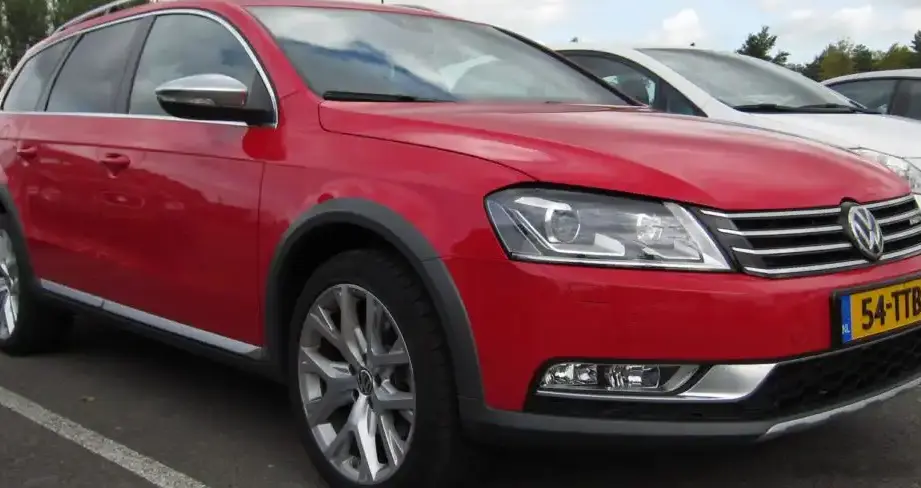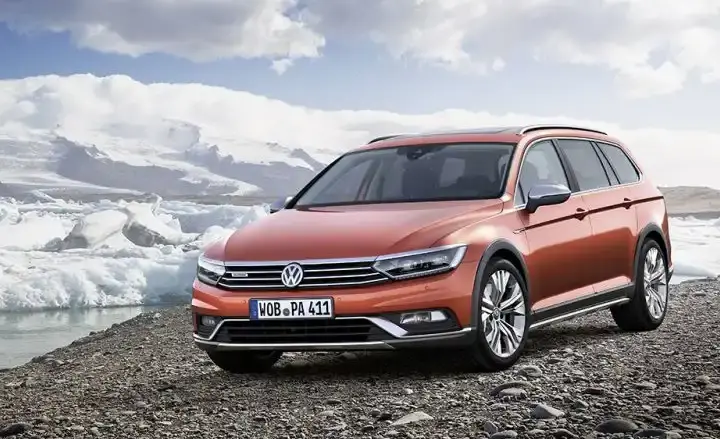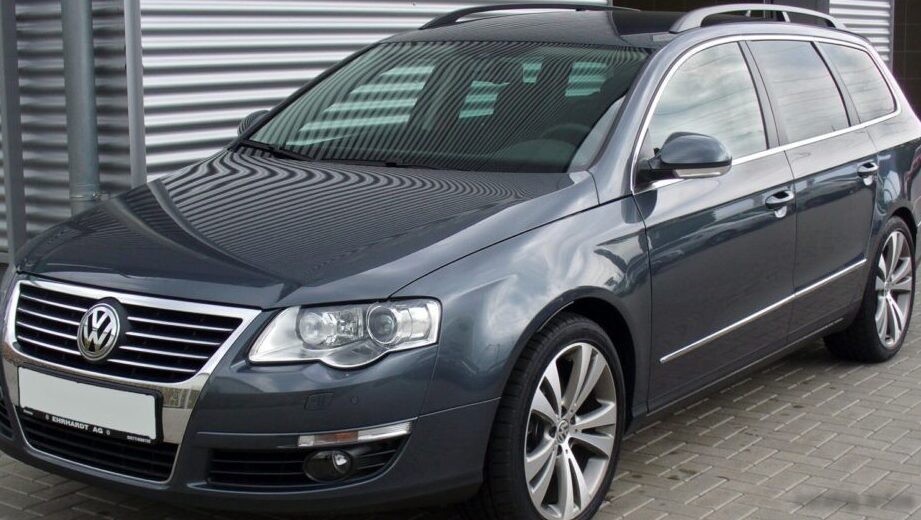
The Volkswagen Passat Variant (B6) 2.0 TDI 16V, producing 140 horsepower, was a popular choice in the European market from February 2005 to February 2008. This variant occupied a middle ground within the B6 Passat range, offering a balance between fuel efficiency, practicality, and reasonable performance. It was positioned as a more economical alternative to the higher-powered petrol engines and the more expensive, top-of-the-line TDI models. The B6 generation Passat, built on the 1HX0/A3 platform, aimed to improve upon its predecessor with enhanced refinement, safety features, and a more modern interior.
Technical Specifications
| Brand | Volkswagen |
| Model | Passat |
| Generation | Passat Variant (B6) |
| Type (Engine) | 2.0 TDI 16V (140 Hp) PDE DSG |
| Start of production | February, 2005 |
| End of production | February, 2008 |
| Powertrain Architecture | Internal Combustion engine |
| Body type | Station wagon (estate) |
| Seats | 5 |
| Doors | 5 |
| Fuel consumption (urban) | 8.8 l/100 km (26.7 US mpg, 32.1 UK mpg, 11.4 km/l) |
| Fuel consumption (extra urban) | 5.3 l/100 km (44.4 US mpg, 53.3 UK mpg, 18.9 km/l) |
| Fuel consumption (combined) | 6.5 l/100 km (36.2 US mpg, 43.5 UK mpg, 15.4 km/l) |
| Fuel Type | Diesel |
| Acceleration 0 – 100 km/h | 10.1 sec |
| Acceleration 0 – 62 mph | 10.1 sec |
| Acceleration 0 – 60 mph | 9.6 sec |
| Maximum speed | 203 km/h (126.14 mph) |
| Emission standard | Euro 4 |
| Weight-to-power ratio | 10.9 kg/Hp, 91.4 Hp/tonne |
| Weight-to-torque ratio | 4.8 kg/Nm, 208.9 Nm/tonne |
| Power | 140 Hp @ 4000 rpm |
| Power per litre | 71.1 Hp/l |
| Torque | 320 Nm @ 1750 rpm (236.02 lb.-ft. @ 1750 rpm) |
| Engine layout | Front, Transverse |
| Engine Model/Code | EA188 / BKP |
| Engine displacement | 1968 cm3 (120.09 cu. in.) |
| Number of cylinders | 4 |
| Engine configuration | Inline |
| Cylinder Bore | 81 mm (3.19 in.) |
| Piston Stroke | 95.5 mm (3.76 in.) |
| Compression ratio | 18.5:1 |
| Number of valves per cylinder | 4 |
| Fuel injection system | Pump-nozzle (Unit Injector) |
| Engine aspiration | Turbocharger, Intercooler |
| Valvetrain | DOHC |
| Engine oil capacity | 4 l (4.23 US qt | 3.52 UK qt) |
| Coolant | 8 l (8.45 US qt | 7.04 UK qt) |
| Kerb Weight | 1532 kg (3377.48 lbs.) |
| Max. weight | 2170 kg (4784.03 lbs.) |
| Max load | 638 kg (1406.55 lbs.) |
| Trunk (boot) space – minimum | 603 l (21.29 cu. ft.) |
| Trunk (boot) space – maximum | 1731 l (61.13 cu. ft.) |
| Fuel tank capacity | 70 l (18.49 US gal | 15.4 UK gal) |
| Max. roof load | 100 kg (220.46 lbs.) |
| Permitted trailer load with brakes (12%) | 1800 kg (3968.32 lbs.) |
| Permitted trailer load without brakes | 750 kg (1653.47 lbs.) |
| Permitted towbar download | 90 kg (198.42 lbs.) |
| Length | 4774 mm (187.95 in.) |
| Width | 1820 mm (71.65 in.) |
| Width including mirrors | 2004 mm (78.9 in.) |
| Height | 1517 mm (59.72 in.) |
| Wheelbase | 2709 mm (106.65 in.) |
| Front track | 1552 mm (61.1 in.) |
| Rear (Back) track | 1551 mm (61.06 in.) |
| Minimum turning circle | 11.4 m (37.4 ft.) |
| Drivetrain Architecture | The Internal combustion engine (ICE) drives the front wheels of the vehicle. |
| Drive wheel | Front wheel drive |
| Number of gears and type of gearbox | 6 gears, automatic transmission |
| Front suspension | Spring Strut |
| Rear suspension | Coil spring |
| Front brakes | Ventilated discs |
| Rear brakes | Disc |
| Assisting systems | ABS (Anti-lock braking system) |
| Steering type | Steering rack and pinion |
| Tires size | 215/55 R16 |
| Wheel rims size | 6.5J X 16 |
Powertrain & Engine Architecture
The heart of this Passat Variant was the EA188 series 2.0-liter TDI engine, specifically the BKP code. This engine was a four-cylinder, inline diesel featuring a turbocharger with an intercooler to boost power and efficiency. The BKP utilized a pump-nozzle (Unit Injector) fuel injection system, a technology known for its precise fuel delivery and contribution to the engine’s torque output. The engine boasted 16 valves (four per cylinder) operated by a double overhead camshaft (DOHC) valvetrain. The 18.5:1 compression ratio was typical for a direct-injection diesel engine. The engine was transversely mounted in the front of the vehicle. Paired with the engine was a six-speed Direct-Shift Gearbox (DSG), a dual-clutch transmission that offered both the efficiency of a manual and the convenience of an automatic. The DSG’s quick and smooth shifts contributed to a more engaging driving experience.
Driving Characteristics
The 140 hp 2.0 TDI with the DSG transmission provided a respectable, if not exhilarating, driving experience. Acceleration from 0-60 mph took around 9.6 seconds, and top speed was approximately 126 mph. The engine’s 320 Nm (236 lb-ft) of torque, available from a low 1750 rpm, provided good pulling power for everyday driving and overtaking maneuvers. The DSG transmission was well-suited to the engine’s characteristics, offering quick shifts and keeping the engine in its optimal power band. Compared to the more powerful TDI variants (like the 170 hp version), this setup felt less urgent, but it offered significantly better fuel economy. The automatic transmission also made it more accessible to drivers unfamiliar with manual gearboxes.
Equipment & Trim Levels
The 2.0 TDI 16V typically came with a reasonable level of standard equipment. This included features like air conditioning, power windows, central locking, and an integrated radio/CD player. Higher trim levels offered options such as alloy wheels, a multi-function steering wheel, cruise control, and upgraded upholstery. Interior trim generally consisted of cloth seats, although leather options were available. Safety features included ABS brakes, front and side airbags, and a basic stability control system.
Chassis & Braking
The Passat Variant B6 featured a typical front-wheel-drive layout with a MacPherson strut suspension in the front and a multi-link coil spring suspension in the rear. The front brakes were ventilated discs, providing good stopping power, while the rear brakes were solid discs. The suspension was tuned for comfort, offering a relatively smooth ride, but it also provided adequate handling for everyday driving. Stabilizer bars were fitted to both the front and rear axles to reduce body roll during cornering.
Market Reception & Comparison
The 2.0 TDI 16V DSG Passat Variant was well-received in the European market as a practical and economical family car. Critics praised its fuel efficiency, comfortable ride, and spacious interior. However, some noted that the engine lacked the outright performance of the more powerful TDI variants. Compared to the 1.9 TDI, the 2.0 TDI offered more power and refinement, but at a slightly higher price point. The 1.8L petrol versions were generally less fuel-efficient and offered less torque. The DSG transmission was generally viewed positively, although some early units experienced reliability issues.
Legacy
The EA188 2.0 TDI engine, including the BKP variant, became a mainstay in the Volkswagen Group’s lineup for many years. While generally reliable, some BKP engines were susceptible to issues with the fuel injectors and the turbocharger. The DSG transmission also required regular maintenance, including fluid changes, to ensure longevity. Today, the Passat Variant B6 2.0 TDI 16V remains a relatively affordable and practical used car option. Its fuel efficiency and spaciousness continue to appeal to buyers looking for a versatile family vehicle. However, potential buyers should be aware of the potential maintenance costs associated with the engine and transmission, and a thorough inspection is recommended before purchase.