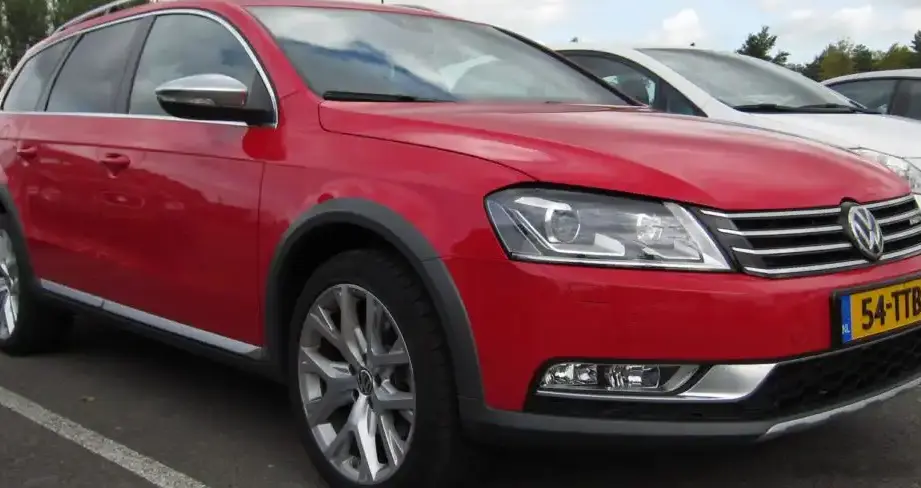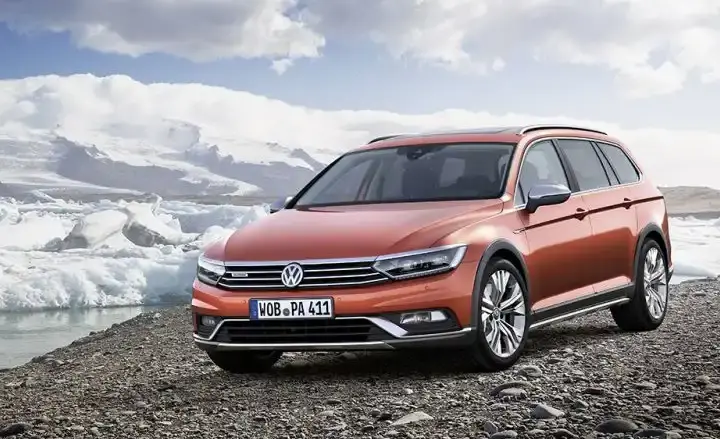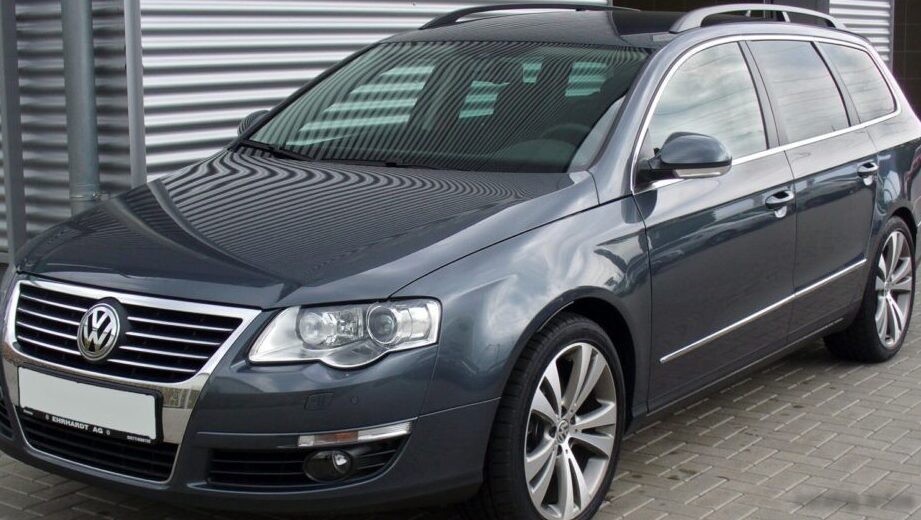
The Volkswagen Passat Variant (B6) 2.0 TDI with 170 horsepower and a Direct Shift Gearbox (DSG) was a popular configuration of the B6 generation Passat, produced between October 2005 and April 2008. This variant occupied a mid-range position within the B6 lineup, offering a balance of performance, fuel efficiency, and practicality for European buyers. The B6 Passat, built on the Volkswagen Group’s B6 platform (shared with models like the Audi A4 and Škoda Superb), aimed to improve upon its predecessor with enhanced refinement, safety features, and a more modern design. The Variant, or station wagon, body style was particularly favored in Europe for its increased cargo capacity and versatility.
Technical Specifications
| Brand | Volkswagen |
| Model | Passat |
| Generation | Passat Variant (B6) |
| Type (Engine) | 2.0 TDI (170 Hp) PDE DSG |
| Start of production | October, 2005 |
| End of production | April, 2008 |
| Powertrain Architecture | Internal Combustion engine |
| Body type | Station wagon (estate) |
| Seats | 5 |
| Doors | 5 |
| Fuel consumption (urban) | 8.6 l/100 km (27.4 US mpg, 32.8 UK mpg, 11.6 km/l) |
| Fuel consumption (extra urban) | 5.5 l/100 km (42.8 US mpg, 51.4 UK mpg, 18.2 km/l) |
| Fuel consumption (combined) | 6.6 l/100 km (35.6 US mpg, 42.8 UK mpg, 15.2 km/l) |
| Fuel Type | Diesel |
| Acceleration 0 – 100 km/h | 8.8 sec |
| Acceleration 0 – 62 mph | 8.8 sec |
| Acceleration 0 – 60 mph | 8.4 sec |
| Maximum speed | 217 km/h (134.84 mph) |
| Emission standard | Euro 4 |
| Weight-to-power ratio | 9 kg/Hp, 110.8 Hp/tonne |
| Weight-to-torque ratio | 4.4 kg/Nm, 228.2 Nm/tonne |
| Power | 170 Hp @ 4200 rpm |
| Power per litre | 86.4 Hp/l |
| Torque | 350 Nm @ 1800 rpm (258.15 lb.-ft. @ 1800 rpm) |
| Engine layout | Front, Transverse |
| Engine Model/Code | EA188 / BMR |
| Engine displacement | 1968 cm3 (120.09 cu. in.) |
| Number of cylinders | 4 |
| Engine configuration | Inline |
| Cylinder Bore | 81 mm (3.19 in.) |
| Piston Stroke | 95.5 mm (3.76 in.) |
| Compression ratio | 18.5:1 |
| Number of valves per cylinder | 4 |
| Fuel injection system | Pump-nozzle (Unit Injector) |
| Engine aspiration | Turbocharger, Intercooler |
| Valvetrain | DOHC |
| Engine oil capacity | 4 l (4.23 US qt | 3.52 UK qt) |
| Coolant | 8 l (8.45 US qt | 7.04 UK qt) |
| Kerb Weight | 1534 kg (3381.89 lbs.) |
| Max. weight | 2170 kg (4784.03 lbs.) |
| Max load | 636 kg (1402.14 lbs.) |
| Trunk (boot) space – minimum | 603 l (21.29 cu. ft.) |
| Trunk (boot) space – maximum | 1731 l (61.13 cu. ft.) |
| Fuel tank capacity | 70 l (18.49 US gal | 15.4 UK gal) |
| Max. roof load | 100 kg (220.46 lbs.) |
| Permitted trailer load with brakes (12%) | 1800 kg (3968.32 lbs.) |
| Permitted trailer load without brakes | 750 kg (1653.47 lbs.) |
| Permitted towbar download | 90 kg (198.42 lbs.) |
| Length | 4774 mm (187.95 in.) |
| Width | 1820 mm (71.65 in.) |
| Width including mirrors | 2004 mm (78.9 in.) |
| Height | 1517 mm (59.72 in.) |
| Wheelbase | 2709 mm (106.65 in.) |
| Front track | 1552 mm (61.1 in.) |
| Rear (Back) track | 1551 mm (61.06 in.) |
| Minimum turning circle (turning diameter) | 11.4 m (37.4 ft.) |
| Drivetrain Architecture | The Internal combustion engine (ICE) drives the front wheels of the vehicle. |
| Drive wheel | Front wheel drive |
| Number of gears and type of gearbox | 6 gears, automatic transmission |
| Front suspension | Spring Strut |
| Rear suspension | Coil spring |
| Front brakes | Ventilated discs |
| Rear brakes | Disc |
| Assisting systems | ABS (Anti-lock braking system) |
| Steering type | Steering rack and pinion |
| Power steering | Electric Steering |
| Tires size | 215/55 R16 |
| Wheel rims size | 6.5J X 16 |
Powertrain & Engine Architecture
The heart of this Passat Variant was the EA188 2.0-liter four-cylinder diesel engine, specifically the BMR code. This engine utilized a common-rail direct injection system with pump-nozzle technology (PDE), delivering fuel directly into the cylinders at extremely high pressure for efficient combustion. The engine featured a single overhead camshaft (DOHC) operating four valves per cylinder, optimizing gas flow. A turbocharger with an intercooler was employed to boost power output and improve torque across a wider rev range. The 170 horsepower peak was achieved at 4200 rpm, while the substantial 350 Nm (258 lb-ft) of torque was available from just 1800 rpm, providing strong pulling power. The engine was transversely mounted in the front of the vehicle.
Paired with the engine was a six-speed Direct Shift Gearbox (DSG). This dual-clutch transmission offered the efficiency of a manual gearbox with the convenience of an automatic. The DSG rapidly switches between gears, providing smooth and quick shifts, contributing to both performance and fuel economy.
Driving Characteristics
The 2.0 TDI 170 hp with DSG offered a refined and capable driving experience. Acceleration to 62 mph (100 km/h) took approximately 8.8 seconds, making it reasonably quick for a family estate. The readily available torque meant strong acceleration in everyday driving situations, such as overtaking or merging onto highways. Compared to the lower-powered 1.9 TDI variants, the 2.0 TDI provided a noticeable performance boost. While not as sporty as the petrol-powered models, the 2.0 TDI offered a good balance of power and efficiency. The DSG transmission contributed to a smooth and responsive driving experience, although some drivers noted occasional low-speed jerkiness, a common characteristic of early DSG units.
Equipment & Trim Levels
The 2.0 TDI 170 hp DSG typically came with a good level of standard equipment. This included features like air conditioning, power windows, central locking, and an audio system. Higher trim levels, such as Sport or Highline, added features like alloy wheels, upgraded upholstery, a multi-function steering wheel, and parking sensors. Optional extras included a sunroof, navigation system, and leather seats.
Chassis & Braking
The B6 Passat Variant featured a MacPherson strut front suspension and a multi-link rear suspension, providing a comfortable and controlled ride. The front brakes were ventilated discs, while the rear brakes were solid discs. Anti-lock Braking System (ABS) was standard. The suspension was tuned to prioritize comfort, but still offered decent handling characteristics. Stabilizer bars were fitted to both the front and rear axles to reduce body roll during cornering.
Market Reception & Comparison
The 2.0 TDI 170 hp DSG Passat Variant was well-received by European buyers. Critics praised its blend of performance, fuel economy, and practicality. It offered a compelling alternative to petrol-powered rivals and provided a more refined driving experience than some of the lower-powered diesel options. Fuel economy was a strong point, with combined figures around 6.6 l/100 km (35.6 US mpg). Compared to the 1.9 TDI, the 2.0 TDI offered more power and a smoother driving experience, but at a slightly higher price point.
Legacy
The EA188 engine family, including the BMR code used in this Passat, proved to be generally reliable, although early DSG transmissions could be prone to issues if not properly maintained. Regular servicing, including DSG fluid changes, is crucial for long-term reliability. Today, the B6 Passat Variant 2.0 TDI 170 hp DSG remains a popular choice in the used car market, particularly for those seeking a practical and fuel-efficient estate car. Its robust engine and comfortable ride continue to appeal to buyers looking for a dependable and versatile vehicle.