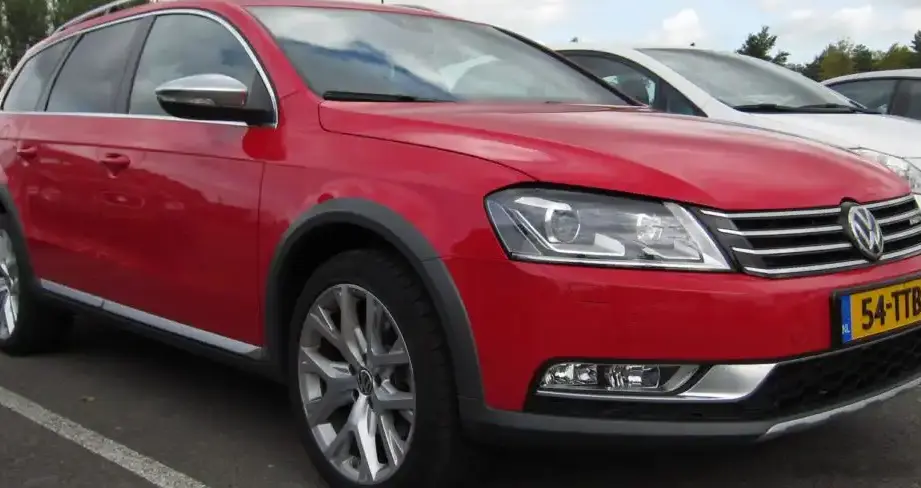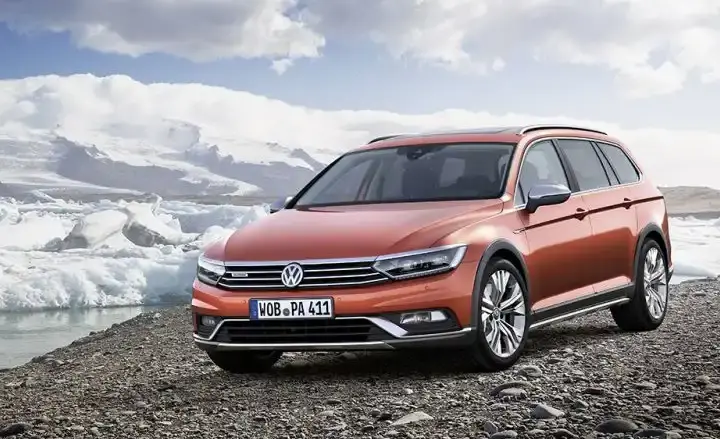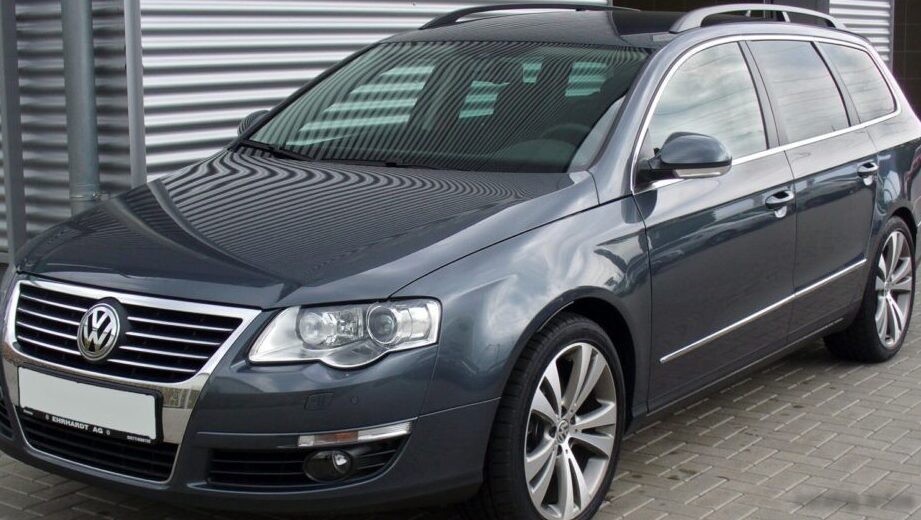
The Volkswagen Passat Variant (B6) 2.0 TDI 8V, producing 140 horsepower, was a popular choice in the European market from February 2005 to February 2008. Positioned as a mid-range offering within the B6 Passat Variant lineup, it aimed to balance fuel efficiency with reasonable performance for family and business users. This variant was part of the larger B6 generation (2005-2010), built on the Volkswagen Group’s A6 platform, also shared with models like the Audi A4 and Škoda Superb. The ‘Variant’ designation signifies the station wagon (estate) body style, offering increased cargo capacity compared to the sedan.
Technical Specifications
| Brand | Volkswagen |
| Model | Passat |
| Generation | Passat Variant (B6) |
| Type (Engine) | 2.0 TDI 8V (140 Hp) PDE |
| Start of production | February, 2005 |
| End of production | February, 2008 |
| Powertrain Architecture | Internal Combustion engine |
| Body type | Station wagon (estate) |
| Seats | 5 |
| Doors | 5 |
| Fuel consumption (urban) | 7.9 l/100 km (29.8 US mpg, 35.8 UK mpg, 12.7 km/l) |
| Fuel consumption (extra urban) | 5 l/100 km (47 US mpg, 56.5 UK mpg, 20 km/l) |
| Fuel consumption (combined) | 6 l/100 km (39.2 US mpg, 47.1 UK mpg, 16.7 km/l) |
| CO2 emissions | 158 g/km |
| Fuel Type | Diesel |
| Acceleration 0 – 100 km/h | 10.1 sec |
| Acceleration 0 – 62 mph | 10.1 sec |
| Acceleration 0 – 60 mph | 9.6 sec |
| Maximum speed | 206 km/h (128 mph) |
| Emission standard | Euro 4 |
| Weight-to-power ratio | 10.8 kg/Hp, 92.7 Hp/tonne |
| Weight-to-torque ratio | 4.7 kg/Nm, 211.9 Nm/tonne |
| Power | 140 Hp @ 4000 rpm |
| Power per litre | 71.1 Hp/l |
| Torque | 320 Nm @ 1800 rpm (236.02 lb.-ft. @ 1800 rpm) |
| Engine layout | Front, Transverse |
| Engine Model/Code | EA188 / BMP |
| Engine displacement | 1968 cm3 (120.09 cu. in.) |
| Number of cylinders | 4 |
| Engine configuration | Inline |
| Cylinder Bore | 81 mm (3.19 in.) |
| Piston Stroke | 95.5 mm (3.76 in.) |
| Compression ratio | 18.5:1 |
| Number of valves per cylinder | 2 |
| Fuel injection system | Pump-nozzle (Unit Injector) |
| Engine aspiration | Turbocharger, Intercooler |
| Valvetrain | SOHC |
| Engine oil capacity | 4 l (4.23 US qt | 3.52 UK qt) |
| Coolant | 8 l (8.45 US qt | 7.04 UK qt) |
| Kerb Weight | 1510 kg (3328.98 lbs.) |
| Max. weight | 2140 kg (4717.89 lbs.) |
| Max load | 630 kg (1388.91 lbs.) |
| Trunk (boot) space – minimum | 603 l (21.29 cu. ft.) |
| Trunk (boot) space – maximum | 1731 l (61.13 cu. ft.) |
| Fuel tank capacity | 70 l (18.49 US gal | 15.4 UK gal) |
| Max. roof load | 100 kg (220.46 lbs.) |
| Permitted trailer load with brakes (12%) | 1800 kg (3968.32 lbs.) |
| Permitted trailer load without brakes | 750 kg (1653.47 lbs.) |
| Permitted towbar download | 90 kg (198.42 lbs.) |
| Length | 4774 mm (187.95 in.) |
| Width | 1820 mm (71.65 in.) |
| Width including mirrors | 2004 mm (78.9 in.) |
| Height | 1517 mm (59.72 in.) |
| Wheelbase | 2709 mm (106.65 in.) |
| Front track | 1552 mm (61.1 in.) |
| Rear (Back) track | 1551 mm (61.06 in.) |
| Minimum turning circle | 11.4 m (37.4 ft.) |
| Drivetrain Architecture | The Internal combustion engine (ICE) drives the front wheels of the vehicle. |
| Drive wheel | Front wheel drive |
| Number of gears and type of gearbox | 6 gears, manual transmission |
| Front suspension | Spring Strut |
| Rear suspension | Coil spring |
| Front brakes | Ventilated discs |
| Rear brakes | Disc |
| Assisting systems | ABS (Anti-lock braking system) |
| Steering type | Steering rack and pinion |
| Tires size | 215/55 R16 |
| Wheel rims size | 6.5J X 16 |
INTRODUCTION
The Volkswagen Passat Variant (B6) 2.0 TDI 8V, produced between 2005 and 2008, represented a significant offering in the European mid-size wagon segment. It was designed to appeal to buyers seeking a practical, fuel-efficient vehicle with ample space for passengers and cargo. The B6 Passat, overall, was a substantial update over its predecessor, featuring a more refined interior, improved ride quality, and a wider range of engine options. The 2.0 TDI 8V variant, with its pump-nozzle diesel injection system, was a key component of Volkswagen’s strategy to offer efficient diesel powerplants in a competitive market.
Powertrain & Engine Architecture
At the heart of the Passat Variant 2.0 TDI 8V lies the EA188 engine family, specifically the BMP code. This 1968cc inline-four cylinder diesel engine utilizes a sophisticated pump-nozzle (PDE) fuel injection system. PDE technology, developed by Bosch, delivers highly precise fuel metering directly into the combustion chamber at extremely high pressure, improving combustion efficiency and reducing emissions. The engine features a single overhead camshaft (SOHC) operating two valves per cylinder. A turbocharger with an intercooler is employed to boost power and torque. The intercooler cools the compressed air from the turbocharger, increasing its density and further enhancing performance. The 6-speed manual transmission was standard, providing a good balance between fuel economy and driver control. The engine’s design prioritized low-end torque, making it well-suited for everyday driving and hauling loads.
Driving Characteristics
The 140 horsepower and 320 Nm (236 lb-ft) of torque delivered by the 2.0 TDI 8V engine provided adequate, though not exhilarating, performance. Acceleration from 0 to 100 km/h (0-62 mph) took around 10.1 seconds. The engine’s strength lay in its mid-range pull, making overtaking maneuvers relatively easy. Compared to the more powerful 170 hp TDI variants, the 140 hp version felt less stressed during highway cruising and offered slightly better fuel economy. The 6-speed manual transmission was well-matched to the engine’s characteristics, with gear ratios optimized for both fuel efficiency and responsiveness. While not a sporty vehicle, the Passat Variant 2.0 TDI 8V offered a comfortable and composed driving experience.
Equipment & Trim Levels
The 2.0 TDI 8V typically came equipped with a reasonable level of standard features. These included power windows, central locking, air conditioning, and an audio system. Interior upholstery was generally cloth, though leather options were available. Trim levels varied depending on the market, but common options included alloy wheels, a multi-function steering wheel, cruise control, and a sunroof. Higher trim levels often added features like automatic climate control, upgraded audio systems, and parking sensors. The Passat Variant prioritized practicality and comfort, offering a well-equipped interior for its price point.
Chassis & Braking
The Passat Variant (B6) utilized a MacPherson strut front suspension and a multi-link rear suspension, providing a comfortable ride and good handling characteristics. The suspension was tuned to prioritize comfort over outright sportiness. Braking duties were handled by ventilated discs at the front and solid discs at the rear. Anti-lock Braking System (ABS) was standard, enhancing safety during emergency braking situations. The chassis was designed to accommodate the increased weight of the wagon body style while maintaining stability and control.
Market Reception & Comparison
The Passat Variant 2.0 TDI 8V was generally well-received by automotive critics. It was praised for its fuel efficiency, spacious interior, and comfortable ride. However, some reviewers noted that the engine could be somewhat noisy compared to gasoline alternatives. Compared to the more powerful TDI variants, the 140 hp version offered a more affordable entry point into the Passat range. Its fuel economy was comparable to, or slightly better than, the higher-output TDI models. Reliability was generally good, although the pump-nozzle injection system could be prone to issues if not properly maintained.
Legacy
The Volkswagen Passat Variant (B6) 2.0 TDI 8V remains a relatively common sight on European roads today. The EA188 engine, while having some known issues with oil consumption in certain iterations, is generally considered durable when properly maintained. The pump-nozzle injection system, while technologically advanced for its time, can require specialized knowledge for repairs. In the used car market, these Passats offer a good value proposition for buyers seeking a practical, fuel-efficient wagon. However, potential buyers should be aware of the potential maintenance costs associated with the diesel engine and injection system. The B6 Passat Variant, particularly the 2.0 TDI 8V, solidified Volkswagen’s reputation for building well-engineered and practical vehicles.