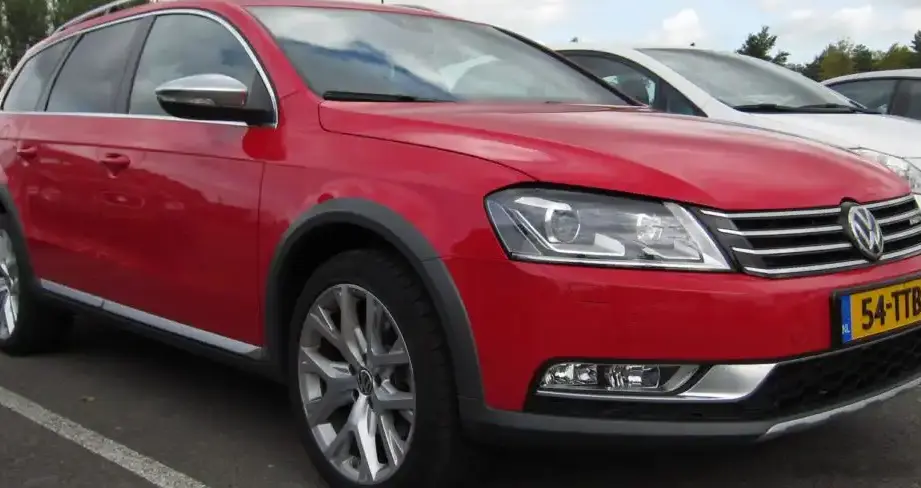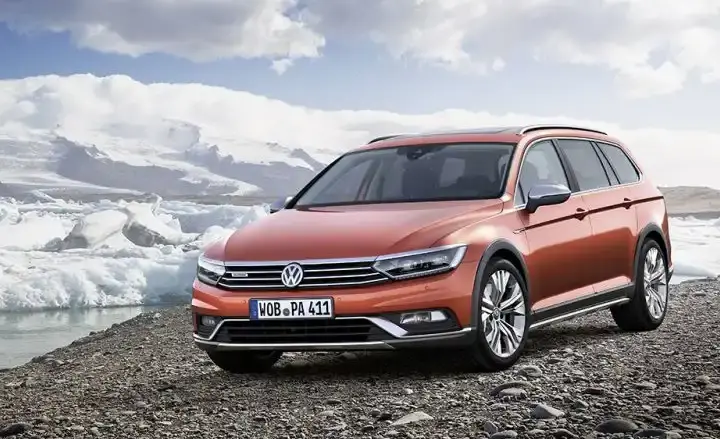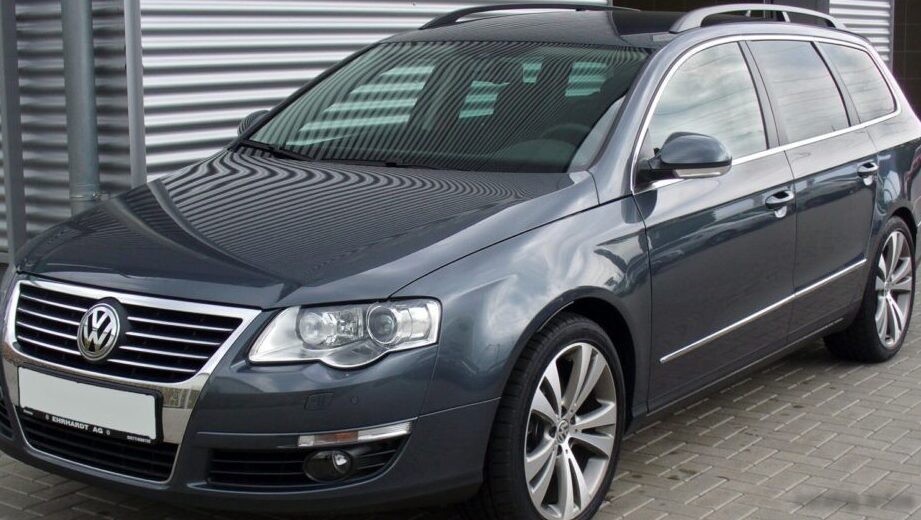
The Volkswagen Passat Variant (B6) 2.0 TDI 8V (140 hp) PDE DSG, produced between February 2005 and February 2008, represented a significant offering in Volkswagen’s mid-size family car lineup. This variant, a station wagon (estate) body style, combined a fuel-efficient diesel engine with a sophisticated direct-shift gearbox (DSG) to deliver a practical and relatively sporty driving experience. It was primarily aimed at the European market, where demand for diesel-powered wagons remained strong, offering a balance between economy, space, and performance.
Technical Specifications
| Brand | Volkswagen |
| Model | Passat |
| Generation | Passat Variant (B6) |
| Type (Engine) | 2.0 TDI 8V (140 Hp) PDE DSG |
| Start of production | February, 2005 |
| End of production | February, 2008 |
| Powertrain Architecture | Internal Combustion engine |
| Body type | Station wagon (estate) |
| Seats | 5 |
| Doors | 5 |
| Fuel consumption (economy) – urban | 9 l/100 km (26.1 US mpg, 31.4 UK mpg, 11.1 km/l) |
| Fuel consumption (economy) – extra urban | 5.6 l/100 km (42 US mpg, 50.4 UK mpg, 17.9 km/l) |
| Fuel consumption (economy) – combined | 6.8 l/100 km (34.6 US mpg, 41.5 UK mpg, 14.7 km/l) |
| CO2 emissions | 180 g/km |
| Fuel Type | Diesel |
| Acceleration 0 – 100 km/h | 10.1 sec |
| Acceleration 0 – 62 mph | 10.1 sec |
| Acceleration 0 – 60 mph | 9.6 sec |
| Maximum speed | 203 km/h (126.14 mph) |
| Emission standard | Euro 4 |
| Weight-to-power ratio | 10.9 kg/Hp, 91.4 Hp/tonne |
| Weight-to-torque ratio | 4.8 kg/Nm, 208.9 Nm/tonne |
| Power | 140 Hp @ 4000 rpm |
| Power per litre | 71.1 Hp/l |
| Torque | 320 Nm @ 1800 rpm (236.02 lb.-ft. @ 1800 rpm) |
| Engine layout | Front, Transverse |
| Engine Model/Code | EA188 / BMP |
| Engine displacement | 1968 cm3 (120.09 cu. in.) |
| Number of cylinders | 4 |
| Engine configuration | Inline |
| Cylinder Bore | 81 mm (3.19 in.) |
| Piston Stroke | 95.5 mm (3.76 in.) |
| Compression ratio | 18.5:1 |
| Number of valves per cylinder | 2 |
| Fuel injection system | Pump-nozzle (Unit Injector) |
| Engine aspiration | Turbocharger, Intercooler |
| Valvetrain | SOHC |
| Engine oil capacity | 4 l (4.23 US qt | 3.52 UK qt) |
| Coolant | 8 l (8.45 US qt | 7.04 UK qt) |
| Kerb Weight | 1532 kg (3377.48 lbs.) |
| Max. weight | 2170 kg (4784.03 lbs.) |
| Max load | 638 kg (1406.55 lbs.) |
| Trunk (boot) space – minimum | 603 l (21.29 cu. ft.) |
| Trunk (boot) space – maximum | 1731 l (61.13 cu. ft.) |
| Fuel tank capacity | 70 l (18.49 US gal | 15.4 UK gal) |
| Max. roof load | 100 kg (220.46 lbs.) |
| Permitted trailer load with brakes (12%) | 1800 kg (3968.32 lbs.) |
| Permitted trailer load without brakes | 750 kg (1653.47 lbs.) |
| Permitted towbar download | 90 kg (198.42 lbs.) |
| Length | 4774 mm (187.95 in.) |
| Width | 1820 mm (71.65 in.) |
| Width including mirrors | 2004 mm (78.9 in.) |
| Height | 1517 mm (59.72 in.) |
| Wheelbase | 2709 mm (106.65 in.) |
| Front track | 1552 mm (61.1 in.) |
| Rear (Back) track | 1551 mm (61.06 in.) |
| Minimum turning circle (turning diameter) | 11.4 m (37.4 ft.) |
| Drivetrain Architecture | The Internal combustion engine (ICE) drives the front wheels of the vehicle. |
| Drive wheel | Front wheel drive |
| Number of gears and type of gearbox | 6 gears, automatic transmission |
| Front suspension | Spring Strut |
| Rear suspension | Coil spring |
| Front brakes | Ventilated discs |
| Rear brakes | Disc |
| Assisting systems | ABS (Anti-lock braking system) |
| Steering type | Steering rack and pinion |
| Tires size | 215/55 R16 |
| Wheel rims size | 6.5J X 16 |
Positioning within the B6 Passat Range
The 2.0 TDI 8V (140 hp) variant occupied a crucial mid-range position within the B6 Passat lineup. Below it sat the lower-powered diesel options, typically the 1.9 TDI, aimed at buyers prioritizing maximum fuel economy. Above it were the more potent petrol engines, such as the 1.8 TSI and the range-topping 3.2-liter V6, which offered significantly more performance but at the cost of increased fuel consumption and purchase price. The 2.0 TDI struck a balance, providing respectable performance for everyday driving combined with the inherent efficiency of a modern turbodiesel engine.
Engine and Transmission Details
The heart of this Passat variant was the EA188 series 2.0-liter four-cylinder diesel engine. This engine, designated ‘BMP’ in this application, utilized pump-nozzle (PDE) fuel injection technology. PDE systems, while effective, were gradually being superseded by common-rail injection due to the latter’s greater refinement and potential for higher pressures. The 8-valve cylinder head configuration, while simpler than 16-valve designs, contributed to good low-end torque, making the engine responsive in typical driving conditions. The turbocharger and intercooler further enhanced performance by increasing air density entering the engine.
Paired with the engine was a 6-speed Direct-Shift Gearbox (DSG). DSG, also known as a dual-clutch transmission, offered the convenience of an automatic while maintaining the efficiency and responsiveness of a manual gearbox. It achieved this by utilizing two separate clutches, allowing for seamless gear changes without the torque interruption associated with traditional automatics. This combination resulted in brisk acceleration – 0 to 60 mph in approximately 9.6 seconds – and a comfortable cruising experience.
Comparison with Other B6 Passat Variants
Compared to the 1.9 TDI models, the 2.0 TDI offered a noticeable power increase (140 hp vs. typically 100-130 hp) and slightly improved torque. This translated to better acceleration and more relaxed highway cruising. However, the 1.9 TDI generally achieved slightly better fuel economy. Against the petrol-powered variants, the 2.0 TDI provided significantly superior fuel efficiency and torque, making it a more practical choice for long-distance driving and those frequently carrying passengers or cargo. The petrol engines, particularly the V6, offered a more refined engine note and higher peak power, appealing to drivers prioritizing performance and driving enjoyment.
Reliability and Maintenance
The B6 Passat, in general, is considered a relatively reliable vehicle, but the 2.0 TDI variant has some known areas of concern. The PDE injection system, while durable, can be expensive to repair if issues arise. DSG transmissions, while advanced, require regular maintenance – typically fluid and filter changes every 40,000-60,000 miles – to ensure smooth operation and prevent premature failure. The turbocharger is another component that requires attention, with potential for wear and tear over time. Regular servicing and preventative maintenance are crucial for maximizing the lifespan of this variant. The particulate filter, a standard feature to meet Euro 4 emissions standards, can also become clogged if the vehicle is primarily used for short trips, requiring periodic regeneration or eventual replacement.
Legacy and Market Impact
The Volkswagen Passat Variant (B6) 2.0 TDI 8V (140 hp) PDE DSG played a significant role in solidifying the Passat’s position as a popular choice in the European mid-size family car segment. It offered a compelling combination of practicality, efficiency, and performance, appealing to a wide range of buyers. While superseded by newer Passat generations with more advanced technology and improved fuel economy, the B6 remains a well-regarded vehicle, often sought after for its robust build quality and relatively affordable price on the used car market.