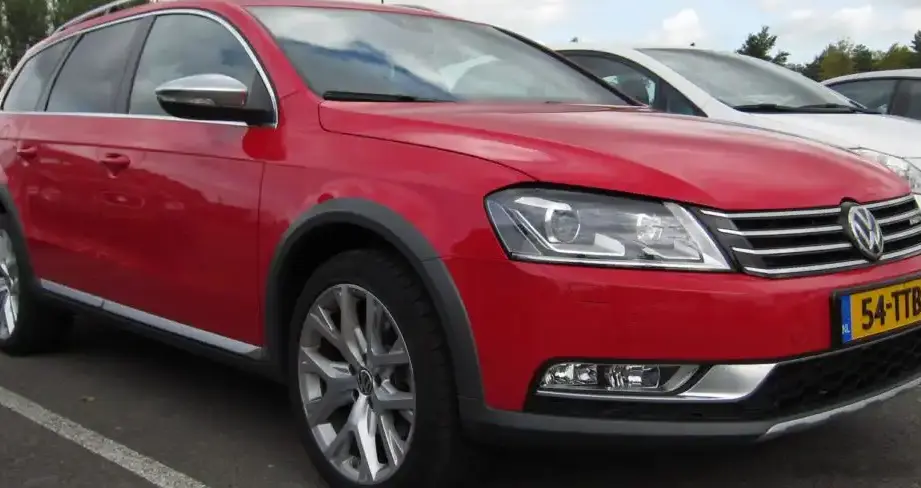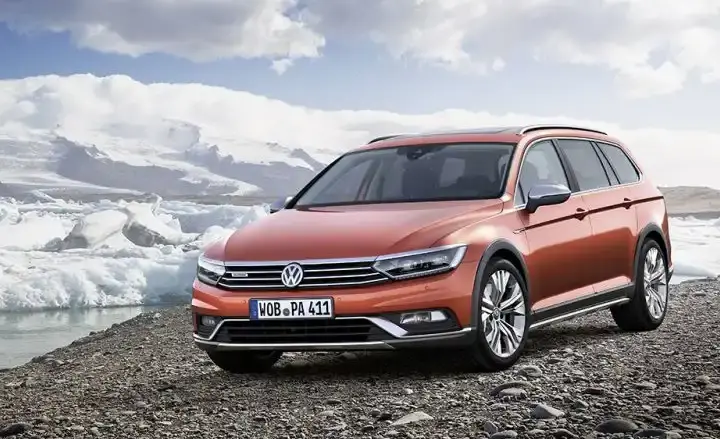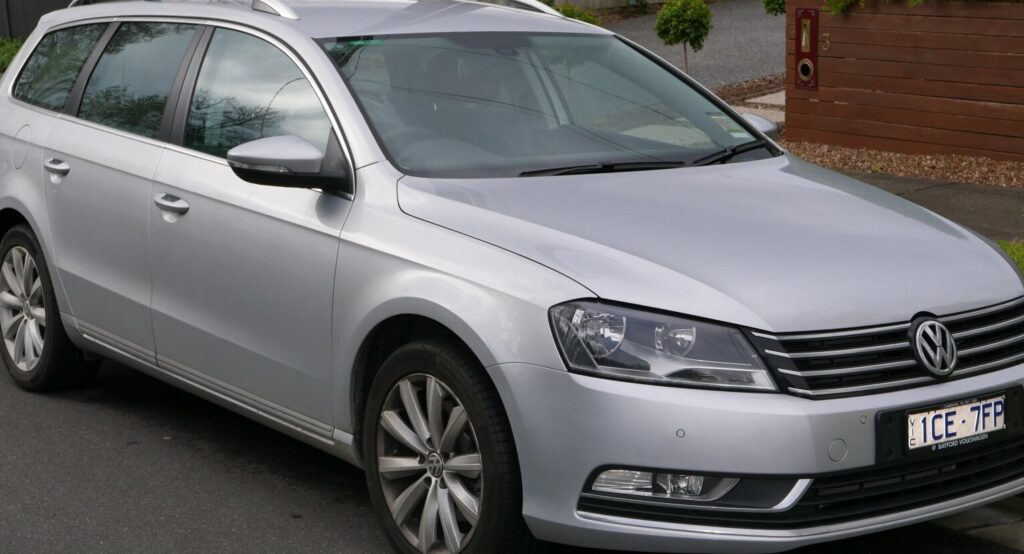
The Volkswagen Passat Variant (B7) 1.4 TSI (150 hp) EcoFuel CNG, produced between 2010 and 2014, represents a unique offering within the broader B7 Passat range. This variant combined the practicality of the Passat wagon body style with a bi-fuel powertrain capable of running on both gasoline and Compressed Natural Gas (CNG). Positioned as an environmentally conscious alternative, it aimed to appeal to buyers seeking lower running costs and reduced emissions without sacrificing the comfort and space expected of a mid-size family vehicle. The B7 generation Passat, built on the Volkswagen Group’s PQ46 platform (also known as the A6 platform in some contexts), was a significant update to the previous B6 model, featuring revised styling, improved interior quality, and a range of updated engine options.
Technical Specifications
| Brand | Volkswagen |
| Model | Passat |
| Generation | Passat Variant (B7) |
| Type (Engine) | 1.4 TSI (150 Hp) EcoFuel CNG |
| Start of production | 2010 |
| End of production | 2014 |
| Powertrain Architecture | Internal Combustion engine |
| Body type | Station wagon (estate) |
| Seats | 5 |
| Doors | 5 |
| Fuel consumption (economy) – urban (NEDC) | 9.2 l/100 km (25.6 US mpg, 30.7 UK mpg, 10.9 km/l) |
| Fuel consumption (economy) – urban (CNG) (NEDC) | 5.8 kg/100 km |
| Fuel consumption (economy) – extra urban (NEDC) | 5.6 l/100 km (42 US mpg, 50.4 UK mpg, 17.9 km/l) |
| Fuel consumption (economy) – extra urban (CNG) (NEDC) | 3.5 kg/100 km |
| Fuel consumption (economy) – combined (NEDC) | 6.9 l/100 km (34.1 US mpg, 40.9 UK mpg, 14.5 km/l) |
| Fuel consumption (economy) – combined (CNG) (NEDC) | 4.3 kg/100 km |
| CO2 emissions (NEDC) | 161 g/km |
| CO2 emissions (CNG) (NEDC) | 119 g/km |
| Fuel Type | Petrol / CNG |
| Acceleration 0 – 100 km/h | 9.9 sec |
| Acceleration 0 – 62 mph | 9.9 sec |
| Acceleration 0 – 60 mph | 9.4 sec |
| Maximum speed | 212 km/h (131.73 mph) |
| Emission standard | Euro 5 |
| Weight-to-power ratio | 10.3 kg/Hp, 96.7 Hp/tonne |
| Weight-to-torque ratio | 7.1 kg/Nm, 141.8 Nm/tonne |
| Power | 150 Hp @ 5500 rpm |
| Power per litre | 107.9 Hp/l |
| Torque | 220 Nm @ 1500-4500 rpm (162.26 lb.-ft. @ 1500-4500 rpm) |
| Engine layout | Front, Transverse |
| Engine Model/Code | EA111 / CDGA |
| Engine displacement | 1390 cm3 (84.82 cu. in.) |
| Number of cylinders | 4 |
| Engine configuration | Inline |
| Cylinder Bore | 76.5 mm (3.01 in.) |
| Piston Stroke | 75.6 mm (2.98 in.) |
| Compression ratio | 10:1 |
| Number of valves per cylinder | 4 |
| Fuel injection system | Direct injection and Multi-port manifold injection |
| Engine aspiration | Turbocharging and Supercharger, Intercooler |
| Valvetrain | DOHC |
| Engine oil capacity | 3.6 l (3.8 US qt | 3.17 UK qt) |
| Kerb Weight | 1551 kg (3419.37 lbs.) |
| Max. weight | 2150 kg (4739.94 lbs.) |
| Max load | 599 kg (1320.57 lbs.) |
| Trunk (boot) space – minimum | 523 l (18.47 cu. ft.) |
| Trunk (boot) space – maximum | 1651 l (58.3 cu. ft.) |
| Fuel tank capacity | 31 l (8.19 US gal | 6.82 UK gal) |
| CNG cylinder capacity | 21 kg |
| Max. roof load | 100 kg (220.46 lbs.) |
| Permitted trailer load with brakes (8%) | 1700 kg (3747.86 lbs.) |
| Permitted trailer load with brakes (12%) | 1500 kg (3306.93 lbs.) |
| Permitted trailer load without brakes | 750 kg (1653.47 lbs.) |
| Permitted towbar download | 90 kg (198.42 lbs.) |
| Length | 4771 mm (187.83 in.) |
| Width | 1820 mm (71.65 in.) |
| Width including mirrors | 2062 mm (81.18 in.) |
| Height | 1516 mm (59.69 in.) |
| Wheelbase | 2712 mm (106.77 in.) |
| Front track | 1552 mm (61.1 in.) |
| Rear (Back) track | 1551 mm (61.06 in.) |
| Front overhang | 941 mm (37.05 in.) |
| Rear overhang | 1118 mm (44.02 in.) |
| Ride height (ground clearance) | 135 mm (5.31 in.) |
| Minimum turning circle (turning diameter) | 11.4 m (37.4 ft.) |
| Front suspension | Independent, type McPherson with coil spring and anti-roll bar |
| Rear suspension | Independent multi-link spring suspension with stabilizer |
| Front brakes | Ventilated discs, 312×25 mm |
| Rear brakes | Disc, 286×12 mm |
| Assisting systems | ABS (Anti-lock braking system) |
| Steering type | Steering rack and pinion |
| Power steering | Electric Steering |
| Tires size | 205/55 R16; 215/55 R16; 235/45 R17; 235/40 R18 |
| Wheel rims size | 6.5J x 16; 7J x 16; 7.5J x 17; 8J x 18 |
INTRODUCTION
The Volkswagen Passat Variant (B7) 1.4 TSI (150 hp) EcoFuel CNG, produced from 2010 to 2014, was a station wagon variant of the popular B7 Passat. It distinguished itself through its bi-fuel capability, allowing operation on either gasoline or Compressed Natural Gas (CNG). This model was primarily aimed at the European market, where CNG infrastructure was more developed and government incentives encouraged the adoption of alternative fuel vehicles. The EcoFuel designation signified Volkswagen’s commitment to offering environmentally friendly options, and this Passat variant provided a compelling blend of practicality, fuel efficiency, and reduced emissions.
Powertrain & Engine Architecture
At the heart of the Passat Variant 1.4 TSI EcoFuel CNG lies the EA111 engine code, specifically the CDGA variant. This 1.4-liter inline-four cylinder engine is notable for its combination of turbocharging and supercharging – a configuration designed to deliver both low-end torque and high-end power. The supercharger provides boost at lower engine speeds, eliminating turbo lag, while the turbocharger takes over at higher RPMs for sustained power delivery. Direct injection further enhances efficiency and performance. The engine produces 150 horsepower at 5500 rpm and 220 Nm (162 lb-ft) of torque between 1500 and 4500 rpm. The CNG system replaces the traditional fuel tank with a high-pressure CNG cylinder, typically with a capacity of around 21 kg. When running on CNG, the engine management system automatically switches to the appropriate fuel map. The engine utilizes a six-speed manual transmission as standard, although a seven-speed DSG dual-clutch transmission was also available as an option.
Driving Characteristics
The 1.4 TSI EcoFuel CNG Passat Variant offered a driving experience that prioritized fuel economy and smooth operation over outright performance. While 150 hp is adequate for everyday driving, it doesn’t provide the brisk acceleration of higher-powered Passat variants like the 2.0 TDI. The supercharger-turbocharger combination does mitigate turbo lag, providing a reasonably responsive feel, particularly in urban environments. The manual transmission, when equipped, offers precise shifts, while the optional DSG provides seamless gear changes. Switching between gasoline and CNG is generally seamless, although a slight reduction in power is noticeable when running on CNG. The wagon’s suspension provides a comfortable ride, absorbing bumps and imperfections in the road effectively. The steering is light and precise, making it easy to maneuver in tight spaces.
Equipment & Trim Levels
The Passat Variant 1.4 TSI EcoFuel CNG typically came equipped with a respectable level of standard features. These included air conditioning, power windows, power mirrors, a CD/MP3 stereo system, and alloy wheels. Higher trim levels, such as Trendline and Comfortline, added features like automatic climate control, a multi-function steering wheel, cruise control, and upgraded upholstery. Optional extras included a navigation system, parking sensors, and a panoramic sunroof. Interior upholstery was typically cloth, with leather options available on higher trims. The dashboard layout was consistent with other B7 Passat models, featuring a functional and ergonomic design.
Chassis & Braking
The Passat Variant 1.4 TSI EcoFuel CNG utilized an independent suspension setup, with McPherson struts at the front and a multi-link system at the rear. This configuration provided a good balance of ride comfort and handling. Stabilizer bars were fitted to both axles to reduce body roll during cornering. The braking system consisted of ventilated discs at the front and solid discs at the rear. Anti-lock Braking System (ABS) was standard, enhancing safety and control during emergency braking. The steering system employed an electric power steering setup, providing light and precise steering feel.
Market Reception & Comparison
The Passat Variant 1.4 TSI EcoFuel CNG was generally well-received by critics, who praised its fuel efficiency and environmental credentials. However, some reviewers noted that the CNG infrastructure was limited in many areas, making it less convenient than gasoline-powered vehicles. Compared to other Passat variants, such as the 1.8 TSI or 2.0 TDI, the 1.4 TSI EcoFuel CNG offered lower running costs when utilizing CNG, but also delivered less overall performance. The 1.8 TSI provided a more engaging driving experience, while the 2.0 TDI offered superior fuel economy on gasoline alone. The EcoFuel model appealed to environmentally conscious buyers who prioritized fuel savings and reduced emissions.
Legacy
The Volkswagen Passat Variant 1.4 TSI EcoFuel CNG represents an interesting chapter in Volkswagen’s exploration of alternative fuel technologies. While CNG never achieved widespread adoption in many markets, the EcoFuel models demonstrated Volkswagen’s commitment to reducing the environmental impact of its vehicles. Today, these Passats can be found on the used car market, often at attractive prices. The EA111 engine, while generally reliable, can be prone to carbon buildup if not properly maintained, particularly when running primarily on gasoline. Regular servicing and the use of quality fuel are essential to ensure the long-term reliability of this powertrain. The Passat Variant 1.4 TSI EcoFuel CNG remains a practical and economical choice for buyers seeking a spacious and fuel-efficient wagon.