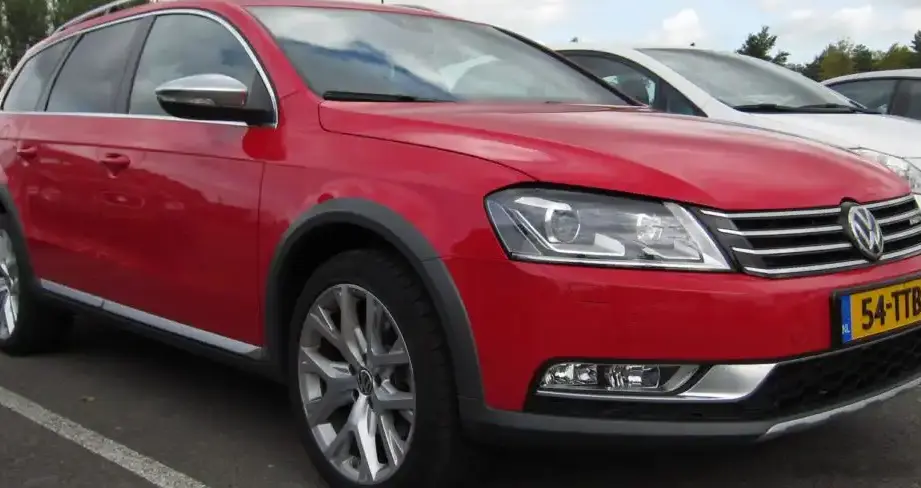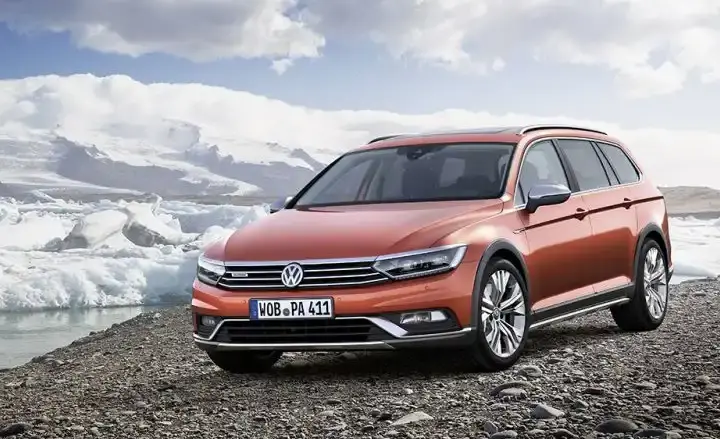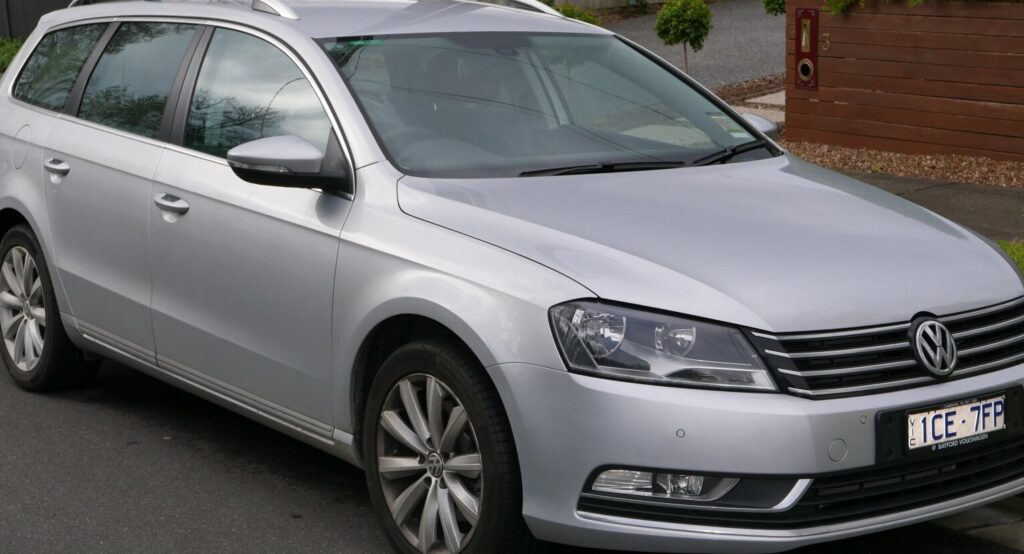
The Volkswagen Passat Variant (B7) 1.4 TSI BMT with 122 horsepower and a Direct-Shift Gearbox (DSG) represents a significant iteration of Volkswagen’s popular mid-size wagon, produced between 2010 and 2014. Positioned as a fuel-efficient and practical option within the B7 Passat range, this variant aimed to balance affordability with the versatility expected of a European estate car. It was primarily marketed in Europe, where wagons maintain a strong market presence, offering a compelling alternative to SUVs for families and individuals needing ample cargo space. This model falls within the broader context of the B7 generation (2010-2014), which itself was a substantial refresh of the B6 Passat, incorporating updated styling, technology, and improved efficiency.
Technical Specifications
| Brand | Volkswagen |
| Model | Passat |
| Generation | Passat Variant (B7) |
| Type (Engine) | 1.4 TSI BMT (122 Hp) DSG |
| Start of production | 2010 |
| End of production | 2014 |
| Powertrain Architecture | Internal Combustion engine |
| Body type | Station wagon (estate) |
| Seats | 5 |
| Doors | 5 |
| Fuel consumption (economy) – urban (NEDC) | 7.5 l/100 km (31.4 US mpg, 37.7 UK mpg, 13.3 km/l) |
| Fuel consumption (economy) – extra urban (NEDC) | 5.3 l/100 km (44.4 US mpg, 53.3 UK mpg, 18.9 km/l) |
| Fuel consumption (economy) – combined (NEDC) | 6.1 l/100 km (38.6 US mpg, 46.3 UK mpg, 16.4 km/l) |
| CO2 emissions (NEDC) | 140 g/km |
| Fuel Type | Petrol (Gasoline) |
| Acceleration 0 – 100 km/h | 10.6 sec |
| Acceleration 0 – 62 mph | 10.6 sec |
| Acceleration 0 – 60 mph | 10.1 sec |
| Maximum speed | 202 km/h (125.52 mph) |
| Emission standard | Euro 5 |
| Weight-to-power ratio | 11.7 kg/Hp, 85.2 Hp/tonne |
| Weight-to-torque ratio | 7.2 kg/Nm, 139.7 Nm/tonne |
| Power | 122 Hp @ 5000 rpm |
| Power per litre | 87.8 Hp/l |
| Torque | 200 Nm @ 1500-4000 rpm (147.51 lb.-ft. @ 1500-4000 rpm) |
| Engine layout | Front, Transverse |
| Engine Model/Code | EA111 / CAXA |
| Engine displacement | 1390 cm3 (84.82 cu. in.) |
| Number of cylinders | 4 |
| Engine configuration | Inline |
| Cylinder Bore | 76.5 mm (3.01 in.) |
| Piston Stroke | 75.6 mm (2.98 in.) |
| Compression ratio | 10:1 |
| Number of valves per cylinder | 4 |
| Fuel injection system | Direct injection |
| Engine aspiration | Turbocharger, Intercooler |
| Valvetrain | DOHC |
| Engine oil capacity | 3.6 l (3.8 US qt | 3.17 UK qt) |
| Kerb Weight | 1432 kg (3157.02 lbs.) |
| Max. weight | 2110 kg (4651.75 lbs.) |
| Max load | 678 kg (1494.73 lbs.) |
| Trunk (boot) space – minimum | 603 l (21.29 cu. ft.) |
| Trunk (boot) space – maximum | 1731 l (61.13 cu. ft.) |
| Fuel tank capacity | 70 l (18.49 US gal | 15.4 UK gal) |
| Max. roof load | 100 kg (220.46 lbs.) |
| Permitted trailer load with brakes (8%) | 1600 kg (3527.4 lbs.) |
| Permitted trailer load with brakes (12%) | 1400 kg (3086.47 lbs.) |
| Permitted trailer load without brakes | 750 kg (1653.47 lbs.) |
| Permitted towbar download | 90 kg (198.42 lbs.) |
| Length | 4771 mm (187.83 in.) |
| Width | 1820 mm (71.65 in.) |
| Width including mirrors | 2062 mm (81.18 in.) |
| Height | 1516 mm (59.69 in.) |
| Wheelbase | 2712 mm (106.77 in.) |
| Front track | 1552 mm (61.1 in.) |
| Rear (Back) track | 1551 mm (61.06 in.) |
| Front overhang | 941 mm (37.05 in.) |
| Rear overhang | 1118 mm (44.02 in.) |
| Ride height (ground clearance) | 135 mm (5.31 in.) |
| Minimum turning circle (turning diameter) | 11.4 m (37.4 ft.) |
| Drivetrain Architecture | The Internal combustion engine (ICE) drives the front wheels of the vehicle. |
| Drive wheel | Front wheel drive |
| Number of gears and type of gearbox | 7 gears, automatic transmission DSG |
| Front suspension | Independent, type McPherson with coil spring and anti-roll bar |
| Rear suspension | Independent multi-link spring suspension with stabilizer |
| Front brakes | Ventilated discs, 312×25 mm |
| Rear brakes | Disc, 286×12 mm |
| Assisting systems | ABS (Anti-lock braking system) |
| Steering type | Steering rack and pinion |
| Power steering | Electric Steering |
| Tires size | 215/55 R16; 235/45 R17; 235/40 R18 |
| Wheel rims size | 7J x 16; 7.5J x 17; 8J x 18 |
INTRODUCTION
The Passat Variant (B7) 1.4 TSI BMT with the DSG transmission was introduced as a more accessible entry point into the Passat range. The “BMT” designation stands for “BlueMotion Technology,” signifying Volkswagen’s efforts to improve fuel efficiency through various measures. This variant occupied a middle ground in the lineup, offering a balance between performance and economy, appealing to buyers who prioritized practicality and running costs over outright speed. It was positioned below the more powerful 1.8 TSI and 2.0 TDI models, and above the base 1.6-liter petrol engine.
Powertrain & Engine Architecture
At the heart of this Passat variant lies the EA111 1.4-liter turbocharged four-cylinder engine, specifically the CAXA engine code. This engine utilizes direct fuel injection (FSI) and a turbocharger with an intercooler to deliver a respectable 122 horsepower. The engine’s design incorporates features like variable valve timing on both the intake and exhaust sides to optimize performance and efficiency across the rev range. The BMT package includes start-stop technology, further contributing to fuel savings. The engine is transversely mounted at the front of the vehicle. The dual-clutch, seven-speed DSG (Direct-Shift Gearbox) transmission provides quick and smooth gear changes, enhancing the driving experience. This particular DSG unit is known for its efficiency and responsiveness, although earlier versions of the DSG were sometimes prone to mechatronic unit failures.
Driving Characteristics
The 1.4 TSI BMT with DSG delivers adequate performance for everyday driving. Acceleration from 0-60 mph takes around 10.1 seconds, and the top speed is 125.52 mph. While not a sports car, the turbocharger provides a noticeable boost in power when needed, making overtaking maneuvers relatively effortless. The DSG transmission keeps the engine in its optimal power band, contributing to a responsive feel. Compared to the more powerful 1.8 TSI, this variant feels less urgent, particularly at higher speeds. However, the DSG transmission helps to mitigate some of the performance deficit. The gear ratios are tuned for fuel efficiency, meaning the engine can run at lower RPMs during cruising, further enhancing economy.
Equipment & Trim Levels
The Passat Variant (B7) 1.4 TSI BMT typically came equipped with a reasonable level of standard features. These included air conditioning, alloy wheels (typically 16 or 17 inch), a CD/radio system with auxiliary input, and electric windows. Higher trim levels offered options such as leather upholstery, a touchscreen infotainment system, parking sensors, and a sunroof. Interior upholstery was generally cloth, with the option of upgrading to leatherette or full leather. The dashboard layout was functional and well-built, typical of Volkswagen interiors of the period.
Chassis & Braking
The B7 Passat Variant features independent suspension all around, with a McPherson strut setup at the front and a multi-link system at the rear. This provides a comfortable ride quality, absorbing bumps and imperfections in the road effectively. The front brakes are ventilated discs, while the rear brakes are solid discs. ABS (Anti-lock Braking System) is standard. Stabilizer bars are fitted to both the front and rear axles to reduce body roll during cornering. The suspension tuning is geared towards comfort rather than outright sportiness, making it well-suited for long-distance journeys.
Market Reception & Comparison
The 1.4 TSI BMT variant was generally well-received by critics as a practical and economical option. Fuel economy was a key selling point, with combined figures around 38.6 US mpg. Compared to the 1.8 TSI, the 1.4 TSI offered lower running costs but sacrificed some performance. The 2.0 TDI diesel variant provided even better fuel economy but came with a higher purchase price and potential concerns about diesel emissions. Reliability was generally good, although the DSG transmission required regular maintenance to prevent potential issues.
Legacy
The Volkswagen Passat Variant (B7) 1.4 TSI BMT remains a popular choice in the used car market, particularly for buyers seeking a spacious, comfortable, and fuel-efficient wagon. The EA111 engine, while not without its quirks, is generally considered reliable if properly maintained. The DSG transmission, while potentially requiring attention, offers a smooth and efficient driving experience. These vehicles represent a good value proposition for those needing a practical family car with a touch of European refinement. However, prospective buyers should be aware of the potential for DSG transmission issues and ensure that the vehicle has been regularly serviced.