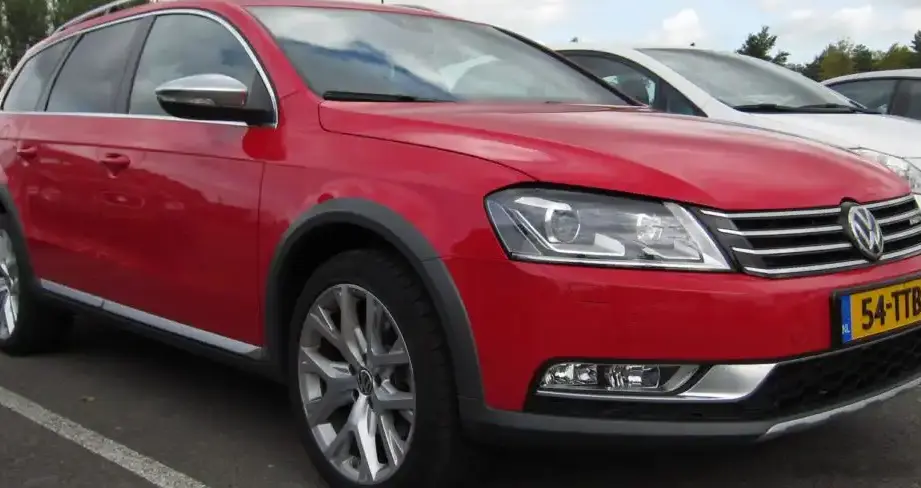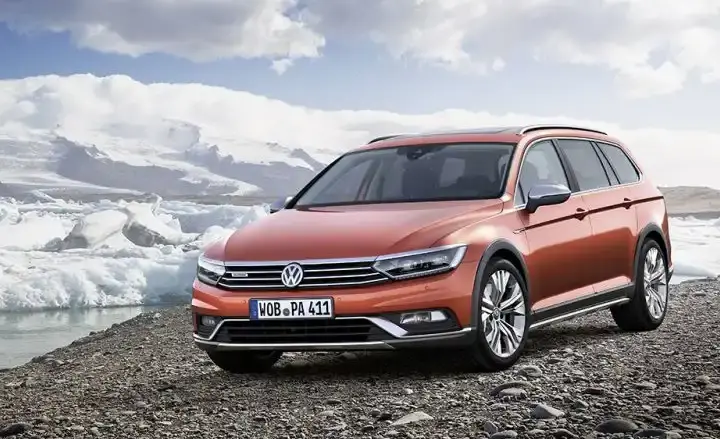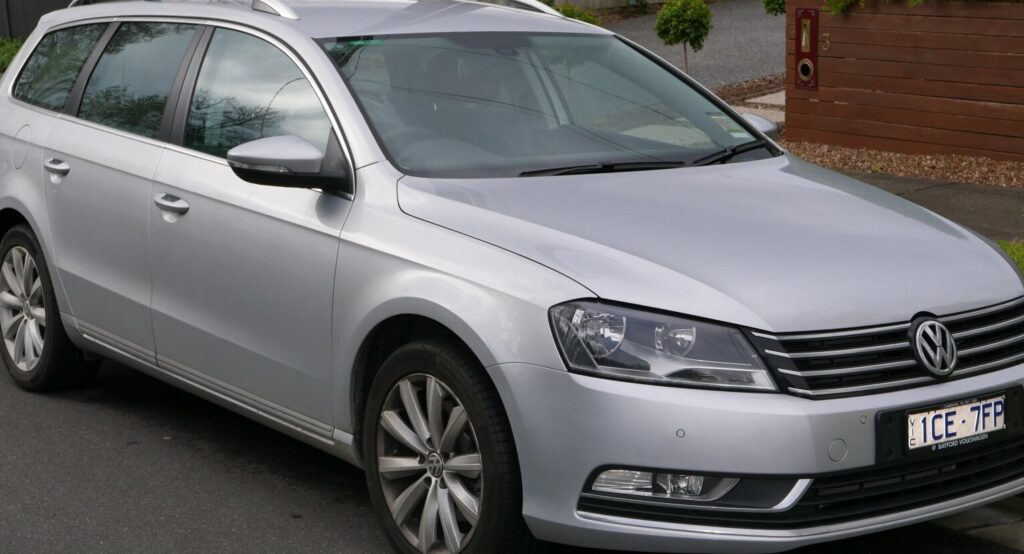
The Volkswagen Passat Variant (B7) 1.6 TDI BlueMotion, produced from 2011 to 2014, represented a fuel-efficient and practical option within the broader B7 Passat range. Positioned as an entry-level diesel variant, it catered to buyers prioritizing economy and space over outright performance. This model, a station wagon (estate) body style, was primarily sold in the European market, where demand for such vehicles remained strong. It built upon the success of previous Passat generations, offering a blend of comfort, practicality, and Volkswagen’s reputation for build quality. The B7 generation itself was a significant refresh of the B6, featuring updated styling, improved technology, and enhanced efficiency.
Technical Specifications
| Brand | Volkswagen |
| Model | Passat |
| Generation | Passat Variant (B7) |
| Type (Engine) | 1.6 TDI (105 Hp) BlueMotion |
| Start of production | 2011 |
| End of production | 2014 |
| Powertrain Architecture | Internal Combustion engine |
| Body type | Station wagon (estate) |
| Seats | 5 |
| Doors | 5 |
| Fuel consumption (economy) – urban (NEDC) | 5.2 l/100 km (45.2 US mpg, 54.3 UK mpg, 19.2 km/l) |
| Fuel consumption (economy) – extra urban (NEDC) | 3.8 l/100 km (61.9 US mpg, 74.3 UK mpg, 26.3 km/l) |
| Fuel consumption (economy) – combined (NEDC) | 4.3 l/100 km (54.7 US mpg, 65.7 UK mpg, 23.3 km/l) |
| CO2 emissions (NEDC) | 113 g/km |
| Fuel Type | Diesel |
| Acceleration 0 – 100 km/h | 12.5 sec |
| Acceleration 0 – 62 mph | 12.5 sec |
| Acceleration 0 – 60 mph | 11.9 sec |
| Maximum speed | 196 km/h (121.79 mph) |
| Emission standard | Euro 5 |
| Weight-to-power ratio | 14 kg/Hp, 71.3 Hp/tonne |
| Weight-to-torque ratio | 5.9 kg/Nm, 169.8 Nm/tonne |
| Power | 105 Hp @ 4400 rpm |
| Power per litre | 65.7 Hp/l |
| Torque | 250 Nm @ 1500-2500 rpm (184.39 lb.-ft. @ 1500-2500 rpm) |
| Engine layout | Front, Transverse |
| Engine Model/Code | EA189 / CAYC |
| Engine displacement | 1598 cm3 (97.52 cu. in.) |
| Number of cylinders | 4 |
| Engine configuration | Inline |
| Cylinder Bore | 79.5 mm (3.13 in.) |
| Piston Stroke | 80.5 mm (3.17 in.) |
| Compression ratio | 16.5:1 |
| Number of valves per cylinder | 4 |
| Fuel injection system | Diesel Commonrail |
| Engine aspiration | Turbocharger, Intercooler |
| Valvetrain | DOHC |
| Engine oil capacity | 4.3 l (4.54 US qt | 3.78 UK qt) |
| Kerb Weight | 1472 kg (3245.2 lbs.) |
| Max. weight | 2090 kg (4607.66 lbs.) |
| Max load | 618 kg (1362.46 lbs.) |
| Trunk (boot) space – minimum | 603 l (21.29 cu. ft.) |
| Trunk (boot) space – maximum | 1731 l (61.13 cu. ft.) |
| Fuel tank capacity | 70 l (18.49 US gal | 15.4 UK gal) |
| Max. roof load | 100 kg (220.46 lbs.) |
| Permitted trailer load with brakes (8%) | 1400 kg (3086.47 lbs.) |
| Permitted trailer load with brakes (12%) | 1200 kg (2645.55 lbs.) |
| Permitted trailer load without brakes | 750 kg (1653.47 lbs.) |
| Permitted towbar download | 90 kg (198.42 lbs.) |
| Length | 4771 mm (187.83 in.) |
| Width | 1820 mm (71.65 in.) |
| Width including mirrors | 2062 mm (81.18 in.) |
| Height | 1508 mm (59.37 in.) |
| Wheelbase | 2712 mm (106.77 in.) |
| Front track | 1553 mm (61.14 in.) |
| Rear (Back) track | 1554 mm (61.18 in.) |
| Front overhang | 941 mm (37.05 in.) |
| Rear overhang | 1118 mm (44.02 in.) |
| Ride height (ground clearance) | 124 mm (4.88 in.) |
| Minimum turning circle (turning diameter) | 11.4 m (37.4 ft.) |
| Front suspension | Independent, type McPherson with coil spring and anti-roll bar |
| Rear suspension | Independent multi-link spring suspension with stabilizer |
| Front brakes | Ventilated discs, 312×25 mm |
| Rear brakes | Disc, 286×12 mm |
| Drive wheel | Front wheel drive |
| Number of gears and type of gearbox | 6 gears, manual transmission |
Powertrain & Engine Architecture
The heart of the Passat Variant 1.6 TDI BlueMotion is the EA189 series 1.6-liter inline-four diesel engine, specifically the CAYC code. This engine utilizes a common rail direct injection system, delivering fuel at extremely high pressures for optimized combustion. A turbocharger with an intercooler is employed to boost power and torque, overcoming the inherent limitations of a relatively small displacement engine. The engine features a double overhead camshaft (DOHC) valvetrain with four valves per cylinder, enhancing breathing and contributing to improved efficiency. The BlueMotion technology package included features like start/stop functionality and optimized aerodynamics to further reduce fuel consumption and emissions. The engine’s 16.5:1 compression ratio is typical for a diesel engine, aiding in efficient combustion. The 6-speed manual transmission was standard, chosen for its efficiency and driver engagement.
Driving Characteristics
The 105 horsepower and 250 Nm (184 lb-ft) of torque produced by the 1.6 TDI engine provided adequate, though not exhilarating, performance. Acceleration from 0-100 km/h (0-62 mph) took around 12.5 seconds, making it suitable for everyday driving rather than spirited performance. The engine’s torque peak, available from 1500-2500 rpm, meant that it felt reasonably responsive in normal driving conditions, offering sufficient pulling power for overtaking and highway cruising. Compared to the more powerful 2.0 TDI variants, the 1.6 TDI felt noticeably slower, particularly when fully loaded. However, the manual transmission allowed drivers to make the most of the available power, and the well-tuned gear ratios helped to keep the engine in its optimal operating range.
Equipment & Trim Levels
The 1.6 TDI BlueMotion typically came with a reasonable level of standard equipment. This included air conditioning, electric front windows, a basic audio system, and alloy wheels. Safety features such as ABS, ESP (Electronic Stability Program), and multiple airbags were also standard. Higher trim levels, available as options, added features like automatic climate control, a more advanced audio system with touchscreen display, parking sensors, and upgraded interior upholstery. Interior materials were generally durable and functional, reflecting the car’s practical focus. The dashboard layout was typical of Volkswagen at the time, with a clean and ergonomic design.
Chassis & Braking
The Passat Variant B7 featured an independent suspension setup, with McPherson struts at the front and a multi-link system at the rear. This provided a comfortable ride quality, absorbing bumps and imperfections in the road effectively. Stabilizer bars were fitted to both axles to reduce body roll during cornering. The braking system consisted of ventilated discs at the front and solid discs at the rear. ABS (Anti-lock Braking System) was standard, providing enhanced braking performance and stability. The steering was a rack-and-pinion system with electric power assistance, offering a precise and responsive feel.
Market Reception & Comparison
The Passat Variant 1.6 TDI BlueMotion was generally well-received by critics for its fuel efficiency and practicality. It was praised for its comfortable ride, spacious interior, and build quality. However, some reviewers noted that the engine lacked outright power, particularly when compared to the more expensive 2.0 TDI models. In terms of fuel economy, the 1.6 TDI BlueMotion excelled, achieving combined fuel consumption figures of around 4.3 l/100 km (54.7 US mpg). This made it a particularly attractive option for drivers covering long distances. Compared to competitors like the Ford Mondeo and Opel/Vauxhall Insignia, the Passat offered a more refined driving experience and a higher perceived quality.
Legacy
The EA189 engine family, including the CAYC code used in the 1.6 TDI BlueMotion, has a mixed reputation for long-term reliability. While generally durable, some engines were affected by issues related to the diesel particulate filter (DPF) and EGR (Exhaust Gas Recirculation) valve. Regular maintenance, including timely oil changes and DPF regeneration, is crucial for ensuring the longevity of this powertrain. Today, used examples of the Passat Variant 1.6 TDI BlueMotion are relatively affordable and represent a practical choice for buyers seeking a fuel-efficient and spacious estate car. However, potential buyers should be aware of the potential for DPF and EGR issues and factor in the cost of any necessary repairs.