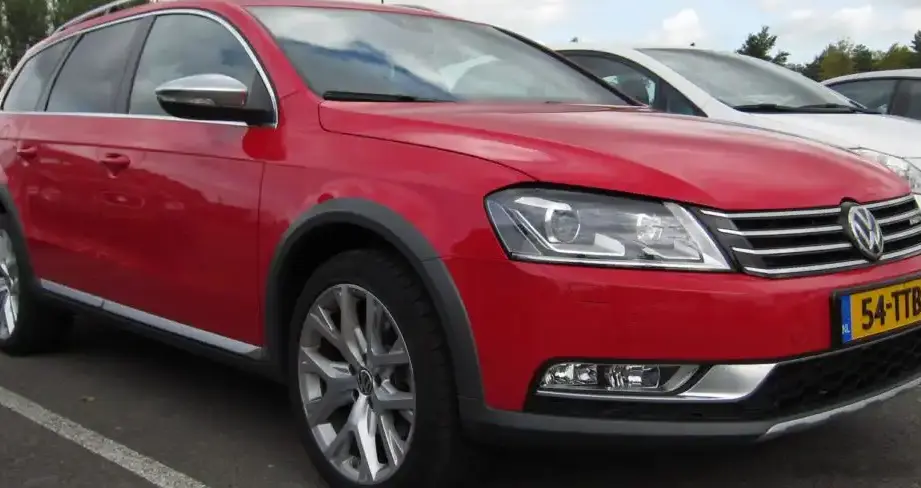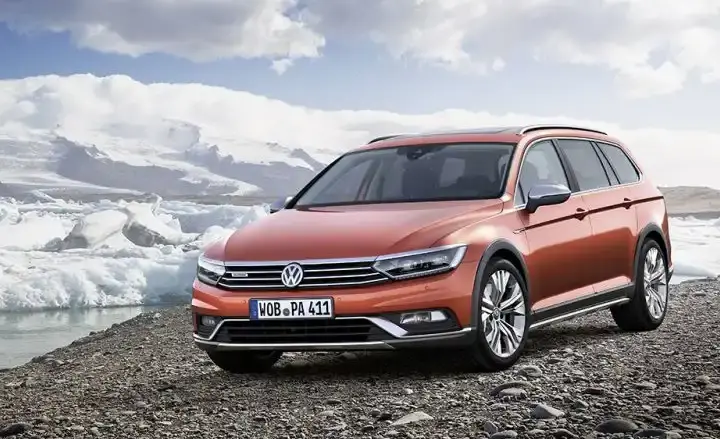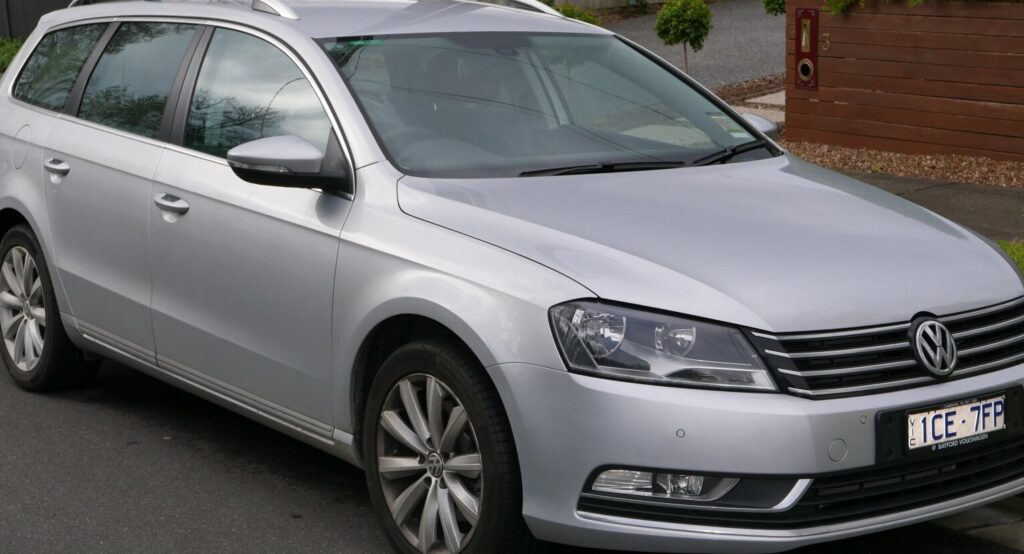
The Volkswagen Passat Variant (B7) 2.0 TDI BMT 4MOTION, produced between 2010 and 2014, represents a compelling blend of practicality, efficiency, and all-weather capability within the Passat range. Positioned as a mid-range offering, this variant catered to buyers seeking a spacious, comfortable estate car with the added security of Volkswagen’s 4MOTION all-wheel-drive system and the fuel economy benefits of a modern diesel engine. It falls within the B7 generation of the Passat, which itself was a significant refresh of the B6 platform, focusing on refinement and technological upgrades. The “BMT” designation signifies Volkswagen’s BlueMotion Technology, emphasizing fuel-saving measures.
Technical Specifications
| Brand | Volkswagen |
| Model | Passat |
| Generation | Passat Variant (B7) |
| Type (Engine) | 2.0 TDI BMT (140 Hp) 4MOTION |
| Start of production | 2010 |
| End of production | 2014 |
| Powertrain Architecture | Internal Combustion engine |
| Body type | Station wagon (estate) |
| Seats | 5 |
| Doors | 5 |
| Fuel consumption (economy) – urban (NEDC) | 6.6 l/100 km (35.6 US mpg, 42.8 UK mpg, 15.2 km/l) |
| Fuel consumption (economy) – extra urban (NEDC) | 4.6 l/100 km (51.1 US mpg, 61.4 UK mpg, 21.7 km/l) |
| Fuel consumption (economy) – combined (NEDC) | 5.3 l/100 km (44.4 US mpg, 53.3 UK mpg, 18.9 km/l) |
| CO2 emissions (NEDC) | 139 g/km |
| Fuel Type | Diesel |
| Acceleration 0 – 100 km/h | 10.1 sec |
| Acceleration 0 – 62 mph | 10.1 sec |
| Acceleration 0 – 60 mph | 9.6 sec |
| Maximum speed | 207 km/h (128.62 mph) |
| Emission standard | Euro 5 |
| Weight-to-power ratio | 11.3 kg/Hp, 88.6 Hp/tonne |
| Weight-to-torque ratio | 4.9 kg/Nm, 202.4 Nm/tonne |
| Power | 140 Hp @ 4200 rpm |
| Power per litre | 71.1 Hp/l |
| Torque | 320 Nm @ 1750-2500 rpm (236.02 lb.-ft. @ 1750-2500 rpm) |
| Engine layout | Front, Transverse |
| Engine Model/Code | EA189 / CFFB |
| Engine displacement | 1968 cm3 (120.09 cu. in.) |
| Number of cylinders | 4 |
| Engine configuration | Inline |
| Cylinder Bore | 81 mm (3.19 in.) |
| Piston Stroke | 95.5 mm (3.76 in.) |
| Compression ratio | 16:1 |
| Number of valves per cylinder | 4 |
| Fuel injection system | Diesel Commonrail |
| Engine aspiration | Turbocharger, Intercooler |
| Valvetrain | DOHC |
| Engine oil capacity | 4.3 l (4.54 US qt | 3.78 UK qt) |
| Kerb Weight | 1581 kg (3485.51 lbs.) |
| Max. weight | 2270 kg (5004.49 lbs.) |
| Max load | 689 kg (1518.98 lbs.) |
| Trunk (boot) space – minimum | 588 l (20.77 cu. ft.) |
| Trunk (boot) space – maximum | 1716 l (60.6 cu. ft.) |
| Fuel tank capacity | 70 l (18.49 US gal | 15.4 UK gal) |
| Max. roof load | 100 kg (220.46 lbs.) |
| Permitted trailer load with brakes (8%) | 2200 kg (4850.17 lbs.) |
| Permitted trailer load with brakes (12%) | 2000 kg (4409.25 lbs.) |
| Permitted trailer load without brakes | 750 kg (1653.47 lbs.) |
| Permitted towbar download | 90 kg (198.42 lbs.) |
| Length | 4771 mm (187.83 in.) |
| Width | 1820 mm (71.65 in.) |
| Width including mirrors | 2062 mm (81.18 in.) |
| Height | 1516 mm (59.69 in.) |
| Wheelbase | 2712 mm (106.77 in.) |
| Front track | 1552 mm (61.1 in.) |
| Rear (Back) track | 1551 mm (61.06 in.) |
| Front overhang | 941 mm (37.05 in.) |
| Rear overhang | 1118 mm (44.02 in.) |
| Ride height (ground clearance) | 135 mm (5.31 in.) |
| Minimum turning circle (turning diameter) | 11.4 m (37.4 ft.) |
| Drivetrain Architecture | The Internal combustion engine (ICE) drives the front wheels permanently, and the rear wheels are driven through an electrically or mechanically operated clutch if necessary. |
| Drive wheel | All wheel drive (4×4) |
| Number of gears and type of gearbox | 6 gears, manual transmission |
| Front suspension | Independent, type McPherson with coil spring and anti-roll bar |
| Rear suspension | Independent multi-link spring suspension with stabilizer |
| Front brakes | Ventilated discs |
| Rear brakes | Disc |
INTRODUCTION
The Volkswagen Passat Variant (B7) 2.0 TDI BMT 4MOTION, launched in 2010, built upon the success of the B6 generation, offering a refined and practical estate car option for European buyers. The B7 represented a mid-cycle refresh, with styling updates, improved interior materials, and enhanced technology. This particular variant, powered by the 2.0-liter TDI engine with 140 horsepower and equipped with Volkswagen’s 4MOTION all-wheel-drive system, aimed to provide a balance between fuel efficiency, performance, and all-weather capability. It occupied a middle ground in the Passat lineup, appealing to families and individuals needing a versatile vehicle for both daily commuting and longer journeys.
Powertrain & Engine Architecture
At the heart of the Passat Variant 2.0 TDI BMT 4MOTION lies the EA189 series 2.0-liter four-cylinder diesel engine, specifically the CFFB engine code. This engine utilizes a common rail direct injection system, delivering fuel directly into the combustion chamber at extremely high pressure for improved efficiency and reduced emissions. The engine features a turbocharger with an intercooler to boost power output. The “BMT” designation indicates the inclusion of BlueMotion Technology, which incorporates features like a stop-start system and optimized aerodynamics to minimize fuel consumption. The engine produces 140 horsepower at 4200 rpm and 320 Nm (236 lb-ft) of torque between 1750 and 2500 rpm. The engine employs a double overhead camshaft (DOHC) valvetrain with four valves per cylinder. The 4MOTION system is a permanent all-wheel-drive system, utilizing a viscous coupling to distribute power between the front and rear axles as needed, providing enhanced traction in slippery conditions. The transmission is a 6-speed manual gearbox.
Driving Characteristics
The 2.0 TDI BMT 4MOTION offered a composed and refined driving experience. While not overtly sporty, the 140 horsepower engine provided adequate performance for everyday driving and highway cruising. The 320 Nm of torque, available from relatively low engine speeds, ensured strong acceleration in most situations. The 6-speed manual transmission allowed for precise gear selection, although the gear ratios were geared towards fuel efficiency rather than outright performance. Compared to higher-output versions of the 2.0 TDI, this variant felt less eager to rev, but it compensated with better fuel economy. The 4MOTION system provided noticeable improvements in handling and stability, particularly on wet or loose surfaces. The steering was precise and well-weighted, contributing to a confident feel behind the wheel.
Equipment & Trim Levels
The Passat Variant 2.0 TDI BMT 4MOTION typically came equipped with a respectable level of standard features. These included air conditioning, power windows, power mirrors, a CD/radio system, and alloy wheels. Higher trim levels offered options such as leather upholstery, a sunroof, a navigation system, and parking sensors. Interior upholstery was typically cloth, with the option of leather upgrades. The dashboard layout was functional and well-designed, with clear instrumentation and intuitive controls. Safety features included ABS, ESP (Electronic Stability Program), and multiple airbags.
Chassis & Braking
The Passat Variant B7 utilized an independent suspension setup, with McPherson struts at the front and a multi-link suspension at the rear. This configuration provided a comfortable ride quality and good handling characteristics. The front brakes were ventilated discs, while the rear brakes were solid discs. The suspension was tuned to prioritize comfort, but it also offered a reasonable level of body control. Stabilizer bars were fitted to both the front and rear axles to reduce body roll during cornering.
Market Reception & Comparison
The Passat Variant 2.0 TDI BMT 4MOTION was generally well-received by automotive critics. It was praised for its spacious interior, comfortable ride, and fuel efficiency. The 4MOTION system was also highlighted as a significant benefit, particularly for drivers in regions with harsh winter weather. Compared to the more powerful 2.0 TDI variants, this version offered a more affordable entry point into the Passat range, but it sacrificed some performance. Against competitors like the Ford Mondeo Estate and the Skoda Octavia Estate, the Passat offered a more premium feel and a more refined driving experience. Fuel economy was competitive, typically achieving around 5.3 l/100km (44.4 US mpg) in combined driving.
Legacy
The EA189 engine, while generally reliable, has been subject to scrutiny regarding emissions compliance, leading to software updates for some vehicles. However, the 2.0 TDI BMT 4MOTION powertrain, when properly maintained, has proven to be durable and long-lasting. On the used car market, these Passat Variants are often sought after for their practicality, comfort, and all-weather capability. Regular maintenance, including oil changes and timing belt replacements, is crucial to ensure the longevity of the engine. The 4MOTION system is also relatively reliable, but it requires periodic servicing to maintain its optimal performance. Overall, the Passat Variant 2.0 TDI BMT 4MOTION remains a popular choice for buyers seeking a versatile and dependable estate car.