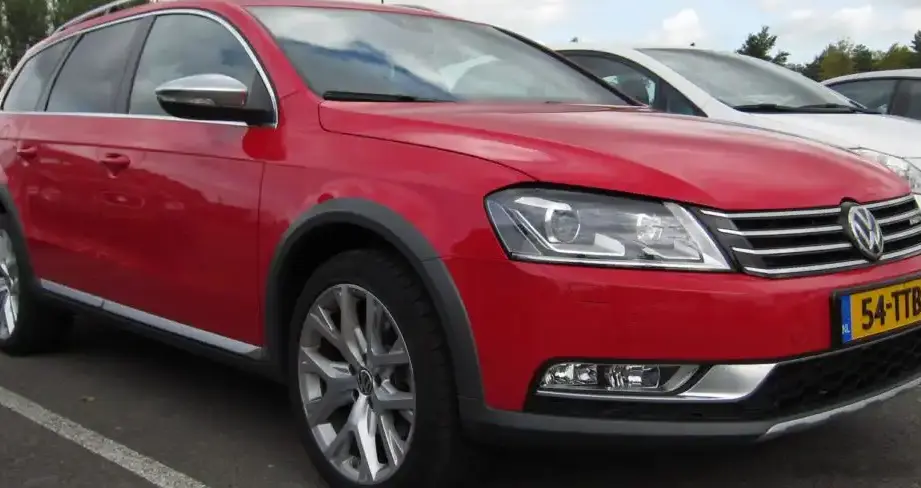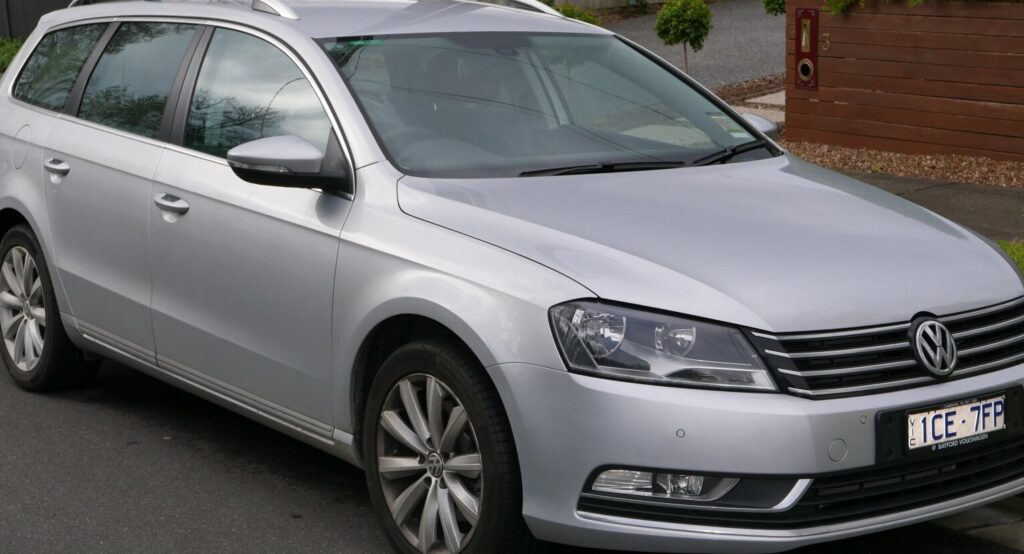
The Volkswagen Passat Variant (B7) 2.0 TDI BMT with 140 horsepower and a Direct-Shift Gearbox (DSG) was a popular configuration of the seventh generation Passat, produced from 2010 to 2014. Positioned as a mid-range offering within the B7 lineup, it aimed to balance fuel efficiency with reasonable performance for European buyers seeking a practical and comfortable family estate car. This variant represented a key part of Volkswagen’s strategy to offer a diverse range of powertrain options catering to different driving needs and preferences, particularly in markets where diesel engines were favored.
Technical Specifications
| Brand | Volkswagen |
| Model | Passat |
| Generation | Passat Variant (B7) |
| Type (Engine) | 2.0 TDI BMT (140 Hp) DSG |
| Start of production | 2010 |
| End of production | 2014 |
| Powertrain Architecture | Internal Combustion engine |
| Body type | Station wagon (estate) |
| Seats | 5 |
| Doors | 5 |
| Fuel consumption (economy) – urban (NEDC) | 6.3 l/100 km (37.3 US mpg, 44.8 UK mpg, 15.9 km/l) |
| Fuel consumption (economy) – extra urban (NEDC) | 4.5 l/100 km (52.3 US mpg, 62.8 UK mpg, 22.2 km/l) |
| Fuel consumption (economy) – combined (NEDC) | 5.2 l/100 km (45.2 US mpg, 54.3 UK mpg, 19.2 km/l) |
| CO2 emissions (NEDC) | 135 g/km |
| Fuel Type | Diesel |
| Acceleration 0 – 100 km/h | 10 sec |
| Acceleration 0 – 62 mph | 10 sec |
| Acceleration 0 – 60 mph | 9.5 sec |
| Maximum speed | 208 km/h (129.25 mph) |
| Emission standard | Euro 5 |
| Weight-to-power ratio | 10.9 kg/Hp, 91.7 Hp/tonne |
| Weight-to-torque ratio | 4.8 kg/Nm, 209.7 Nm/tonne |
| Power | 140 Hp @ 4200 rpm |
| Power per litre | 71.1 Hp/l |
| Torque | 320 Nm @ 1750-2500 rpm (236.02 lb.-ft. @ 1750-2500 rpm) |
| Engine layout | Front, Transverse |
| Engine Model/Code | EA189 / CFFB |
| Engine displacement | 1968 cm3 (120.09 cu. in.) |
| Number of cylinders | 4 |
| Engine configuration | Inline |
| Cylinder Bore | 81 mm (3.19 in.) |
| Piston Stroke | 95.5 mm (3.76 in.) |
| Compression ratio | 16:1 |
| Number of valves per cylinder | 4 |
| Fuel injection system | Diesel Commonrail |
| Engine aspiration | Turbocharger, Intercooler |
| Valvetrain | DOHC |
| Engine oil capacity | 4.3 l (4.54 US qt | 3.78 UK qt) |
| Kerb Weight | 1526 kg (3364.25 lbs.) |
| Max. weight | 2210 kg (4872.22 lbs.) |
| Max load | 684 kg (1507.96 lbs.) |
| Trunk (boot) space – minimum | 603 l (21.29 cu. ft.) |
| Trunk (boot) space – maximum | 1731 l (61.13 cu. ft.) |
| Fuel tank capacity | 70 l (18.49 US gal | 15.4 UK gal) |
| Max. roof load | 100 kg (220.46 lbs.) |
| Permitted trailer load with brakes (8%) | 2000 kg (4409.25 lbs.) |
| Permitted trailer load with brakes (12%) | 1800 kg (3968.32 lbs.) |
| Permitted trailer load without brakes | 750 kg (1653.47 lbs.) |
| Permitted towbar download | 90 kg (198.42 lbs.) |
| Length | 4771 mm (187.83 in.) |
| Width | 1820 mm (71.65 in.) |
| Width including mirrors | 2062 mm (81.18 in.) |
| Height | 1516 mm (59.69 in.) |
| Wheelbase | 2712 mm (106.77 in.) |
| Front track | 1552 mm (61.1 in.) |
| Rear (Back) track | 1551 mm (61.06 in.) |
| Front overhang | 941 mm (37.05 in.) |
| Rear overhang | 1118 mm (44.02 in.) |
| Ride height (ground clearance) | 135 mm (5.31 in.) |
| Minimum turning circle (turning diameter) | 11.4 m (37.4 ft.) |
| Front suspension | Independent, type McPherson with coil spring and anti-roll bar |
| Rear suspension | Independent multi-link spring suspension with stabilizer |
| Front brakes | Ventilated discs, 312×25 mm |
| Rear brakes | Disc, 286×12 mm |
| Number of gears and type of gearbox | 6 gears, automatic transmission DSG |
INTRODUCTION
The Passat Variant (B7), launched in 2010, represented a significant refresh of the B6 generation, offering updated styling, improved technology, and refined powertrains. The 2.0 TDI BMT (BlueMotion Technology) variant, producing 140 horsepower and paired with the 6-speed DSG dual-clutch transmission, was a cornerstone of the range, particularly in Europe. It was designed to appeal to buyers prioritizing fuel economy and practicality without sacrificing a reasonable level of performance. The B7 Passat aimed to solidify the Passat’s position as a leading mid-size family car, competing with models like the Ford Mondeo, Opel/Vauxhall Insignia, and Peugeot 508.
Powertrain & Engine Architecture
The heart of this Passat variant is the EA189 series 2.0-liter four-cylinder diesel engine, specifically the CFFB engine code. This engine utilizes a common rail direct injection system, delivering fuel at extremely high pressure for optimized combustion. The turbocharger, coupled with an intercooler, provides increased air intake, boosting power and torque. The BMT designation signifies the inclusion of BlueMotion Technology features, such as start-stop functionality and regenerative braking, aimed at reducing fuel consumption and emissions. The engine features a double overhead camshaft (DOHC) valvetrain with four valves per cylinder, enhancing breathing and overall efficiency. The 6-speed DSG transmission is a crucial component, offering quick and smooth gear changes, contributing to both performance and fuel economy. Unlike traditional automatics, the DSG uses two separate clutches for odd and even gears, pre-selecting the next gear for near-instantaneous shifts.
Driving Characteristics
The 140 hp 2.0 TDI BMT with DSG delivers a competent, if not exhilarating, driving experience. Acceleration from 0-60 mph takes around 9.5 seconds, and top speed is rated at 129.25 mph. The DSG transmission keeps the engine within its optimal power band, providing responsive acceleration in most driving situations. Compared to the more powerful 170 hp or 177 hp TDI variants, this version feels less urgent, particularly during overtaking maneuvers. However, the readily available 320 Nm (236 lb-ft) of torque from 1750-2500 rpm provides ample pulling power for everyday driving and hauling loads. The DSG transmission’s gear ratios are tuned for fuel efficiency, resulting in a slightly higher cruising RPM compared to a manual transmission. The ride quality is generally comfortable, typical of the Passat, and the steering is precise, though lacking significant feedback.
Equipment & Trim Levels
The 2.0 TDI BMT 140 hp DSG variant typically came equipped with a respectable level of standard features. These included air conditioning, alloy wheels (typically 16 or 17 inch), a multi-function steering wheel, and an infotainment system with a color touchscreen. Higher trim levels, such as Trendline, Comfortline, and Highline, added features like automatic climate control, parking sensors, rain-sensing wipers, and upgraded upholstery. Optional extras included navigation systems, leather seats, and advanced driver-assistance systems like adaptive cruise control. Interior upholstery was typically cloth on lower trims, with leather options available on higher-spec models. The dashboard layout was functional and well-designed, prioritizing ergonomics and ease of use.
Chassis & Braking
The B7 Passat Variant featured an independent suspension setup at all four wheels. The front utilized a McPherson strut design with coil springs and an anti-roll bar, while the rear employed a multi-link suspension system, also with a stabilizer bar. This configuration provided a good balance between ride comfort and handling. Brakes consisted of ventilated discs at the front and solid discs at the rear. ABS (Anti-lock Braking System) was standard. The chassis was designed to provide stability and predictable handling, making it a safe and comfortable family car. Stabilizer bar thickness varied slightly depending on the trim level, with higher trims often receiving thicker bars for improved body control.
Market Reception & Comparison
The 2.0 TDI BMT 140 hp DSG Passat Variant was generally well-received by automotive critics. It was praised for its fuel efficiency, comfortable ride, and spacious interior. However, some reviewers noted that the engine lacked the outright performance of its more powerful siblings. Compared to the 170 hp TDI, the 140 hp version offered a lower purchase price and slightly better fuel economy, making it an attractive option for budget-conscious buyers. The 1.6 TDI variants, while even more fuel-efficient, were often criticized for feeling underpowered, making the 2.0 TDI BMT a more balanced choice for many. Reliability was generally good, although some owners reported issues with the DSG transmission, particularly early units.
Legacy
The 2.0 TDI BMT 140 hp DSG Passat Variant remains a relatively common sight on European roads today. The EA189 engine, while subject to scrutiny during the Volkswagen emissions scandal, is generally considered durable and reliable when properly maintained. DSG transmissions, while potentially requiring more frequent servicing than traditional automatics, can provide years of trouble-free operation. On the used car market, these Passats offer good value for money, providing a practical and comfortable driving experience at an affordable price. However, potential buyers should be aware of the potential for DSG transmission issues and ensure that the vehicle has been properly serviced throughout its life.