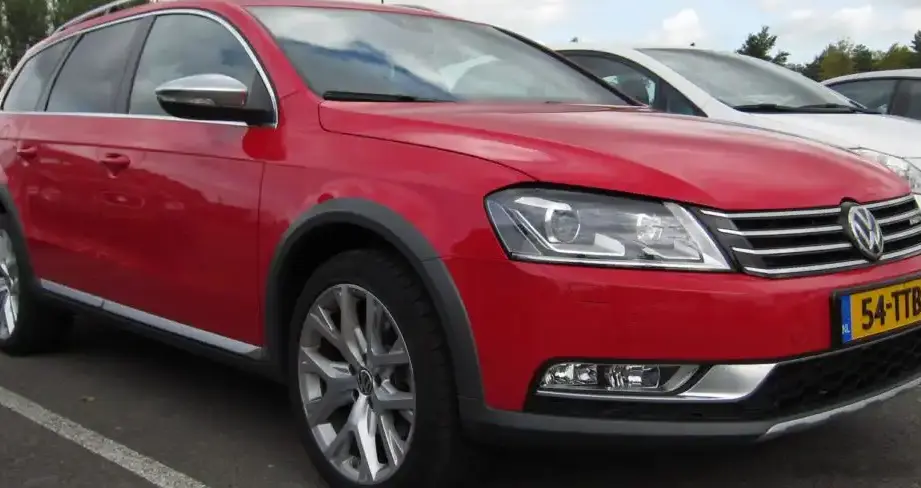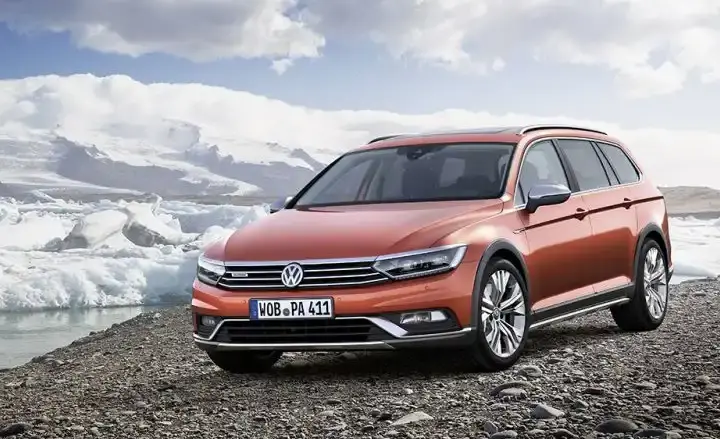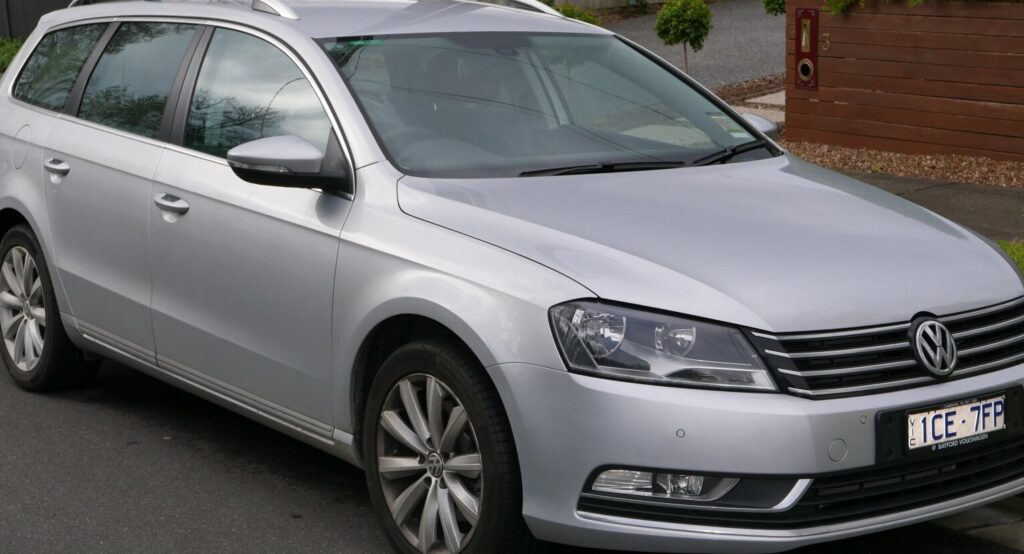
The Volkswagen Passat Variant (B7) 2.0 TDI BMT with 177 horsepower and a dual-clutch gearbox (DSG) was a popular configuration of the seventh generation Passat, produced between 2012 and 2014. Positioned as a mid-range offering within the B7 Variant lineup, it aimed to balance fuel efficiency with respectable performance for European buyers seeking a practical and comfortable family vehicle. This model represented a refinement of the B6 generation, building upon its success with updated styling, improved technology, and a focus on reducing emissions. The “BMT” designation signifies “BlueMotion Technology,” indicating Volkswagen’s efforts to enhance fuel economy and lower environmental impact.
Technical Specifications
| Brand | Volkswagen |
| Model | Passat |
| Generation | Passat Variant (B7) |
| Type (Engine) | 2.0 TDI BMT (177 Hp) DSG |
| Start of production | 2012 |
| End of production | 2014 |
| Powertrain Architecture | Internal Combustion engine |
| Body type | Station wagon (estate) |
| Seats | 5 |
| Doors | 5 |
| Fuel consumption (economy) – urban (NEDC) | 6.2 l/100 km (37.9 US mpg, 45.6 UK mpg, 16.1 km/l) |
| Fuel consumption (economy) – extra urban (NEDC) | 4.6 l/100 km (51.1 US mpg, 61.4 UK mpg, 21.7 km/l) |
| Fuel consumption (economy) – combined (NEDC) | 5.2 l/100 km (45.2 US mpg, 54.3 UK mpg, 19.2 km/l) |
| CO2 emissions (NEDC) | 136 g/km |
| Fuel Type | Diesel |
| Acceleration 0 – 100 km/h | 8.6 sec |
| Acceleration 0 – 62 mph | 8.6 sec |
| Acceleration 0 – 60 mph | 8.2 sec |
| Maximum speed | 220 km/h (136.7 mph) |
| Emission standard | Euro 5 |
| Weight-to-power ratio | 8.5 kg/Hp, 117.6 Hp/tonne |
| Weight-to-torque ratio | 4 kg/Nm, 252.5 Nm/tonne |
| Power | 177 Hp @ 4200 rpm |
| Power per litre | 89.9 Hp/l |
| Torque | 380 Nm @ 1750-2500 rpm (280.27 lb.-ft. @ 1750-2500 rpm) |
| Engine layout | Front, Transverse |
| Engine Model/Code | EA189 / CFGC |
| Engine displacement | 1968 cm3 (120.09 cu. in.) |
| Number of cylinders | 4 |
| Engine configuration | Inline |
| Cylinder Bore | 81 mm (3.19 in.) |
| Piston Stroke | 95.5 mm (3.76 in.) |
| Compression ratio | 16:1 |
| Number of valves per cylinder | 4 |
| Fuel injection system | Diesel Commonrail |
| Engine aspiration | Turbocharger, Intercooler |
| Valvetrain | DOHC |
| Engine oil capacity | 4.3 l (4.54 US qt | 3.78 UK qt) |
| Kerb Weight | 1505 kg (3317.96 lbs.) |
| Max. weight | 2200 kg (4850.17 lbs.) |
| Max load | 695 kg (1532.21 lbs.) |
| Trunk (boot) space – minimum | 603 l (21.29 cu. ft.) |
| Trunk (boot) space – maximum | 1731 l (61.13 cu. ft.) |
| Fuel tank capacity | 70 l (18.49 US gal | 15.4 UK gal) |
| Max. roof load | 100 kg (220.46 lbs.) |
| Permitted trailer load with brakes (8%) | 2000 kg (4409.25 lbs.) |
| Permitted trailer load with brakes (12%) | 1800 kg (3968.32 lbs.) |
| Permitted trailer load without brakes | 750 kg (1653.47 lbs.) |
| Permitted towbar download | 90 kg (198.42 lbs.) |
| Length | 4771 mm (187.83 in.) |
| Width | 1820 mm (71.65 in.) |
| Width including mirrors | 2062 mm (81.18 in.) |
| Height | 1516 mm (59.69 in.) |
| Wheelbase | 2712 mm (106.77 in.) |
| Front track | 1552 mm (61.1 in.) |
| Rear (Back) track | 1551 mm (61.06 in.) |
| Front overhang | 941 mm (37.05 in.) |
| Rear overhang | 1118 mm (44.02 in.) |
| Ride height (ground clearance) | 135 mm (5.31 in.) |
| Minimum turning circle (turning diameter) | 11.4 m (37.4 ft.) |
| Drivetrain Architecture | The Internal combustion engine (ICE) drives the front wheels of the vehicle. |
| Drive wheel | Front wheel drive |
| Number of gears and type of gearbox | 6 gears, automatic transmission DSG |
| Front suspension | Independent, type McPherson with coil spring and anti-roll bar |
| Rear suspension | Independent multi-link spring suspension with stabilizer |
| Front brakes | Ventilated discs, 312×25 mm |
| Rear brakes | Disc, 286×12 mm |
| Assisting systems | ABS (Anti-lock braking system) |
| Steering type | Steering rack and pinion |
| Power steering | Electric Steering |
| Tires size | 215/55 R16; 235/45 R17; 235/40 R18 |
| Wheel rims size | 7J x 16; 7.5J x 17; 8J x 18 |
INTRODUCTION
The Volkswagen Passat Variant (B7) 2.0 TDI BMT with the DSG transmission, produced from 2012 to 2014, was a key model in Volkswagen’s European lineup. Built on the 1HX0/A3 platform, the B7 represented an evolution of the popular B6 Passat, featuring refreshed styling, enhanced interior quality, and improvements to fuel efficiency. The Variant (estate) body style offered increased practicality and cargo space, making it a popular choice for families. The 2.0 TDI BMT engine, paired with the DSG gearbox, aimed to deliver a balance of performance and economy, appealing to drivers who frequently cover long distances.
Powertrain & Engine Architecture
The heart of this Passat Variant is the EA189 series 2.0-liter four-cylinder diesel engine, specifically the CFGC code. This engine utilizes a common rail direct injection system, delivering fuel at extremely high pressure for optimized combustion. The engine features a turbocharger with an intercooler to increase power output and efficiency. The double overhead camshaft (DOHC) valvetrain, with four valves per cylinder, further enhances breathing and performance. The “BMT” designation indicates the inclusion of BlueMotion Technology, which incorporates features like start/stop functionality and optimized aerodynamics to reduce fuel consumption and emissions. The DSG (Direct-Shift Gearbox) is a six-speed dual-clutch transmission that provides quick and smooth gear changes, contributing to both performance and fuel economy. It operates similarly to two manual gearboxes in one, allowing for pre-selection of the next gear for seamless shifts.
Driving Characteristics
The 177 horsepower and 280 lb-ft of torque produced by the 2.0 TDI BMT engine, combined with the DSG transmission, provided a responsive and capable driving experience. While not as overtly sporty as some of its gasoline-powered siblings, the diesel offered strong low-end torque, making it well-suited for everyday driving and overtaking maneuvers. The DSG transmission’s quick shifts helped to keep the engine in its optimal power band. Compared to the manual transmission versions, the DSG offered greater convenience, particularly in urban traffic. However, some drivers preferred the more direct feel of the manual gearbox. Compared to higher-output TDI variants (like those exceeding 180 hp), this version offered a slightly more relaxed driving experience, prioritizing fuel economy over outright performance. The gear ratios were tuned for a balance between acceleration and cruising efficiency.
Equipment & Trim Levels
The 2.0 TDI BMT DSG variant of the Passat Variant B7 typically came equipped with a respectable level of standard features. These included air conditioning, power windows, power mirrors, a multi-function steering wheel, and an audio system with CD player. Higher trim levels offered upgrades such as leather upholstery, heated front seats, a touchscreen infotainment system with navigation, and parking sensors. Optional extras included a panoramic sunroof, bi-xenon headlights, and advanced driver-assistance systems. Interior upholstery was typically cloth on base models, with leather available as an upgrade. The dashboard layout was functional and well-designed, with a focus on ergonomics.
Chassis & Braking
The Passat Variant B7 featured an independent suspension setup, with a McPherson strut front suspension and a multi-link rear suspension. This configuration provided a comfortable ride and good handling characteristics. The front suspension incorporated a stabilizer bar to reduce body roll during cornering. Braking duties were handled by ventilated discs at the front and solid discs at the rear. Anti-lock Braking System (ABS) was standard, enhancing safety and control during emergency braking situations. The chassis was designed to provide a stable and predictable driving experience, even when fully loaded.
Market Reception & Comparison
The Passat Variant (B7) 2.0 TDI BMT DSG was generally well-received by automotive critics. It was praised for its fuel efficiency, comfortable ride, spacious interior, and practical estate car body style. Critics noted that the engine, while not exceptionally powerful, provided ample performance for most driving situations. Compared to the gasoline-powered Passat variants, the TDI BMT offered significantly better fuel economy. Compared to other TDI variants, this 177 hp version offered a good balance between performance and economy, making it a popular choice for drivers who prioritized fuel savings. Reliability was generally good, although some owners reported issues with the DSG transmission, particularly early units.
Legacy
The Volkswagen Passat Variant (B7) 2.0 TDI BMT DSG remains a popular choice in the used car market today. The EA189 engine, while subject to some scrutiny regarding emissions in later years, is generally considered to be durable and reliable when properly maintained. The DSG transmission, while potentially requiring more frequent servicing than a traditional automatic, offers a smooth and efficient driving experience. The B7 Passat Variant is known for its practicality, comfort, and relatively low running costs, making it a sensible choice for families and long-distance commuters. Its enduring popularity is a testament to Volkswagen’s reputation for building well-engineered and reliable vehicles.