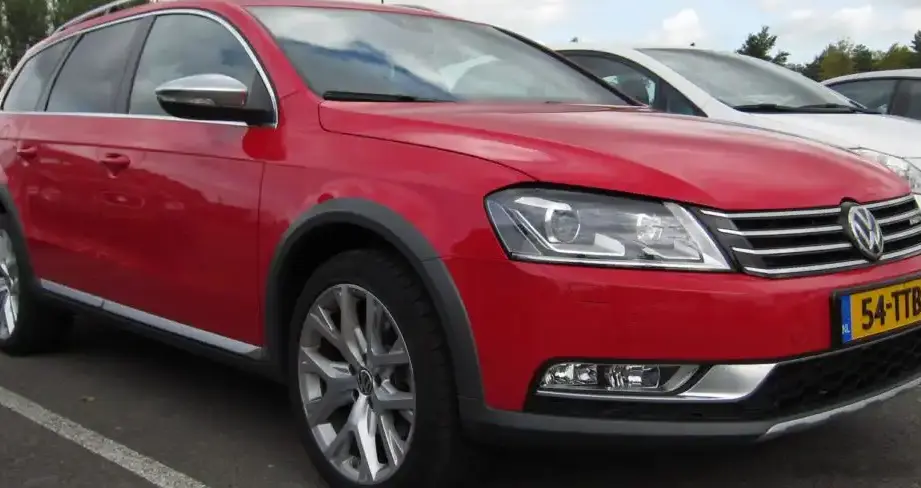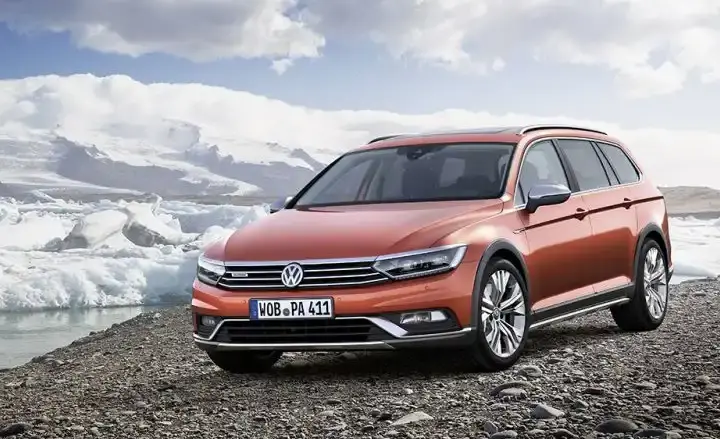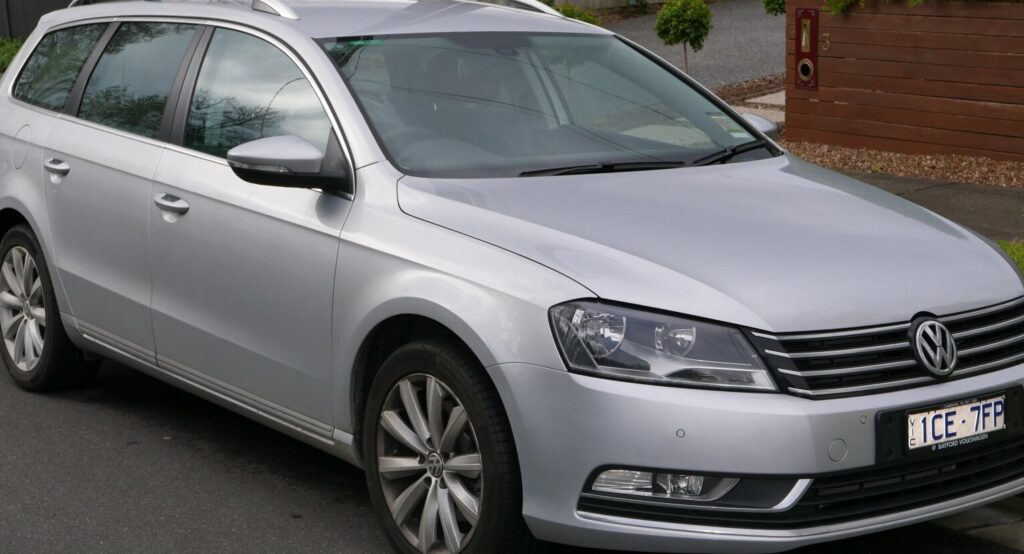
The Volkswagen Passat Variant (B7) 2.0 TSI 211 hp with the Direct-Shift Gearbox (DSG) represents a compelling blend of performance and practicality within the Passat B7 range, produced between 2010 and 2014. Positioned as a mid-to-upper trim level, this variant catered to buyers seeking a more engaging driving experience than the base models, while still benefiting from the spaciousness and versatility of the Passat wagon body style. It was a key offering in the European market, where wagons remain highly popular, and saw limited sales in North America where the Passat sedan was the primary focus.
Technical Specifications
| Brand | Volkswagen |
| Model | Passat |
| Generation | Passat Variant (B7) |
| Type (Engine) | 2.0 TSI (211 Hp) DSG |
| Start of production | 2010 |
| End of production | 2014 |
| Powertrain Architecture | Internal Combustion engine |
| Body type | Station wagon (estate) |
| Seats | 5 |
| Doors | 5 |
| Fuel consumption (economy) – urban (NEDC) | 10.9 l/100 km (21.6 US mpg, 25.9 UK mpg, 9.2 km/l) |
| Fuel consumption (economy) – extra urban (NEDC) | 6.1 l/100 km (38.6 US mpg, 46.3 UK mpg, 16.4 km/l) |
| Fuel consumption (economy) – combined (NEDC) | 7.9 l/100 km (29.8 US mpg, 35.8 UK mpg, 12.7 km/l) |
| CO2 emissions (NEDC) | 183 g/km |
| Fuel Type | Petrol (Gasoline) |
| Acceleration 0 – 100 km/h | 7.9 sec |
| Acceleration 0 – 62 mph | 7.9 sec |
| Acceleration 0 – 60 mph | 7.5 sec |
| Maximum speed | 233 km/h (144.78 mph) |
| Emission standard | Euro 5 |
| Weight-to-power ratio | 7.1 kg/Hp, 140 Hp/tonne |
| Weight-to-torque ratio | 5.4 kg/Nm, 185.8 Nm/tonne |
| Power | 211 Hp @ 5300-6200 rpm |
| Power per litre | 106.4 Hp/l |
| Torque | 280 Nm @ 1700-5200 rpm (206.52 lb.-ft. @ 1700-5200 rpm) |
| Engine layout | Front, Transverse |
| Engine Model/Code | EA888 / CCZB |
| Engine displacement | 1984 cm3 (121.07 cu. in.) |
| Number of cylinders | 4 |
| Engine configuration | Inline |
| Cylinder Bore | 82.5 mm (3.25 in.) |
| Piston Stroke | 92.8 mm (3.65 in.) |
| Compression ratio | 9.8:1 |
| Number of valves per cylinder | 4 |
| Fuel injection system | Direct injection |
| Engine aspiration | Turbocharger, Intercooler |
| Valvetrain | DOHC |
| Engine oil capacity | 4.7 l (4.97 US qt | 4.14 UK qt) |
| Kerb Weight | 1507 kg (3322.37 lbs.) |
| Max. weight | 2160 kg (4761.98 lbs.) |
| Max load | 653 kg (1439.62 lbs.) |
| Trunk (boot) space – minimum | 603 l (21.29 cu. ft.) |
| Trunk (boot) space – maximum | 1731 l (61.13 cu. ft.) |
| Fuel tank capacity | 70 l (18.49 US gal | 15.4 UK gal) |
| Max. roof load | 100 kg (220.46 lbs.) |
| Permitted trailer load with brakes (8%) | 1800 kg (3968.32 lbs.) |
| Permitted trailer load with brakes (12%) | 1600 kg (3527.4 lbs.) |
| Permitted trailer load without brakes | 750 kg (1653.47 lbs.) |
| Permitted towbar download | 90 kg (198.42 lbs.) |
| Length | 4771 mm (187.83 in.) |
| Width | 1820 mm (71.65 in.) |
| Width including mirrors | 2062 mm (81.18 in.) |
| Height | 1516 mm (59.69 in.) |
| Wheelbase | 2712 mm (106.77 in.) |
| Front track | 1552 mm (61.1 in.) |
| Rear (Back) track | 1551 mm (61.06 in.) |
| Front overhang | 941 mm (37.05 in.) |
| Rear overhang | 1118 mm (44.02 in.) |
| Ride height (ground clearance) | 135 mm (5.31 in.) |
| Minimum turning circle (turning diameter) | 11.4 m (37.4 ft.) |
| Front suspension | Independent, type McPherson with coil spring and anti-roll bar |
| Rear suspension | Independent multi-link spring suspension with stabilizer |
| Front brakes | Ventilated discs, 312×25 mm |
| Rear brakes | Disc, 286×12 mm |
| Number of gears and type of gearbox | 6 gears, automatic transmission DSG |
INTRODUCTION
The Passat Variant (B7), launched in 2010, represented a significant refresh of the B6 generation, building upon its success as a practical and comfortable family vehicle. The 2.0 TSI 211 hp variant, paired with the DSG dual-clutch transmission, offered a step up in performance and driving enjoyment. This model was built on the Volkswagen Group’s B7 platform (shared with the Škoda Superb and Audi A4), and aimed to provide a more refined experience than its predecessors. It occupied a sweet spot in the lineup, offering a balance between affordability and performance, appealing to drivers who desired a spirited drive without sacrificing the utility of a wagon.
Powertrain & Engine Architecture
At the heart of this Passat Variant lies the EA888 engine, specifically the CCZB code variant. This 2.0-liter turbocharged inline-four engine is a cornerstone of the Volkswagen Group’s powertrain strategy. The CCZB features direct fuel injection (FSI), a robust cast iron block, and an aluminum cylinder head with a double overhead camshaft (DOHC) valvetrain. The turbocharger, coupled with an intercooler, provides significant boost, contributing to the engine’s 211 horsepower output at 5300-6200 rpm and 280 Nm (206.52 lb-ft) of torque available from a low 1700 rpm all the way to 5200 rpm. The engine’s responsiveness is further enhanced by variable valve timing on both the intake and exhaust sides. The DSG 6-speed dual-clutch transmission is a key component, offering quick and seamless gear changes, contributing to both performance and fuel efficiency. Unlike a traditional automatic, the DSG utilizes two separate clutches for odd and even gears, pre-selecting the next gear for near-instantaneous shifts.
Driving Characteristics
The 2.0 TSI 211 hp/DSG combination delivers a noticeably more engaging driving experience compared to lower-powered Passat variants. Acceleration from 0-60 mph takes approximately 7.5 seconds, and the car feels confident at highway speeds. The DSG transmission plays a crucial role, providing smooth upshifts and downshifts, and allowing for manual control via paddle shifters or the gear selector. While not a sports car, the Passat Variant B7 2.0 TSI offers ample power for overtaking and merging onto highways. The gear ratios are well-chosen, providing a good balance between acceleration and fuel economy. Compared to the 1.8L TSI models, the 2.0 TSI offers a more substantial power delivery throughout the rev range. The DSG transmission, while generally excellent, can exhibit some low-speed jerkiness in certain situations, a common characteristic of early DSG units.
Equipment & Trim Levels
The 2.0 TSI variant typically came well-equipped, often including features like alloy wheels (typically 17 or 18 inch), automatic climate control, a touchscreen infotainment system, and parking sensors. Interior upholstery was usually a combination of cloth and leatherette, with higher trims offering full leather options. Standard safety features included ABS, ESP (Electronic Stability Program), and multiple airbags. Optional extras included a sunroof, navigation system, premium sound system, and adaptive cruise control. Trim levels varied by market, but generally, this engine was offered in mid-to-high specification packages.
Chassis & Braking
The Passat Variant B7 utilizes an independent suspension setup, with McPherson struts at the front and a multi-link system at the rear. This configuration provides a comfortable ride while maintaining good handling characteristics. The front brakes are ventilated discs, measuring 312x25mm, while the rear brakes are solid discs, measuring 286x12mm. ABS (Anti-lock Braking System) is standard, ensuring effective braking performance in various conditions. Stabilizer bars are fitted to both the front and rear axles, reducing body roll during cornering. The suspension tuning is geared towards comfort, but the 2.0 TSI variant benefits from slightly firmer dampers compared to the base models, improving handling.
Market Reception & Comparison
The Passat Variant B7 2.0 TSI received generally positive reviews from automotive critics. It was praised for its spacious interior, comfortable ride, and strong performance. The DSG transmission was often highlighted as a key selling point, although some reviewers noted its occasional quirks. Compared to the 1.8 TSI variants, the 2.0 TSI offered a significant performance upgrade, justifying the higher price tag for drivers prioritizing driving enjoyment. Fuel economy was considered reasonable for a vehicle of its size and performance, averaging around 29.8 US mpg in combined driving. Reliability was generally good, although some owners reported issues with the DSG transmission, particularly early units.
Legacy
The EA888 engine, in its various iterations, has proven to be a durable and reliable powerplant. The DSG transmission, while requiring more diligent maintenance than a traditional automatic, is also generally robust when properly serviced. Today, the Passat Variant B7 2.0 TSI remains a popular choice in the used car market, particularly in Europe. Its combination of practicality, performance, and comfort makes it a compelling alternative to more modern vehicles. However, potential buyers should be aware of the potential for DSG transmission issues and ensure that the vehicle has been properly maintained. The B7 Passat, and particularly this 2.0 TSI variant, represents a high point in Volkswagen’s wagon offerings, offering a refined and enjoyable driving experience.