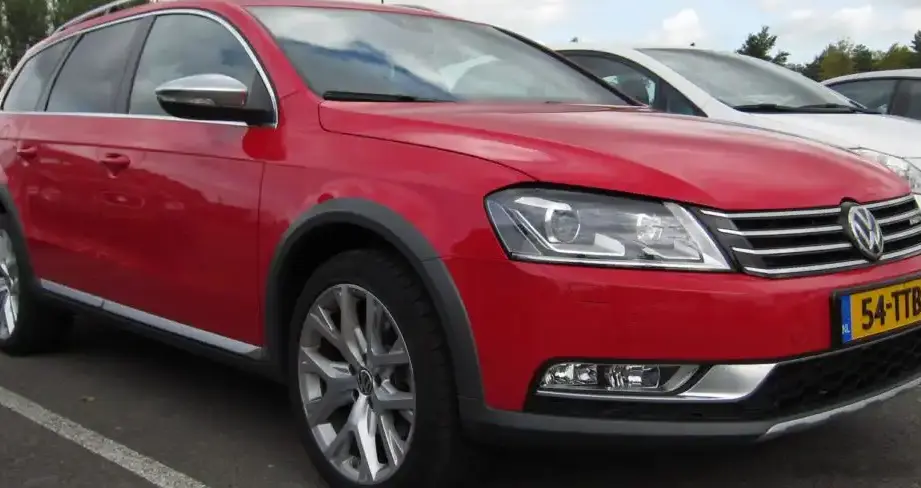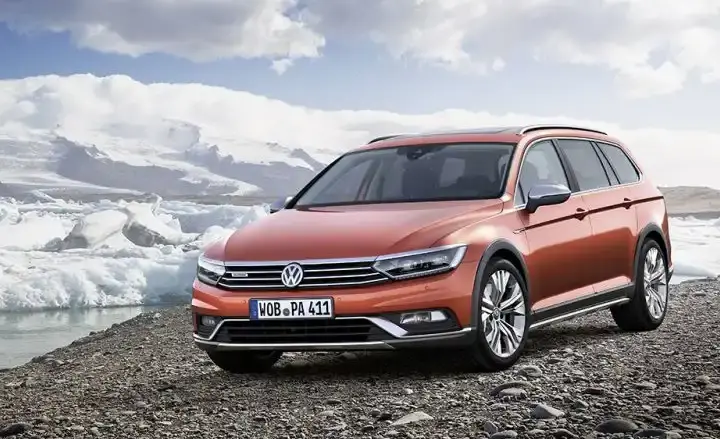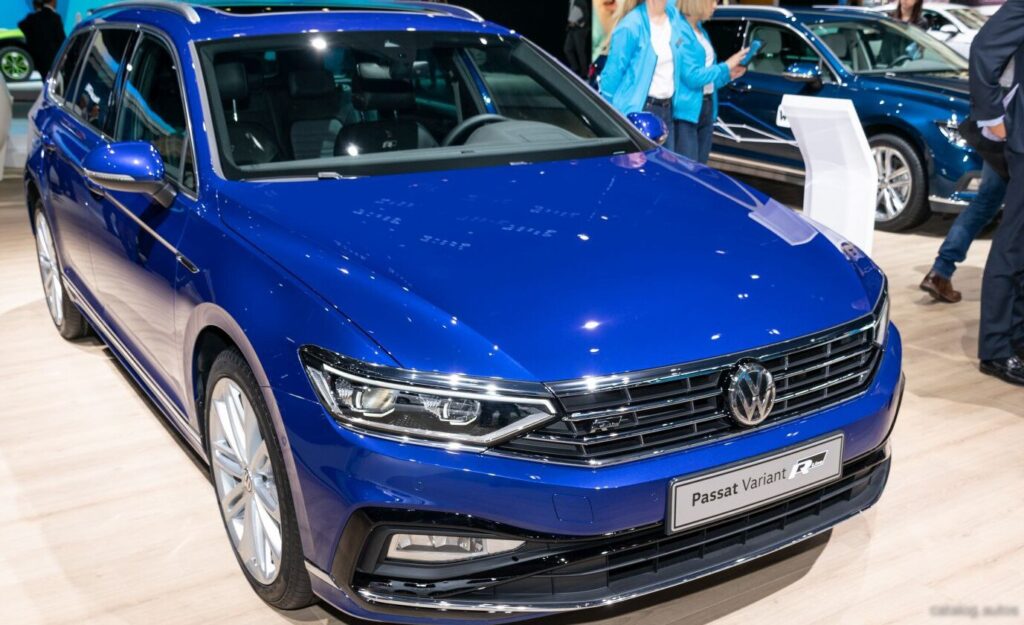
The Volkswagen Passat Variant (B8, facelift 2019) 2.0 TDI 150 hp represents a significant iteration of Volkswagen’s long-running family estate car. Introduced in August 2019 and continuing through 2023, this variant occupied a central position within the B8 Passat range, offering a balance between fuel efficiency, practicality, and reasonable performance. It builds upon the foundation of the B8 platform (shared with the Skoda Superb and SEAT Passat), benefitting from the facelift’s updated styling and technology. This model was primarily aimed at the European market, where the station wagon body style remains highly popular, offering a compelling alternative to SUVs for families and those requiring substantial cargo space.
Technical Specifications
| Brand | Volkswagen |
| Model | Passat |
| Generation | Passat Variant (B8, facelift 2019) |
| Type (Engine) | 2.0 TDI (150 Hp) |
| Start of production | August, 2019 |
| End of production | 2023 |
| Powertrain Architecture | Internal Combustion engine |
| Body type | Station wagon (estate) |
| Seats | 5 |
| Doors | 5 |
| Fuel consumption at Low speed (WLTP) | 5.7 l/100 km (41.3 US mpg, 49.6 UK mpg, 17.5 km/l) |
| Fuel consumption at Medium speed (WLTP) | 4.8 l/100 km (49 US mpg, 58.9 UK mpg, 20.8 km/l) |
| Fuel consumption at high speed (WLTP) | 4.3 l/100 km (54.7 US mpg, 65.7 UK mpg, 23.3 km/l) |
| Fuel consumption at very high speed (WLTP) | 5.1 l/100 km (46.1 US mpg, 55.4 UK mpg, 19.6 km/l) |
| Combined fuel consumption (WLTP) | 4.8 l/100 km (49 US mpg, 58.9 UK mpg, 20.8 km/l) |
| CO2 emissions (WLTP) | 127 g/km |
| Fuel consumption (economy) – urban (NEDC) | 4.5-4.6 l/100 km (52.3 – 51.1 US mpg, 62.8 – 61.4 UK mpg, 22.2 – 21.7 km/l) |
| Fuel consumption (economy) – extra urban (NEDC) | 3.6-3.8 l/100 km (65.3 – 61.9 US mpg, 78.5 – 74.3 UK mpg, 27.8 – 26.3 km/l) |
| Fuel consumption (economy) – combined (NEDC) | 4.0-4.1 l/100 km (58.8 – 57.4 US mpg, 70.6 – 68.9 UK mpg, 25 – 24.4 km/l) |
| CO2 emissions (NEDC) | 104-108 g/km |
| Fuel Type | Diesel |
| Acceleration 0 – 100 km/h | 9.1 sec |
| Acceleration 0 – 62 mph | 9.1 sec |
| Acceleration 0 – 60 mph | 8.6 sec |
| Maximum speed | 213 km/h (132.35 mph) |
| Emission standard | EURO VId – TEMP – EVAP – ISC |
| Weight-to-power ratio | 9.9 kg/Hp, 101 Hp/tonne |
| Weight-to-torque ratio | 4.4 kg/Nm, 229 Nm/tonne |
| Power | 150 Hp @ 3500-4000 rpm |
| Power per litre | 76.2 Hp/l |
| Torque | 340 Nm @ 1600-3000 rpm (250.77 lb.-ft. @ 1600-3000 rpm) |
| Engine layout | Front, Transverse |
| Engine Model/Code | DBGA, DCYA, DFEA |
| Engine displacement | 1968 cm3 (120.09 cu. in.) |
| Number of cylinders | 4 |
| Engine configuration | Inline |
| Number of valves per cylinder | 4 |
| Fuel injection system | Diesel Commonrail |
| Engine aspiration | Turbocharger, Intercooler |
| Engine oil capacity | 4.7 l (4.97 US qt | 4.14 UK qt) |
| Kerb Weight | 1485 kg (3273.86 lbs.) |
| Max. weight | 2140 kg (4717.89 lbs.) |
| Max load | 655 kg (1444.03 lbs.) |
| Trunk (boot) space – minimum | 650 l (22.95 cu. ft.) |
| Trunk (boot) space – maximum | 1780 l (62.86 cu. ft.) |
| Fuel tank capacity | 66 l (17.44 US gal | 14.52 UK gal) |
| AdBlue tank | 16 l (4.23 US gal | 3.52 UK gal) |
| Max. roof load | 100 kg (220.46 lbs.) |
| Permitted trailer load with brakes (12%) | 2000 kg (4409.25 lbs.) |
| Permitted trailer load without brakes | 750 kg (1653.47 lbs.) |
| Permitted towbar download | 90 kg (198.42 lbs.) |
| Length | 4773-4889 mm (187.91 – 192.48 in.) |
| Width | 1832 mm (72.13 in.) |
| Width including mirrors | 2083 mm (82.01 in.) |
| Height | 1516 mm (59.69 in.) |
| Wheelbase | 2786 mm (109.69 in.) |
| Front track | 1578-1586 mm (62.13 – 62.44 in.) |
| Rear (Back) track | 1564-1572 mm (61.57 – 61.89 in.) |
| Minimum turning circle (turning diameter) | 11.7 m (38.39 ft.) |
| Drivetrain Architecture | The Internal combustion engine (ICE) drives the front wheels of the vehicle. |
| Drive wheel | Front wheel drive |
| Number of gears and type of gearbox | 6 gears, manual transmission |
| Front brakes | Ventilated discs |
| Rear brakes | Disc |
| Assisting systems | ABS (Anti-lock braking system) |
| Steering type | Steering rack and pinion |
| Power steering | Electric Steering |
| Tires size | 215/60 R16; 215/55 R17 |
| Wheel rims size | 6.5 J x 16; 7J x 17 |
Powertrain & Engine Architecture
The heart of this Passat Variant is the 2.0-liter TDI engine, specifically utilizing engine codes DBGA, DCYA, or DFEA depending on the exact production date and market. This engine is a four-cylinder, inline diesel, featuring a turbocharger and intercooler to enhance power and efficiency. It employs a common rail direct injection system, delivering fuel directly into the combustion chamber at extremely high pressure for optimized combustion. The engine boasts 150 horsepower at 3500-4000 rpm and a substantial 340 Nm (250.77 lb-ft) of torque available from 1600-3000 rpm. This broad torque curve is characteristic of modern diesel engines and contributes to strong mid-range acceleration. The engine also incorporates a particulate filter to reduce emissions. The 6-speed manual transmission was standard, providing a balance between fuel economy and driver control.
Driving Characteristics
The 2.0 TDI 150 hp Passat Variant offers a composed and comfortable driving experience. While not overtly sporty, the engine provides ample power for everyday driving and long-distance cruising. The generous torque allows for effortless overtaking, and the manual transmission provides a direct connection to the engine. Compared to higher-output TDI variants (like the 240 hp BiTurbo), this version prioritizes fuel economy over outright performance. The gear ratios are tuned for efficiency, meaning the engine doesn’t rev as freely as some petrol alternatives. However, this translates to excellent fuel consumption figures, making it an ideal choice for high-mileage drivers.
Equipment & Trim Levels
The Passat Variant (B8, facelift 2019) 2.0 TDI 150 hp typically came equipped with a solid base level of features. Standard equipment often included air conditioning, an infotainment system with a touchscreen display, Bluetooth connectivity, alloy wheels, and a suite of safety features like ABS, ESP, and multiple airbags. Higher trim levels, such as SE Business or GT, added features like adaptive cruise control, leather upholstery, a larger infotainment screen, and parking sensors. Interior upholstery was typically cloth on the base models, with leather options available on higher trims.
Chassis & Braking
The B8 Passat Variant utilizes a MacPherson strut front suspension and a multi-link rear suspension, providing a comfortable and controlled ride. The braking system consists of ventilated discs on the front wheels and solid discs on the rear. ABS (Anti-lock Braking System) is standard, enhancing braking performance and stability. Stabilizer bars are fitted to both the front and rear axles to reduce body roll during cornering. The suspension setup is tuned for comfort, prioritizing ride quality over sporty handling.
Market Reception & Comparison
The 2.0 TDI 150 hp Passat Variant was generally well-received by automotive critics. It was praised for its fuel efficiency, spacious interior, and comfortable ride. Compared to the more powerful TDI variants, it offered a more affordable entry point into the Passat range, appealing to buyers who prioritized economy over performance. Against petrol-powered alternatives, the TDI offered significantly better fuel economy, although it came with a slightly higher purchase price. Reliability was generally good, although diesel particulate filter issues could occasionally arise, particularly with drivers who primarily undertook short journeys.
Legacy
The Volkswagen Passat Variant (B8, facelift 2019) 2.0 TDI 150 hp remains a popular choice on the used car market. Its reputation for reliability, fuel efficiency, and practicality ensures continued demand. The 2.0 TDI engine, while subject to scrutiny regarding diesel emissions in the past, has proven to be a durable and long-lasting unit when properly maintained. These models represent a good value proposition for buyers seeking a spacious, economical, and comfortable family estate car.