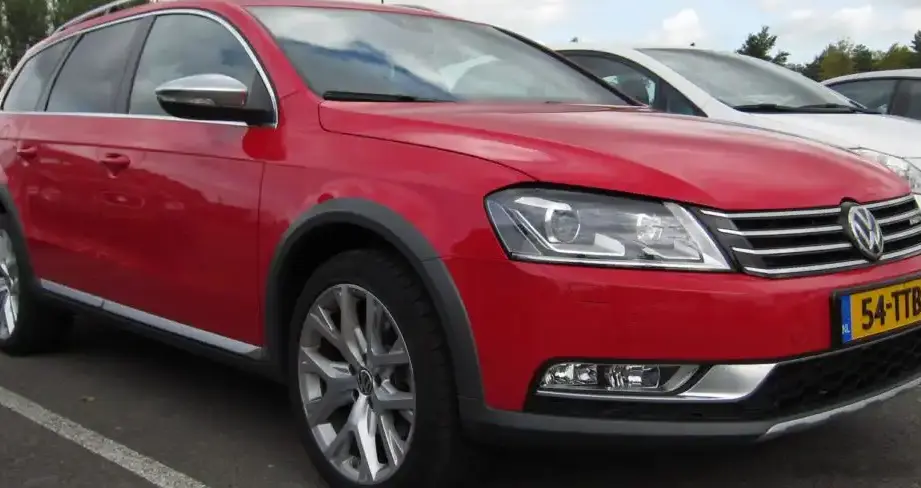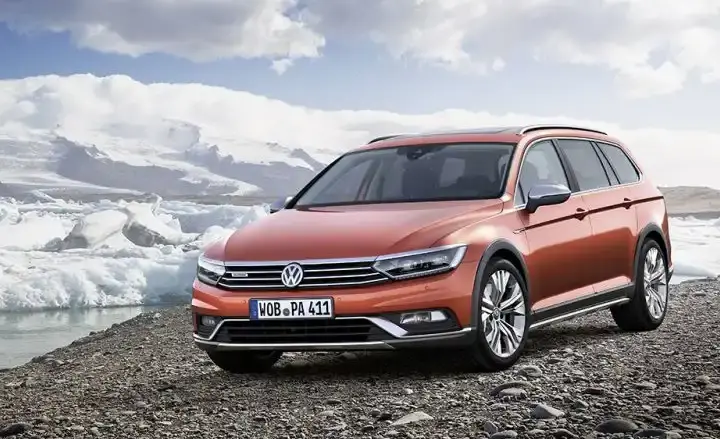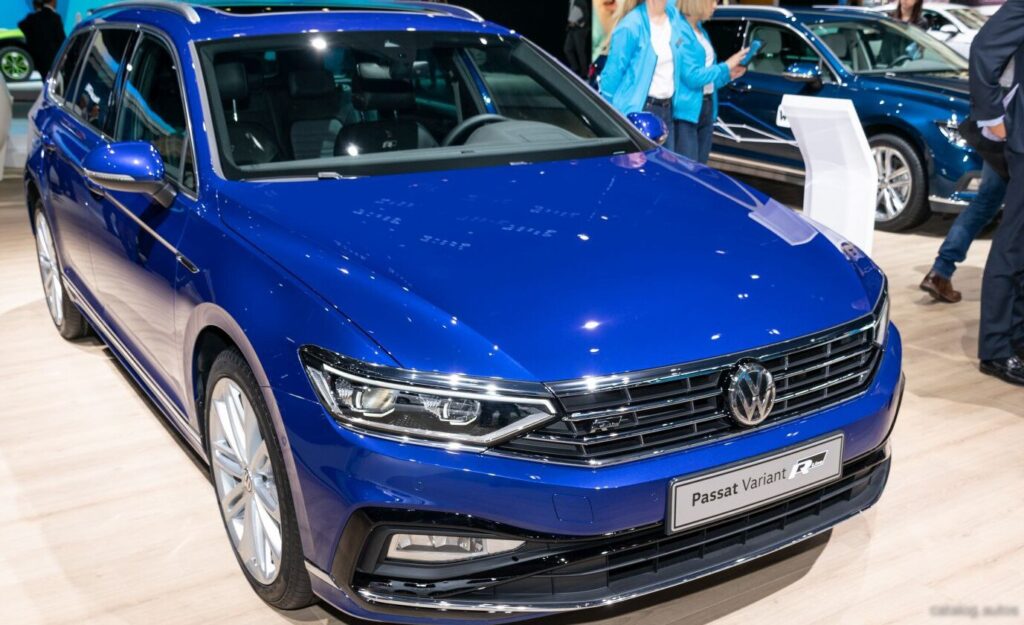
The Volkswagen Passat Variant (B8, facelift 2019) 2.0 TDI 150 hp with a Dual Clutch Gearbox (DSG) represents a significant iteration of Volkswagen’s long-running family estate car. Produced from 2019 to 2023, this variant occupied a central position within the B8 Passat range, offering a balance between fuel efficiency, performance, and practicality. It was primarily aimed at the European market, where the station wagon body style remains highly popular, and served as a versatile vehicle for families and individuals requiring ample cargo space and comfortable long-distance cruising. This model benefitted from the mid-life facelift of the B8 generation, bringing updated styling, improved technology, and refined engine options.
Technical Specifications
| Brand | Volkswagen |
| Model | Passat |
| Generation | Passat Variant (B8, facelift 2019) |
| Type (Engine) | 2.0 TDI (150 Hp) DSG |
| Start of production | 2019 year |
| End of production | 2023 year |
| Powertrain Architecture | Internal Combustion engine |
| Body type | Station wagon (estate) |
| Seats | 5 |
| Doors | 5 |
| Fuel consumption at Low speed (WLTP) | 5.1 l/100 km (46.1 US mpg, 55.4 UK mpg, 19.6 km/l) |
| Fuel consumption at Medium speed (WLTP) | 5.2 l/100 km (45.2 US mpg, 54.3 UK mpg, 19.2 km/l) |
| Fuel consumption at high speed (WLTP) | 5.1 l/100 km (46.1 US mpg, 55.4 UK mpg, 19.6 km/l) |
| Fuel consumption at very high speed (WLTP) | 6.3 l/100 km (37.3 US mpg, 44.8 UK mpg, 15.9 km/l) |
| Combined fuel consumption (WLTP) | 4.4 l/100 km (53.5 US mpg, 64.2 UK mpg, 22.7 km/l) |
| CO2 emissions (WLTP) | 133 g/km |
| Fuel consumption (economy) – urban (NEDC) | 4.4-4.6 l/100 km (53.5 – 51.1 US mpg, 64.2 – 61.4 UK mpg, 22.7 – 21.7 km/l) |
| Fuel consumption (economy) – extra urban (NEDC) | 3.7-3.9 l/100 km (63.6 – 60.3 US mpg, 76.3 – 72.4 UK mpg, 27 – 25.6 km/l) |
| Fuel consumption (economy) – combined (NEDC) | 4.0-4.1 l/100 km (58.8 – 57.4 US mpg, 70.6 – 68.9 UK mpg, 25 – 24.4 km/l) |
| CO2 emissions (NEDC) | 105-109 g/km |
| Fuel Type | Diesel |
| Acceleration 0 – 100 km/h | 9.1 sec |
| Acceleration 0 – 62 mph | 9.1 sec |
| Acceleration 0 – 60 mph | 8.6 sec |
| Maximum speed | 210 km/h (130.49 mph) |
| Emission standard | EURO VId – TEMP – EVAP – ISC |
| Weight-to-power ratio | 10.1 kg/Hp, 99 Hp/tonne |
| Weight-to-torque ratio | 4.2 kg/Nm, 237.6 Nm/tonne |
| Power | 150 Hp @ 3500-4000 rpm |
| Power per litre | 76.2 Hp/l |
| Torque | 360 Nm @ 1600-2750 rpm (265.52 lb.-ft. @ 1600-2750 rpm) |
| Engine layout | Front, Transverse |
| Engine Model/Code | DBGA, DCYA, DFEA |
| Engine displacement | 1968 cm3 (120.09 cu. in.) |
| Number of cylinders | 4 |
| Engine configuration | Inline |
| Number of valves per cylinder | 4 |
| Fuel injection system | Diesel Commonrail |
| Engine aspiration | Turbocharger, Intercooler |
| Engine oil capacity | 4.7 l (4.97 US qt | 4.14 UK qt) |
| Kerb Weight | 1515 kg (3340 lbs.) |
| Max. weight | 2170 kg (4784.03 lbs.) |
| Max load | 655 kg (1444.03 lbs.) |
| Trunk (boot) space – minimum | 650 l (22.95 cu. ft.) |
| Trunk (boot) space – maximum | 1780 l (62.86 cu. ft.) |
| Fuel tank capacity | 66 l (17.44 US gal | 14.52 UK gal) |
| AdBlue tank | 16 l (4.23 US gal | 3.52 UK gal) |
| Max. roof load | 100 kg (220.46 lbs.) |
| Permitted trailer load with brakes (12%) | 2000 kg (4409.25 lbs.) |
| Permitted trailer load without brakes | 750 kg (1653.47 lbs.) |
| Permitted towbar download | 90 kg (198.42 lbs.) |
| Length | 4773-4889 mm (187.91 – 192.48 in.) |
| Width | 1832 mm (72.13 in.) |
| Width including mirrors | 2083 mm (82.01 in.) |
| Height | 1516 mm (59.69 in.) |
| Wheelbase | 2786 mm (109.69 in.) |
| Front track | 1578-1586 mm (62.13 – 62.44 in.) |
| Rear (Back) track | 1564-1572 mm (61.57 – 61.89 in.) |
| Minimum turning circle (turning diameter) | 11.7 m (38.39 ft.) |
| Drivetrain Architecture | The Internal combustion engine (ICE) drives the front wheels of the vehicle. |
| Drive wheel | Front wheel drive |
| Number of gears and type of gearbox | 7 gears, automatic transmission DSG |
| Front brakes | Ventilated discs |
| Rear brakes | Disc |
| Assisting systems | ABS (Anti-lock braking system) |
| Steering type | Steering rack and pinion |
| Power steering | Electric Steering |
| Tires size | 215/60 R16; 215/55 R17 |
| Wheel rims size | 6.5 J x 16; 7J x 17 |
Powertrain & Engine Architecture
The heart of this Passat Variant is the 2.0-liter four-cylinder diesel engine, identified by engine codes such as DBGA, DCYA, and DFEA. This engine is a member of Volkswagen’s modular engine family, known for its compact dimensions and efficiency. It utilizes a common rail direct injection system, delivering fuel directly into the combustion chamber at extremely high pressure for optimized combustion. A turbocharger with an intercooler is employed to boost power output and improve torque across a wide rev range. The engine features four valves per cylinder and a timing belt, requiring periodic replacement as part of scheduled maintenance. The 360 Nm (265.52 lb.-ft.) of torque, available from 1600-2750 rpm, provides strong pulling power for everyday driving and effortless highway cruising. Paired with the engine is a 7-speed Dual Clutch Gearbox (DSG). This transmission offers quick, seamless gear changes and contributes to the vehicle’s overall efficiency. The DSG automatically selects the optimal gear based on driving conditions, providing both comfort and performance.
Driving Characteristics
The 150 hp 2.0 TDI with the DSG transmission delivers a composed and refined driving experience. Acceleration from 0-60 mph takes approximately 8.6 seconds, which is adequate for most driving situations. The DSG transmission ensures smooth and responsive gear changes, minimizing any noticeable shift shock. The engine’s strong low-end torque makes overtaking maneuvers easy and confident. Compared to the more powerful 2.0 TDI variants (e.g., 190 hp), this version prioritizes fuel economy over outright performance. While it may not offer the same level of exhilarating acceleration, it provides a more relaxed and economical driving experience. Compared to manual transmission versions, the DSG offers greater convenience, particularly in urban traffic, but some drivers may prefer the more direct feel of a manual gearbox.
Equipment & Trim Levels
The 2.0 TDI 150 hp DSG variant of the Passat Variant typically came equipped with a generous level of standard features. These included air conditioning, an infotainment system with a touchscreen display, Bluetooth connectivity, alloy wheels, and a suite of safety features such as ABS, ESP, and multiple airbags. Higher trim levels offered additional features such as leather upholstery, a panoramic sunroof, adaptive cruise control, and a premium sound system. The interior was well-appointed and offered a comfortable and spacious cabin for both driver and passengers. The estate body style provided a substantial 650 liters (22.95 cu. ft.) of luggage space with the rear seats up, expanding to 1780 liters (62.86 cu. ft.) with the seats folded down.
Chassis & Braking
The Passat Variant B8 utilizes a MacPherson strut front suspension and a multi-link rear suspension, providing a comfortable and controlled ride. The suspension is tuned to balance ride comfort with handling stability. The braking system consists of ventilated discs at the front and solid discs at the rear, providing adequate stopping power. ABS (Anti-lock Braking System) and ESP (Electronic Stability Program) are standard features, enhancing safety and control in various driving conditions.
Market Reception & Comparison
The Passat Variant 2.0 TDI 150 hp DSG was well-received by critics and consumers alike. It was praised for its fuel efficiency, comfortable ride, spacious interior, and practical estate body style. Compared to other trims in the Passat lineup, this variant offered a compelling balance between price and performance. It was a popular choice for families and individuals seeking a versatile and economical vehicle. Fuel economy figures of around 4.4 l/100 km (53.5 US mpg) made it an attractive option for those covering long distances regularly.
Legacy
The 2.0 TDI engine, in various iterations, has proven to be a reliable and durable powertrain. However, like all diesel engines, it is susceptible to issues related to the diesel particulate filter (DPF) and the AdBlue system, particularly if the vehicle is primarily used for short journeys. Regular maintenance, including oil changes and filter replacements, is crucial for ensuring long-term reliability. In the used car market, this variant of the Passat Variant remains a popular choice, offering a good combination of practicality, efficiency, and value for money. Its reputation for reliability and comfortable driving experience continues to attract buyers seeking a well-rounded family estate car.