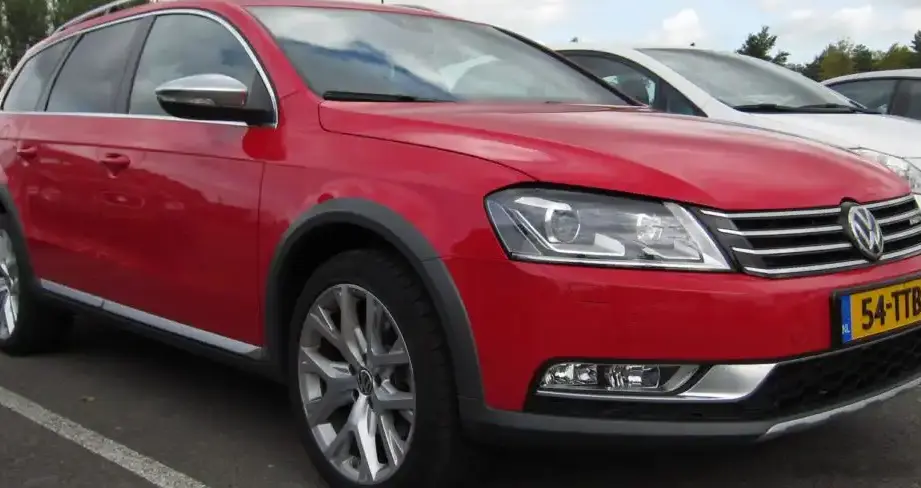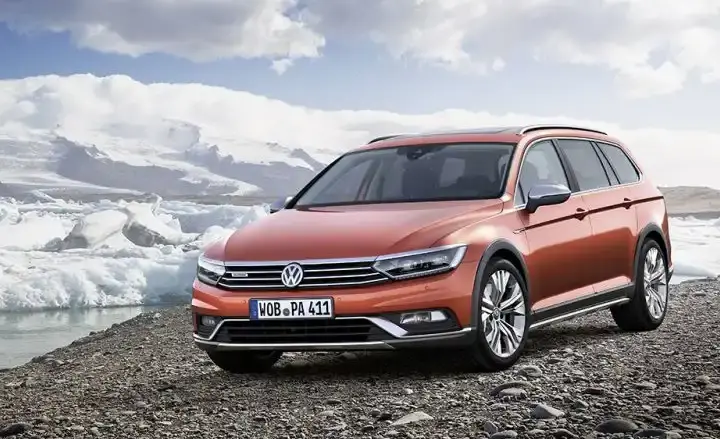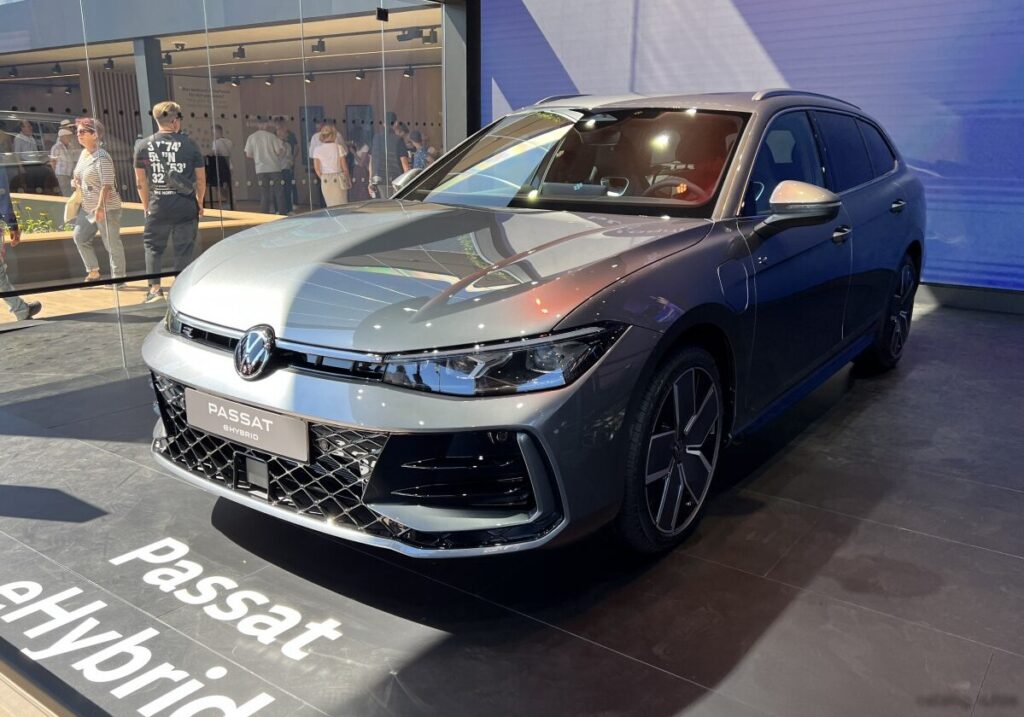
The Volkswagen Passat Variant (B9) 2.0 TDI 122 hp DSG, introduced in March 2024, represents the latest iteration of Volkswagen’s long-running family estate car. This variant is positioned as a fuel-efficient and practical option within the B9 Passat range, primarily aimed at the European market where wagons remain highly popular. It builds upon the foundation of the MQB Evo platform, shared with other Volkswagen Group vehicles, and emphasizes a blend of comfort, technology, and diesel-powered economy. The B9 generation marks a significant shift for the Passat, as it is no longer offered as a sedan, focusing exclusively on the more versatile Variant (wagon) body style.
Technical Specifications
| Brand | Volkswagen |
| Model | Passat |
| Generation | Passat Variant (B9) |
| Type (Engine) | 2.0 TDI (122 Hp) DSG |
| Start of production | March, 2024 |
| Powertrain Architecture | Internal Combustion engine |
| Body type | Station wagon (estate) |
| Seats | 5 |
| Doors | 5 |
| Fuel consumption at Low speed (WLTP) | 7.2 l/100 km (32.7 US mpg, 39.2 UK mpg, 13.9 km/l) |
| Fuel consumption at Medium speed (WLTP) | 5-5.1 l/100 km (47 – 46.1 US mpg, 56.5 – 55.4 UK mpg, 20 – 19.6 km/l) |
| Fuel consumption at high speed (WLTP) | 4.2 l/100 km (56 US mpg, 67.3 UK mpg, 23.8 km/l) |
| Fuel consumption at very high speed (WLTP) | 4.6 l/100 km (51.1 US mpg, 61.4 UK mpg, 21.7 km/l) |
| Combined fuel consumption (WLTP) | 4.9 l/100 km (48 US mpg, 57.6 UK mpg, 20.4 km/l) |
| CO2 emissions (WLTP) | 129-130 g/km |
| Fuel Type | Diesel |
| Acceleration 0 – 100 km/h | 11 sec |
| Acceleration 0 – 62 mph | 11 sec |
| Acceleration 0 – 60 mph | 10.5 sec |
| Maximum speed | 212 km/h (131.73 mph) |
| Emission standard | Euro 6 EA |
| Weight-to-power ratio | 13.1 kg/Hp, 76.6 Hp/tonne |
| Weight-to-torque ratio | 5 kg/Nm, 200.9 Nm/tonne |
| Power | 122 Hp |
| Power per litre | 62 Hp/l |
| Torque | 320 Nm @ 1600-2500 rpm (236.02 lb.-ft. @ 1600-2500 rpm) |
| Engine layout | Front, Transverse |
| Engine Model/Code | EA288 evo / DXPB |
| Engine displacement | 1968 cm3 (120.09 cu. in.) |
| Number of cylinders | 4 |
| Engine configuration | Inline |
| Cylinder Bore | 81 mm (3.19 in.) |
| Piston Stroke | 95.5 mm (3.76 in.) |
| Number of valves per cylinder | 4 |
| Fuel injection system | Diesel Commonrail |
| Engine aspiration | Turbocharger, Intercooler |
| Valvetrain | DOHC |
| Engine oil capacity | 5.5 l (5.81 US qt | 4.84 UK qt) |
| Kerb Weight | 1593 kg (3511.96 lbs.) |
| Max. weight | 2240 kg (4938.35 lbs.) |
| Max load | 647 kg (1426.39 lbs.) |
| Trunk (boot) space – minimum | 690 l (24.37 cu. ft.) |
| Trunk (boot) space – maximum | 1920 l (67.8 cu. ft.) |
| Fuel tank capacity | 66 l (17.44 US gal | 14.52 UK gal) |
| Max. roof load | 100 kg (220.46 lbs.) |
| Permitted trailer load with brakes (8%) | 1800 kg (3968.32 lbs.) |
| Permitted trailer load with brakes (12%) | 1500 kg (3306.93 lbs.) |
| Permitted trailer load without brakes | 750 kg (1653.47 lbs.) |
| Permitted towbar download | 90 kg (198.42 lbs.) |
| Length | 4917 mm (193.58 in.) |
| Width | 1849 mm (72.8 in.) |
| Width including mirrors | 2090 mm (82.28 in.) |
| Height | 1521 mm (59.88 in.) |
| Wheelbase | 2837 mm (111.69 in.) |
| Front track | 1577-1585 mm (62.09 – 62.4 in.) |
| Rear (Back) track | 1560-1574 mm (61.42 – 61.97 in.) |
| Drag coefficient (Cd) | 0.25 |
| Minimum turning circle (turning diameter) | 12 m (39.37 ft.) |
| Drivetrain Architecture | The Internal combustion engine (ICE) drives the front wheels of the vehicle. |
| Drive wheel | Front wheel drive |
| Number of gears and type of gearbox | 7 gears, automatic transmission DSG |
| Front suspension | Independent, type McPherson with coil spring and anti-roll bar |
| Front brakes | Ventilated discs |
| Rear brakes | Disc |
| Tires size | 215/60 R16; 215/55 R17; 235/45 R18 |
| Wheel rims size | 7J x 16; 7.5J x 17; 8J x 18 |
Powertrain & Engine Architecture
The heart of this Passat Variant is the EA288 evo 2.0-liter four-cylinder diesel engine, specifically the DXPB code. This engine is a turbocharged common-rail direct injection diesel, representing a further refinement of Volkswagen’s widely used diesel powerplant. The engine utilizes a single turbocharger with variable geometry turbine (VGT) technology to optimize boost across the rev range, contributing to both power and fuel efficiency. The common-rail system delivers fuel at extremely high pressure, ensuring fine atomization for cleaner combustion. The engine features a Dual Overhead Camshaft (DOHC) valvetrain with four valves per cylinder, enhancing breathing and overall performance. Paired with the engine is a 7-speed Dual Clutch Gearbox (DSG). This transmission offers quick and smooth gear changes, contributing to both performance and fuel economy. The DSG is known for its efficiency and responsiveness, although it can sometimes exhibit a slight hesitation at low speeds.
Driving Characteristics
The 122 hp 2.0 TDI with the DSG transmission delivers a comfortable and refined driving experience. Acceleration from 0-60 mph takes around 10.5 seconds, which is adequate for everyday driving but doesn’t offer particularly sporty performance. The engine’s 320 Nm (236 lb-ft) of torque, available from 1600-2500 rpm, provides ample pulling power for overtaking and cruising on the highway. The DSG transmission is well-matched to the engine, providing smooth and timely gear changes. Compared to the more powerful TDI variants (like the 150 hp or 200 hp versions), this setup prioritizes fuel economy over outright performance. Manual transmission options, when available, offer a more engaging driving experience but typically at the expense of fuel efficiency. The gear ratios in the DSG are tuned for efficiency, meaning the engine doesn’t always feel as responsive as it could be in higher gears.
Equipment & Trim Levels
The 2.0 TDI 122 hp DSG variant typically falls into the mid-range of the B9 Passat Variant lineup. Standard equipment generally includes features like automatic climate control, a touchscreen infotainment system with Apple CarPlay and Android Auto compatibility, a suite of driver-assistance systems (such as lane-keeping assist and adaptive cruise control), and comfortable seating. Interior upholstery is typically cloth, with options for leather upgrades. Higher trim levels add features like larger infotainment screens, premium sound systems, heated seats, and more advanced driver-assistance technologies. Optional extras often include a panoramic sunroof, upgraded wheels, and various styling packages.
Chassis & Braking
The B9 Passat Variant utilizes an independent McPherson strut front suspension and a multi-link rear suspension, providing a comfortable and controlled ride. The suspension is tuned for comfort, prioritizing ride quality over sporty handling. Brakes are ventilated discs at the front and solid discs at the rear. Anti-lock Braking System (ABS) and Electronic Stability Control (ESC) are standard safety features. The steering is electric power-assisted, offering light and precise steering feel.
Market Reception & Comparison
The 2.0 TDI 122 hp DSG Passat Variant has been generally well-received by automotive critics as a practical and fuel-efficient family car. Its combined fuel consumption of around 4.9 l/100 km (48 US mpg) is a significant selling point. Compared to the higher-output TDI variants, this version offers a lower purchase price and better fuel economy, but sacrifices some performance. The DSG transmission has received mixed reviews, with some critics praising its smoothness and efficiency, while others have noted occasional hesitation at low speeds. Compared to petrol-powered Passat variants, the TDI offers superior fuel economy and torque, making it a popular choice for drivers who cover long distances.
Legacy
The EA288 engine family, including the DXPB code used in this Passat Variant, has proven to be relatively reliable, although diesel engines in general are subject to more stringent emissions regulations and potential maintenance concerns related to the diesel particulate filter (DPF) and exhaust gas recirculation (EGR) systems. Proper maintenance, including regular oil changes and DPF regeneration, is crucial for ensuring long-term reliability. In the used car market, the 2.0 TDI 122 hp DSG Passat Variant is likely to hold its value reasonably well, particularly among buyers seeking a fuel-efficient and practical estate car. Its reputation for reliability and low running costs should contribute to its continued popularity in the years to come.