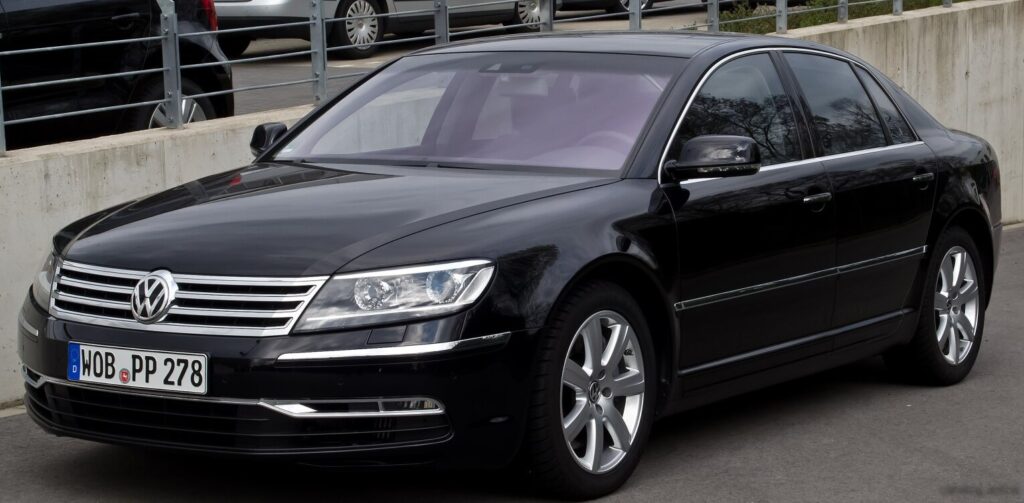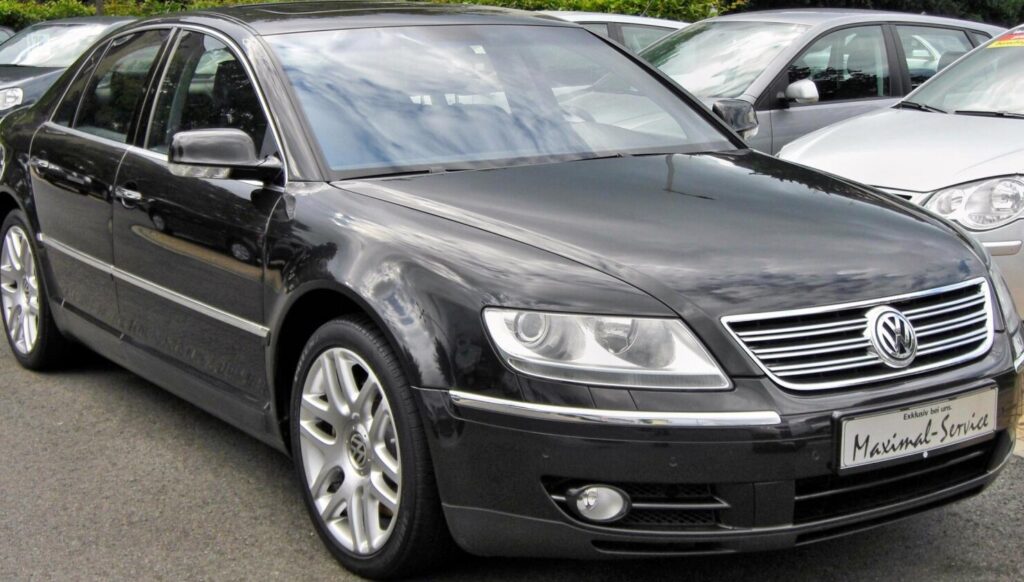
The Volkswagen Phaeton 3.2 V6 Automatic, produced from 2002 to 2008, represented Volkswagen’s ambitious foray into the luxury sedan segment. Positioned as a direct competitor to established marques like BMW and Mercedes-Benz, the Phaeton aimed to showcase Volkswagen’s engineering prowess and build quality. This particular variant, powered by the 3.2-liter V6 engine paired with a five-speed automatic transmission, occupied a mid-range position within the Phaeton lineup, offering a balance of performance and refinement. It was built on the D1 platform, shared with the Audi A8 of the same era, and was primarily aimed at the European and North American markets, though sales were limited in the US.
Technical Specifications
| Brand | Volkswagen |
| Model | Phaeton |
| Generation | Phaeton |
| Type (Engine) | 3.2 V6 (241 Hp) Automatic |
| Start of production | 2002 |
| End of production | 2008 |
| Powertrain Architecture | Internal Combustion engine |
| Body type | Sedan |
| Seats | 5 |
| Doors | 4 |
| Fuel consumption (urban) | 17.1 l/100 km (13.8 US mpg, 16.5 UK mpg, 5.8 km/l) |
| Fuel consumption (extra urban) | 9.3 l/100 km (25.3 US mpg, 30.4 UK mpg, 10.8 km/l) |
| Fuel consumption (combined) | 12.1 l/100 km (19.4 US mpg, 23.3 UK mpg, 8.3 km/l) |
| Fuel Type | Petrol (Gasoline) |
| Acceleration 0 – 100 km/h | 9.2 sec |
| Acceleration 0 – 62 mph | 9.2 sec |
| Acceleration 0 – 60 mph | 8.7 sec |
| Maximum speed | 242 km/h (150.37 mph) |
| Weight-to-power ratio | 8.3 kg/Hp, 120.8 Hp/tonne |
| Weight-to-torque ratio | 6.3 kg/Nm, 157.9 Nm/tonne |
| Power | 241 Hp @ 2400 rpm |
| Power per litre | 75.6 Hp/l |
| Torque | 315 Nm @ 2400 rpm (232.33 lb.-ft. @ 2400 rpm) |
| Engine layout | Front, Longitudinal |
| Engine Model/Code | AYT, BKL, BRK |
| Engine displacement | 3189 cm3 (194.6 cu. in.) |
| Number of cylinders | 6 |
| Engine configuration | V-engine |
| Cylinder Bore | 84 mm (3.31 in.) |
| Piston Stroke | 95.9 mm (3.78 in.) |
| Compression ratio | 11.3:1 |
| Number of valves per cylinder | 4 |
| Fuel injection system | Multi-port manifold injection |
| Engine aspiration | Naturally aspirated engine |
| Engine oil capacity | 6 l (6.34 US qt | 5.28 UK qt) |
| Coolant | 9 l (9.51 US qt | 7.92 UK qt) |
| Kerb Weight | 1995 kg (4398.22 lbs.) |
| Max. weight | 2600 kg (5732.02 lbs.) |
| Max load | 605 kg (1333.8 lbs.) |
| Trunk (boot) space – minimum | 500 l (17.66 cu. ft.) |
| Fuel tank capacity | 90 l (23.78 US gal | 19.8 UK gal) |
| Length | 5055 mm (199.02 in.) |
| Width | 1903 mm (74.92 in.) |
| Height | 1450 mm (57.09 in.) |
| Wheelbase | 2881 mm (113.43 in.) |
| Front track | 1628 mm (64.09 in.) |
| Rear (Back) track | 1612 mm (63.46 in.) |
| Drivetrain Architecture | The Internal combustion engine (ICE) drives the front wheels of the vehicle. |
| Drive wheel | Front wheel drive |
| Number of gears and type of gearbox | 5 gears, automatic transmission |
| Front suspension | Air suspension |
| Rear suspension | Air suspension |
| Front brakes | Ventilated discs |
| Rear brakes | Ventilated discs |
| Assisting systems | ABS (Anti-lock braking system) |
| Steering type | Steering rack and pinion |
| Power steering | Hydraulic Steering |
| Tires size | 235/55 R16 |
| Wheel rims size | 7.5J x 16 |
Powertrain & Engine Architecture
The heart of the Phaeton 3.2 was the AYT, BKL, or BRK engine code 3.2-liter naturally aspirated V6. This engine featured a 60-degree V-angle, contributing to a relatively compact design. It utilized a multi-port fuel injection system and four valves per cylinder, managed by a sophisticated engine control unit (ECU). The engine was known for its smooth power delivery and refined character. The five-speed automatic transmission, sourced from ZF, was calibrated for comfort and seamless shifts rather than outright performance. It featured Tiptronic manual shift capability, allowing drivers some control over gear selection. The transmission was designed to handle the engine’s 315 Nm (232 lb-ft) of torque efficiently.
Driving Characteristics
The 3.2 V6 Automatic Phaeton offered a comfortable and composed driving experience. Acceleration from 0-60 mph took approximately 8.7 seconds, and top speed was electronically limited to 150 mph. While not overtly sporty, the engine provided sufficient power for relaxed highway cruising and confident overtaking. The automatic transmission, while smooth, could feel somewhat hesitant during quick downshifts. Compared to the more powerful 4.2-liter V8 version, the 3.2 felt less urgent, but it offered better fuel economy. Against the diesel-powered variants, like the 2.5 TDI, the 3.2 provided a more refined and quieter experience, albeit with higher fuel consumption.
Equipment & Trim Levels
The Phaeton 3.2 came standard with a high level of equipment, reflecting its luxury positioning. Standard features included leather upholstery, wood trim, automatic climate control, a premium audio system, and power-adjustable front seats. Optional extras included rear seat entertainment, massaging seats, and a more advanced navigation system. The interior was meticulously crafted with high-quality materials, emphasizing comfort and sophistication. Trim levels were relatively limited, with most customization occurring through optional packages.
Chassis & Braking
The Phaeton’s chassis was designed for ride comfort and stability. It featured an advanced air suspension system on both the front and rear axles, providing a smooth and controlled ride. The suspension automatically adjusted to road conditions and driving style. Braking duties were handled by ventilated disc brakes on all four wheels, coupled with an Anti-lock Braking System (ABS). The Phaeton’s weight (approximately 4,398 lbs) necessitated a robust braking system to ensure adequate stopping power.
Market Reception & Comparison
The Phaeton received mixed reviews upon its launch. Critics praised its build quality, luxurious interior, and comfortable ride. However, it was often criticized for its high price, which put it in direct competition with more established luxury brands. The 3.2 V6 Automatic variant was seen as a sensible choice for those prioritizing comfort and refinement over outright performance. Fuel economy was reasonable for a vehicle of its size and class, averaging around 19.4 US mpg in combined driving. Compared to the V8 and TDI models, the 3.2 offered a lower purchase price and potentially lower maintenance costs.
Legacy
The Volkswagen Phaeton, despite its limited sales success, remains a fascinating example of Volkswagen’s ambition. The 3.2 V6 Automatic variant, while not the most sought-after version, offers a compelling combination of luxury, comfort, and reliability. The engine and transmission, when properly maintained, have proven to be durable. Today, the Phaeton is gaining a following among enthusiasts who appreciate its unique character and understated elegance. Used examples are relatively affordable, making it an accessible entry point into the world of high-end luxury sedans. However, potential buyers should be aware of the potential for expensive repairs due to the car’s complex technology and age.