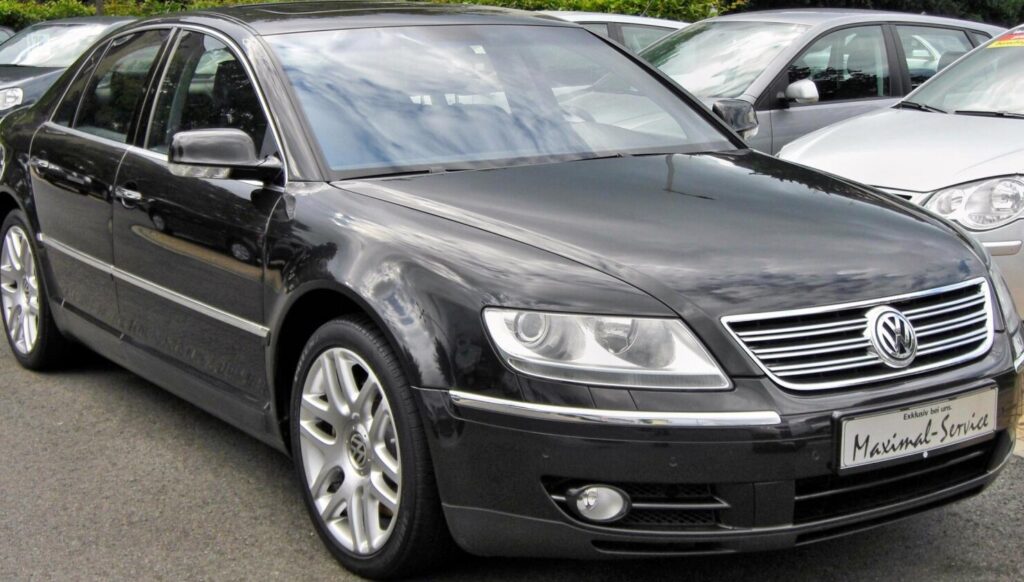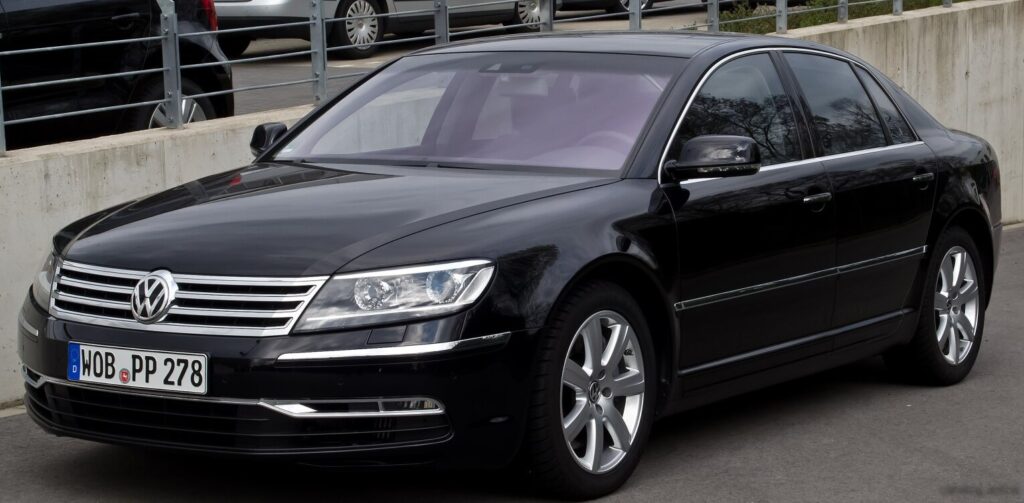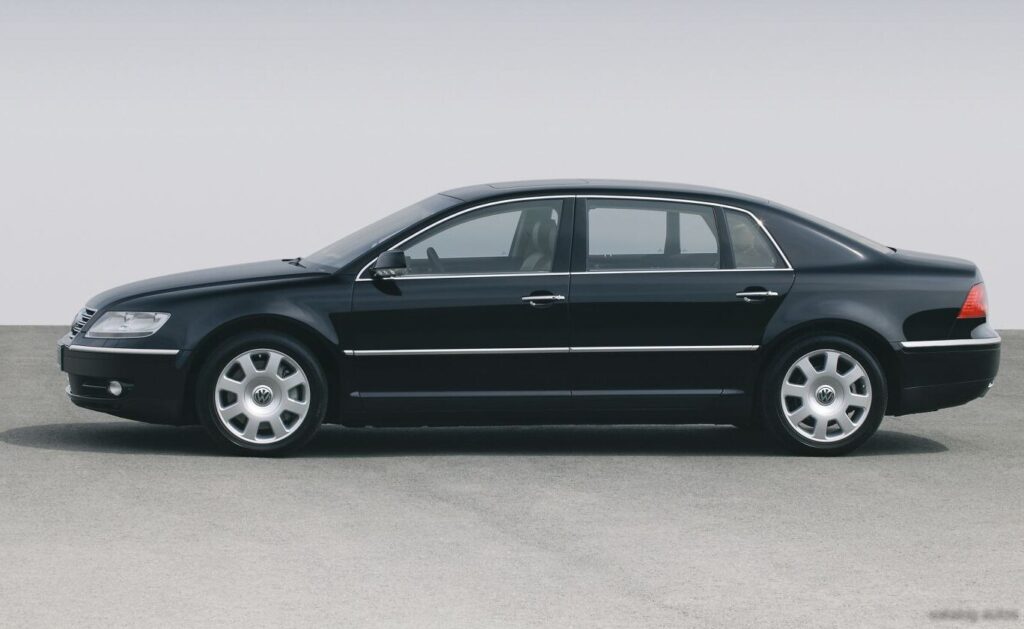
The Volkswagen Phaeton Long 3.2 V6 Tiptronic 4Motion, produced from 2005 to 2008, represented Volkswagen’s ambitious foray into the ultra-luxury sedan segment. Positioned as a direct competitor to the BMW 7 Series and Mercedes-Benz S-Class, the Phaeton aimed to showcase Volkswagen’s engineering prowess and build quality. The “Long” designation indicated an extended wheelbase, offering increased rear passenger legroom. This particular variant, equipped with the 3.2-liter V6 engine and a five-speed Tiptronic automatic transmission coupled with Volkswagen’s 4Motion all-wheel-drive system, occupied a middle ground within the Phaeton lineup, offering a balance of performance, comfort, and technology. It served as a more accessible entry point into the Phaeton range compared to the more powerful V8 and W12 models.
Technical Specifications
| Brand | Volkswagen |
| Model | Phaeton |
| Generation | Phaeton Long |
| Type (Engine) | 3.2 V6 (241 Hp) Tiptronic 4Motion |
| Start of production | 2005 |
| End of production | 2008 |
| Powertrain Architecture | Internal Combustion engine |
| Body type | Sedan |
| Seats | 4-5 |
| Doors | 4 |
| Fuel consumption (urban) | 17.1 l/100 km (13.8 US mpg, 16.5 UK mpg, 5.8 km/l) |
| Fuel consumption (extra urban) | 8.6 l/100 km (27.4 US mpg, 32.8 UK mpg, 11.6 km/l) |
| Fuel consumption (combined) | 11.7 l/100 km (20.1 US mpg, 24.1 UK mpg, 8.5 km/l) |
| Fuel Type | Petrol (Gasoline) |
| Acceleration 0 – 100 km/h | 8.9 sec |
| Acceleration 0 – 62 mph | 8.9 sec |
| Acceleration 0 – 60 mph | 8.5 sec |
| Maximum speed | 250 km/h (155.34 mph) |
| Emission standard | Euro 4 |
| Weight-to-power ratio | 9.9 kg/Hp, 100.8 Hp/tonne |
| Weight-to-torque ratio | 7.7 kg/Nm, 129.7 Nm/tonne |
| Power | 241 Hp @ 6200 rpm |
| Power per litre | 75.6 Hp/l |
| Torque | 310 Nm @ 3200 rpm (228.64 lb.-ft. @ 3200 rpm) |
| Engine layout | Front, Transverse |
| Engine Model/Code | AYT, BKL, BRK |
| Engine displacement | 3189 cm3 (194.6 cu. in.) |
| Number of cylinders | 6 |
| Engine configuration | V-engine |
| Cylinder Bore | 84 mm (3.31 in.) |
| Piston Stroke | 95.9 mm (3.78 in.) |
| Compression ratio | 11.3:1 |
| Number of valves per cylinder | 4 |
| Fuel injection system | Multi-port manifold injection |
| Engine aspiration | Naturally aspirated engine |
| Valvetrain | DOHC |
| Engine oil capacity | 6 l (6.34 US qt | 5.28 UK qt) |
| Coolant | 9 l (9.51 US qt | 7.92 UK qt) |
| Kerb Weight | 2390 kg (5269.05 lbs.) |
| Max. weight | 2910 kg (6415.45 lbs.) |
| Max load | 520 kg (1146.4 lbs.) |
| Trunk (boot) space – minimum | 500 l (17.66 cu. ft.) |
| Fuel tank capacity | 90 l (23.78 US gal | 19.8 UK gal) |
| Length | 5175 mm (203.74 in.) |
| Width | 1903 mm (74.92 in.) |
| Height | 1450 mm (57.09 in.) |
| Wheelbase | 3001 mm (118.15 in.) |
| Front track | 1628 mm (64.09 in.) |
| Rear (Back) track | 1612 mm (63.46 in.) |
| Drive wheel | All wheel drive (4×4) |
| Number of gears and type of gearbox | 5 gears, automatic transmission |
| Front suspension | Air suspension |
| Rear suspension | Air suspension |
| Front brakes | Ventilated discs |
| Rear brakes | Disc |
| Assisting systems | ABS (Anti-lock braking system) |
| Steering type | Steering rack and pinion |
| Power steering | Hydraulic Steering |
| Tires size | 235/55 R18 Y |
| Wheel rims size | 7.5J x 18 |
Powertrain & Engine Architecture
The heart of the Phaeton Long 3.2 V6 was the AYT engine, a 3.2-liter naturally aspirated V6. This engine, also found in other Volkswagen Group vehicles like the Audi A4 and A6, featured a 60-degree V-angle for optimal balance. It utilized a multi-port fuel injection system and a double overhead camshaft (DOHC) valvetrain with four valves per cylinder. The engine produced 241 horsepower at 6200 rpm and 310 Nm (228.64 lb-ft) of torque at 3200 rpm. The five-speed Tiptronic automatic transmission allowed for both fully automatic operation and manual gear selection via steering wheel-mounted paddles or the gear selector. The 4Motion all-wheel-drive system employed a Torsen differential, distributing power variably between the front and rear axles for enhanced traction and stability.
Driving Characteristics
The 3.2 V6 Tiptronic 4Motion Phaeton Long offered a refined and comfortable driving experience. While not overtly sporty, the engine provided adequate power for effortless cruising and confident overtaking. Acceleration from 0 to 60 mph took approximately 8.5 seconds, and the car had a governed top speed of 155 mph. The Tiptronic transmission generally shifted smoothly, although it could occasionally feel hesitant during quick downshifts. The 4Motion system provided excellent grip in all weather conditions, enhancing stability and confidence. Compared to the more powerful V8 and W12 models, the 3.2 V6 felt less urgent in its acceleration, but it offered a more fuel-efficient and manageable driving experience. The air suspension contributed to a remarkably smooth ride, effectively isolating passengers from road imperfections.
Equipment & Trim Levels
The Phaeton Long 3.2 V6 came standard with a comprehensive array of luxury features. Interior appointments included leather upholstery, wood trim, and power-adjustable front seats with memory function. Standard equipment also included a premium audio system, automatic climate control, and a navigation system. Optional extras included rear seat entertainment, massaging seats, and a variety of exterior customization options. The “Long” wheelbase added significant rear legroom, making it particularly appealing to chauffeur-driven buyers. The dashboard layout was clean and elegant, with a focus on user-friendliness and intuitive controls.
Chassis & Braking
The Phaeton Long featured an all-aluminum space frame chassis, providing a lightweight yet rigid foundation. The suspension system utilized air springs at all four corners, offering adjustable ride height and damping. Front brakes were ventilated discs, while rear brakes were solid discs. The anti-lock braking system (ABS) and electronic stability control (ESC) were standard safety features. The Phaeton’s suspension was tuned for comfort, prioritizing a smooth and isolated ride over sporty handling. Stabilizer bars were fitted front and rear to reduce body roll during cornering.
Market Reception & Comparison
The Phaeton, despite its impressive engineering and luxurious appointments, struggled to gain widespread acceptance in the luxury car market. Critics praised its build quality, ride comfort, and technology, but many questioned its value proposition compared to established rivals from BMW and Mercedes-Benz. The 3.2 V6 Tiptronic 4Motion variant was generally viewed as the most sensible choice in the Phaeton lineup, offering a good balance of performance and fuel economy. Fuel economy figures were around 20 mpg combined, which was respectable for a large luxury sedan of its time. Reliability was generally good, although the complex technology could be expensive to repair.
Legacy
The Volkswagen Phaeton, while not a commercial success, remains a fascinating example of Volkswagen’s ambition and engineering capabilities. The 3.2 V6 Tiptronic 4Motion variant, in particular, has developed a following among enthusiasts who appreciate its blend of luxury, performance, and all-weather capability. On the used car market, Phaetons are relatively affordable, but maintenance can be costly due to the complexity of the vehicle and the potential for age-related issues. The engine itself is known to be durable, but the air suspension system and electronic components require careful attention. The Phaeton serves as a reminder of Volkswagen’s desire to compete with the best in the world, even if it didn’t quite achieve its goals in the marketplace.