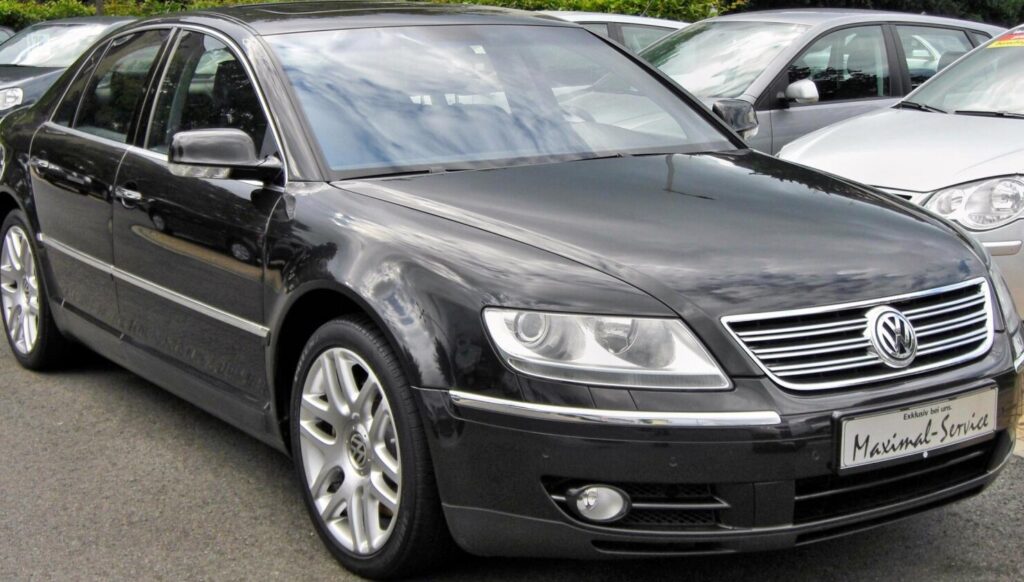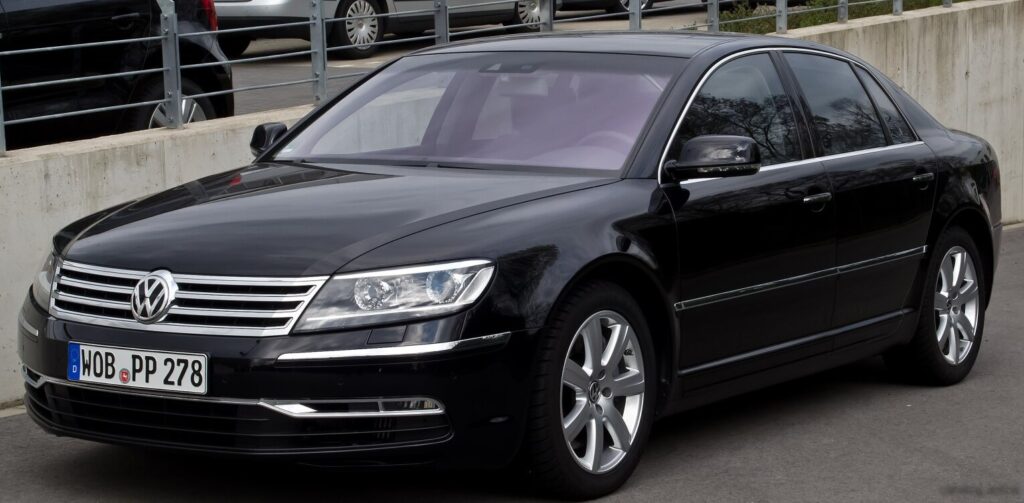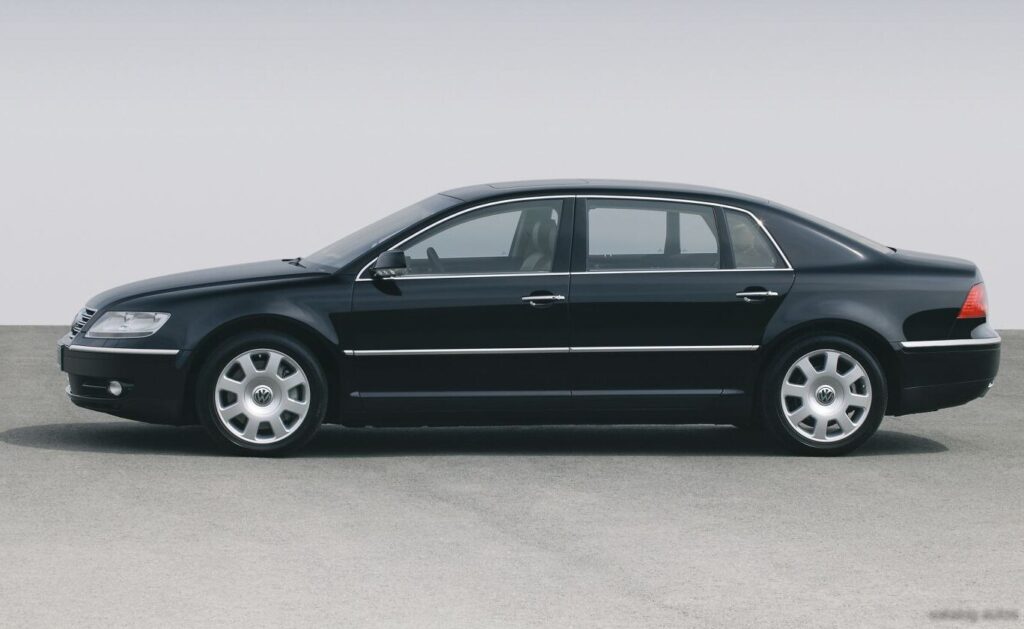
The Volkswagen Phaeton Long 4.2 V8 Tiptronic 4Motion, produced between 2005 and 2008, represented the pinnacle of Volkswagen’s ambition to create a true luxury sedan to rival established German marques like BMW and Mercedes-Benz. Positioned as the flagship of the Phaeton range, the “Long” designation indicated an extended wheelbase, offering increased rear passenger legroom. This variant, powered by a naturally aspirated 4.2-liter V8 engine paired with a five-speed Tiptronic automatic transmission and Volkswagen’s 4Motion all-wheel-drive system, aimed to deliver a blend of performance, comfort, and sophisticated technology. It was a statement vehicle for Volkswagen, showcasing their engineering prowess and commitment to building a world-class luxury car.
Technical Specifications
| Brand | Volkswagen |
| Model | Phaeton |
| Generation | Phaeton Long |
| Type (Engine) | 4.2 V8 (335 Hp) Tiptronic 4Motion |
| Start of production | 2005 |
| End of production | 2008 |
| Powertrain Architecture | Internal Combustion engine |
| Body type | Sedan |
| Seats | 4-5 |
| Doors | 4 |
| Fuel consumption (economy) – urban | 18.9 l/100 km (12.4 US mpg, 14.9 UK mpg, 5.3 km/l) |
| Fuel consumption (economy) – extra urban | 9.6 l/100 km (24.5 US mpg, 29.4 UK mpg, 10.4 km/l) |
| Fuel consumption (economy) – combined | 13 l/100 km (18.1 US mpg, 21.7 UK mpg, 7.7 km/l) |
| Fuel Type | Petrol (Gasoline) |
| Acceleration 0 – 100 km/h | 6.9 sec |
| Acceleration 0 – 62 mph | 6.9 sec |
| Acceleration 0 – 60 mph | 6.6 sec |
| Maximum speed | 250 km/h (155.34 mph) |
| Emission standard | Euro 4 |
| Weight-to-power ratio | 7.1 kg/Hp, 140.2 Hp/tonne |
| Weight-to-torque ratio | 5.6 kg/Nm, 179.9 Nm/tonne |
| Power | 335 Hp @ 6500 rpm |
| Power per litre | 80.3 Hp/l |
| Torque | 430 Nm @ 3500 rpm (317.15 lb.-ft. @ 3500 rpm) |
| Engine layout | Front, Longitudinal |
| Engine Model/Code | BGH, BGJ |
| Engine displacement | 4172 cm3 (254.59 cu. in.) |
| Number of cylinders | 8 |
| Engine configuration | V-engine |
| Cylinder Bore | 84.5 mm (3.33 in.) |
| Piston Stroke | 93 mm (3.66 in.) |
| Compression ratio | 11:1 |
| Number of valves per cylinder | 5 |
| Fuel injection system | Multi-port manifold injection |
| Engine aspiration | Naturally aspirated engine |
| Valvetrain | DOHC |
| Engine oil capacity | 7.5 l (7.93 US qt | 6.6 UK qt) |
| Coolant | 9 l (9.51 US qt | 7.92 UK qt) |
| Kerb Weight | 2390 kg (5269.05 lbs.) |
| Max. weight | 2910 kg (6415.45 lbs.) |
| Max load | 520 kg (1146.4 lbs.) |
| Trunk (boot) space – minimum | 500 l (17.66 cu. ft.) |
| Fuel tank capacity | 90 l (23.78 US gal | 19.8 UK gal) |
| Length | 5175 mm (203.74 in.) |
| Width | 1903 mm (74.92 in.) |
| Height | 1450 mm (57.09 in.) |
| Wheelbase | 3001 mm (118.15 in.) |
| Front track | 1628 mm (64.09 in.) |
| Rear (Back) track | 1612 mm (63.46 in.) |
| Drive wheel | All wheel drive (4×4) |
| Number of gears and type of gearbox | 5 gears, automatic transmission |
| Front suspension | Air suspension |
| Rear suspension | Air suspension |
| Front brakes | Ventilated discs |
| Rear brakes | Disc |
| Assisting systems | ABS (Anti-lock braking system) |
| Steering type | Steering rack and pinion |
| Power steering | Hydraulic Steering |
| Tires size | 235/55 R18 Y |
| Wheel rims size | 7.5J x 18 |
INTRODUCTION
The Volkswagen Phaeton, launched in 2002, was a bold attempt by the German automaker to enter the ultra-luxury segment. The Long variant, introduced in 2005, further emphasized the car’s focus on rear passenger comfort. Built on the D2 platform (shared with the Audi A8), the Phaeton Long 4.2 V8 Tiptronic 4Motion was positioned above other Phaeton trims, offering a more powerful engine and the added security of all-wheel drive. It aimed to compete directly with the BMW 7 Series and Mercedes-Benz S-Class, offering a unique blend of German engineering, understated luxury, and advanced technology.
Powertrain & Engine Architecture
At the heart of the Phaeton Long 4.2 V8 lay the BGH or BGJ engine code, a 4.2-liter naturally aspirated V8. This engine featured a 90-degree V-angle, contributing to its smooth operation. It utilized multi-port fuel injection and a double overhead camshaft (DOHC) valvetrain with five valves per cylinder. The engine produced 335 horsepower at 6500 rpm and 317 lb-ft of torque at 3500 rpm. The five-speed Tiptronic automatic transmission allowed for both fully automatic operation and manual gear selection via steering wheel-mounted paddles or the gear selector. Volkswagen’s 4Motion all-wheel-drive system distributed power between the front and rear axles as needed, enhancing traction and stability in various driving conditions. The system typically favored a rear-wheel-drive bias for a more engaging driving experience.
Driving Characteristics
The Phaeton Long 4.2 V8 offered a refined and comfortable driving experience. The V8 engine provided ample power for effortless cruising and confident acceleration, achieving 0-60 mph in approximately 6.6 seconds. While not overtly sporty, the car’s weight (around 5,269 lbs) and the Tiptronic transmission’s programming prioritized smooth shifts and relaxed cruising over aggressive performance. The 4Motion system provided excellent grip, particularly in inclement weather. Compared to the base 3.2-liter V6 Phaeton, the 4.2 V8 offered significantly more power and a more authoritative feel. It also felt more composed at higher speeds than the diesel variants, which, while fuel-efficient, lacked the V8’s effortless surge of power.
Equipment & Trim Levels
The Phaeton Long 4.2 V8 came standard with a comprehensive list of luxury features. These included leather upholstery, wood trim, heated and ventilated front seats with massage function, a premium audio system, automatic climate control, and a navigation system. The extended wheelbase provided generous rear legroom, making it particularly well-suited for chauffeured transport. Optional extras included rear-seat entertainment systems, a refrigerator in the rear center console, and various customization options for interior materials and finishes. The Phaeton aimed to offer a level of personalization comparable to its British rivals.
Chassis & Braking
The Phaeton Long featured an advanced chassis design, incorporating an air suspension system on both the front and rear axles. This system allowed for adjustable ride height and damping, providing a smooth and comfortable ride even on uneven surfaces. The car was equipped with ventilated disc brakes on all four wheels, coupled with an Anti-lock Braking System (ABS) for enhanced stopping power and control. The suspension was tuned to prioritize comfort and stability, rather than outright sportiness. Stabilizer bars were used front and rear to minimize body roll during cornering.
Market Reception & Comparison
Despite its impressive engineering and luxurious appointments, the Phaeton struggled to gain widespread acceptance in the luxury car market, particularly in the United States. Critics praised its build quality, ride comfort, and advanced technology, but many found its styling too understated and its brand image lacking the prestige of its competitors. The 4.2 V8 variant offered a compelling combination of performance and luxury, but its fuel economy (13 l/100 km combined) was relatively high compared to some of its rivals. Compared to the 3.2-liter V6 Phaeton, the 4.2 V8 offered a significant performance upgrade, but at a higher price point. The diesel variants, while more fuel-efficient, were often seen as less refined.
Legacy
The Volkswagen Phaeton, while not a commercial success, remains a fascinating example of Volkswagen’s ambition and engineering capabilities. The 4.2 V8 Tiptronic 4Motion variant, in particular, is appreciated by enthusiasts for its smooth power delivery, comfortable ride, and understated luxury. While maintenance costs can be high due to the car’s complexity and the availability of parts, well-maintained examples are becoming increasingly collectible. The Phaeton’s advanced technology and build quality have ensured that many examples remain on the road today, serving as a testament to Volkswagen’s commitment to engineering excellence.