
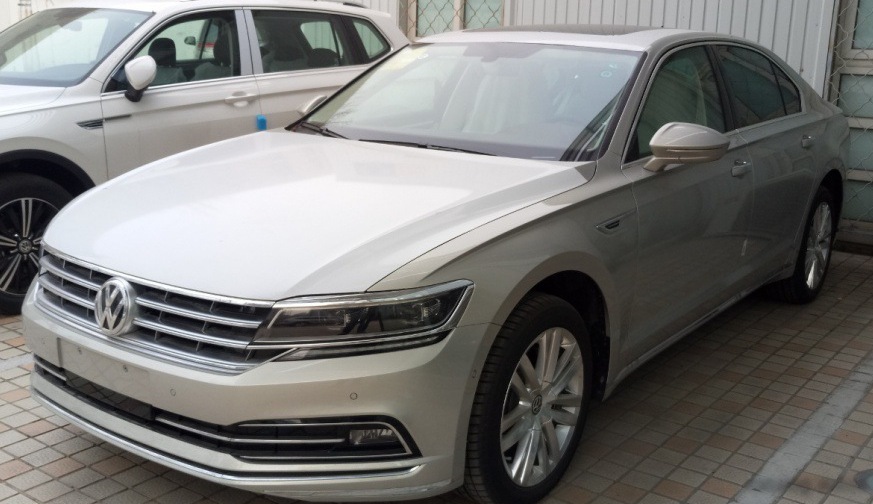
The Volkswagen Phideon 380TSI, produced from 2016 onwards, represents Volkswagen’s foray into the premium large sedan segment, primarily targeted at the Chinese market. Positioned above the Passat and Magotan in Volkswagen’s Chinese lineup, the Phideon aimed to offer a more luxurious and technologically advanced experience. The 380TSI designation signifies the engine variant – a 2.0-liter turbocharged four-cylinder engine producing 224 horsepower, paired with a seven-speed dual-clutch transmission (DSG). This configuration served as a key offering within the Phideon range, balancing performance with efficiency and representing a sweet spot for many buyers.
Technical Specifications
| Brand | Volkswagen |
| Model | Phideon |
| Type (Engine) | 380TSI (224 Hp) DSG |
| Start of production | 2016 |
| Powertrain Architecture | Internal Combustion engine |
| Body type | Sedan |
| Seats | 5 |
| Doors | 4 |
| Fuel consumption (combined) | 7 l/100 km (33.6 US mpg, 40.4 UK mpg, 14.3 km/l) |
| Fuel Type | Petrol (Gasoline) |
| Acceleration 0 – 100 km/h | 8.1 sec |
| Acceleration 0 – 62 mph | 8.1 sec |
| Acceleration 0 – 60 mph | 7.7 sec |
| Maximum speed | 240 km/h (149.13 mph) |
| Weight-to-power ratio | 8.1 kg/Hp, 123.4 Hp/tonne |
| Weight-to-torque ratio | 5.2 kg/Nm, 192.8 Nm/tonne |
| Power | 224 Hp @ 4500-6250 rpm |
| Power per litre | 112.9 Hp/l |
| Torque | 350 Nm @ 1500-4500 rpm (258.15 lb.-ft. @ 1500-4500 rpm) |
| Engine layout | Front, Longitudinal |
| Engine Model/Code | EA888 |
| Engine displacement | 1984 cm3 (121.07 cu. in.) |
| Number of cylinders | 4 |
| Engine configuration | Inline |
| Cylinder Bore | 82.5 mm (3.25 in.) |
| Piston Stroke | 92.8 mm (3.65 in.) |
| Number of valves per cylinder | 4 |
| Fuel injection system | Direct injection |
| Engine aspiration | Turbocharger, Intercooler |
| Valvetrain | DOHC |
| Kerb Weight | 1815 kg (4001.39 lbs.) |
| Fuel tank capacity | 75 l (19.81 US gal | 16.5 UK gal) |
| Length | 5074 mm (199.76 in.) |
| Width | 1893 mm (74.53 in.) |
| Height | 1489 mm (58.62 in.) |
| Wheelbase | 3009 mm (118.46 in.) |
| Drivetrain Architecture | The Internal combustion engine (ICE) drives the front wheels of the vehicle. |
| Drive wheel | Front wheel drive |
| Number of gears and type of gearbox | 7 gears, automatic transmission DSG |
| Front brakes | Ventilated discs |
| Rear brakes | Disc |
| Assisting systems | ABS (Anti-lock braking system) |
| Steering type | Steering rack and pinion |
| Power steering | Electric Steering |
Powertrain & Engine Architecture
The heart of the Phideon 380TSI is the EA888 2.0-liter turbocharged inline-four engine. This engine, a staple in the Volkswagen Group’s portfolio, utilizes direct fuel injection and a sophisticated turbocharging system to deliver a balance of power and efficiency. The EA888 engine family has undergone numerous revisions over the years, and the version found in the Phideon benefits from advancements in thermal management and friction reduction. The engine’s output of 224 horsepower and 350 Nm (258 lb-ft) of torque is achieved through precise control of the turbocharger boost and optimized engine mapping. The seven-speed dual-clutch transmission (DSG) plays a crucial role in delivering smooth and rapid gear changes, enhancing both performance and fuel economy. The DSG’s ability to pre-select the next gear allows for near-instantaneous shifts, contributing to a more engaging driving experience.
Driving Characteristics
The Phideon 380TSI offers a comfortable and refined driving experience. The 224 hp engine provides adequate power for everyday driving and highway cruising, with the 0-60 mph sprint taking approximately 7.7 seconds. While not a sports sedan, the Phideon’s DSG transmission and well-tuned suspension contribute to a responsive and controlled feel. The DSG transmission’s gear ratios are optimized for both acceleration and fuel efficiency, providing a good balance between the two. Compared to higher-output versions of the Phideon (which were available in some markets), the 380TSI prioritizes smoothness and fuel economy over outright performance. The engine delivers a broad torque curve, making it easy to accelerate from low speeds and maintain momentum on the highway. The front-wheel-drive configuration provides predictable handling, although it may not offer the same level of grip as an all-wheel-drive system.
Equipment & Trim Levels
The Phideon 380TSI typically came well-equipped, reflecting its positioning as a premium sedan. Standard features often included leather upholstery, automatic climate control, a touchscreen infotainment system, and a suite of safety features such as ABS, electronic stability control, and multiple airbags. Higher trim levels offered additional features such as a premium sound system, panoramic sunroof, adaptive cruise control, and parking assist. Interior appointments focused on creating a luxurious and comfortable cabin, with attention paid to material quality and design. The dashboard layout was clean and modern, with a focus on intuitive controls and a user-friendly interface.
Chassis & Braking
The Phideon utilizes a MacPherson strut front suspension and a multi-link rear suspension, providing a comfortable ride and good handling characteristics. The suspension is tuned to prioritize comfort over sportiness, absorbing bumps and imperfections in the road effectively. The braking system consists of ventilated discs at the front and solid discs at the rear, providing adequate stopping power for the vehicle’s weight. ABS (Anti-lock Braking System) is standard, enhancing safety and control during emergency braking situations. The steering is electrically assisted, providing a light and precise feel.
Market Reception & Comparison
The Volkswagen Phideon was primarily aimed at the Chinese market, where large sedans are highly sought after. Critics generally praised the Phideon’s spacious interior, comfortable ride, and advanced technology. However, some reviewers noted that the Phideon lacked the brand cachet of its German rivals, such as the Audi A6L and BMW 5 Series. The 380TSI variant offered a compelling value proposition, providing a good balance of performance, efficiency, and features at a competitive price point. Compared to the higher-output versions of the Phideon, the 380TSI offered better fuel economy and a more relaxed driving experience, making it a popular choice for buyers who prioritized comfort and practicality.
Legacy
The Volkswagen Phideon, while not a global success, represents an interesting chapter in Volkswagen’s history. The EA888 engine, in particular, has proven to be a reliable and durable powerplant, with many examples still on the road today. The DSG transmission, while requiring periodic maintenance, is generally considered to be a robust and efficient unit. In the used car market, the Phideon 380TSI offers a relatively affordable entry point into the premium large sedan segment. Its combination of comfort, technology, and reliability makes it an attractive option for buyers seeking a well-equipped and spacious vehicle.
