The Volkswagen Polo II (86C) 0.9 (39 Hp) represents a significant chapter in the history of European compact cars. Emerging in 1981, this second-generation Polo built upon the foundation laid by its predecessor, offering a more modern design, enhanced practicality, and a range of fuel-efficient powertrains. The 0.9-liter, 39 horsepower variant, while a basic entry-level offering, played a crucial role in establishing the Polo II’s reputation for economical and reliable transportation across European markets. Though never officially sold in the United States, the Polo II became a common sight on European roads, demonstrating Volkswagen’s ability to cater to diverse automotive needs with a smaller, more accessible vehicle.
Engine & Performance: The HA Powertrain
The heart of the introductory Volkswagen Polo II (86C) was its 0.9-liter internal combustion engine, internally designated HA. This naturally aspirated, gasoline-powered four-cylinder produced 39 horsepower. While modest by contemporary standards, this output was well-suited to the Polo II’s lightweight construction and urban-focused design. The engine prioritized fuel economy and reliability over outright performance, making it ideal for navigating congested city streets and providing efficient short-to-medium distance travel. Its simplicity contributed to lower manufacturing costs, easier maintenance, and a robust lifespan – qualities highly valued by budget-conscious consumers in the early 1980s.
The HA engine delivered its power smoothly, though not rapidly. Its design emphasized fuel efficiency, a critical consideration during a period of fluctuating oil prices and growing environmental awareness. The modest horsepower allowed the lightweight hatchback to keep pace with city traffic and manage gentle highway cruising. This engine helped establish the Polo II’s reputation as an economical choice, appealing to first-time car buyers, small families, or those seeking a secondary vehicle. The engineering behind the HA engine, though basic, underscored Volkswagen’s commitment to dependable and cost-effective powertrains.
Design & Features: A Practical Supermini
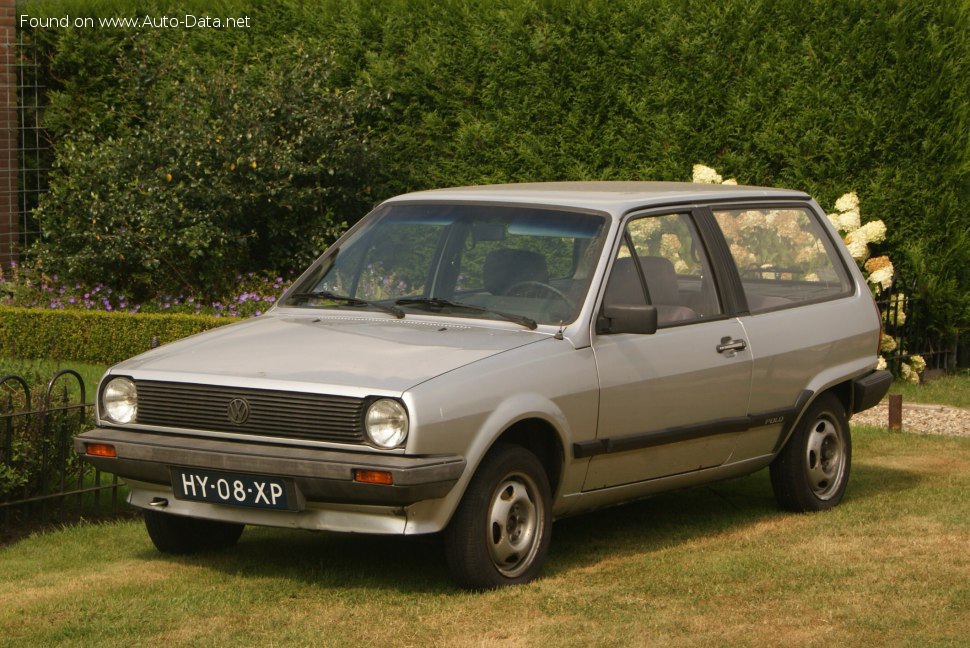
The Volkswagen Polo II (86C) featured a design that marked a departure from the first-generation model. The 86C adopted a more angular, “breadvan” or “shooting-brake” like profile, particularly in its hatchback configuration. This wasn’t merely an aesthetic choice; it was driven by a desire to maximize interior space and practicality within a small footprint. The result was a surprisingly spacious cabin and cargo area for a vehicle of its class, enhancing its versatility for daily use.
The hatchback body style was central to the Polo II’s appeal, offering excellent access to the rear cargo area. Folding down the rear seats significantly expanded the cargo capacity, making the Polo II suitable for tasks ranging from grocery shopping to transporting small furniture. Exterior styling included large, functional headlights, a simple grille, and a clean silhouette prioritizing aerodynamics and manufacturing efficiency. The car’s compact dimensions were essential for navigating narrow streets and tight parking spaces common in European cities, complemented by good all-around visibility.
Inside, the Polo II (86C) featured a functional and durable interior. Materials were chosen for longevity and ease of cleaning, reflecting the car’s utilitarian purpose. Instrumentation was straightforward, typically including a speedometer, fuel gauge, and basic warning lights. While luxury features were minimal, the focus was on ergonomics and user-friendliness. Safety features, typical for 1981, included three-point seatbelts and a robust steel body structure, meeting the prevailing safety standards for compact cars of the era. The overall design ethos of the Polo II was one of sensible, no-nonsense engineering.
Volkswagen Polo II (86C) 0.9 (39 Hp): Technical Specifications
| Category | Specification |
| Brand | Volkswagen |
| Model | Polo |
| Generation | Polo II (86C) |
| Type (Engine) | 0.9 (39 Hp) |
| Start of Production | 1981 |
| End of Production | 1981 |
| Powertrain Architecture | Internal Combustion engine |
| Body Type | Hatchback |
| Fuel Type | Petrol (Gasoline) |
| Power | 39 Hp |
| Engine Model/Code | HA |
| Engine Aspiration | Naturally aspirated engine |
| Engine Oil Capacity | 3 L (3.17 US qt) |
| Coolant Capacity | 4 L (4.23 US qt) |
Legacy & Market Impact: A European Success Story
The Volkswagen Polo II (86C), and specifically its early 0.9 (39 Hp) variant, had a lasting impact on the European automotive market. Although this engine was offered for a limited time at the beginning of the 86C’s production, it established the generation’s commitment to economy and accessibility. The Polo II quickly became a strong competitor in the supermini segment, facing rivals like the Ford Fiesta, Renault 5, Fiat Uno, and Opel Corsa A. The Polo II distinguished itself through its reputation for robust build quality and the perceived solidity of German engineering, even in this entry-level segment.
Volkswagen leveraged its brand image, built on the success of the Beetle and Golf, to position the Polo as a reliable and sensible choice for a broad range of buyers. The Polo II’s practicality, low running costs, and straightforward mechanics contributed to its widespread adoption and long-term popularity. Many Polo IIs remained on European roads for decades, a testament to their inherent longevity and ease of maintenance.
The Volkswagen Polo II (86C) was more than just a car; it was a foundational model that solidified the Polo’s position as a perennial contender in the European small car market. Its legacy is one of practical innovation, economic efficiency, and enduring appeal. The early 0.9-liter model, despite its brief production run, perfectly embodied the initial philosophy of the Polo II: a no-frills, reliable, and highly functional vehicle designed to meet the everyday transportation needs of millions.