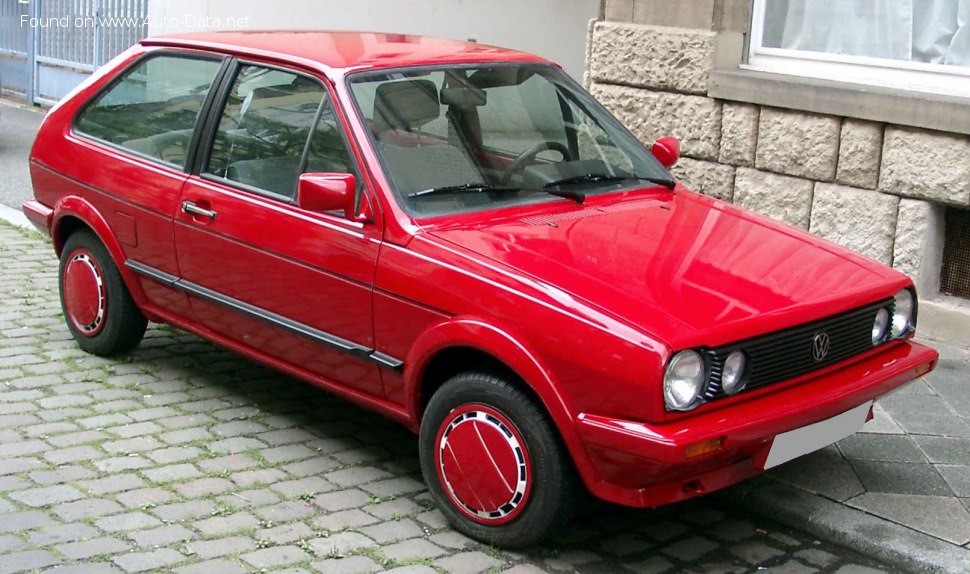
The Volkswagen Polo II Coupe (86C) 1.3 (60 Hp) represents a significant chapter in Volkswagen’s history of compact car engineering. Debuting in 1981, this model was a key component of the second-generation Polo (Type 86C), designed to capture a substantial share of the European supermini market. Offering a more stylish, two-door body style alongside the traditional hatchback and sedan (Derby/Classic) options, the Polo II Coupe aimed to appeal to a broader range of buyers. While the Polo has never been officially sold in the United States, its influence on the global automotive landscape, particularly in Europe, is considerable.
The Volkswagen Polo II Coupe (86C) in Context
The original Polo, launched in 1975, successfully established Volkswagen in the growing supermini class, building upon the success of the larger Golf. The second generation, the Type 86C, arrived in 1981 with a more contemporary design, improved aerodynamics, and a wider variety of body styles and engine choices. The “86C” designation refers to the platform shared by all Polo variants of this generation, which remained in production with various updates until 1994, making it one of Volkswagen’s longest-running platforms.
The introduction of the “Coupe” variant was a deliberate strategy to attract a younger, more fashion-conscious customer base. Unlike traditional coupes with dedicated trunks, the Polo Coupe was essentially a two-door hatchback featuring a more steeply angled rear window and a slightly revised rear end, creating a sportier, fastback-like appearance. This design maximized interior space and cargo capacity while still projecting a dynamic image. The Volkswagen Polo II Coupe (86C) 1.3 (60 Hp) specifically refers to an early production model that combined this new body style with a dependable, entry-level powertrain.
Engine & Performance: The 1.3-Liter Powerplant
The 1981 Volkswagen Polo II Coupe (86C) 1.3 was powered by a naturally aspirated 1.3-liter (1272 cubic centimeters) gasoline engine, identified by the engine code “HH.” This engine produced 60 horsepower (Hp). Within the context of early 1980s European superminis, 60 Hp was a respectable output for an engine of this size, providing a good balance between fuel economy and usable performance for city driving and occasional highway travel.
The engine’s powertrain architecture was a conventional internal combustion engine, prioritizing reliability and ease of maintenance with a simple, robust design. Fueling was typically handled by a carburetor, a common technology of the era, contributing to its straightforward operation. The engine had an oil capacity of 3 liters (3.17 US quarts) and a coolant capacity of 4 liters (4.23 US quarts), designed for economical operation and relatively simple servicing, crucial for its target market of budget-conscious consumers.
While not exceptionally powerful, the 1.3-liter engine provided the lightweight Polo Coupe with sufficient performance for its intended urban environment. Its naturally aspirated design ensured predictable power delivery, and its mechanical simplicity contributed to the Polo’s reputation for durability and dependability, capable of handling the demands of daily European commuting.
Design & Features: A Compact Coupe for Europe
The design of the Volkswagen Polo II Coupe (86C) marked a significant evolution from its predecessor. While still compact, it adopted a more angular, wedge-shaped profile characteristic of early 1980s automotive design. The “Coupe” body style, as previously mentioned, was a two-door hatchback with a distinctive sloping rear, giving it a sportier stance compared to the three-door hatchback or the notchback sedan (Derby/Classic) versions.
Functionality was a key aspect of the Polo’s design. Its compact dimensions made it highly maneuverable in congested European cities, and the practical hatchback rear offered versatile cargo space, a significant advantage for small families or individual commuters. The interior, while basic by today’s standards, was ergonomically designed for ease of use, featuring clear instrumentation and durable materials built to withstand years of use. Features like power windows, air conditioning, or advanced infotainment systems were uncommon in this segment in 1981, with the focus primarily on fundamental utility, reliability, and affordability.
Safety features for the time were also relatively rudimentary, relying on the structural integrity of the chassis, seatbelts, and a clear line of sight for the driver. The Polo II, like many of its contemporaries, was designed to meet the prevailing safety standards of its era, which were less comprehensive than today’s regulations.
Technical Specifications
| Category | Specification |
| Brand | Volkswagen |
| Model | Polo |
| Generation | Polo II Coupe (86C) |
| Type (Engine) | 1.3 (60 Hp) |
| Start of production | 1981 |
| End of production | 1981 |
| Powertrain Architecture | Internal Combustion engine |
| Body type | Coupe |
| Fuel Type | Petrol (Gasoline) |
| Power | 60 Hp |
| Engine Model/Code | HH |
| Engine aspiration | Naturally aspirated engine |
| Engine oil capacity | 3 l (3.17 US qt) |
| Coolant capacity | 4 l (4.23 US qt) |
| Drivetrain | Internal Combustion engine |
Legacy and Market Impact
The Volkswagen Polo II Coupe (86C) 1.3 (60 Hp), despite its limited 1981 production run, was an essential part of the successful Polo II generation. This generation solidified Volkswagen’s reputation for producing reliable, well-built, and practical small cars. The “Coupe” body style, in particular, established a niche for itself, appealing to buyers who wanted the practicality of a small hatchback with a touch of visual appeal.
In its primary European markets, the Polo II Coupe competed with rivals like the Ford Fiesta, Opel Corsa (Vauxhall Nova in the UK), Fiat Uno, and the Renault 5. The Polo distinguished itself through its perceived build quality and robust engineering, often commanding a slightly higher price justified by its superior longevity and resale value. Its mechanical simplicity, exemplified by the 1.3-liter engine, resulted in lower running costs and easier maintenance, a significant factor for European consumers.
The Polo II’s lasting legacy is its contribution to shaping the modern supermini segment. It demonstrated that small cars didn’t have to be basic; they could be stylish, practical, and dependable. While specific variants like the 1981 1.3 (60 Hp) Coupe are now collector’s items for enthusiasts of classic European cars, their fundamental design and engineering principles laid the foundation for future Polo generations, which continue to be best-sellers in Europe today. The Volkswagen Polo II Coupe (86C) 1.3 (60 Hp) stands as a testament to an era of straightforward, honest automotive design and engineering – a true workhorse with a subtle sense of style.