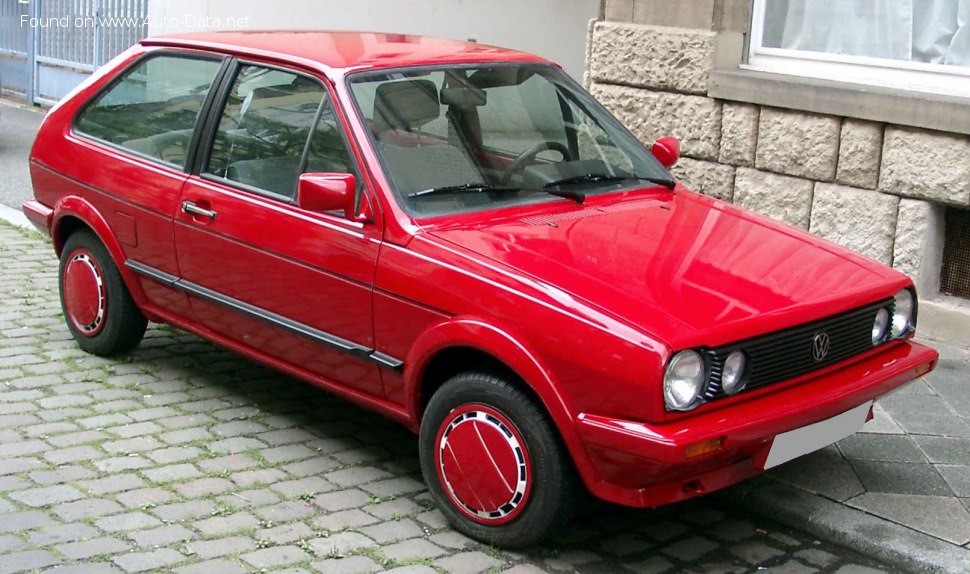
The Volkswagen Polo II Coupe (86C) represents a pivotal moment in the evolution of Volkswagen’s popular supermini. A staple in the European automotive landscape for decades, the second-generation Polo, internally designated Type 86C, expanded beyond the original hatchback with the introduction of a sedan variant (later the Polo Classic) and a stylish three-door “Coupe” body style. This article details the Volkswagen Polo II Coupe (86C) equipped with the 1.3-liter engine producing 75 horsepower, a widely produced and capable version from 1982 to 1989. While never officially offered for sale in the United States, the Polo II Coupe played a vital role in strengthening Volkswagen’s position in the competitive European supermini segment, offering a blend of practicality, economical performance, and a sporty aesthetic.
The Volkswagen Polo II Coupe (86C): A European Success Story
The Polo II (86C) succeeded the original Polo (86), building upon its foundations with improvements in aerodynamics, interior space, and a broader range of engines and trim levels. The Coupe variant, despite its name, was essentially a three-door hatchback featuring a more steeply raked rear window and a less boxy design than the standard hatchback, resulting in a sportier profile. This design appealed to a younger demographic and those seeking a more dynamic appearance without sacrificing the Polo’s inherent fuel efficiency and compact dimensions. The 1.3-liter (75 HP) engine proved to be a particularly well-regarded powertrain, balancing performance for its class with economical operation, making it a versatile choice for both city commuting and longer journeys.
Engine & Performance: The 1.3-Liter GK Powertrain
The heart of this specific Volkswagen Polo II Coupe (86C) variant is its 1.3-liter naturally aspirated gasoline engine, identified by the engine code GK. This engine embodies Volkswagen’s engineering philosophy of the era: reliability, simplicity, and efficiency. Producing 75 horsepower, it delivered lively performance for a supermini in the 1980s. While modest by modern standards, this output was more than sufficient for a vehicle weighing between 1,700 and 1,800 pounds, depending on trim and options. The naturally aspirated design provided predictable power delivery and a direct connection between the accelerator and engine response, a characteristic valued by drivers.
The 1.3-liter unit was known for its robustness and ease of maintenance, contributing to the Polo’s reputation for reliability. It offered a good compromise between city driving agility and highway capability, crucial in the diverse European market. The engine’s relatively low displacement also contributed to favorable fuel economy, an important consideration for budget-conscious buyers. The powertrain architecture, a conventional internal combustion engine, benefited from decades of Volkswagen’s experience in small engine development. The specified engine oil capacity of 3.5 liters (3.7 US quarts) and coolant capacity of 4.5 liters (4.76 US quarts) reflect a compact yet well-engineered system designed for optimal thermal management and lubrication. Typically paired with a manual transmission, the engine allowed drivers to maximize its power band, providing an engaging driving experience.
Design & Features: A Sporty Silhouette
The design of the Volkswagen Polo II Coupe (86C) represented a departure from the more conservative styling of its predecessor. While the standard Polo II hatchback had a boxier rear profile, the Coupe adopted a sleeker, more aerodynamic aesthetic. In the European context, “Coupe” often denoted a three-door hatchback with a sportier roofline and rear window angle, rather than a traditional two-door with a separate trunk. This allowed the Coupe to maintain practicality, including a usable rear cargo area accessed via a liftgate, while offering a more dynamic visual appeal. The steeply raked rear window and shorter rear overhang gave the Coupe a more athletic stance compared to the standard hatchback, sometimes referred to as a “breadvan” due to its squarer rear.
Styling cues of the 1980s are evident in the Polo II Coupe’s design, characterized by crisp, angular lines, functional bumpers, and a relatively uncluttered exterior. Its compact dimensions made it exceptionally maneuverable in tight urban environments, a significant advantage in crowded European cities. The interior upheld Volkswagen’s reputation for functional and durable interiors. Materials, while not luxurious, were hard-wearing and designed for longevity. The dashboard layout was straightforward and ergonomic, with easily accessible controls. Typical features for an economy car of this era included manual windows, a basic heating and ventilation system, and often a simple AM/FM radio. While modern safety features were not yet standard, the Polo II benefited from a robust body structure for its time. The design prioritized maximizing interior space within a small footprint, offering surprising headroom and adequate legroom for front occupants.
Technical Specifications
| Category | Specification |
| Brand | Volkswagen |
| Model | Polo |
| Generation | Polo II Coupe (86C) |
| Engine Type | 1.3 (75 Hp) |
| Start of Production | 1982 |
| End of Production | 1989 |
| Powertrain Architecture | Internal Combustion engine |
| Body Type | Coupe |
| Fuel Type | Petrol (Gasoline) |
| Power | 75 Hp |
| Engine Model/Code | GK |
| Engine Aspiration | Naturally aspirated engine |
| Engine Oil Capacity | 3.5 l (3.7 US qt | 3.08 UK qt) |
| Coolant Capacity | 4.5 l (4.76 US qt | 3.96 UK qt) |
| Drivetrain | Internal Combustion engine |
Legacy and Market Impact
The Volkswagen Polo II (86C) generation, and particularly its Coupe variant, significantly impacted the European automotive market. It built upon the success of the original Polo, solidifying Volkswagen’s reputation in the supermini segment. The 1.3-liter (75 Hp) Coupe offered a compelling package for buyers seeking an economical, reliable, and stylish car. Its production run from 1982 to 1989 saw it compete against rivals like the Ford Fiesta, Opel Corsa (Vauxhall Nova), Fiat Uno, and Renault 5. The Polo distinguished itself with its perceived superior build quality and the enduring appeal of the Volkswagen badge.
The Polo II Coupe was praised for its robust construction, contributing to its longevity and strong resale values. Its mechanical simplicity, especially with the 1.3-liter engine, meant maintenance was generally straightforward and affordable, appealing to a wide demographic. The car’s compact footprint combined with its surprisingly spacious interior made it an ideal urban companion, while the 75 horsepower engine provided comfortable highway cruising, making it a versatile choice for European consumers. Beyond its practicality, the Polo II Coupe gained a following among enthusiasts, appreciating its nimble handling and potential for modifications. Its enduring design has allowed it to maintain a cult status among vintage car aficionados. The success of the 86C generation paved the way for subsequent Polo generations, continuing the model’s blend of efficiency, quality, and compact design. The Volkswagen Polo II Coupe (86C), particularly in its 1.3-liter (75 Hp) guise, remains a significant chapter in the history of the Volkswagen Polo.