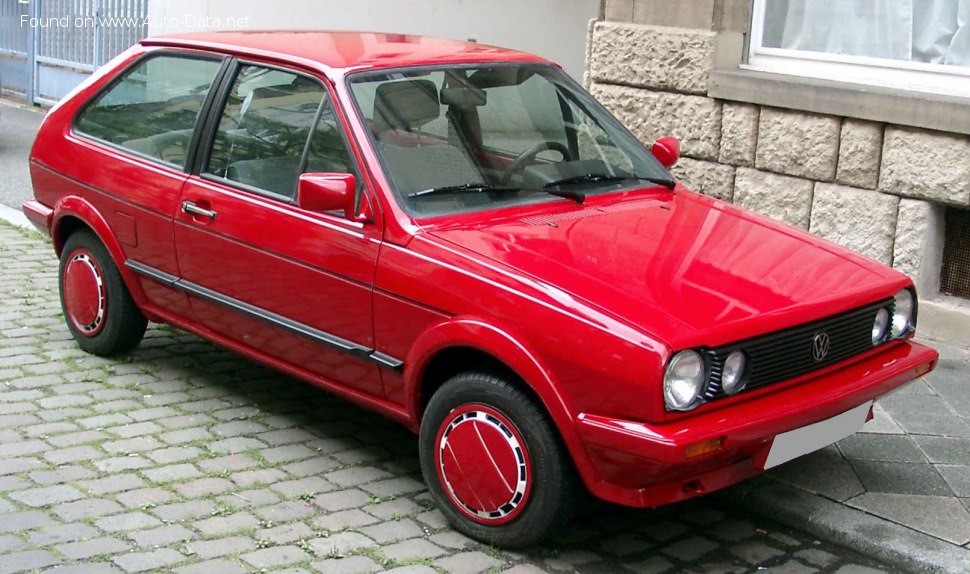
The Volkswagen Polo II Coupe (86C) 1.3 G40 represents a fascinating chapter in Volkswagen’s performance history. Though never officially sold in the United States or Canada, this supercharged hatchback captivated European drivers in the late 1980s with its potent engine and nimble handling. It stands as a testament to the engineering prowess of Volkswagen, demonstrating what could be achieved within a compact chassis using forced induction. The Polo G40 remains a highly sought-after classic, appealing to enthusiasts who appreciate its unique character and relative rarity.
The Genesis of a Giant Killer: The Polo II (86C) and the G40 Revolution
The Volkswagen Polo, initially launched in 1975, served as Volkswagen’s entry-level model, positioned below the popular Golf. The second generation, designated Type 86C, arrived in 1981, refining the Polo’s practical hatchback design with improved aerodynamics and styling. Offered in various body styles – including a standard hatchback, a van-like “breadvan” (Derby), and the sportier Coupe – the Polo II quickly became a mainstay in the European automotive landscape.
However, it was in 1987 that the Polo II Coupe underwent a significant transformation. Volkswagen, renowned for its engineering innovation, sought to elevate the performance of its smallest platform. The solution arrived in the form of forced induction, specifically utilizing the G-Lader supercharger. This unique, scroll-type supercharger had previously appeared in limited numbers in the Golf G60, but its application to the Polo was groundbreaking. The result was the Volkswagen Polo II Coupe (86C) 1.3 G40, a vehicle that redefined expectations for subcompact performance in Europe. Initially produced in limited quantities for homologation purposes (the G40 Cup), its popularity spurred a wider market release, solidifying its reputation as a genuine performance car despite its small size.
Engine & Performance: The G-Lader’s Roar
The core of the Polo G40’s appeal lay in its meticulously engineered powertrain. Volkswagen took its established 1.3-liter (1272 cc) inline-four engine, commonly found in less powerful models, and significantly upgraded it. The centerpiece of this transformation was the G-Lader G40 supercharger, a mechanical compressor that forced air into the engine, substantially increasing its volumetric efficiency. Unlike traditional centrifugal or roots-type superchargers, the G-Lader’s spiral design allowed for high boost pressures with relatively smooth power delivery and minimal turbo lag, a common issue with turbochargers of the time.
This configuration enabled the small engine to produce an impressive 115 horsepower at 6,000 rpm and approximately 110 lb-ft of torque at a low 3,600 rpm. While these figures may seem modest by contemporary standards, they delivered exhilarating performance in a car weighing under 1,800 pounds. The Polo G40 could accelerate from 0 to 60 mph in approximately 8.3 seconds and achieve a top speed of around 124 mph. This performance positioned it competitively with larger, more expensive hot hatches, making it a true “giant killer” on European roads. Power was transferred to the front wheels through a slick-shifting 5-speed manual transmission, providing drivers with a direct and engaging driving experience. To accommodate the increased power, Volkswagen enhanced the suspension, braking system (with vented front discs), and equipped the car with wider tires, ensuring the chassis could handle the engine’s newfound vigor. The combination of lightweight construction, a responsive supercharged engine, and a well-tuned chassis made the G40 an incredibly agile and enjoyable vehicle to drive.
Design & Features: Form Meets Function
The Volkswagen Polo II Coupe (86C) 1.3 G40 distinguished itself not only through its performance but also with a subtle yet purposeful design. The Coupe body style was inherently sportier than its hatchback counterparts, featuring a more raked rear window and a sleeker profile. For the G40 variant, Volkswagen added several visual cues that hinted at its performance capabilities without being overly aggressive. These included unique 13-inch (later 14-inch) alloy wheels, discreet G40 badging on the grille and tailgate, and a slightly revised front bumper with integrated fog lights. The overall aesthetic was one of understated performance, a characteristic of Volkswagen’s hot-hatch philosophy.
Inside, the G40 offered a driver-focused cockpit. Sport seats with improved bolstering provided secure support during spirited driving, while a leather-wrapped steering wheel and gear shift knob enhanced the tactile experience. The instrumentation was clear and concise, featuring a tachometer and speedometer alongside essential gauges. While not luxurious, the interior was well-built and ergonomic, reflecting Volkswagen’s reputation for quality. Features were relatively basic by modern standards, reflecting its late 1980s origins and its focus on performance over comfort. Options like power windows, central locking, and a sunroof were available, but the core appeal remained its mechanical integrity and driving dynamics. Safety features were rudimentary compared to contemporary vehicles, limited to seatbelts and a robust chassis structure, but were considered competitive for its segment and era.
Technical Specifications
The following table summarizes the key technical specifications for the Volkswagen Polo II Coupe (86C) 1.3 G40.
| Category | Specification |
| Vehicle Type | 3-door Coupe, Front-engine, Front-wheel drive |
| Generation | Polo II (Type 86C) |
| Model Year (Approx.) | 1987 – 1990 |
| Engine Type | Inline 4-cylinder, SOHC, G-Lader Supercharged |
| Displacement | 1.3 Liters (1272 cc) |
| Horsepower | 115 HP @ 6,000 rpm (approx.) |
| Torque | 110 lb-ft @ 3,600 rpm (approx.) |
| Transmission | 5-speed Manual |
| 0-60 mph Acceleration | 8.3 seconds (approx.) |
| Top Speed | 124 mph (200 km/h) (approx.) |
| Curb Weight | ~1,760 – 1,870 lbs (800 – 850 kg) |
| Length | ~140.2 inches (3560 mm) |
| Width | ~62.2 inches (1580 mm) |
| Height | ~53.1 inches (1350 mm) |
| Wheelbase | ~90.2 inches (2290 mm) |
| Brakes (Front/Rear) | Vented Discs / Drums |
| Suspension (Front) | MacPherson Struts |
| Suspension (Rear) | Torsion Beam Axle |
| Fuel Economy (Combined, EU) | ~28-32 MPG (approx., varies by driving style) |
Legacy & Market Impact
The Volkswagen Polo II Coupe (86C) 1.3 G40 established a unique position in the European hot hatch market of the late 1980s. While it didn’t achieve the same widespread recognition as the Golf GTI, it offered a distinct alternative: a smaller, lighter, and arguably more agile option. Its competitors included the Peugeot 205 GTI 1.6, the Ford Fiesta XR2i, and the Renault 5 GT Turbo. The G40 stood out with its supercharged engine, providing a different power delivery character compared to its naturally aspirated or turbocharged rivals.
Its limited production run and the unique G-Lader technology have contributed to its status as a highly desirable classic among enthusiasts today. The G-Lader itself, while innovative, required meticulous maintenance, reinforcing the car’s reputation as a vehicle for discerning collectors rather than a mainstream appliance. Its impact on Volkswagen’s performance lineage is significant; it demonstrated the brand’s willingness to experiment with forced induction in its smaller models, paving the way for future performance variants. Today, well-maintained examples of the Polo G40 command premium prices, reflecting its rarity and the enduring appeal of its engineering. It remains a cherished symbol of an era when compact cars could deliver genuine performance, a pocket rocket that, despite never being available in the United States, holds a special place in the hearts of automotive enthusiasts worldwide.